Sustainable Superheroes: The South Island Beekeeping Family Securing New Zealand’s Food Future
TranzAlpine Honey is the #1 certified organic honey producer in New Zealand.
They have been BioGro certified for 30 years – since 1993 – and with an unrivalled 113-year history as family beekeepers since 1910; they are undisputed pioneers for a sustainable, organic future.
With humble beginnings as family beekeepers in 1910, they knew early on that the responsibility of being guardians of the environment and the bees would be a lifelong commitment, and they take this just as seriously today as they did over 100 years ago.
“Biodiversity, environmental impact and conservation of the bees are at the forefront of every decision we make – from the carefully considered location of each hive to the packaging we put our honey products in.
While technology has afforded us the ability to streamline some of our processes, our traditional simple beekeeping practices are still very much at the core of everything we do.”
Today they are 5th generation family beekeepers, producing over 27 certified organic honey products, health supplements and remedies including 17 different kinds of premium organic honey and honey fusions, that are enjoyed in over 28 countries across 5 continents.
No other New Zealand organic honey producer has a market this big.
Out of 6735 registered beekeepers in New Zealand, just nine are registered and organically certified and TranzAlpine Honey is one of them.
“As beekeepers, we have a responsibility to safeguard our ecosystems so that our natural pollinators can thrive. As part of that responsibility, every single part of our business processes involves careful consideration as to the environmental impact it may have.
We take rigorous steps to ensure that our organic compliance practices, registration and certifications are current and meticulously met. Our organic beekeeping practices ensure the longevity of natural pollinators who can live out their life cycle in nature while preserving critical biodiversity.”
Yuriy Soshnikov, MD, TranzAlpine Organics
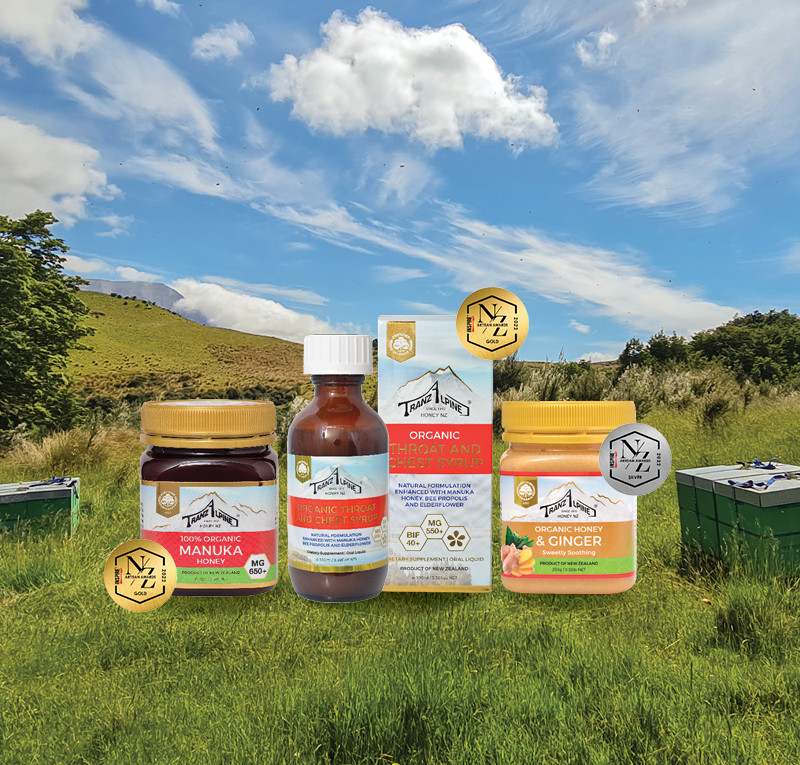

The TranzAlpine Honey Organic Commitment
Despite a global surge in demand for New Zealand organic Mānuka honey, TranzAlpine Honey is proud to continue to produce honey products that don’t come at the expense of the natural environment or the precious natural pollinators.
TranzAlpine Honey believes that the production of certified organic honey is so much more than not using pesticides or chemicals.
“It’s about building and nurturing stronger ecosystems, it’s about education for staff, customers, suppliers and to the industry so that we can all do our bit to decrease the adverse effects of global warming.
It’s about investing in the less harmful elements of production – like wood frames and hives over polyhives and hydrocarbons. Everything we do now impacts the food security of generations to come.”
Here are just some of the ways that TranzAlpine Honey shows their commitment to climate mitigation and future food security through organic practices.
They are 100% NZ Made – They don’t outsource any of their processes from hive to jar. Their packaging is environmentally friendly and 100% recycled, sourced from a local South Island supplier.
They look after their bees – They only use renewable, carbon neutral and sustainable wooden honey frames and beehives. These keep bees warm in the winter and promote longevity.
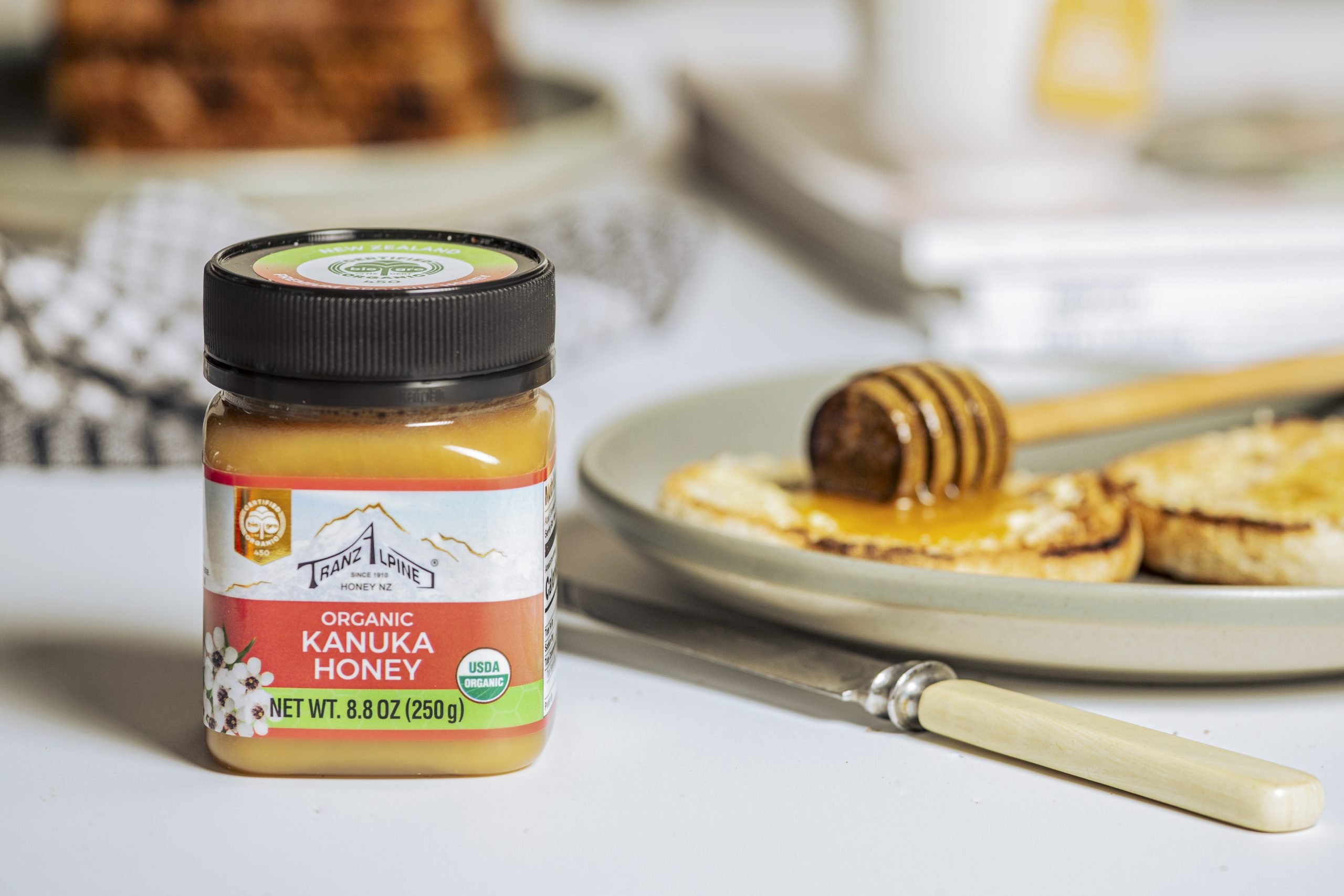
They are industry approved – All of their products are certified EU/USDA/CAN/SW, US FDA organic, Vegetarian certified, and halal certified. They are also NZ-Made certified and a Fernmark-licensed brand.
They are transparent. Each jar of their certified organic honey is fully traceable to the individual beehive and location.
They use renewable energy – They have converted their processing factory to a 15kwh solar system with sophisticated solar battery storage, allowing them to be 90% off the grid during peak season.
They use rPet packaging – rPet is safer with a much lower carbon footprint than glass for handling and shipping locally and around the world.
They are converting to electric vehicles – TranzAlpine is converting their entire vehicle fleet to be 100% EV by 2027.
They are certified – All of our products are non-GMO and BioGro organic certified.
They only use environmentally friendly products – They don’t use any materials derived from hydrocarbons or that contain microplastics.
They are rigorously compliant – Each batch of honey is independently tested, audited and certified by MPI and BioGro NZ.
They don’t use chemicals or heat – Unlike conventional operations that heat honey above 50 degrees Celsius; they maintain the natural temperature of the beehives.
They are champions for New Zealand organic products – TranzAlpine Honey supplies 68% of all organic honey exported to the EU and to date has exported over 1 million jars of honey worldwide.
They are independent – They are not part of any large company and don’t have to sacrifice their values to make a profit. They can innovate, adapt, and remain committed to their organic values.
They are part of NZ policy development – TranzAlpine is actively involved in the development of the New Zealand National Organic standard as part of the development team with MPI.

Bees are on the front lines in the battle against climate change
Honeybees are responsible for over 75% of all global pollination and, by default, global food security.
Pesticides, herbicides, and agricultural spraying are non-selective – they wipe out millions of critically beneficial insects, including bees. Over, 40% of insect species are rapidly declining and 58 species are already extinct.
Commercial apiculture, even small operations, has a direct impact on climate change and biodiversity conservation by not taking what TranzAlpine Honey considers critical steps to preserve declining natural habitats or conserve bee populations.
While the demand for ethically sourced, certified organic, climate and environmentally friendly products increases, so does the rate of the new-to-market brands who use marketing and labels to steer revenue their way.
Luckily, savvy consumers know that there is more to organic products than just labels and their preference for authentic, organic products continues to grow.
People know that when they buy any TranzAlpine Honey product, they vote for a better future.
They vote to support the New Zealand bees living their natural life-cycle in harmony with nature far removed from urban pollution or any pesticides and chemicals from agricultural spraying.

TranzAlpine Honey is constantly innovating and measuring our processes to find better ways to reduce our impact so that we can produce healthy food without compromising future generations’ ability to do the same.
Diversity drives resilience and healthy ecosystems with greater biodiversity are stronger and more adaptable, with the ability to recover faster from adverse climate change events.
Certified organic farming practices have the power to decrease the adverse effects of global warming and have more synergy with the environment.
TranzAlpine Honey continues to build their legacy through good old-fashioned New Zealand values to drive a secure food future for generations to come.