
Nourishing our elders
Good nutrition is important for us all, and perhaps even more so as people age. Anne Gastinger offers suggestions for how older people can get the best nutrition, and shares her own family story.
We hope you enjoy this free article from OrganicNZ. Join us for access to exclusive members-only content.
In their retirement years, our parents often worked together in their garden. Both dedicated gardeners and capable cooks, they practised ‘garden to plate’ nutritional care for over six decades of marriage. The enjoyment, exercise and nourishment this lifestyle gave them arguably contributed to their long lifespans.
In their final years together, worsening rheumatoid arthritis in our mother’s hands saw our father become the sole caretaker of both domains, until his death at age 90. After his passing five years ago our extended family took over various tasks and responsibilities to enable our mother’s wish to remain in her home.

Dining with mum
Living nearby has made it easy for my husband and me to do a ‘meals on wheels’ dinner routine. One of my brothers joins us, which equates to three households uniting four nights a week to share kai and conversation around my mother’s dining table.
We share a food kitty, and for health reasons and environmental concerns eat an organic diet. Here in Christchurch we have access to a cornucopia of organic goods from retailers such as Liberty Market, Piko and Beckenham Organic Butchery.
We all contribute, whether it’s providing a warm welcoming home, care duties, grocery shopping, cooking, dishwashing or kitchen clean-up. We cook in our kitchen, load the crate of food into the car boot and three minutes later the meal, still piping hot, is ready to be served at mum’s.
Tasty and appetising
In old age a number of things can enhance the health benefits and joy of food. “Food needs to be zingy and sharp in flavour rather than mild, because your sense of taste fades,” my mother says.
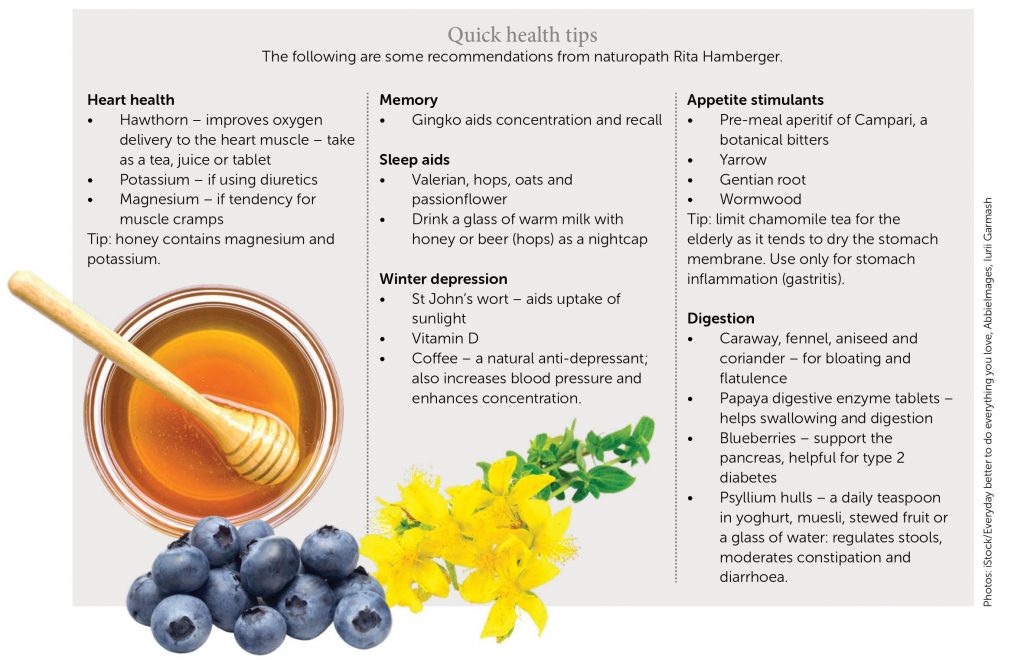
My sister-in-law, Rita Hamberger agrees. She’s been a naturopath for over 30 years with her own practice in Rosenheim, Germany. “The food should be tasty, aromatically and visually pleasing. The elderly need a diverse diet incorporating food with sharp or bitter flavours which are good for stomach function, aiding the absorption of vitamins and minerals from the food.”
Rita’s suggestion of papaya digestive enzymes to aid swallowing are, my mother observes, “a great help for times when the food doesn’t want to go down”.
However, Rita recommends being cautious about too many supplements for older people, as these are not always absorbed well.
Food needs to be zingy and sharp in flavour, because your sense of taste fades
Social health and wellbeing
Access to a diverse diet of fresh food can be difficult for elderly people who live in their own home. Elderly people living alone often take short cuts with their meals.
The will to cook and the wish to eat are affected by various factors like limited incomes, concern about food waste, transport limitations, shopping stress due to mobility and medical issues, isolation, loneliness and depression caused by loss of one’s life partner and friends.
Loneliness can be as harmful for our health as smoking, according to research published in Heart magazine in 2016. Different cultures have long understood the need and value of supporting older folk to eat well by shared living, sharing meals, visiting with excess produce from the garden, helping peel the spuds or dice the carrots and assisting with transport to the farmers’ market or grocery store.
Elderly people can even forget to eat. They may not have much appetite because they’re bored or not getting so much exercise.
Anxiety about digestive issues including constipation can be another eating deterrent for some elderly. Lower levels of physical activity can contribute to a sluggish digestive system, which can then be compounded by stodgy foods like toasted white bread layered with jam. Ample fibre is essential.
Fewer calories, more nutrients
In old age life is increasingly experienced from the confines of an armchair, so we need fewer calories. Yet the ageing body’s need for nutrients is equal to, if not more than, our need in former active times.
Kay Baxter and Bob Corker’s food philosophy outlined in their book Change of Heart: The Ecology of Nourishing Food has strongly influenced my endeavours to maximise dietary gains for my mother. Their approach emphasises nutrient-dense organically grown plants, meat from grass-fed animals, fermented foods, and soups using bone broths.
Eating this fare, my mother (92) never gets colds, flus or stomach upsets. “At this stage in life with medical problems you expect this, but it’s not the case,” she says. “Eating organics is an important part of this.”
Good gut health
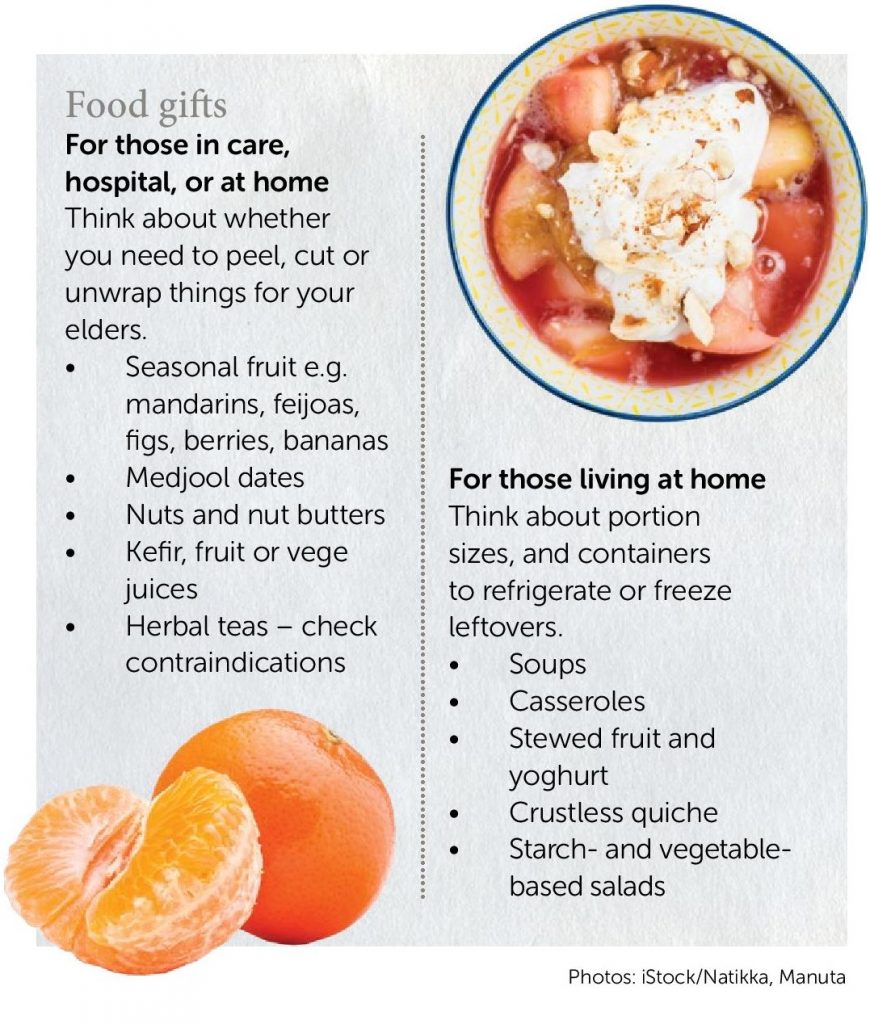
Make batches of soup and then refrigerate or freeze them in portion sizes. Stewed fruit is a useful staple for the pantry and the fridge.
Gluten intolerance can develop at any stage in life, causing gut issues like bloating, diarrhoea or constipation. Fortunately gluten-free grains and cereals like corn, quinoa, amaranth, buckwheat, sorghum, millet and amaranth make flavoursome, nutritious substitutes in bread and baked goods.
Keep hydrated
Elderly people often find it hard to keep up their fluid intake. Soups are ideal, warming the body as well providing fluids.
Fear of incontinence can also lead to restricting liquids, but this can result in other health issues. Keep a freshly filled water bottle within reach of their favourite armchair as a good visual reminder to drink. Also helpful are the blossoming number of herbal teas on the market, catering for all palates and tailored for numerous health conditions.
Make batches of soup and refrigerate or freeze them in portion sizes
Serving ideas for the weekly menu
Include a diverse range of foods in the weekly menu for best nutrition.
- Vary the protein daily, such as beef, fish, lamb, chicken, eggs or nuts, seeds and pulses; likewise vary carbohydrates.
- Salads with a smorgasbord of ingredients are appetising and ideal for providing the day’s quota of vegetables. Finely dice or grate raw ingredients to aid chewing, swallowing and digestion.
- Mash root vegetables into a creamy texture with milk and butter so they’re easier to swallow.
- Accompany steamed vegetables with a squeeze of lemon for zing, dips like garlic aioli, or homemade chutneys, which give a dash of flavour and extra moisture to aid digestion. Dry food like pastry can be problematic for this reason.
- Slow-cooked crockpot dishes flavoured with herbs, seeds and spices together with a splash of wine or apple cider vinegar are favourites of mine. These provide all-important fluids in the form of cooking stock, and result in tender meat and vegetables that are easy to digest. If possible use chicken, meat or fish cuts containing bone and cartilage, so the sauces contain essential dietary minerals found in gelatine.

Double bubble
Occasionally when cooking, double the quantity of main dishes that freeze well. They are a perfect meal resource to gift elderly relatives and friends. Include portion sizes for two or more, and encourage your elders to invite others to join them for companionship and good food. Any leftovers are ideal for lunch the following day.
Good food and company are vital for every stage in life, and even more so in old age. Coming together for an evening meal my mother says is “the highlight of my day”.
Anne Gastinger lives, gardens and writes in Christchurch.