Keep your garden growing
Tips and tasks for the March/April māra,
by Diana Noonan
In the cooler months it’s tempting to wind down the edible beds, but try sowing and growing all over again for months of bountiful harvest at a time when store-bought veges command a premium price.
We hope you enjoy this free article from OrganicNZ. Join us for access to exclusive members-only content.
Ki te hāmama popora te tangata e kore e mau te ika!
He who yawns, catches no fish!
Starting all over again
The summer māra can be disappointing, especially if you’ve been away from home over the holidays and your edible beds have suffered from a lack of attention. But the good news is you can put the past behind you and start growing all over again with cool-season veges – some of which will be ready to harvest in just three to four weeks (see our suggestions below). If you live in a warm region, sow some baby root crops too, as they will keep growing, albeit slowly, almost right through the year.
Undercover agents
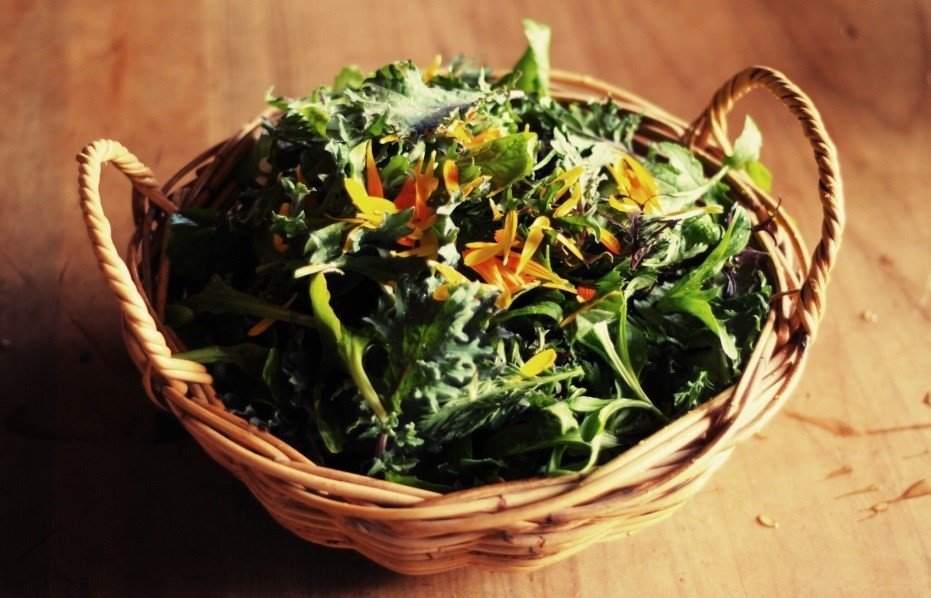
Greenhouses provide a whole new cool-season growing space once summer crops have been harvested. Make the most of this by replenishing the greenhouse soil with organic compost and manures, and sowing quick-turnover greens such as ‘Fiji Feathers’ peas. A semi-leafless pea with crisp feathered shoots and tasty tendrils, it is ready to snip and use just two to three weeks from sowing. Mesclun seed mixes will also come away quickly when sown undercover, and you can double their value by teasing out individual seedlings and planting them into their own spot in the greenhouse where they can grow on to maturity. In very cool regions, where the summer undercover harvest can linger on until mid-autumn, sow and plant into containers which can be placed under cloches until there is space available for them in the greenhouse.

Reader support keeps us going
Please support our work by joining with a membership subscription. Organic NZ is independently published by the Soil & Health Association, a charity devoted to healthy soil, healthy food and healthy people.
Our independent journalism relies on support from people like you!
Extend the season
In order for autumn-sown seeds and cool-season seedlings to be strong, healthy, and potentially productive throughout the winter and early spring months, it’s important to give them a quick start now, in warm beds. If autumns are damp in your part of the country, and you are not already growing in raised beds, mound up your soil by 10–20 cm. This will keep the ground temperature sufficiently damp but not wet, and therefore increase its temperature. If autumn conditions are warm, or if you live in a drought-prone region, use a mulch to lock in moisture and control weeds. If your autumns are on the cool side, skip the mulch (which shuts out the sun’s warmth) and weed by hand.
Use cloches to harvest the autumn sun. While they can be store-bought, you can also make your own by bending over hoops of supple willow or number eight wire, and pushing the ends into the ground. Cover with recycled clear plastic (check out furniture stores for this valuable resource), and hold it in place with rocks. Prop the cloche open with a forked stick on very warm days so your plants don’t overheat. To make a mini cloche, cut the base off a PET bottle, and push the cut end into the ground. Remove the top to allow for ventilation, so your young plants don’t cook, or leave it on in cold weather to increase the heat.
Sow me now
In all but the coldest regions, sow the following:
Veges: Radish, daikon radish, autumn mesclun mix, Asian greens, winter spinach, broad beans. In warm regions only: Carrot, beetroot, broccoli, cauliflower, cabbage, kale.
Herbs: Chervil, chives, coriander, rocket, spring onions.
Flowers: Hollyhock, nasturtium, phacelia, spring bulbs, viola.
Note: In very cold regions, sow quick-growing pea shoots and microgreens under cover.
Transplant me now
Veges (by February in cooler regions and March in warmer regions): Brassicas – especially spring cabbage, cauliflower, broccoli (including purple winter-sprouting broccoli), celery, celeriac, leeks, perennial beet, silver beet, winter lettuce.
Herbs: Most woody herbs including rosemary, sage, thyme, marjoram, and already-established potted lavender. Hardy leafy herbs including parsley, parcel and sorrel.
Flowers: Winter colour (polyanthus, primula, Iceland poppies, pansies) spring bulbs.
Compost clean-up
Anyone who has ever painted or wallpapered knows that nine-tenths of the mahi goes into preparation – and it’s the same with making the perfect compost. In autumn, especially, it’s important to hot-compost because so much of the material cleared from the māra contains weed seeds that require significant heat in order to be destroyed.
Composting instructions are easy to access, but the subject of assembling the necessary ingredients is seldom discussed. When building a hot compost, it’s essential to gather all your materials ahead of time, and to restrict the gathering of high-nitrogen materials to just two or three consecutive days before building the pile (any more and this nitrogen-rich material will begin to decay before you want it to).
Assemble the materials in their different piles: browns (carbon-rich materials such as dead leaves, mulched branches and twigs, and organic straw), greens (nitrogen-rich materials such as green manure crops, lawn clippings, freshly cut long grass, mulched green leaves, seaweeds and kitchen scraps), and very high-nitrogen ingredients (if using), such as fresh and aged animal manures. Although it’s not essential to be totally accurate, a compost heats up best when the ratio of carbon to nitrogen materials is 30:1. You will also need on hand a good supply of water, and material to cover the pile (hessian sacks are ideal). Once you’re ready to begin, following the instructions will be fun and easy.
Fill the larder
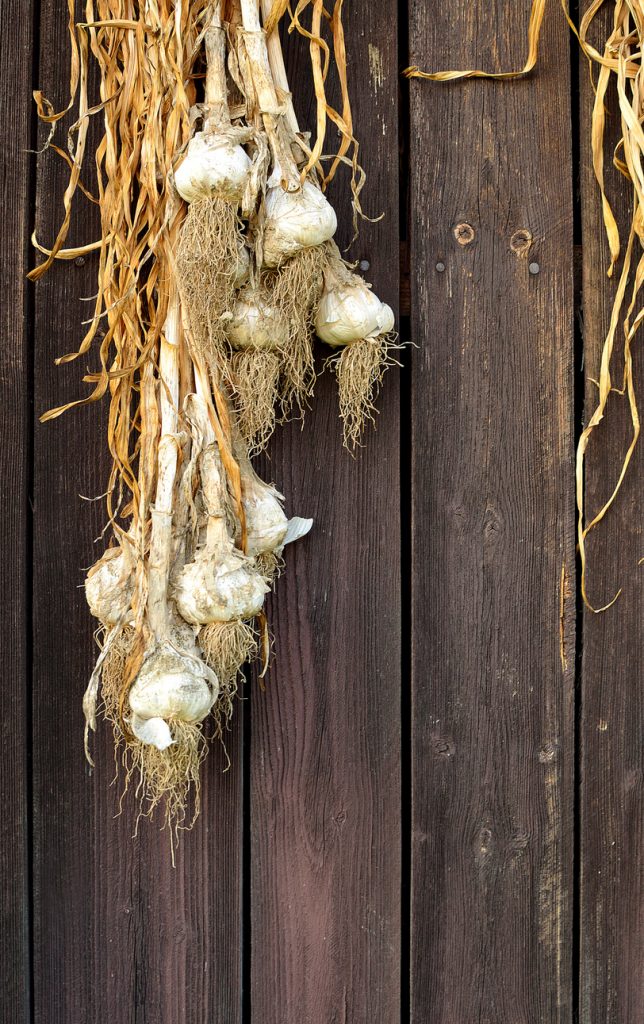
Your winter keep-crops have taken four to six months to grow to maturity. Don’t waste them through poor storage. Dry your alliums (onions, shallots and garlics) until there is no sign of moisture left in their tops (especially around their ‘necks’. Allow kūmara, yams (oca), mashua and ulluco (earth gems) to quick-dry in warm shade, turning them to hurry the process. Dry potatoes in a warm, dark, dry place to prevent greening. Sort crops thoroughly so that any that are damaged are separated out and used quickly. Be aware that different keep-crops require different temperatures and humidity levels to keep well, and do your research. Note that some root crops, such as Jerusalem artichokes and yacon, should be left in the ground until required (in very cold regions, cover the ground above the tubers with a layer of straw to prevent freezing).
Close to home
Think ahead to frequently used winter flavour boosters, and pot up rooted pieces of herbs that can be moved close to the door for easy access on wet, cold days. Give the rooted pieces a good start by growing them under cloches through autumn.
Diana Noonan lives in the Catlins where she grows 70 percent of her food using a variety of methods including permaculture food forest to French intensive.