Homegrown Fruit: Pests and disease-reducing strategies
By Kath Irvine and Jason Ross
Homegrown Fruit: A practical guide is an accessible and comprehensive guide to growing fruit trees, bushes, vines and brambles in Aotearoa New Zealand.
The authors have a wealth of experience between them, and guide readers through everything from planning a home orchard, to specific types of fruit and their requirements, to care and pruning, pest, disease and weed control, and much more.
The following is a section on strategies to reduce pests and disease, extracted with permission from Homegrown Fruit: A practical guide, by Kath Irvine and Jason Ross (K+J Books, 2025) $58 RRP
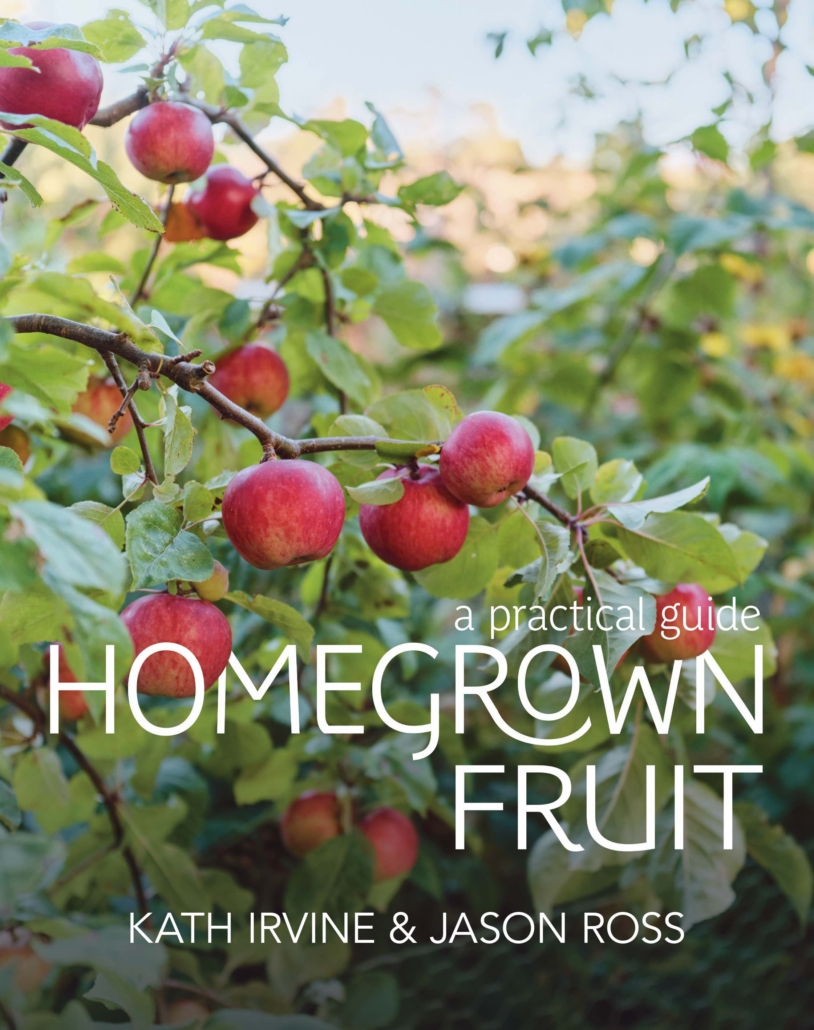
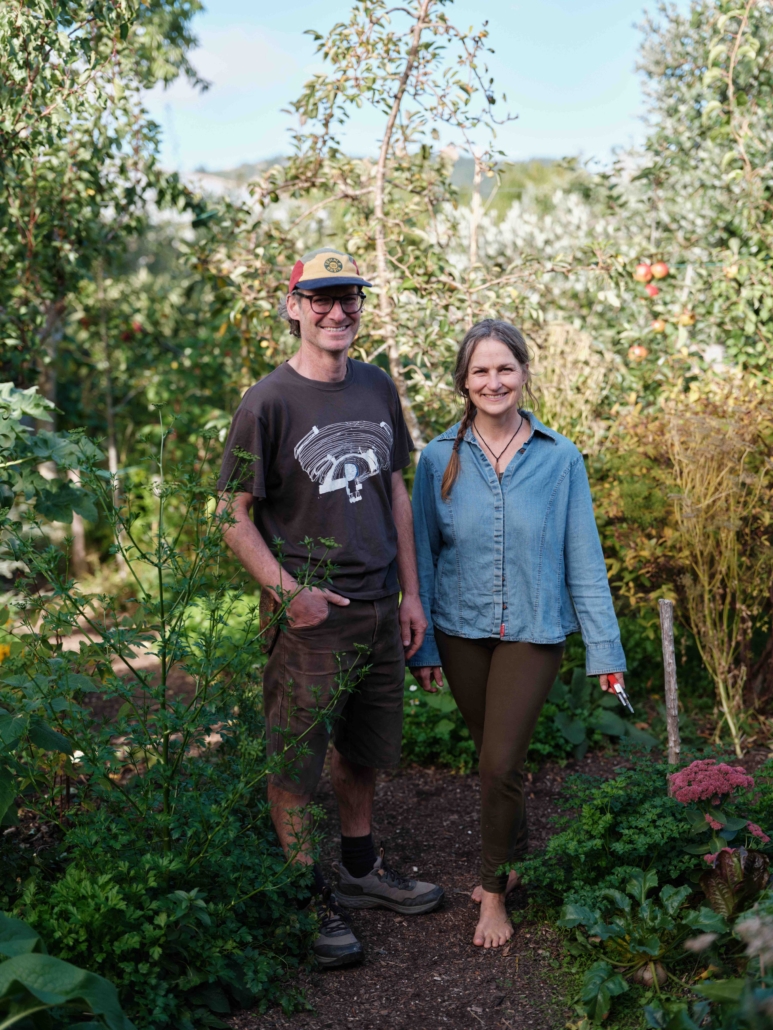
ABOVE: Cover image of Homegrown Fruit, and Jason Ross and Kath Irvine (Mickey Ross Photography)
We hope you enjoy this free article from OrganicNZ. Join us to access more, exclusive member-only content
We’re big fans of sidestepping pests and disease – that’s why we’re so keen on well-suited varieties, and on staying in touch with our trees and keeping health humming along. Even so, pests and disease do happen! Little bits here and there are no worries, but more than that and it’s a good idea to ponder why. It’ll be a stress of some sorts – weak vigour, overfeeding, extreme weather, or because the tree isn’t planted in its happy place.
If a tree continues to get hammered every year in spite of all your love, feel free to chop it down, mulch it up, and try another variety. That in itself is an excellent pest- or disease-reducing strategy – to only grow trees that thrive easily. The younger your orchard is, the more important it is to act on the first signs of pest or disease. The more established, diverse, and healthy your orchard, the more important it is to watch and let things take their natural course. If at any point tree health starts to be compromised, step in with our solutions below.
Pest-reducing strategies
Before you rush in to squash or spray, find out about the bugs you see on your fruit trees and make sure they are foe. You will find most are orchard friends. It’s really useful to understand what the different phases of bug life cycles look like – both for pests and predators. The juveniles can look radically different to the adults.
5 spray-free strategies
Our goal is to manage all pest problems without sprays, to lean into the wondrous network of unseen support that’s constantly in motion in our orchards.
Predatory insects
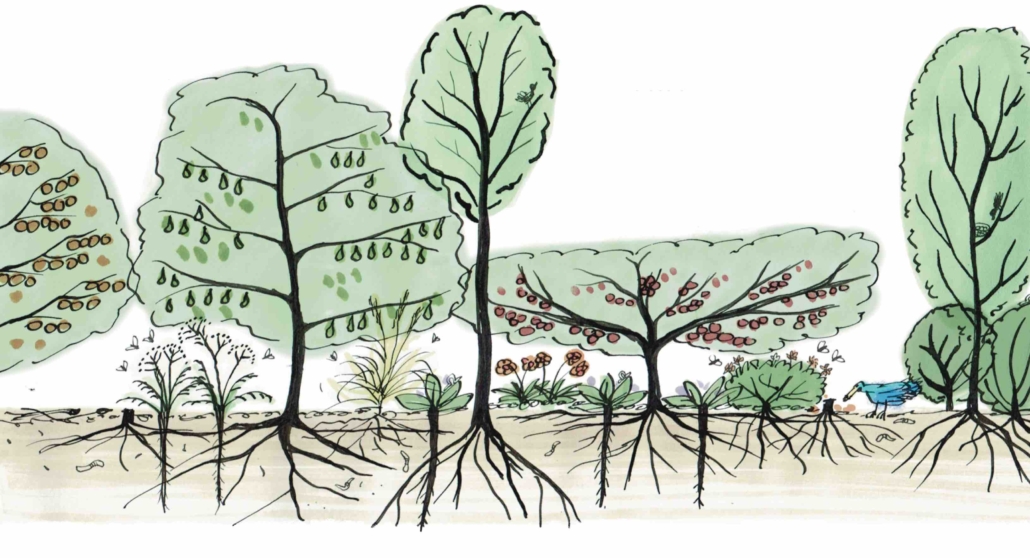
Keep a wide variety of pests in check with a wide variety of predatory and parasitic insects: parasitic wasps, hoverflies, ladybirds, praying mantis, spiders, dragonflies, damselflies, assassin bugs, lacewings, various beetles, frogs, and even earwigs – the more the merrier! Entice them in with a spray-free, wild haven, a year-round supply of nectar and pollen, and of course, some pests to eat!
Wild birds
Birds are a quid pro quo – while you may want to protect your ripening crop from them, the rest of the time birds like wax-eyes, starlings, chaffinches, and fantails are voracious gobblers of insects.
Digital control
Squashing grubs, caterpillars, or aphids is a quick and easy solution on a young tree, a dwarf or espaliered tree, or a reachable vine. Curled or folded leaves are a sign that a grub or caterpillar lurks within – open them up to see. Dimpled leaves indicate a sucking insect is at play – flip them over to check. Webbing is another sign – poke about and be nosy! You don’t need to squash every single pest: get the bulk of them, or the ones within reach – leave a few for the predators. Keep at it during your check-ins.
Fruit and spur thinning
Thinning reduces pest numbers by removing their habitat – the cosy home that’s created where fruits touch.
Chickens and ducks
Chickens scratch up and gobble overwintering grubs and larvae. Ducks love slugs and snails, and both forage on a broad range of pests, from aphids to grasshoppers.
Two safer sprays: Neem and Bt
While it’s our goal to be spray-free, there are times when we are both very grateful to have Neem and Bt in our toolkit. Both must be ingested to work, so the only insects that come to grief are the ones sucking or chewing the foliage or fruits. Bees and predatory or pollinating insects aren’t eating foliage or fruits, so they stay out of harm’s way. Many natural insecticides, like pyrethrum, garlic, or rhubarb spray, are contact killers – they nail everything they touch. We don’t recommend them.
The key to success with Neem and Bt is to completely cover the foliage when you spray, and to follow up with a couple of repeat sprays to catch the next gen of egg hatchings. Repeat sprays are essential! Use your observations to guide you as to how many repeats you need.
SPRAYING TIPS
Spray at dawn or dusk, in dry weather. Use a fresh mixture each time – make a small batch so that you use it all. Rinse out your sprayer afterwards, especially the nozzle, and leave it open and upside-down to air out and dry.
Neem
Use for all sucking insects: aphids, woolly aphids, scale, thrips, passionvine hoppers, green vegetable bug, and cherry/pear slug (sawfly larvae).
- Passionvine hopper adults are impervious to spray – catch them at the juvenile ‘fluffy bum’ stage. Repeat at three-day intervals. By the third spray, the population will be greatly reduced. Continue in this way until there are none left.
- Woolly aphids are a more intense pest because they suck on both roots and tops. If there are tell-tale cottony growths around the root crown, apply Neem granules to the soil at the base of the tree in tandem with using Neem sprays
Bt
Bt is short for Bacillus thuringiensis. It’s the active ingredient in many caterpillar-specific sprays. Use it for raspberry bud moth, leaf roller caterpillar, codling moth, and guava moth.
Codling moth and guava moth get a special mention because natural predators are in short supply in NZ, and they aren’t so much a reflection of stress as they are a reflection of a neighbourhood that’s heaving with them. Success comes from doing a range of things that target different stages of their life cycles.
- Spray with Neem + Bt together, weekly from petal fall.
- Check over young fruits for tiny entry holes where larvae have burrowed in. There may also be frass – tiny piles of sawdust-like excrement – at these sites. Remove fruits and feed them to your chooks or drown them in a barrel of water.
- Immature fruits that fall often contain larvae – send your pigs in or pick them up; this stops the next generation of moths emerging.
- In winter, let chooks in to hunt overwintering larvae – wax-eyes and ground beetles also help with this. Needless to say, clean up all windfalls in case they contain larvae.
- Prevent guava moth by covering trees with insect mesh soon after pollination, when fruitlets start to develop.
Homegrown Fruit: A practical guide, by Kath Irvine and Jason Ross (K+J Books, 2025) $58 RRP