• Link to Facebook
  • Link to Instagram
  • Link to LinkedIn
Reset member access or visit Soil & Health NZ
Organic NZ
  • Articles
    • Features
    • Gardening
    • Health and Food
    • Farming and Horticulture
    • Building and Technology
    • News
  • Competitions
  • Donate
  • Login
  • Join Us
  • Click to open the search input field Click to open the search input field Search
  • Menu Menu

Tag Archive for: Education

Posts

Loving soil, but also learning soil

19 Dec 25/in Education and Knowledge, Farming and Horticulture, Features, Free Online, Gardening, Magazine Articles

By Jenny Lux

This article was first published by Earthworkers and is republished here with their kind permission.

We hope you enjoy this free article from OrganicNZ.  Join us to access more, exclusive member-only content

I have always been a details-oriented sort of person. As a child I remember planting flowers with my Mum, learning all of their names and pressing them in a flower press. I later I revelled in learning how to identify and use the three names of all our native vascular flora (Mฤori, English and scientific). My first career was in plant ecology, after I did a Masters in that area looking at the relationships between soil and the regeneration of kauri forest after fire.

Moving between the details and the big picture, I became seriously concerned about climate change around the time of my late twenties. Not just mildly concerned as I had been in my youth, but in-your-face, losing-sleep, suffering-existential-fear-and-anxiety level of concern.

Of course, this had coincided with finding a husband who was a big-picture thinker and having two wonderful baby boys. I did not end up giving up at that point, but I decided that when I got back to paid work, I would be dedicating my time to a career in climate action.
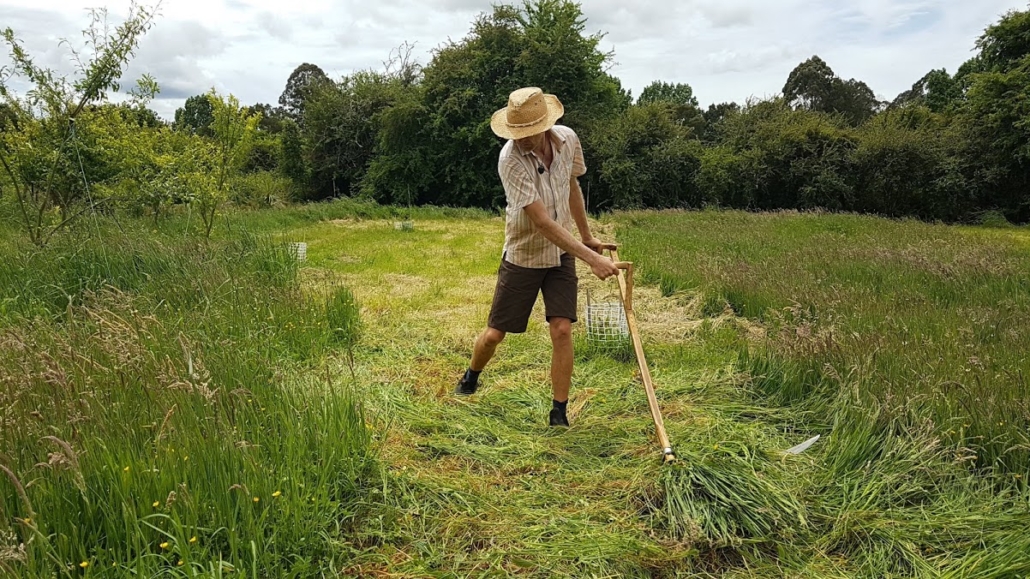
Above: Richard scything grass

Growing vegetables

I moved from field-based plant ecology work to growing and selling organic vegetables, as a home-based profession that could keep me close to our kids and our food. Richard helped me establish Lux Organics, a small-scale organic market garden on the outskirts of Rotorua. He initially kept his day job as an ecologist, but then joined me full-time in the business for three years. My parents got involved, providing a generational backbone to the business.

We grew beautiful vegetables for our community, and by the time the Covid crisis and lockdowns occurred, we were able to pivot to vege boxes, bringing them to peoplesโ€™ doors with our electric van. We started hiring seasonal staff in 2020, which meant a succession of people learning the organic growing methods with us. By 2023 we had added solar panels to our shed, powering our household, vegetable chiller and van with the sun.

This has been a journey of creating a business that minimises carbon emissions while growing food. Hand tools, electric tools and hands in the soil have been our main inputs. The productivity of our soil has been the foundation of our business (as it is for all farming) and we have strived to care for it, taking soil tests each year, and learning about every aspect of soil health along the way.
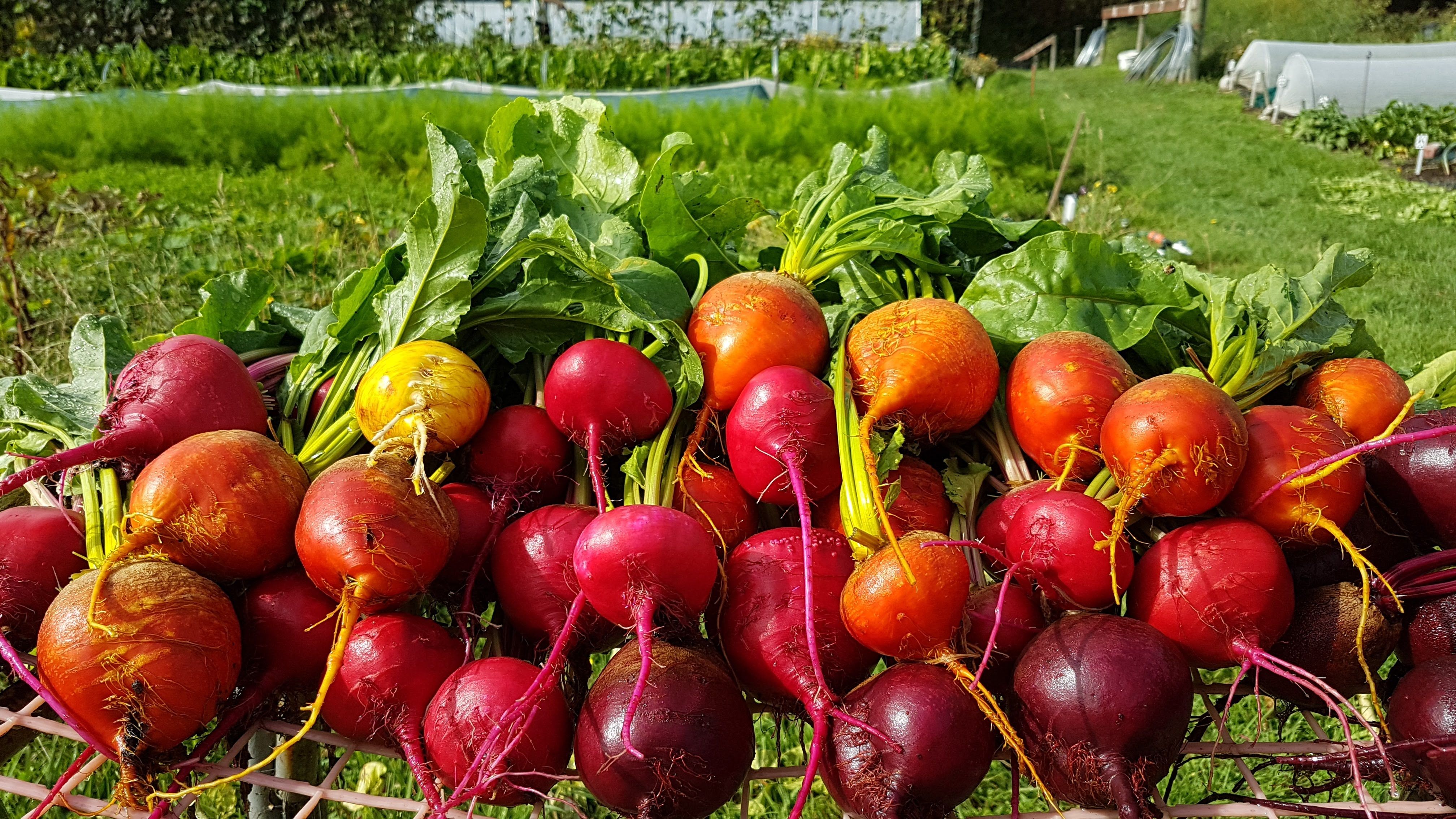
Beetroot

When you grow a crop for market, and especially when you grow over 40 of them (!), there are a lot of questions and uncertainties about how to manage the soil, what might be affecting the outcomes youโ€™re seeing, how to solve problems, and how to keep producing all through the seasons.

These veins of query are what led me to the five-day Earthworkers Regenerative Horticulture 101 course in the winter of 2021. I attended with two of my staff and I encountered a whole group of amazing people involved in different sorts of projects who were on my wavelength.

I discovered new terms which opened up my mind to the soil ecosystem in a new way. Quorum sensing, cation exchange, paramagnetism, root exudates, polycropping. I have kept in touch with the group ever since (online and in person), and this has led to multiple fertile exchanges and more farm visits, opportunities to learn and even to help others. Itโ€™s a magic human interaction!

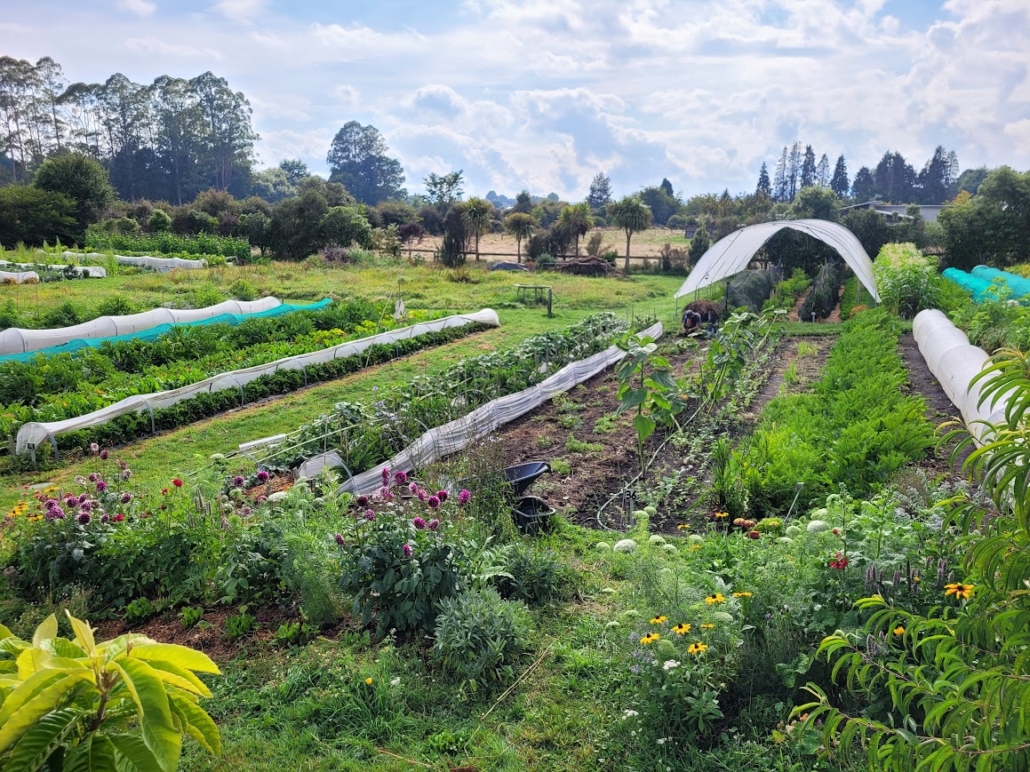
ABOVE: Lux Organics market garden, February 2025

In recent years, with the domestic recession, business has been tough, as local people cut their organic vegetable spending. Looking at in a big picture way, itโ€™s a manifestation of how people cannot/do not make longer-term environmental and health choices when they are poor and worried about their daily survival. Our business relies only on its connection with the local food system, rather than export.

While we experienced a huge high after the Covid crisis, when people suddenly became concerned about the sustainability of their local food supply, we are now in a phase of relentless cost-cutting. Our customer base has concentrated to only those who value food produced in a way that is free from contamination, and which looks after land.

Now that I have been working in practical agroecology on my own land for over nine years, I am curious about taking my soil knowledge deeper and broader, to have a wider impact. It’s one of those cliches… the more you learn, the more you realise you don’t know, and it becomes impossible to give simple explanations any more.

I would now never say, “ah, just use compost and everything will be fine”. There’s a lot more to growing, and to soil, than most of us really, truly understand. Related Research News: why compost alone isnโ€™t enough for juicy lettuce (worm juice + mycorrhizae). My curiosity burns and I want to know which levers to pull to achieve the healthiest crops and soil. Looking again to the bigger picture, how we manage soil on our productive land is the probably the most important aspect of New Zealandโ€™s climate emissions profile.

This is why I’ve dedicated pretty much all of my market garden earnings in 2025 so far to further study and investing in my own knowledge growth.

I have taken papers at the University of Waikato in soil science and hydrological management, and I have attended specialist courses by regenerative educators (Graeme Sait from Nutri-tech Solutions, and Nicole Masters from Integrity Soils).

I am building up a research library and reaching out to soil mentors for the next step in my career. I even bought a microscope from a fellow Earthworker (thank you Coral).

All of this new learning is feeding directly into the next stage of my journey โ€” growing my skills, confidence, and contribution through the Earthworkers community.
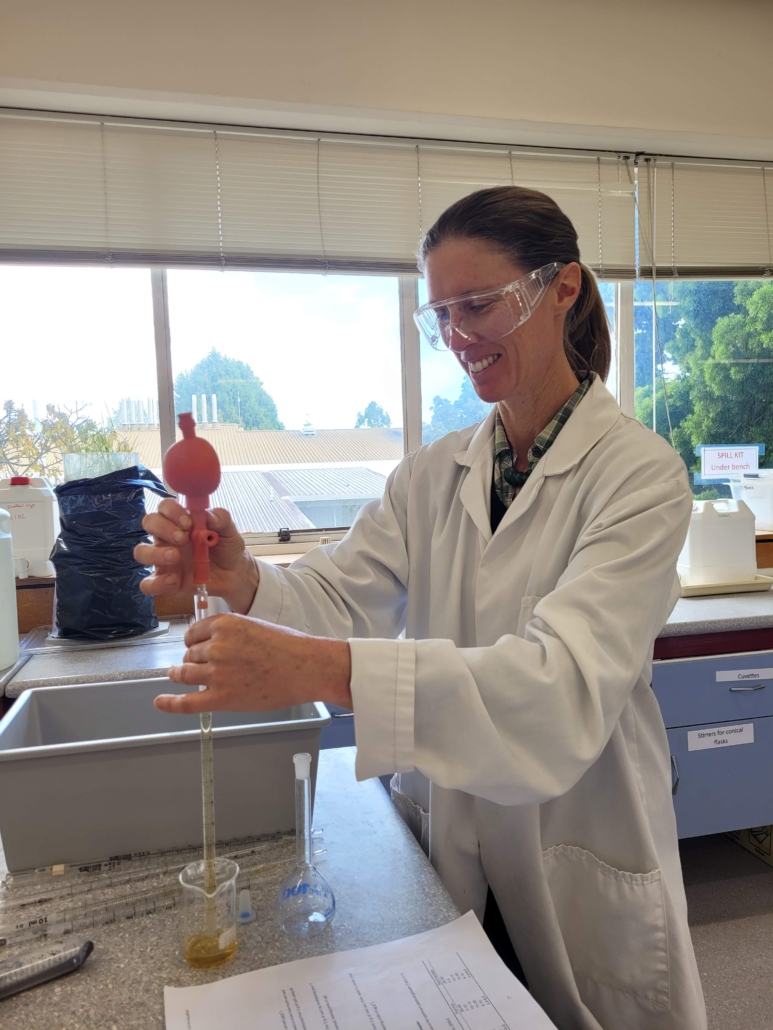
Over the next few months, Iโ€™ll be deepening my learning through the new Regenerative Horticulture 201 and Future Agronomists courses, working directly with Daniel Schuurman as we develop and pilot both programmes. My goal is to grow my capacity as a biology-first regenerative agronomist โ€” someone who can read the soil, guide other growers, and support the shift toward biology-led farming across Aotearoa.

In 2024 I mentored for For the Love of Bees on their year-long Communities of Regenerative Learning programme, which opened a new path for me as a mentor within the sector. That experience, and my continued involvement supporting new growers through the post course Earthworkers WhatsApp network, has shown me how powerful it is when we stay connected โ€” helping one another, sharing knowledge, and learning together every day out in the field.

I look forward to doing Regenerative Horticulture 201 in 2026 and keeping up my active learning and practice. Growing in soil is a bit like general lifeโ€ฆ you canโ€™t follow one set recipe. Things keep moving and changing, and you have to be observant, responsive and kind.


Jenny Lux is a former chair of the Soil & Health Association. Find Lux Organics online here.

Earthworkers has launched

The natural evolution of For the Love of Bees, Earthworkers has a new hub to support biology-first regenerative horticulture in Aotearoa.

After a year of development they have launched a brand new website, and a full learning pathway.

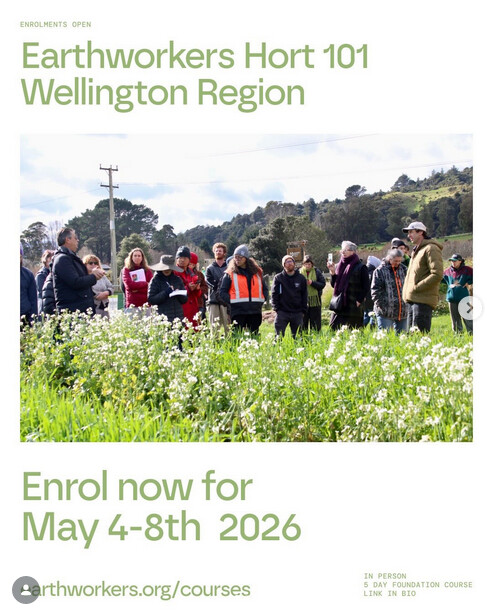
Enrolments are now open for 2026:

  • The foundation course Hort 101 (4โ€“8 May, Mangaroa Te Awa Kairangi โ€“ Wellington region) 
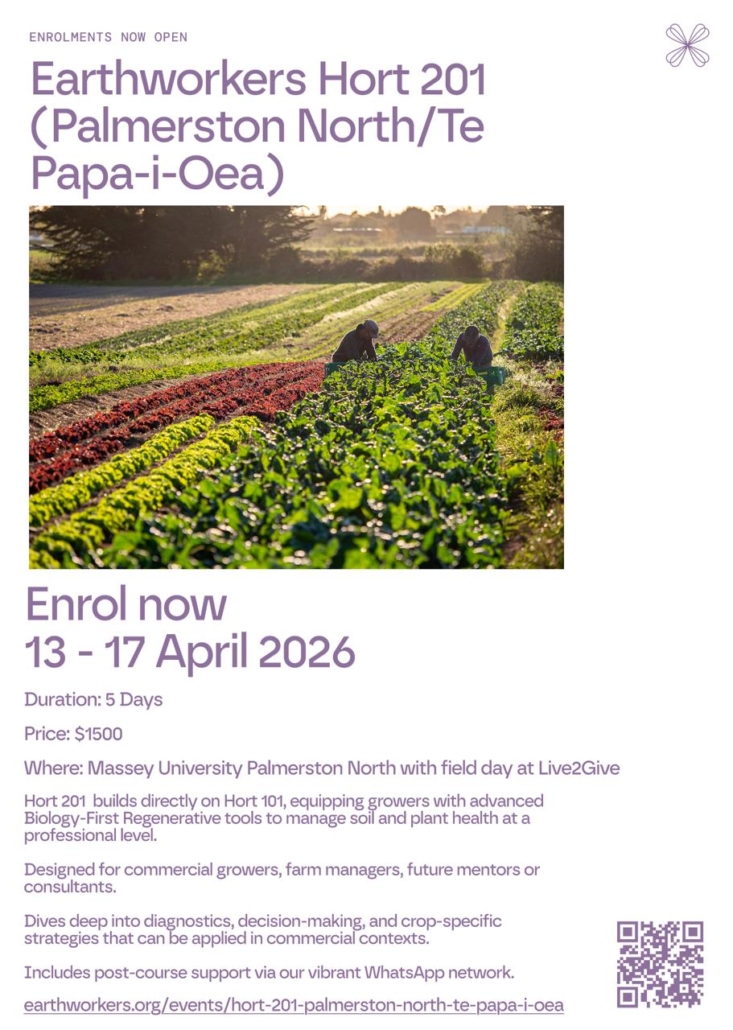
  • The advanced course Hort 201 (13โ€“17 April, Palmerston North, in partnership with Live2Give)

Both courses come with post-course support via a WhatsApp chat network to help growers transition to resilient, profitable, biology-first regenerative systems.

Earthworkers’ first alumni blog, Cultivating Knowledge Together, features Jenny Luxโ€” an experienced grower and organic advocate who will be one of the first participants in our new Hort 201 and Future Agronomists programmes, designed to grow New Zealandโ€™s next generation of biology-first agronomists.

Explore the pathway: earthworkers.org

Earthworkers courses in 2026
https://organicnz.org.nz/wp-content/uploads/sites/2/2025/12/Jenny-Lux-2025-low-res-scaled.jpg 2560 2560 membership https://organicnz.org.nz/wp-content/uploads/sites/2/2024/09/OrganicNZ-2024-Masthead.png membership2025-12-19 07:41:332026-08-03 15:02:06Loving soil, but also learning soil

Cultivating Change

25 Feb 25/in Education and Knowledge, Farming and Horticulture, Features, Free Online, Gardening, Health and Food

Organic NZ interviews Sarah Smuts-Kennedy

Sarah Smuts-Kennedy has dedicated her life to cultivating change โ€“ not just in the soil, but in the way we grow, learn, and connect to the land. From her early days as an artist to becoming an advocate for biology-first regenerative horticulture practices, she has helped reshape how we view the potential of food production in our cities and its capacity to heal the soils we grow in.

Sarah shares her transformational journey, the challenges and triumphs of founding For the Love of Bees (FTLOB), their model farm OMG and the Earthworkers Hort 101 educational pathway.

We hope you enjoy this free article from OrganicNZ.  Join us to access more, exclusive member-only content
ABOVE: Sarah Smuts-Kennedy, establishing interest in the OMG farm in central Auckland, 2017

Tell us a bit about your background, Sarah. Youโ€™ve had quite a diverse career journey. 

Iโ€™ve had an unconventional path, to say the least. I was an actor for over 20 years, from the โ€™80s through to the early 2000s. In the early 2000s I moved to Australia and became an artist and in 2005 I got to travel to India and exhibit my art in New Delhi. That experience really changed my perspective on the world. I began to use my art practice to explore the environmental issues we were facing, like deforestation and coal mining in Australia.

By 2010, I realised that my art wasnโ€™t having the kind of impact I wanted. I was highlighting problems but not providing solutions. So, I decided to make a shift. I enrolled in a Permaculture Design Course at the same time I began an Master of Fine Arts and started working with biodynamic practices, committing myself to learning how to regenerate land I had just moved to which we named Maunga Kereru. I wanted to focus on solutions and find ways to share these practices with others.

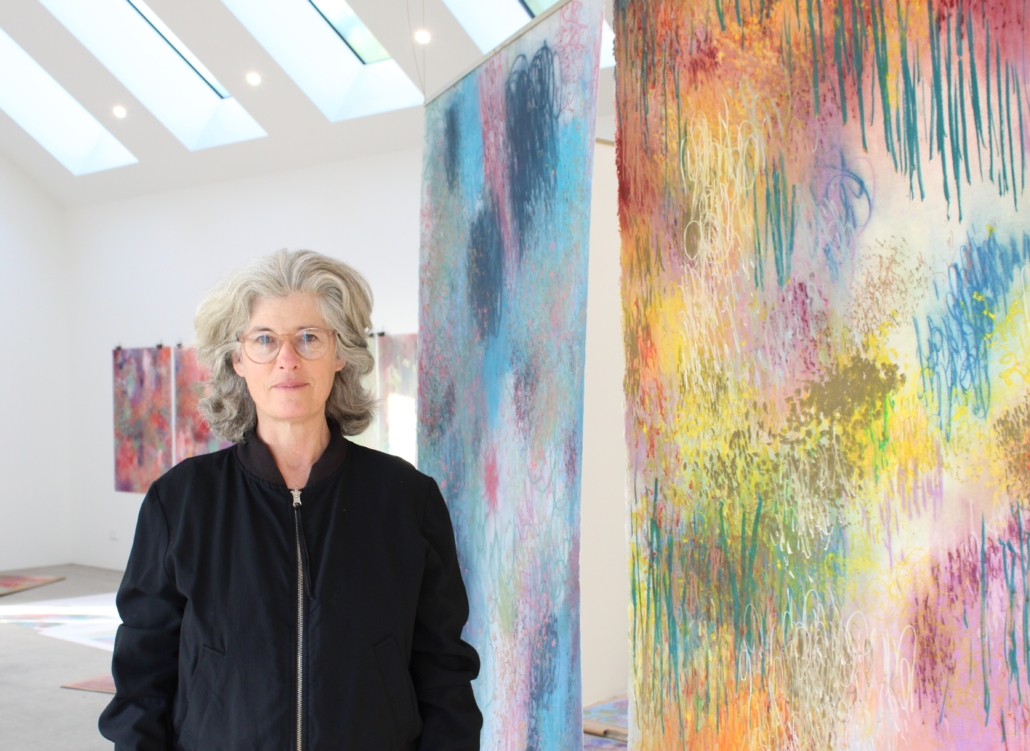
ABOVE: Sarah in her studio at Maunga Kereru, 2023

Youโ€™ve had quite an impact in the regenerative urban farming community. How did For the Love of Bees and Earthworkers come to be?

In 2014, I worked on a collaborative artwork called โ€˜The Parkโ€™, which aimed to bring bees into the city and encourage people to engage with their local food sources. Through this project, I connected with Daniel Schuurman, who introduced me to the idea of using fungi to improve plant health.

I realised that while art could bring attention to environmental issues, it was through practical action that real change could be made. This led to the creation of For the Love of Bees, a project focused on reimagining urban environments as safe spaces for bees. We wanted to build a community that would prioritise biology-first regeneration horticulture. Over the years, that vision grew into Earthworkers, an educational platform designed to equip people with the skills they need to regenerate the land and grow food sustainably.

To date, over 200 people have graduated from Earthworkers, many of whom are now working professionally in the sector, spreading the knowledge theyโ€™ve gained through workshops and projects of their own.

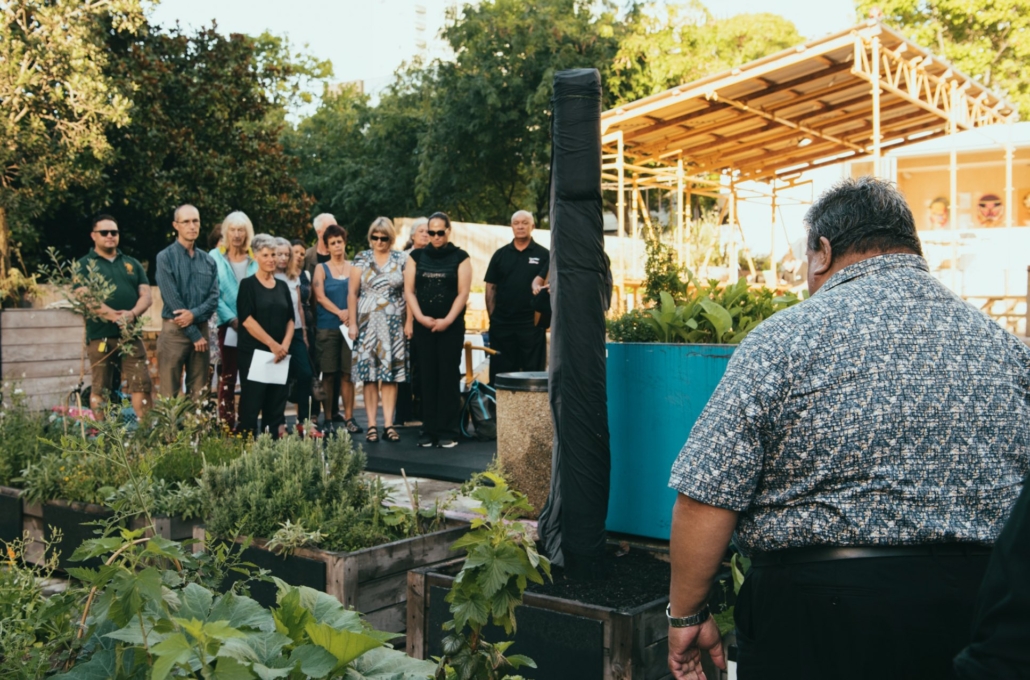
ABOVE: Pลwhiri for the Rongoฤ gardens at Wellesley St, central Auckland, pre OMG (2017)
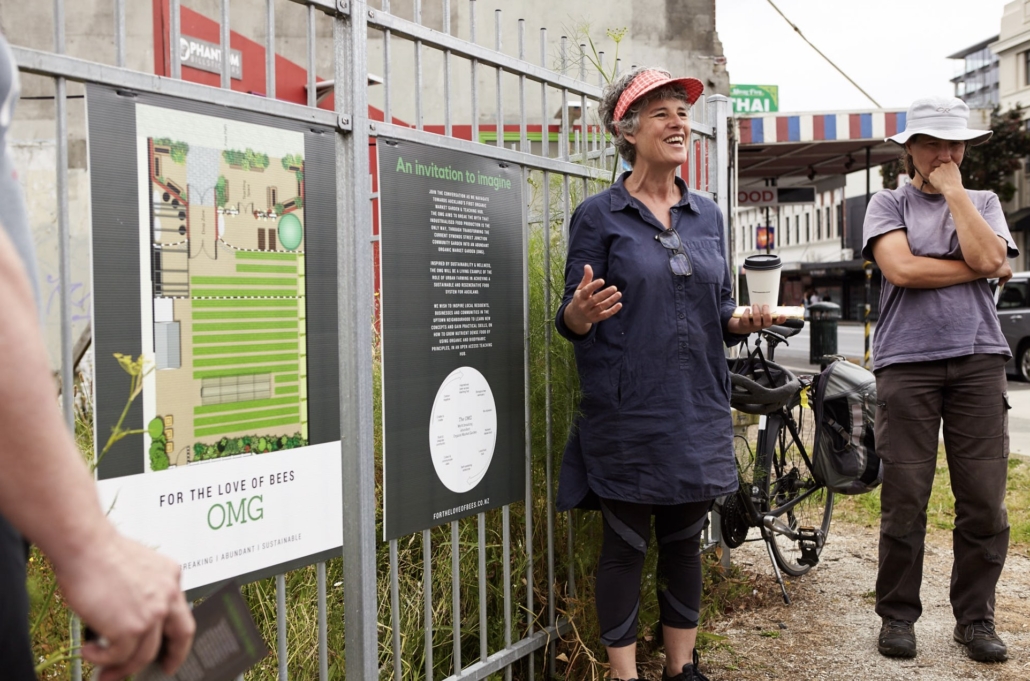
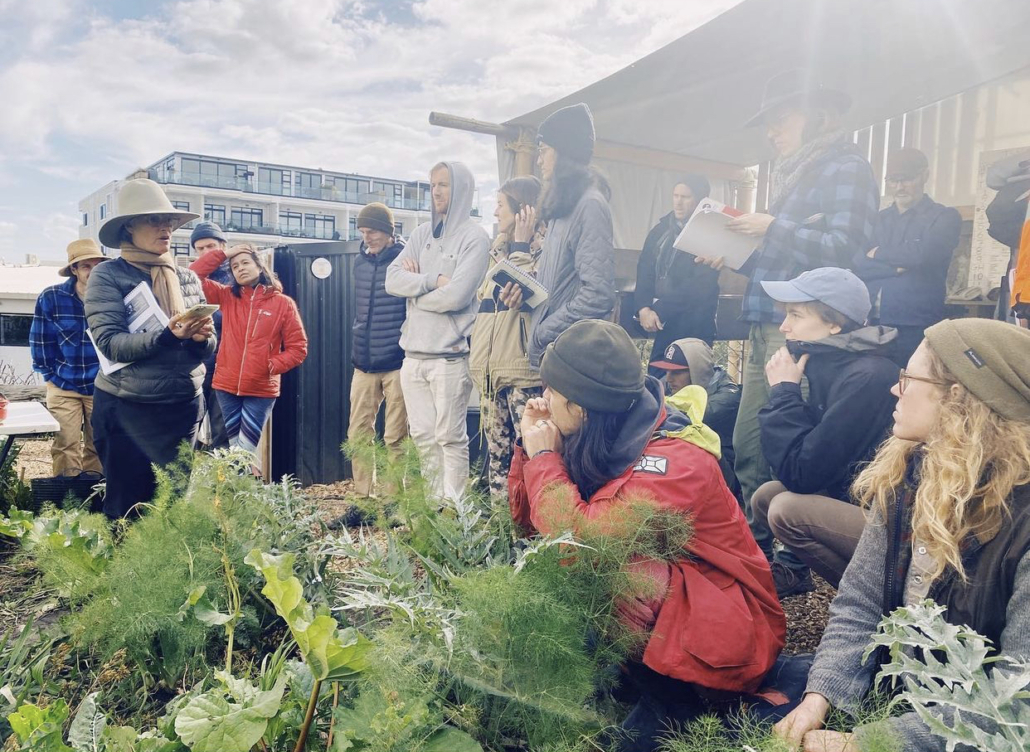
ABOVE: Sarah (at left, wearing a hat) with Earthworkers participants at OMG (Organic Market Garden) in 2021

What led you to focus on education and mentorship in the agricultural sector?

Iโ€™ve always believed in learning from those who are actually doing the work. Thereโ€™s so much theory out there, but hands-on experience makes the difference. After taking various courses and learning from experts like Graham Sait and Jodi Roebuck, I realised that no one was offering an educational pathway that combined learning with ongoing mentorship.

When youโ€™re starting out in regenerative farming, so many questions arise in the field. Without proper support, itโ€™s easy to fall back on old habits or resort to quick fixes โ€“ like pesticides or even organic fertilisers that may not always benefit the ecosystem as a whole. Thatโ€™s why we integrated post-course mentoring into Earthworkers Hort 101.

The idea is that students donโ€™t just leave with knowledge; they have a community to lean on as they continue to learn and grow. The mentorship component ensures that they implement the practices and make decisions that prioritise soil healthโ€”the foundation of any regenerative system.

ABOVE: Left – Sarah Smuts-Kennedy at Maunga Kereru, which she describes as a syntropic research gardening project.
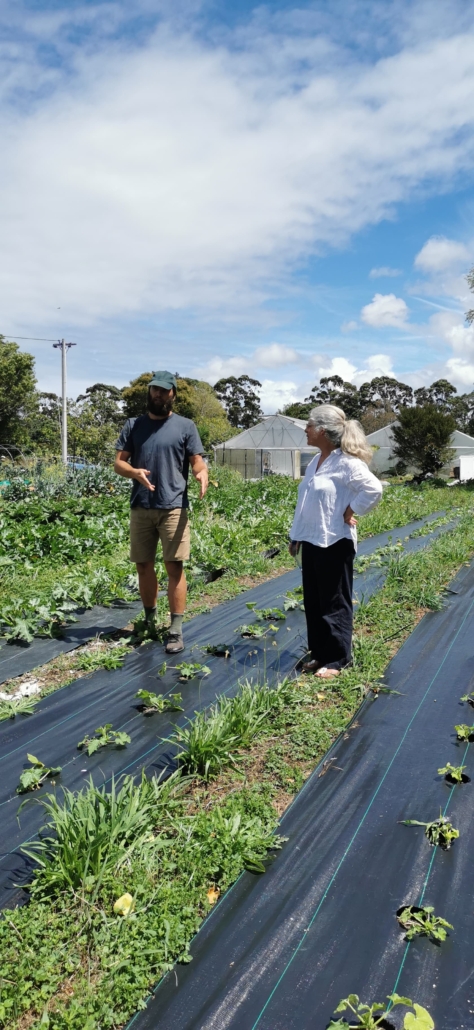
Right – Sarah teaching at an event at Solstice Organics, Whenuapai, organised by OrganicFarmNZ in February 2025

What makes Earthworkers Hort 101 different from other agricultural courses?

Our course is built around a biology-first approach to regenerative farming. We focus on soil remediation and fostering healthy ecosystems as the foundation for sustainable food production. Biology-first means prioritising the health of the biological engine of the soil, which leads to healthier plants and greater economic resilience for growers.

But itโ€™s not just about theory โ€“ itโ€™s about learning through doing. Our five-day intensive course is split between a deep dive into soil science in the classroom, and hands-on fieldwork. We teach everything from the microbial world and mineral cycles to soil testing and plant health monitoring. In the afternoons, we take these concepts into real-world settings โ€“ farms, community gardens, or home gardens โ€“ where students see regenerative systems in action. We teach on model farms that actively use the principles we promote, because seeing is believing. We teach people to investigate their own siteโ€™s condition and only make the amendments it needs, with a less-is-more approach.

Most importantly, after the course ends, we donโ€™t just send students on their way โ€“ we provide ongoing mentorship. Our alumni network has become an incredible resource, with experienced graduates mentoring new students and sharing their knowledge. This sense of community is one of the most valuable aspects of the programme.

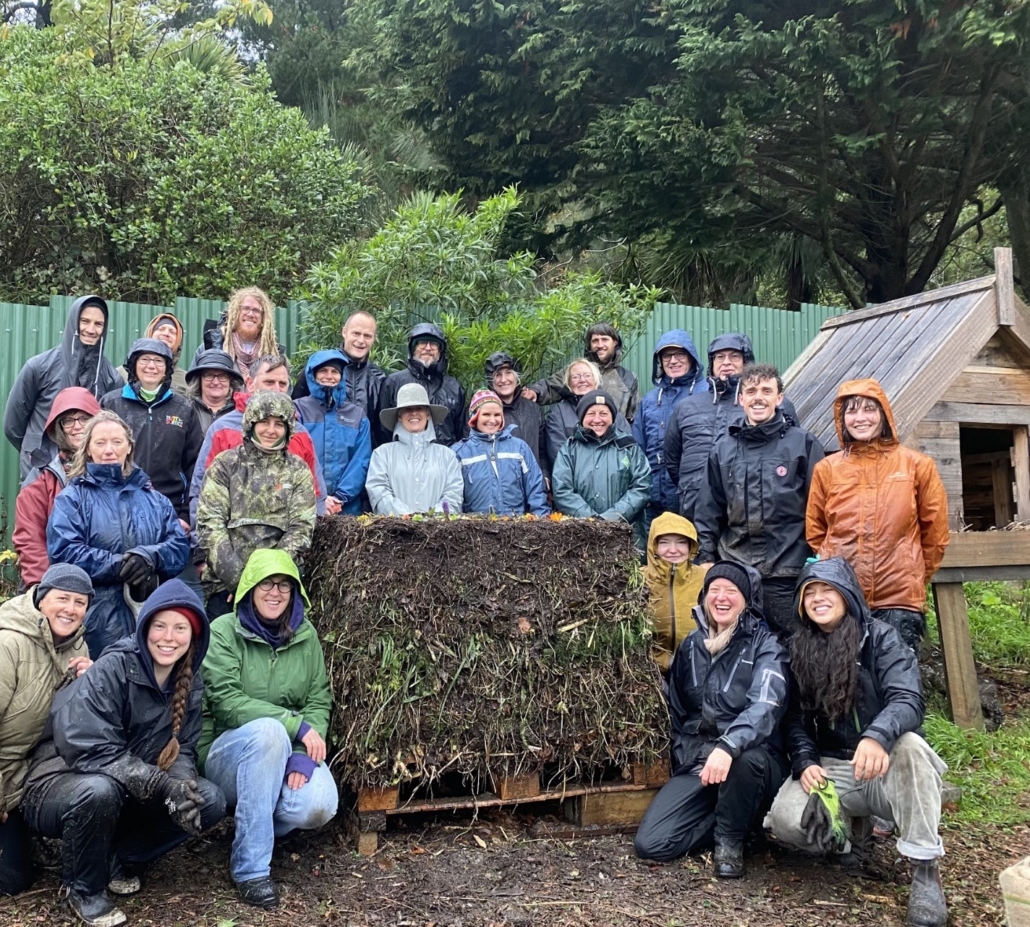
ABOVE: Sarah (centre in pale grey) and participants in Earthworkers 101 at Kaicycle, Pลneke Wellington, 2021

โ€œTrue learning happens in the field, side by side, hands in the soil.โ€ โ€“ Sarah Smuts-Kennedy

Why do you believe that food biology-first regenerative production is key to addressing environmental challenges?

Biology-first regenerative agriculture is one of the most powerful tools we have to combat biodiversity loss and heal farm ecosystems. It restores soil health, which leads to better food production and resilience against climate extremes.

We see the results firsthand โ€“ year after year, crops thrive, yields improve, and produce lasts longer due to higher nutrient density. This means healthier food for consumers and fewer pesticide residues, which is a growing concern for many. Farmers want to grow better, but they face barriers: time, money, and the risk of change. Thatโ€™s why education and support are critical. Weโ€™re now seeing larger-scale growers becoming interested in regenerative techniques, and we believe itโ€™s important to offer a locally supported pathway that harnesses the knowledge of their own communities.

ABOVE: Sarah teaching her neighbour from Kauri Ora, February 2025

Whatโ€™s next for you and For the Love of Bees?

Separating the farm (OMG) from the Earthworkers educational pathway was a tough decision, but itโ€™s allowed us to focus fully on expanding Earthworkers. We want to develop resources to help people learn how to regenerate their land, no matter where they are, and support our alumni who are expressing a desire to train to be regenerative agronomists like Daniel.

I get excited seeing how our alumni continue to innovate and inspire others. Weโ€™ve built a strong community, and by supporting each other, we can keep growing this movement. Ultimately, my goal is to keep learning, keep teaching, and keep building a world where people are more connected to their land and food. If we can do that, weโ€™ll be well on our way to healing both our landscapes and our communities.

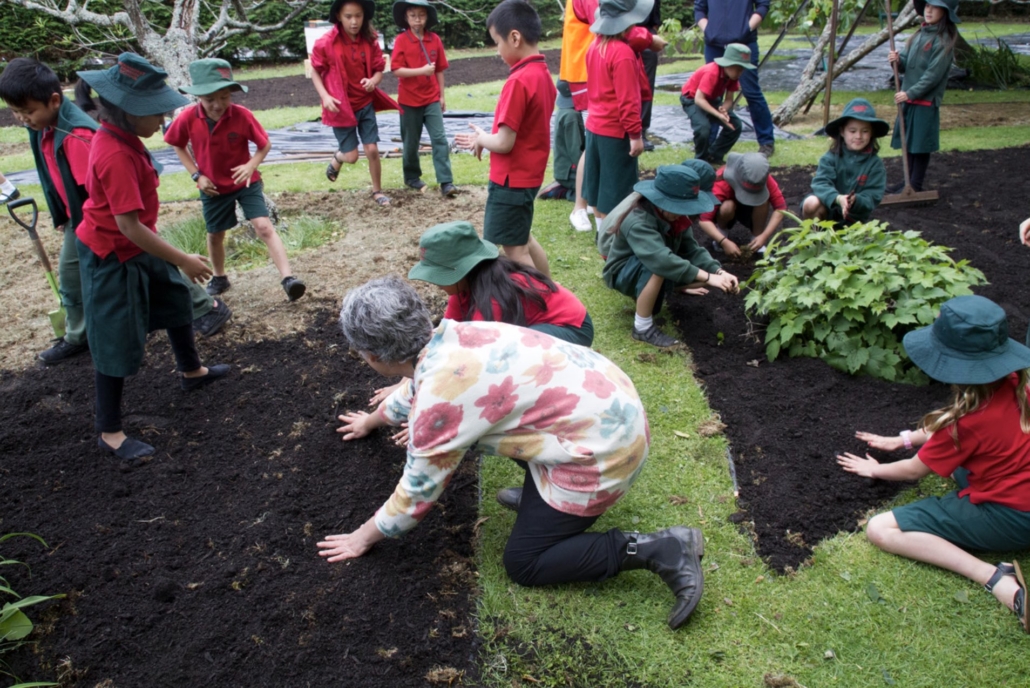
ABOVE: Sarah with school children in Auckland at Highwic Historical House. This was a pasture painting project, in collaboration with Auckland Council, Enviroschools, Parnell Rotary, and Newmarket and Parnell primary schools.

Any final thoughts on teaching and learning?

It has always been important to me that teachers practice what they teach. While I am not a commercial grower, I have spent the last 15 years deeply immersed in regenerative growing. Maunga Kereru, my 10-acre property just 45 minutes north of Auckland, has served as both sanctuary and laboratoryโ€”a place where mistakes have become lessons, and experiments have shaped my evolving understanding of ecosystems.

One of my greatest teachers has been the land itselfโ€”specifically, a 400-square-metre food forest that I regenerated from an engineered, compacted clay driveway. Over 15 years, this hard clay has transformed into the heart of food production at Maunga Kereru, providing evidence that even the most degraded soils can be revived through thoughtful interventions and design.

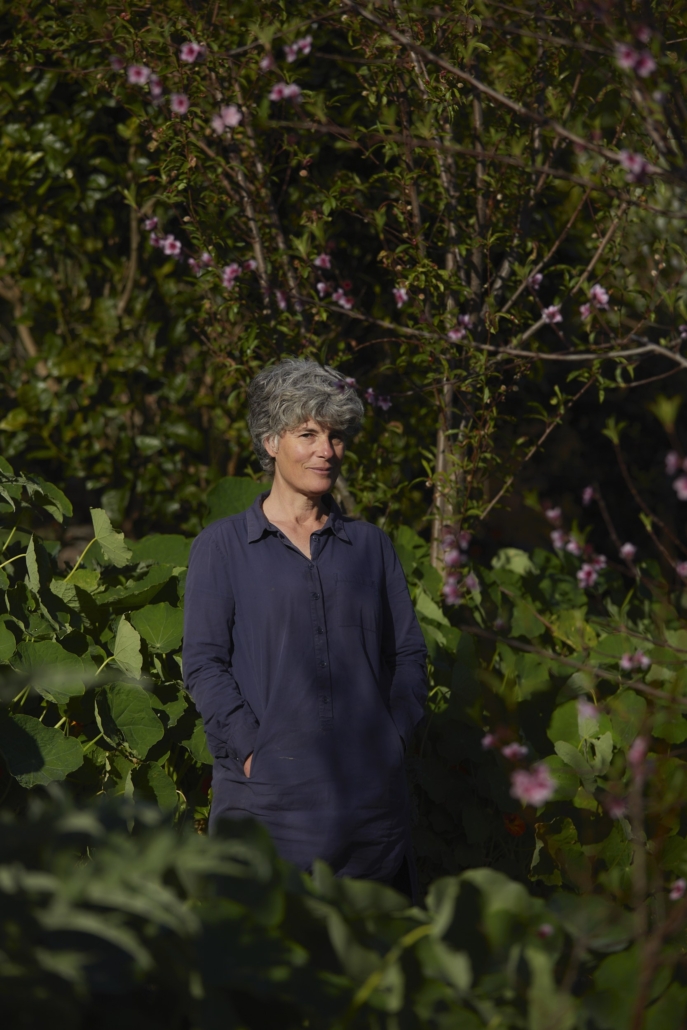
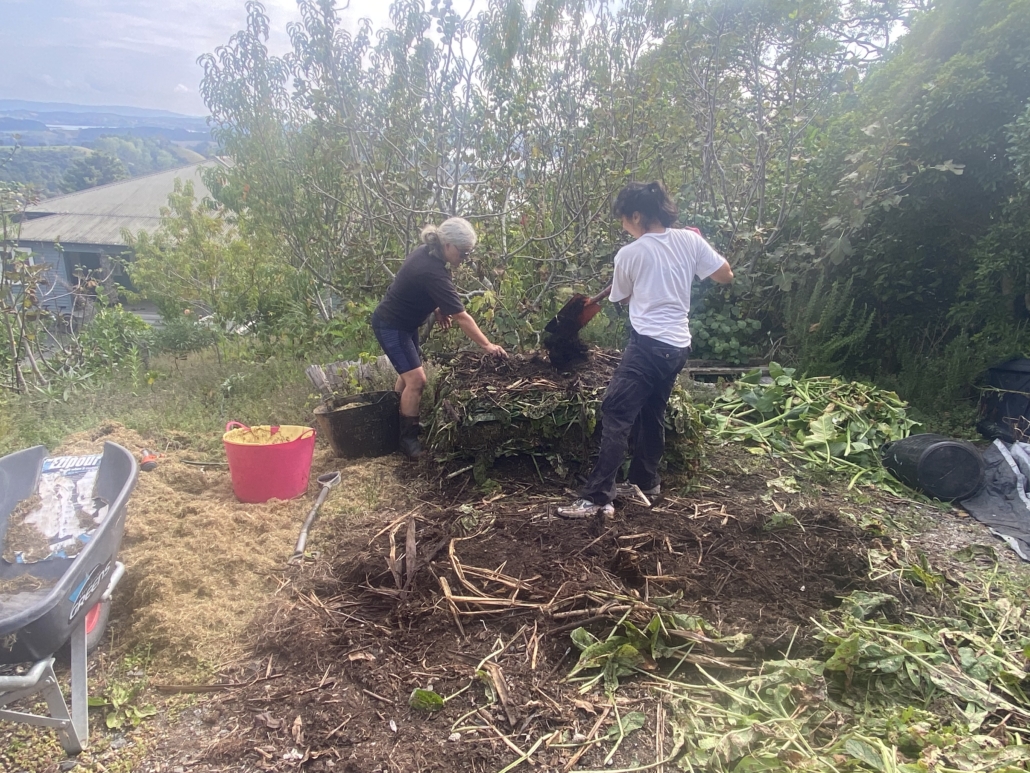
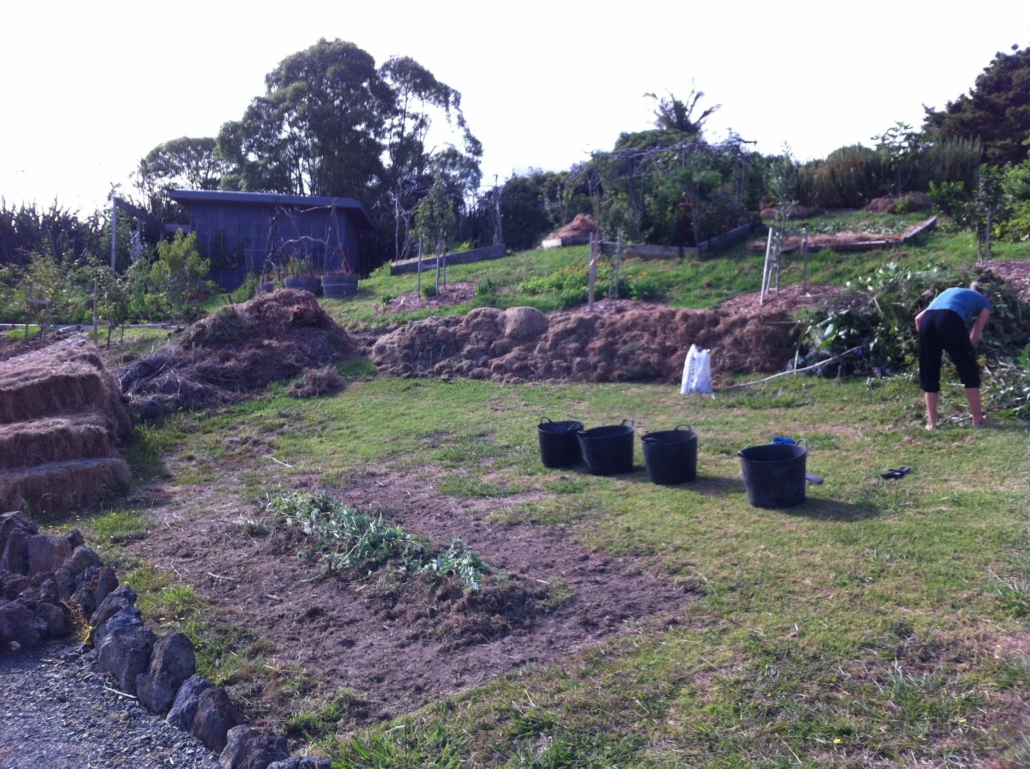
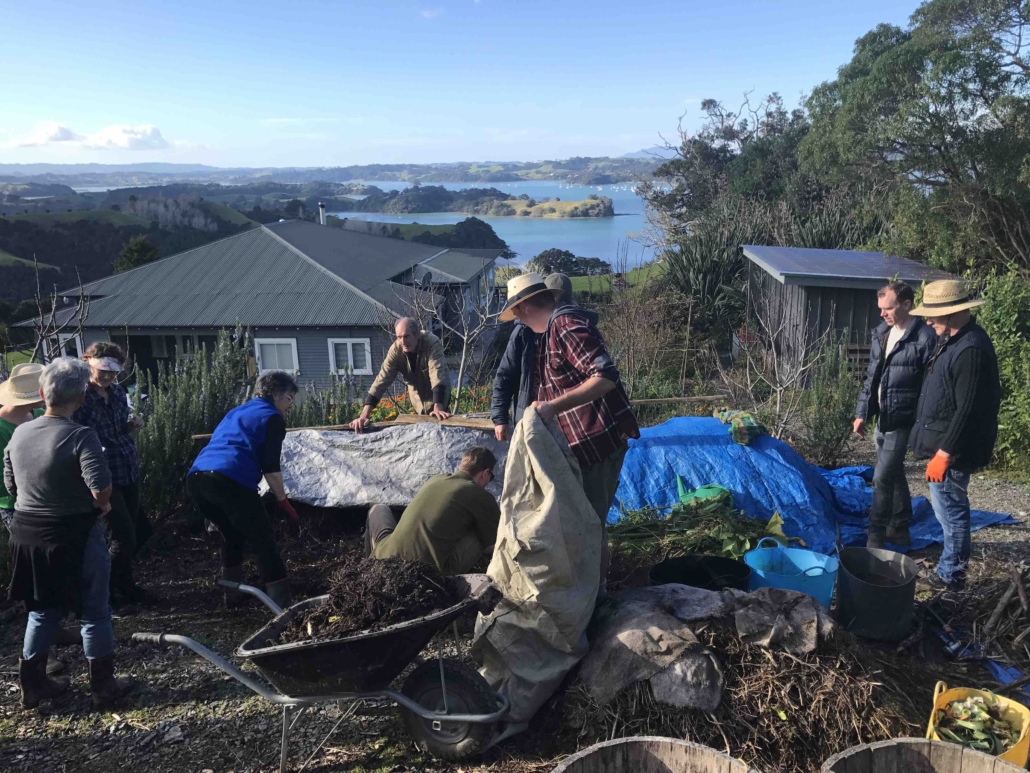
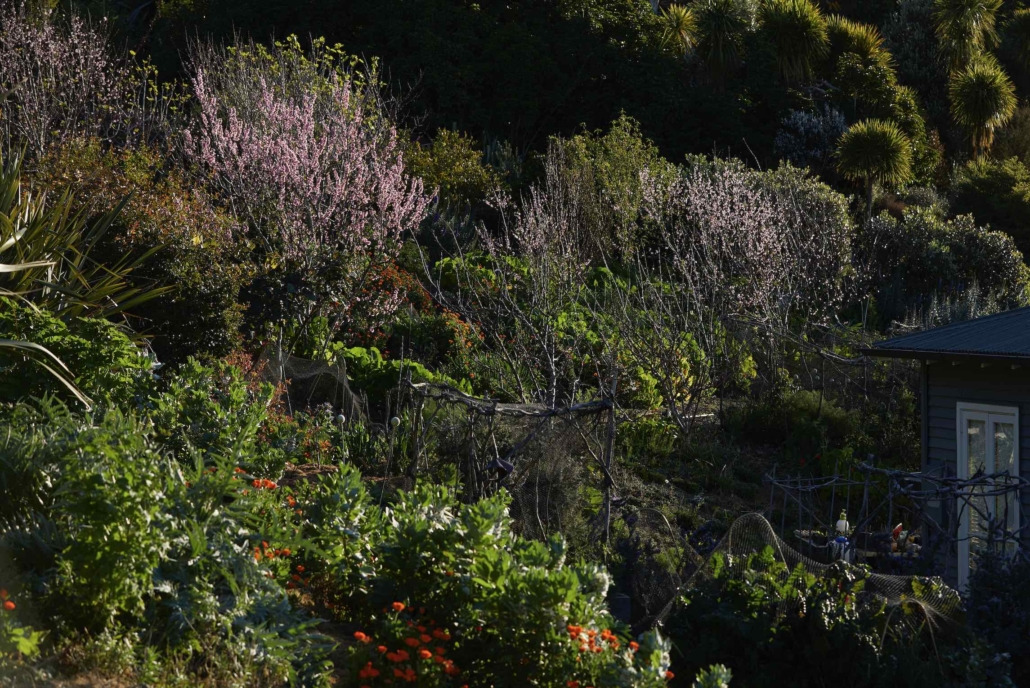
ABOVE: Photos from Sarah’s land, Maunga Kereru, Mahurangi West. Left to right: establishing compost, working bee, spring blossom amidst lush growth

I began learning how to teach hereโ€”first with my WWOOFers, then through workshops with the biodynamic community, and later with the FTLOB and OMG communities. For the past eight years, I concentrated my teaching at the FTLOB OMG farm, but my systems were always tested and refined here at home. More recently, Iโ€™ve returned to teaching at Maunga Kereru, where students can see permaculture, biodynamic, syntropic, raised beds, and traditional horticulture integrated side by side.

My knowledge is valuable, but I wouldnโ€™t feel confident teaching Earthworkers Hort 101 without Danielโ€™s 40-plus years of experience as a grower and agronomist leading us. I am still a student, and each time I participate in an Earthworkers course, I integrate more complex ideas into my knowledge base. As Daniel always says, we are all learning together.

We invite the growers who host Earthworkers Hort 101 on their farms to run modules, and we encourage students to bring their own experiences into the conversation.

After all, true learning happens in the field, side by side, hands in the soil.

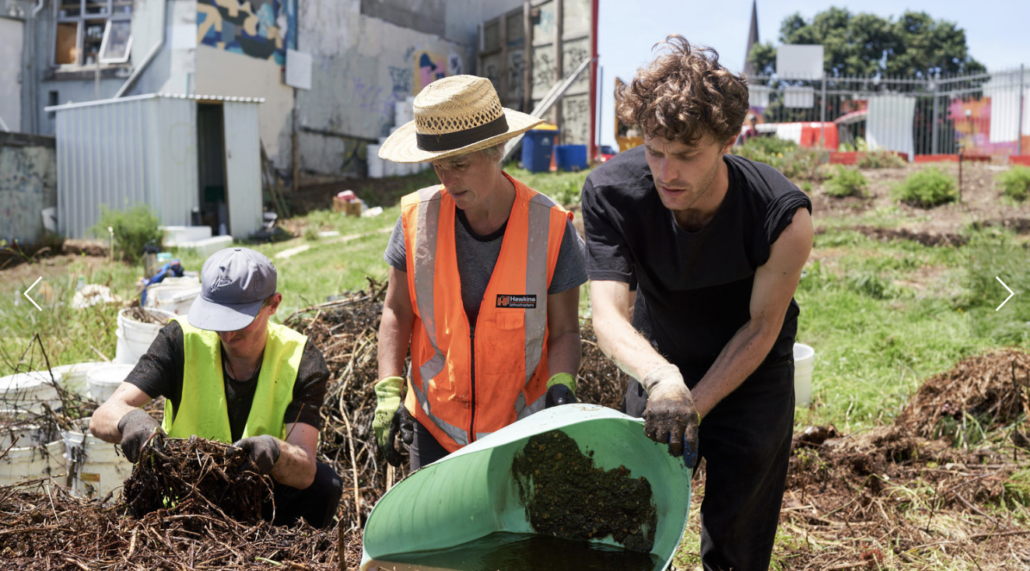
ABOVE: Levi Brinsdon-Hall, Sarah Smuts-Kennedy and friend at the first working bee at OMG, 2018. Photo: Aaron McLean

Earthworkers Hort 101

In 2025 we at the FTLOB organisation are dedicating our focus on creating an educational pathway that will allow growers to journey with us from beginners to agronomists.

The Earthworkers Hort 101 March course in Kirikiriroa/Hamilton was a huge success. 

With two more courses this year, growers will be able to advance their training and benefit from the ongoing post-course mentoring programme.

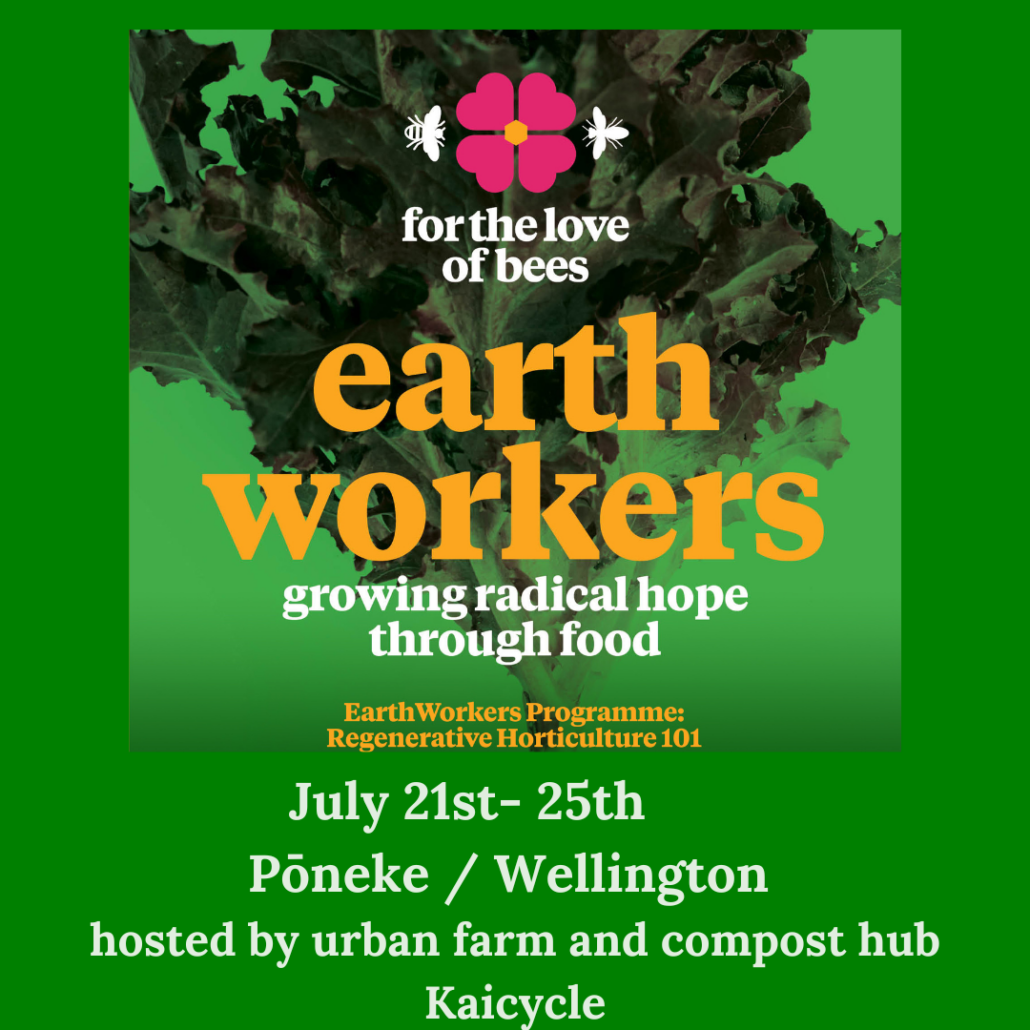
COMING UP: Earthworkers Hort 101, 21โ€“25 July 2025, Pลneke/Wellington

We are thrilled to be returning to this urban farm and community compost hub that hosted us four years ago, and being able to contribute to the regionโ€™s growers biology-first regenerative methods.

Find out more andย ENROL HEREย by 7 July 2025, 9pm


https://organicnz.org.nz/wp-content/uploads/sites/2/2025/02/75A3327SarahSmutsKennedy.jpg 2500 1667 Staff Writer https://organicnz.org.nz/wp-content/uploads/sites/2/2024/09/OrganicNZ-2024-Masthead.png Staff Writer2025-02-25 13:24:442025-04-10 16:32:55Cultivating Change

Categories

  • All Articles
  • News
  • Features
  • Gardening
  • Health and Food
  • Farming and Horticulture
  • Building and Technology
  • Free Online

Latest Articles

  • Kumera slips - moon calendar 2026
    Moon Calendar September-October 2026
  • Lettuces and watering can in home garden
    Worm juice and soil fungi: why compost alone isnโ€™t enough for juicy lettuce
  • Mandarins in a bowl
    Mandarins: Winter vitamin boost
  • 2026 Example calendar covers
    2027 Calendars
  • Fantail on tree branch
    Parable of the paddock edge
  • Green kiwifruit
    Kiwifruit: Treasures in red, gold and green
  • matariki
    Moon Calendar July-August 2026
  • runny honey dripping from spurtle into jar
    The Queen Bee of ลŒhope
  • Box of aubergines (eggplants)
    Aubergines
  • Seed saving with Monique
    Moon Calendar May-June 2026
Soil & Health Association of NZ Established 1941

Proudly published by the Soil & Health Association NZ

  • About us
  • Contact us
  • Help us
  • Sign up to the Newsletter
ยฉ Copyright OrganicNZ | Soil and Health Association NZ.
  • Link to Facebook
  • Link to Instagram
  • Link to LinkedIn
  • Privacy Policy
  • Editorial Policy
Scroll to top Scroll to top Scroll to top