
• Link to Facebook
  • Link to Instagram
  • Link to LinkedIn
Reset member access or visit Soil & Health NZ
Organic NZ
  • Articles
    • Features
    • Gardening
    • Health and Food
    • Farming and Horticulture
    • Building and Technology
    • News
  • Competitions
  • Donate
  • Login
  • Join Us
  • Click to open the search input field Click to open the search input field Search
  • Menu Menu

Tag Archive for: vegetables

Posts

A life of plants, food and foraging

28 Sep 26/in Features, Free Online, Gardening, Health and Food, Magazine Articles

Anna Valentine and The Veggie Tree Cook School 

By Asha Andersen 

We hope you enjoy this free article from OrganicNZ.  Join us to access more, exclusive member-only content

Plant-based chef, cookbook author, teacher, forager and passionate gardener Anna Valentine has spent much of her life discovering and sharing the goodness, flavour and inspiration that can be found in the plant kingdom.

She shares some of her knowledge, wisdom and passion for plants and delicious food with Soil & Health and is collaborating on a new series of short shows about foraging, cooking and the benefits of plants and seasonal eating.  
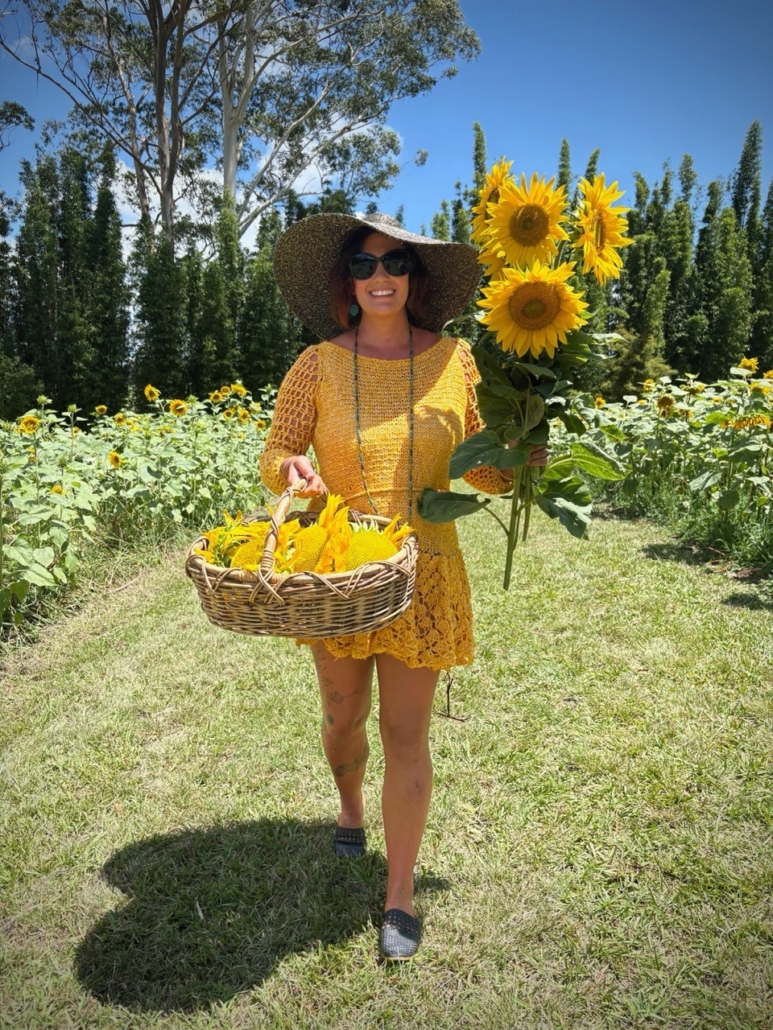
The Veggie Tree Cook School 

Based in the small village of Kaeo in Northland, Anna runs The Veggie Tree, where she holds regular cook schools and workshops from her beautiful home kitchen, as well as providing plant-based catering and consultation. Her work is grounded in a simple idea that good food can be delicious, nourishing, affordable and connected to the seasons and the natural world. 

Iโ€™ve been to a few of Annaโ€™s cooking classes over the years and asked her to cater a couple of our local events, and I am in awe of her passion for cooking food that everybody enjoys. Food thatโ€™s not just simple and healthy, but is full of surprisingly bold flavours and fresh whole ingredients. I love that she doesnโ€™t just teach people how to cook great food, she teaches them how to see plants differently and get excited by what plants have to offer us.  

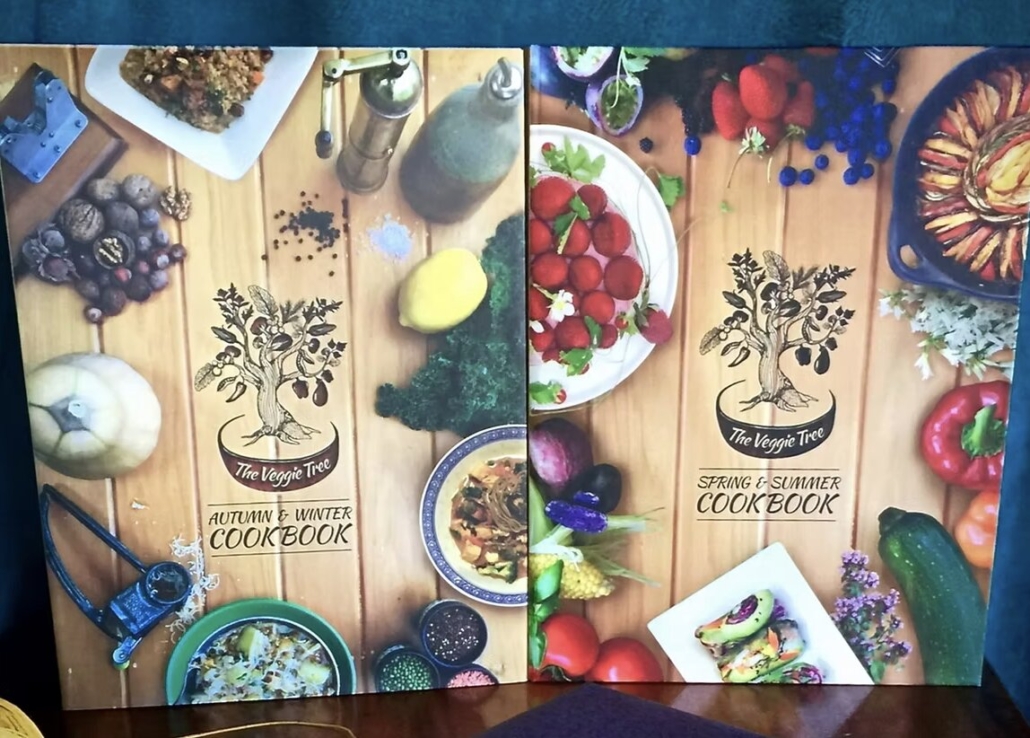
Anna has authored, photographed and self-published two wonderful seasonal plant-based cookbooks (Autumn & Winter, Spring & Summer), followed by her third book, Abundance, which was published in 2023. All are fantastic cookbooks that show how varied and delicious plant-based food can be. Sheโ€™s also been a regular contributor to Vegetarian Living NZ magazine, offering recipes and tips for plant-based cooking. 

Eating seasonally 

A seasonal approach is central to Annaโ€™s cooking. Rather than relying on the same ingredients throughout the year, seasonal eating encourages us to notice what is growing around us and make the most of it. That can mean eating abundant summer vegetables fresh from the garden, preserving when there is more produce than can be eaten, and turning winter vegetables and stored foods into nourishing meals. 

It is also about making the most of what we have. Anna believes eating organically and sustainably doesnโ€™t have to mean spending more money. Learning to use ingredients efficiently, cooking from scratch, preserving food and reducing waste can all make a huge difference. 

A garden full of possibilities 
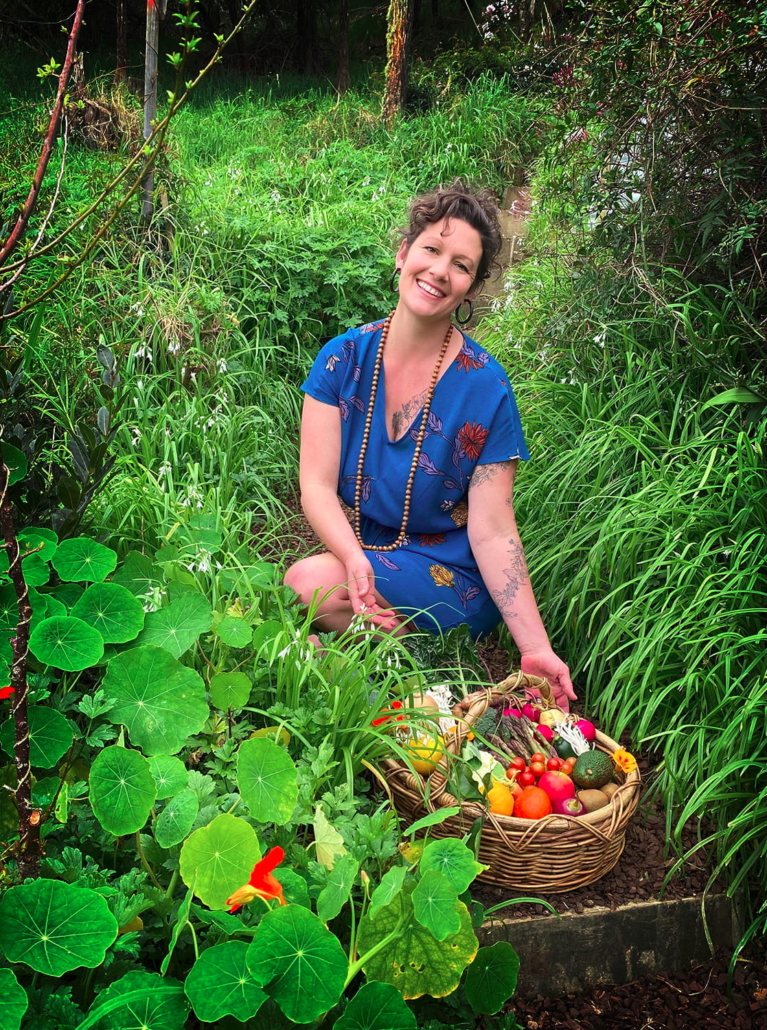
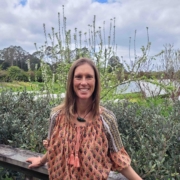
Anna Valentine from the Veggie Tree Cook School

Annaโ€™s garden is another important part of her work. Her wild organic garden supports her family while also providing an educational setting where plants are encouraged to grow naturally and complete their life cycles. She is fascinated by the relationships between plants, soil, biodiversity, food and human health, and weaves this through her teaching. 

This has led Anna well beyond conventional vegetable gardening and into the world of foraging, edible weeds, natural medicine, herbalism and working with wild foods. She is an avid forager and advocate for edible weeds โ€“ encouraging people to look at plants that are often dismissed as unwanted, and discover their potential instead. 

A plant growing spontaneously in the garden or roadside may not simply be a weed. It may be food, medicine, habitat or part of a much larger ecological relationship. Understanding plants in this way changes our relationship with the landscape around us.

Annaโ€™s interest in plants extends deeply into nutrition and wellbeing. She extensively researches food, ingredients, nutrition, naturopathy, herbalism, biodiversity, permaculture and organics. 

Her message is not about complicated diets or expensive ingredients. Itโ€™s about learning how to eat more real, whole foods and discovering how enjoyable plant-based cooking can be. 

This is particularly important to Anna when working with children. She wants young people to experience food as something they can participate in โ€“ something they can grow, touch, prepare and enjoy. Her classes encourage children to get into the kitchen, make a mess, try something new and discover that vegetables and other plant foods can be exciting. 

Upcoming cooking classes 

For those wanting to take the next step, Anna runs group in-person and online cook schools and workshops from her home in Kaeo, sharing the knowledge she has accumulated over decades of cooking and working with plants. Her classes offer an opportunity to learn practical skills while discovering new ingredients, recipes, and ways of thinking about food. 

Whether it is learning how to cook more plant-based meals, making better use of seasonal produce, discovering edible plants growing around us, or simply becoming more confident in the kitchen, Anna’s approach is about empowerment. 
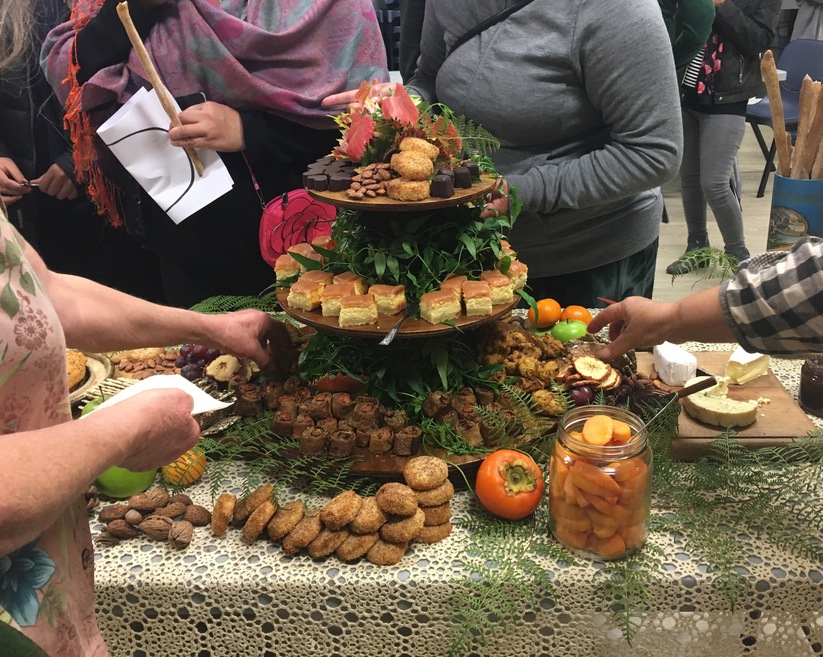
You can check out her cookbooks and all upcoming classes on The Veggie Tree website.  

Classes coming up in October and November include the Asian Banquet with Onion Weed, Eat a Rainbow โ€“ Kids Foraging and Feast, Seaweed Forage and Feast, and Wild Mediterranean Mezze. While these classes are in Annaโ€™s home kitchen in Kaeo, there is also a new offering for people to join online classes too.  

The online Plant Based 101 happening in late November offers the opportunity to people all over the country to join from the comfort of their own home or kitchen, and work with Anna to cook up some sure-to-be favourites. โ€œThe online class might feel a bit weird and daunting, but let me assure you once we get ourselves set up it really is like being here with me at The Veggie Tree HQ but in the comfort of your own kitchen,โ€ says Anna.  

โ€œWe will be making a Deluxe Buddha Bowl, which is the perfect prep-your-lunch-in-advance dish. An enhanced Chia Pudding with Cacao Crisp, which can be savoured at any time of the day, guilt-free and nutrient-dense.  

โ€œWe go through things step by step and thereโ€™s plenty of time for questions and answers, on-the-spot guidance and troubleshooting, plus you get to eat everything you make!โ€  

If you are starting your plant-based journey, or if you are looking to upskill or simply add more healthy plant-based recipes to your diet, the Plant Based 101 could be for you.  

Videos in collaboration with Soil & Health 

A few months ago I asked Anna if she would be interested in creating a few short videos with Soil & Health for our new YouTube channel, exploring foraging, seasonal eating, plant-based cooking and the many ways plants can nourish both people and planet. She was keen to team up, so we got together at her place in Kaeo and filmed some videos of her foraging in the garden, sharing the benefits of wild edible plants and helpful tips on identifying them.  

After foraging around 10 different herby weedy edible greens, we headed into the kitchen where Anna whipped up her Green Goddess Dressing for a divine pasta lunch which we both got to enjoy.  

Shows premiere this week  

The first episodes will be released on the Soil & Health channel this week, with  

  • Episode 1 Foraging in the Garden Part 1 & 2 premieres on Monday 28 September 2026 at 7pm 
  • Episode 2 Green Goddess Dressing in the Kitchen premieres on Saturday 3 October 2026 at 7pm.  
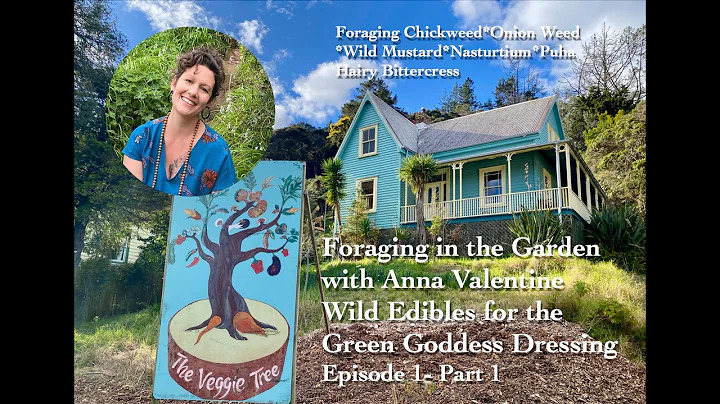
After they premiere, the shows will be up on the Soil & Health channel for you to watch anytime. 

If you enjoy them, please support the channel with a like, subscribe and share and head on over to Annaโ€™s own channel where she has lots of other great plant-based recipes to share. 

Soil & Health YouTube channel 

  • Anna Valentine โ€“ Episode 1: Foraging in the Garden, part 1 (16 mins) 
  • Anna Valentine โ€“ Episode 2: Foraging in the Garden, part 2 (12 minย 
  • Anna Valentine โ€“ Episode 2: Green Goddess Sauce & Dressing (16 mins) 

Anna Valentineโ€™s YouTube Channel 

The Veggie Tree website where you can find seasonal cookbooks, workshops, cook school classes, and more. 
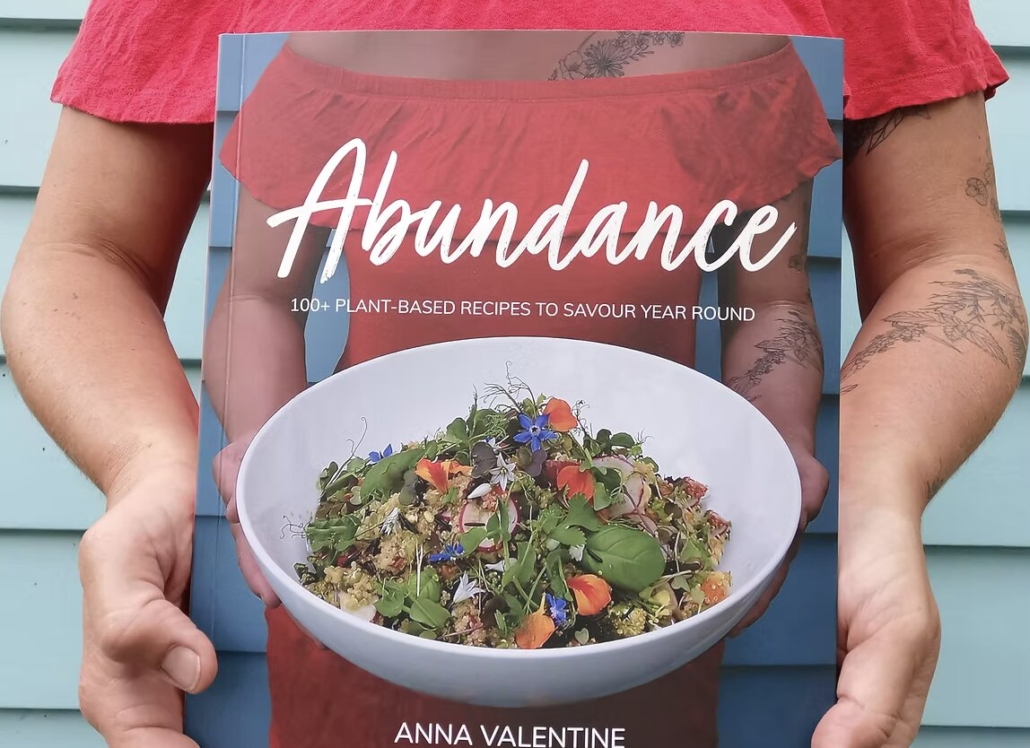
Abundance cookbook
The Veggie Tree seasonal cookbooks

Author bio

Asha Andersen is a Soil & Health National Council member and has led work on developing Soil &ย Healthโ€™s YouTube channel, including online events for Organic Week 2026.ย 


https://organicnz.org.nz/wp-content/uploads/sites/2/2026/09/Anna-Valentine-cropped.jpeg 615 1117 membership https://organicnz.org.nz/wp-content/uploads/sites/2/2024/09/OrganicNZ-2024-Masthead.png membership2026-09-28 17:59:342026-09-28 17:59:36A life of plants, food and foraging

Loving soil, but also learning soil

19 Dec 25/in Education and Knowledge, Farming and Horticulture, Features, Free Online, Gardening, Magazine Articles

By Jenny Lux

This article was first published by Earthworkers and is republished here with their kind permission.

We hope you enjoy this free article from OrganicNZ.  Join us to access more, exclusive member-only content

I have always been a details-oriented sort of person. As a child I remember planting flowers with my Mum, learning all of their names and pressing them in a flower press. I later I revelled in learning how to identify and use the three names of all our native vascular flora (Mฤori, English and scientific). My first career was in plant ecology, after I did a Masters in that area looking at the relationships between soil and the regeneration of kauri forest after fire.

Moving between the details and the big picture, I became seriously concerned about climate change around the time of my late twenties. Not just mildly concerned as I had been in my youth, but in-your-face, losing-sleep, suffering-existential-fear-and-anxiety level of concern.

Of course, this had coincided with finding a husband who was a big-picture thinker and having two wonderful baby boys. I did not end up giving up at that point, but I decided that when I got back to paid work, I would be dedicating my time to a career in climate action.

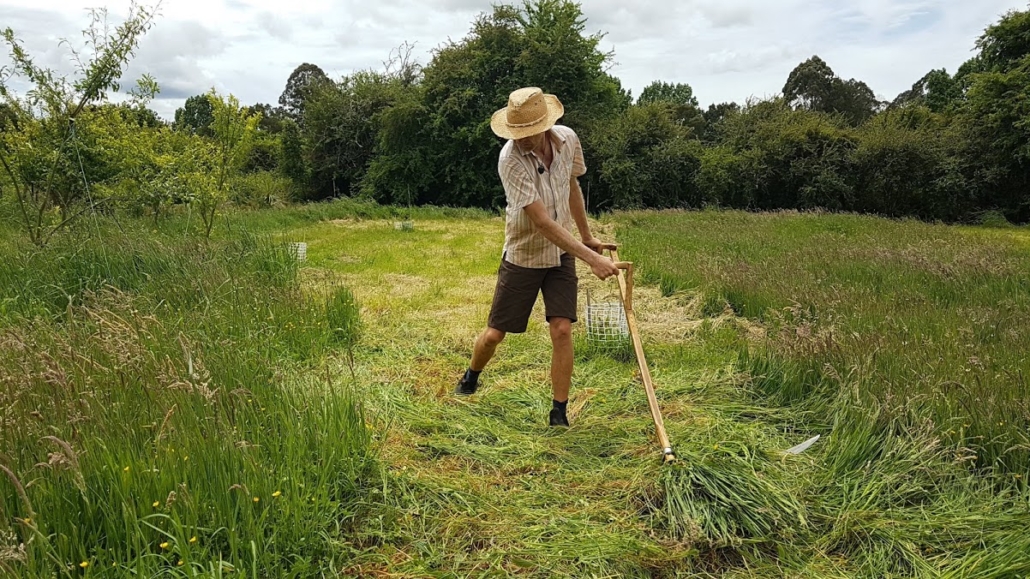
Above: Richard scything grass

Growing vegetables

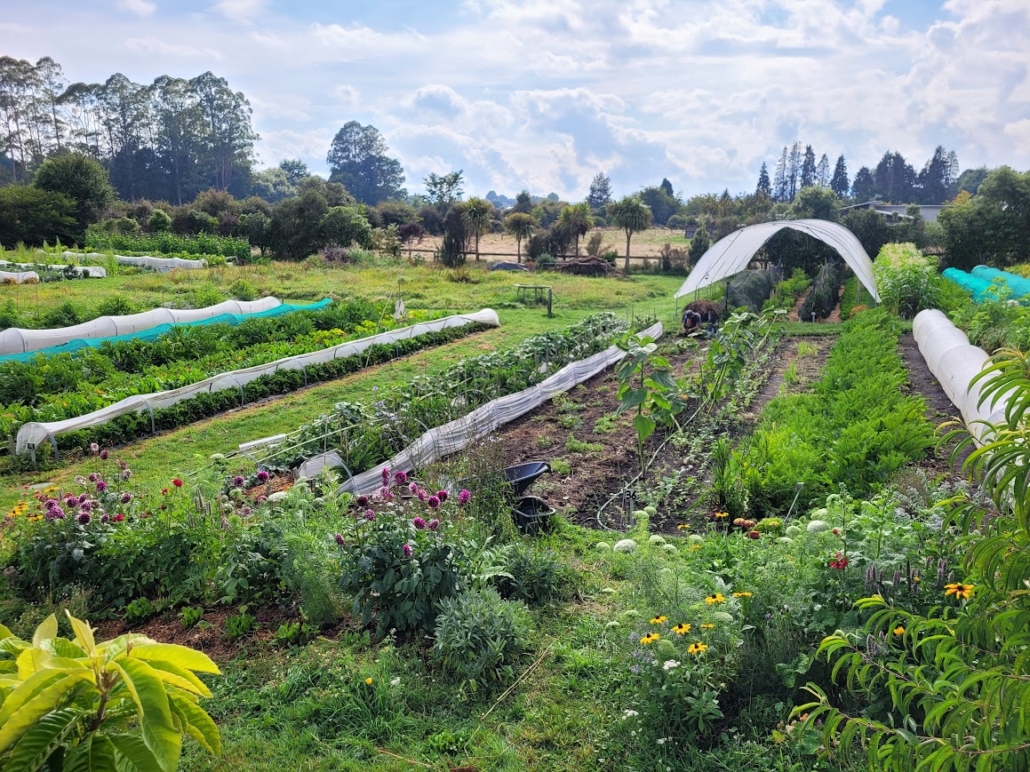
I moved from field-based plant ecology work to growing and selling organic vegetables, as a home-based profession that could keep me close to our kids and our food. Richard helped me establish Lux Organics, a small-scale organic market garden on the outskirts of Rotorua. He initially kept his day job as an ecologist, but then joined me full-time in the business for three years. My parents got involved, providing a generational backbone to the business.

We grew beautiful vegetables for our community, and by the time the Covid crisis and lockdowns occurred, we were able to pivot to vege boxes, bringing them to peoplesโ€™ doors with our electric van. We started hiring seasonal staff in 2020, which meant a succession of people learning the organic growing methods with us. By 2023 we had added solar panels to our shed, powering our household, vegetable chiller and van with the sun.

This has been a journey of creating a business that minimises carbon emissions while growing food. Hand tools, electric tools and hands in the soil have been our main inputs. The productivity of our soil has been the foundation of our business (as it is for all farming) and we have strived to care for it, taking soil tests each year, and learning about every aspect of soil health along the way.

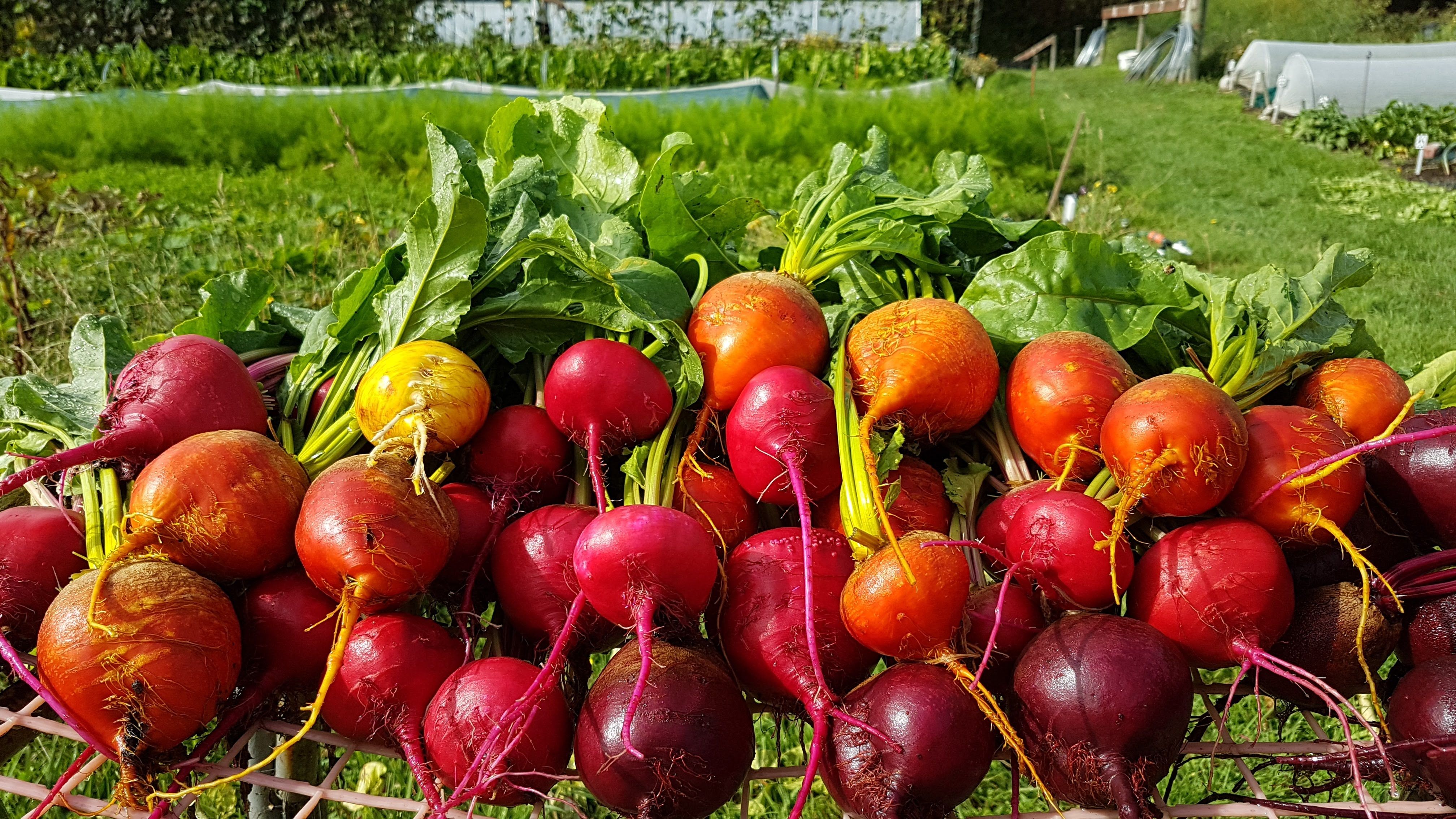
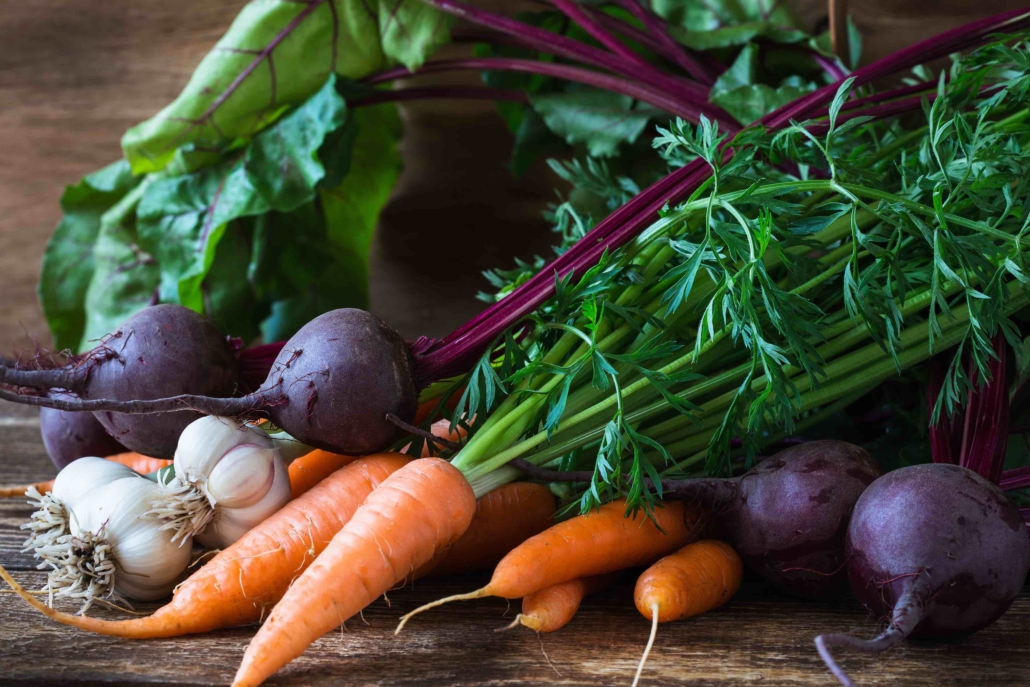
Beetroot

When you grow a crop for market, and especially when you grow over 40 of them (!), there are a lot of questions and uncertainties about how to manage the soil, what might be affecting the outcomes youโ€™re seeing, how to solve problems, and how to keep producing all through the seasons.

These veins of query are what led me to the five-day Earthworkers Regenerative Horticulture 101 course in the winter of 2021. I attended with two of my staff and I encountered a whole group of amazing people involved in different sorts of projects who were on my wavelength.

I discovered new terms which opened up my mind to the soil ecosystem in a new way. Quorum sensing, cation exchange, paramagnetism, root exudates, polycropping. I have kept in touch with the group ever since (online and in person), and this has led to multiple fertile exchanges and more farm visits, opportunities to learn and even to help others. Itโ€™s a magic human interaction!

ABOVE: Lux Organics market garden, February 2025

In recent years, with the domestic recession, business has been tough, as local people cut their organic vegetable spending. Looking at in a big picture way, itโ€™s a manifestation of how people cannot/do not make longer-term environmental and health choices when they are poor and worried about their daily survival. Our business relies only on its connection with the local food system, rather than export.

While we experienced a huge high after the Covid crisis, when people suddenly became concerned about the sustainability of their local food supply, we are now in a phase of relentless cost-cutting. Our customer base has concentrated to only those who value food produced in a way that is free from contamination, and which looks after land.

Now that I have been working in practical agroecology on my own land for over nine years, I am curious about taking my soil knowledge deeper and broader, to have a wider impact. It’s one of those cliches… the more you learn, the more you realise you don’t know, and it becomes impossible to give simple explanations any more.

I would now never say, “ah, just use compost and everything will be fine”. There’s a lot more to growing, and to soil, than most of us really, truly understand. Related Research News: why compost alone isnโ€™t enough for juicy lettuce (worm juice + mycorrhizae). My curiosity burns and I want to know which levers to pull to achieve the healthiest crops and soil. Looking again to the bigger picture, how we manage soil on our productive land is the probably the most important aspect of New Zealandโ€™s climate emissions profile.

This is why I’ve dedicated pretty much all of my market garden earnings in 2025 so far to further study and investing in my own knowledge growth.

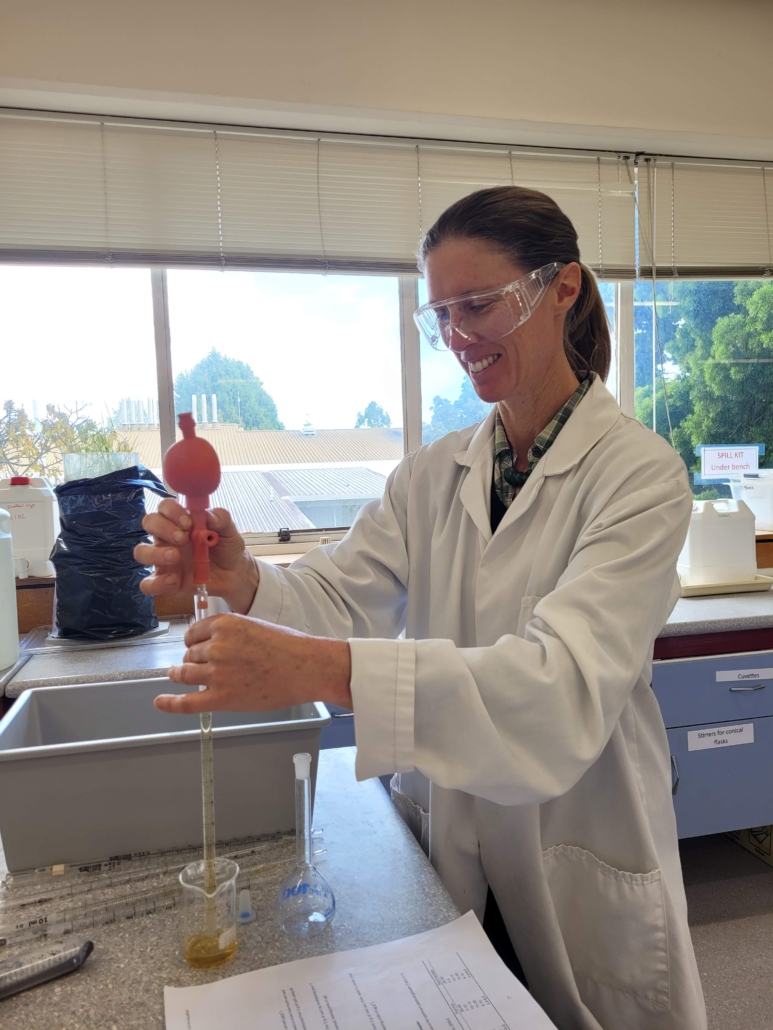
I have taken papers at the University of Waikato in soil science and hydrological management, and I have attended specialist courses by regenerative educators (Graeme Sait from Nutri-tech Solutions, and Nicole Masters from Integrity Soils).

I am building up a research library and reaching out to soil mentors for the next step in my career. I even bought a microscope from a fellow Earthworker (thank you Coral).

All of this new learning is feeding directly into the next stage of my journey โ€” growing my skills, confidence, and contribution through the Earthworkers community.

Over the next few months, Iโ€™ll be deepening my learning through the new Regenerative Horticulture 201 and Future Agronomists courses, working directly with Daniel Schuurman as we develop and pilot both programmes. My goal is to grow my capacity as a biology-first regenerative agronomist โ€” someone who can read the soil, guide other growers, and support the shift toward biology-led farming across Aotearoa.

In 2024 I mentored for For the Love of Bees on their year-long Communities of Regenerative Learning programme, which opened a new path for me as a mentor within the sector. That experience, and my continued involvement supporting new growers through the post course Earthworkers WhatsApp network, has shown me how powerful it is when we stay connected โ€” helping one another, sharing knowledge, and learning together every day out in the field.

I look forward to doing Regenerative Horticulture 201 in 2026 and keeping up my active learning and practice. Growing in soil is a bit like general lifeโ€ฆ you canโ€™t follow one set recipe. Things keep moving and changing, and you have to be observant, responsive and kind.


Jenny Lux is a former chair of the Soil & Health Association. Find Lux Organics online here.

Earthworkers has launched

The natural evolution of For the Love of Bees, Earthworkers has a new hub to support biology-first regenerative horticulture in Aotearoa.

After a year of development they have launched a brand new website, and a full learning pathway.

Enrolments are now open for 2026:

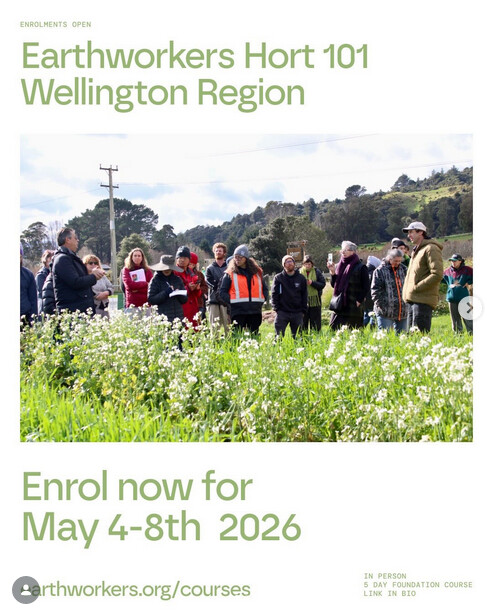
  • The foundation course Hort 101 (4โ€“8 May, Mangaroa Te Awa Kairangi โ€“ Wellington region) 
  • The advanced course Hort 201 (13โ€“17 April, Palmerston North, in partnership with Live2Give)

Both courses come with post-course support via a WhatsApp chat network to help growers transition to resilient, profitable, biology-first regenerative systems.

Earthworkers’ first alumni blog, Cultivating Knowledge Together, features Jenny Luxโ€” an experienced grower and organic advocate who will be one of the first participants in our new Hort 201 and Future Agronomists programmes, designed to grow New Zealandโ€™s next generation of biology-first agronomists.

Explore the pathway: earthworkers.org

Earthworkers courses in 2026

Also related (Research News): Living roots beat dead mulch: why bare beds go hungry โ€” Lincoln BHU update: living root exudates drive ~80% of lasting soil organic matter; keep beds green between crops.

https://organicnz.org.nz/wp-content/uploads/sites/2/2025/12/Jenny-Lux-2025-low-res-scaled.jpg 2560 2560 membership https://organicnz.org.nz/wp-content/uploads/sites/2/2024/09/OrganicNZ-2024-Masthead.png membership2025-12-19 07:41:332026-09-14 09:06:00Loving soil, but also learning soil

Asparagus in season: From garden to table

24 Sep 25/in Free Online, Gardening, Health and Food, Magazine Articles

Few vegetables announce spring quite like asparagus. With its tender green spears and delicate flavour, asparagus is one of New Zealandโ€™s most celebrated seasonal treasures.

Nutritional therapist Paula Sharp introduces this spring star, including gardening tips, recipes and nutritional benefits.

We hope you enjoy this free article from OrganicNZ.  Join us to access more, exclusive member-only content

A brief history

Asparagus (Asparagus officinalis) has been enjoyed for thousands of years. Native to the Mediterranean, it was prized by the ancient Egyptians, Greeks, and Romans for its flavour and medicinal properties. The Romans were so fond of it that they had an โ€˜asparagus fleetโ€™ to quickly transport the spears to distant outposts.

By the sixteenth century it had spread across Europe, and later to the New World. Today, asparagus is enjoyed globally, with New Zealand growers producing some of the freshest and most flavourful asparagus in the Southern Hemisphere.

Harvested from September to December, asparagus thrives in regions such as Waikato, Canterbury, and Hawkeโ€™s Bay, where sandy soils and long sunshine hours provide the perfect growing conditions.

Nutritional benefits

This slender spear is as nourishing as it is delicious. Asparagus is low in calories but high in vitamins A, C, E, and K, as well as folate โ€“ vital for energy and cell repair.

Itโ€™s rich in antioxidants that help protect the body from free-radical damage and contains prebiotic fibre, which supports healthy digestion and feeds the beneficial bacteria in your gut.

Its natural diuretic properties make it light and cleansing, ideal for a springtime reset.

Gardening tips for organic growers

Asparagus is a perennial crop โ€“ once established, it can produce for 15โ€“20 years. It requires patience, but the rewards are worth it. Planting time is from mid September on, as the soil temperatures rise.

  • Site and soil: Choose a sunny, sheltered spot with free-draining, sandy soil. Asparagus dislikes wet feet. Work in plenty of compost and organic matter before planting.
  • Planting: Start with crowns (one-year-old roots). Plant them in trenches 20cm deep, spreading the roots out like a starfish, and cover lightly with soil. Gradually fill in the trench as shoots appear.
  • Spacing: Allow 40cm between plants and one metre between rows โ€“ asparagus needs room to spread.
  • Patience pays: Donโ€™t harvest for the first two years, allowing plants to establish strong root systems. From year three, you can harvest spears for about six weeks each spring.
  • Organic care: Mulch well to keep weeds down and moisture in. Feed annually with compost or seaweed. In winter, after the ferny foliage dies back, cut it down and top-dress with organic matter.
  • Growing your own asparagus is an investment, but once itโ€™s in, youโ€™ll be rewarded with tender, chemical-free spears every spring.

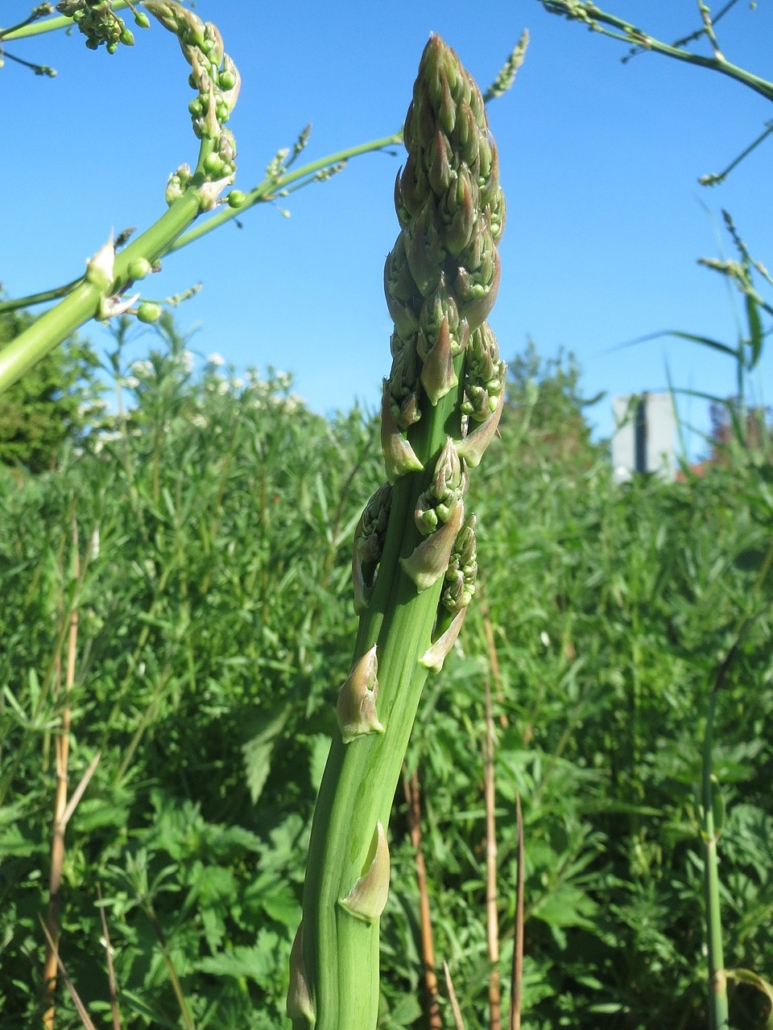
Photo: AnRo0002 / Wikimedia Commons

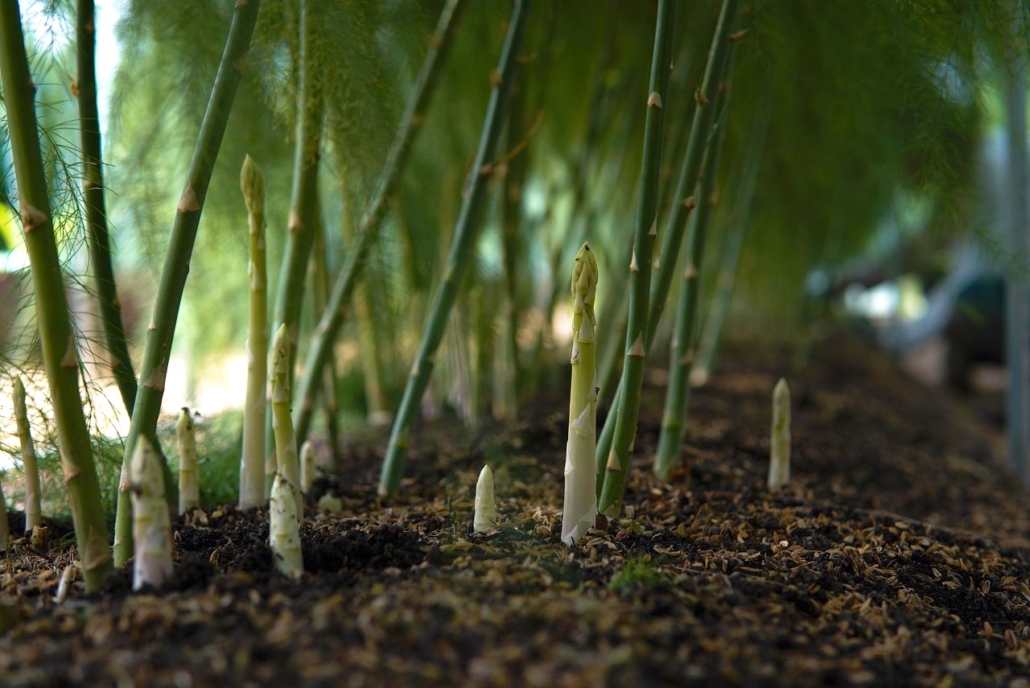
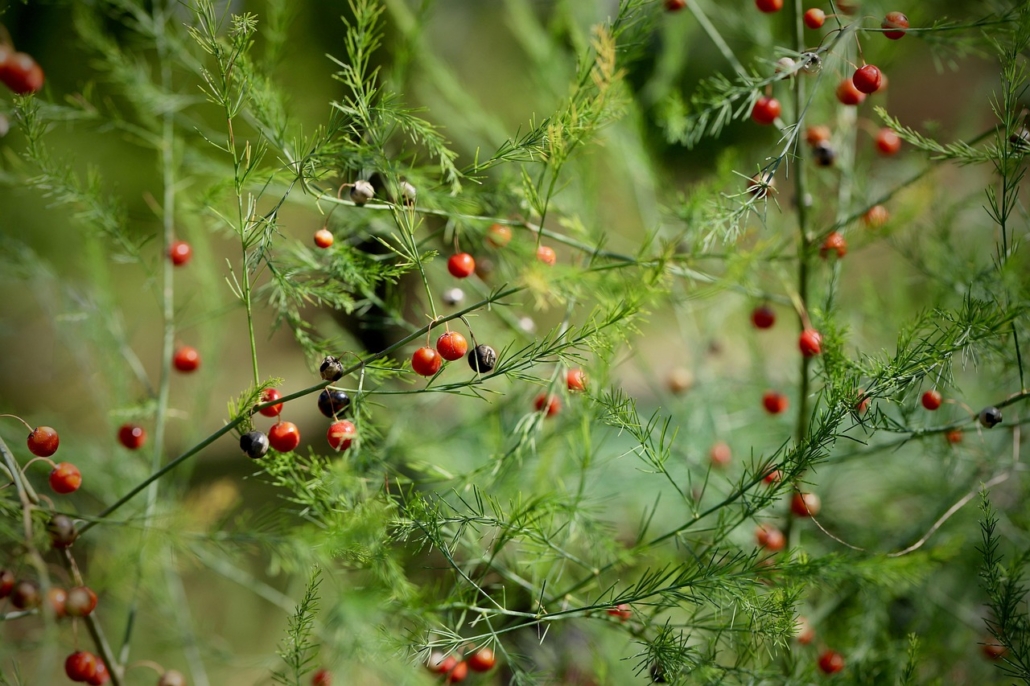
ABOVE: Asparagus spears, if not harvested, will grow into a ferny plant, and later in the season produce red berries.

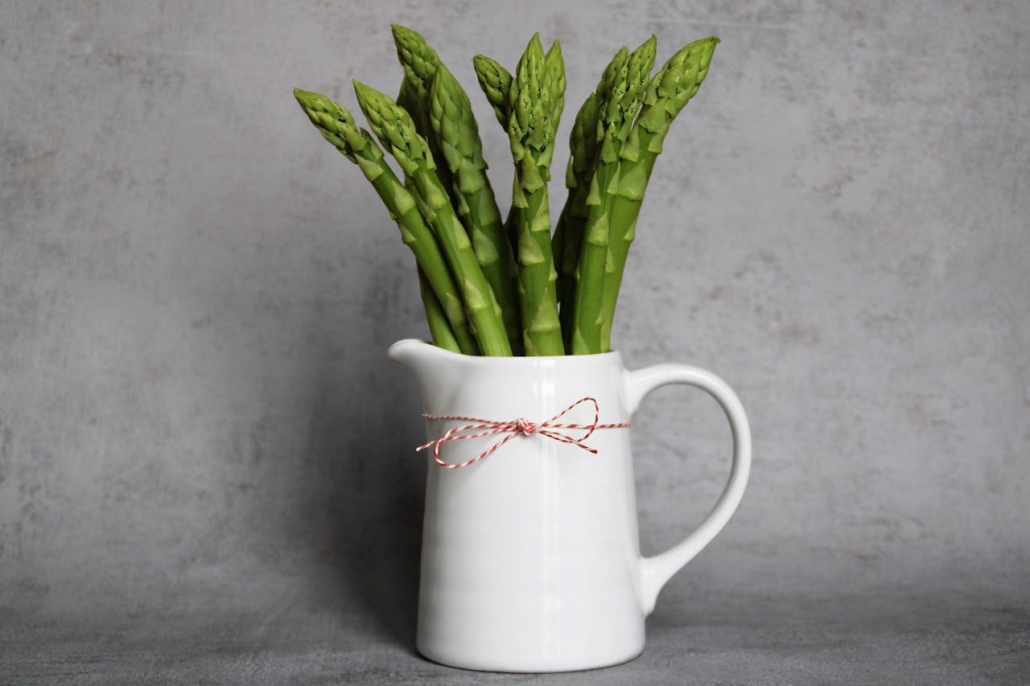
Images: Kohei Tanaka / Pixabay and Nennieinszweidrei / Pixabay

DID YOU KNOW?
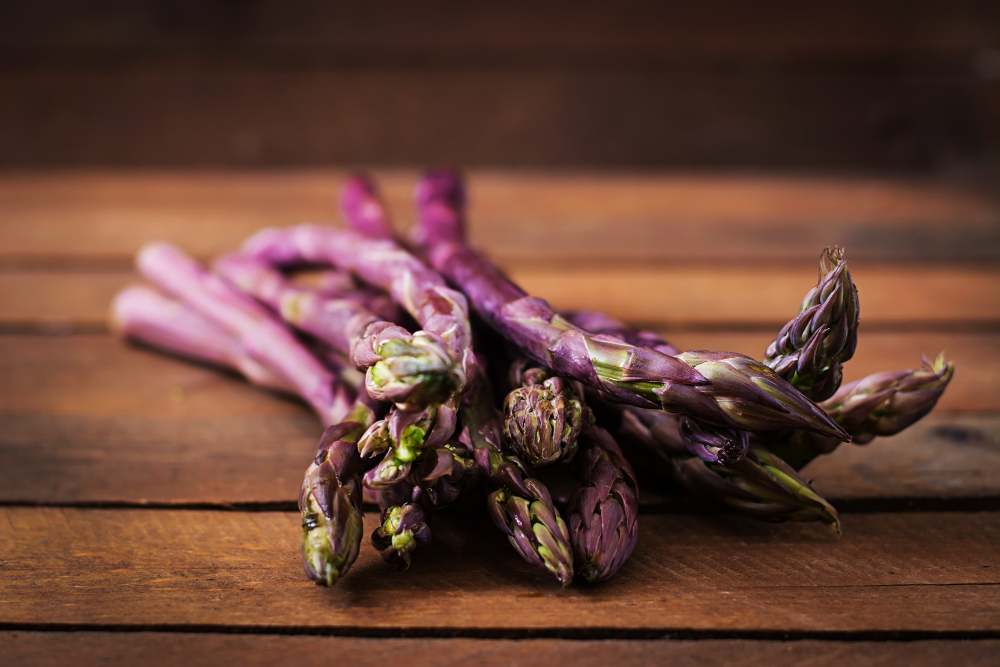
Purple asparagus is grown in New Zealand too โ€“ itโ€™s sweeter and higher in antioxidants than the green variety. (Aphrodisiac history: In nineteenth-century France, grooms were served three courses of asparagus before their wedding night!)
Storage tip: Trim hard ends and then stand the asparagus spears upright in a glass with 2โ€“3cm of water in the fridge.  Cover loosely with a plastic bag. It can stay crisp for up to 5 days.

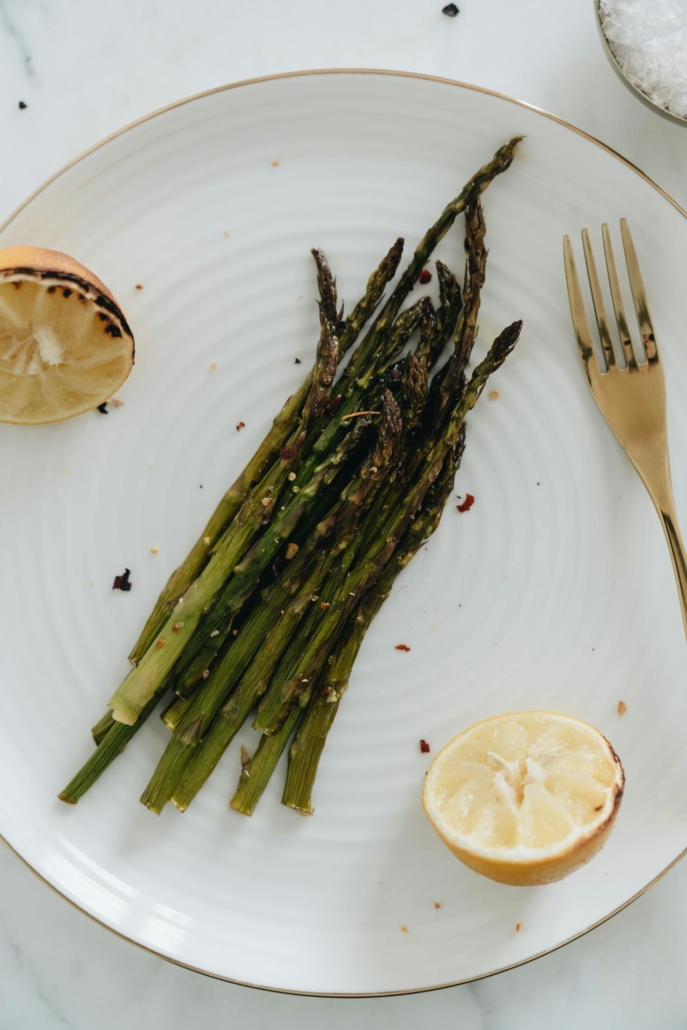
Images: Timolina / Freepik and Michaela St / Pexels)

Cooking with asparagus

Asparagus is wonderfully versatile. It can be steamed, roasted, grilled, stir-fried, or even shaved raw into salads. Its delicate flavour pairs beautifully with lemon, mint, eggs, seafood, and olive oil. Quick cooking helps retain its vibrant green colour and crisp texture.

Quick cooking: Overcooking dulls colour and flavour. Just a few minutes is enough to bring out its best.

A simple preparation trick: hold a spear at both ends and bend gently โ€“ it will naturally snap at the point where the woody end begins. Save those woody ends for stock.

Why eat in season?

It simply tastes better.  Choosing local, seasonal asparagus ensures maximum flavour, nutrition, and freshness. By buying asparagus from your local grower or farmersโ€™ market between September and December, youโ€™re supporting sustainable farming while enjoying one of natureโ€™s finest spring offerings.

Asparagus is more than just a seasonal vegetable โ€“ it tastes like spring! It is a nutrient-rich powerhouse vegetable, and a very rewarding plant for gardeners. Whether roasted with garlic or tossed in a zesty salad, asparagus brings vitality to the plate and reminds us that the best food is seasonal, local, and grown with care.

Asparagus recipes

Here are two easy ways to enjoy fresh asparagus in season.

Lemon & garlic roasted asparagus

Serves 4. Simple, fresh, and perfect as a side.

Ingredients

  • 500g fresh asparagus spears
  • 2 tbsp coconut oil
  • 2 cloves garlic, finely chopped
  • Juice and zest of ยฝ a lemon
  • ยผ tsp sea salt
  • ยผ tsp cracked black pepper
  • 2 tbsp grated Parmesan cheese (optional)

Method

  1. Preheat oven to 200ยฐC (fan bake).
  2. Add coconut oil to a baking tray and heat (until liquid)
  3. Trim asparagus and arrange on the tray, add garlic, and season with salt and pepper.
  4. Toss gently.
  5. Roast for 12โ€“15 minutes until just tender.
  6. Finish with lemon juice, zest, and Parmesan if desired.

Image: Alleksana / Pexels

Asparagus, Feta and Mint Salad

Serves 4.

Ingredients

  • 400g fresh asparagus spears
  • 100g baby spinach leaves
  • 80g feta cheese, crumbled
  • ยผ cup fresh mint leaves, torn
  • 2 tbsp extra virgin olive oil
  • 1 tbsp balsamic vinegar
  • 1 tsp honey
  • ยผ tsp sea salt
  • ยผ tsp cracked black pepper

Method

  1. Trim asparagus ends off and save for stock.
  2. Blanch the spears in boiling water for 2 minutes.
  3. Refresh in iced water, drain, and cut into 3โ€“4cm pieces.
  4. In a large bowl, combine spinach, asparagus, feta, and mint.
  5. To make the dressing, put the last five ingredients in a jar and shake.
  6. Pour dressing over salad, and toss gently.

AUTHOR BIO: Paula Sharp is a qualified nutritional therapist dedicated to helping women feel their best through every stage of life.

She works one-to-one via Zoom with clients around the world, supporting womenโ€™s health in areas such as gut and digestive repair, hormonal balance, skin and hair vitality, restorative sleep, sustainable weight management, and recovery before and after surgery.

Alongside her private practice, Paula is a guest speaker and writer. Her career began in London, where she worked in the organic fruit and vegetable industry, which sparked a lifelong passion for seasonal, spray-free produce. Now based in Whakatฤne, she tends her own extensive organic garden, putting her philosophy of โ€˜food as medicineโ€™ into daily practice.

For more seasonal recipes and womenโ€™s wellness insights, explore Sharp Bite, Paulaโ€™s blog at www.paulasharpnutrition.com โ€“ a fresh bite of inspiration for healthier, more joyful living.

Photo at top of article: Almaje / iStock


https://organicnz.org.nz/wp-content/uploads/sites/2/2025/09/iStock-2151664316lowres-scaled.jpg 1589 2560 membership https://organicnz.org.nz/wp-content/uploads/sites/2/2024/09/OrganicNZ-2024-Masthead.png membership2025-09-24 22:57:562025-09-24 22:57:58Asparagus in season: From garden to table

Broccoli: A Winter Hero

27 Aug 25/in Free Online, Gardening, Health and Food

As the cold settles into our gardens and kitchens, one green vegetable continues to thrive: broccoli. Nutritional therapist Paula Sharp introduces this winter hero, including gardening tips, recipes and nutritional benefits.

We hope you enjoy this free article from OrganicNZ.  Join us to access more, exclusive member-only content

This pretty vegetable that looks remarkably like a small shrub has a fascinating history, impressive health credentials and in my opinion a starring role in the winter vegetable patch. Broccoli is more than just a basic side dish; itโ€™s a powerhouse for human health.

From Ancient Rome to Kiwi gardens

Broccoli (Brassica oleracea var. italica) was grown in the Mediterranean over 2000 years ago. It was developed by ancient Romans from wild cabbage, and its name comes from the Italian broccolo, meaning โ€˜flowering crest of a cabbageโ€™ (broccoli is the plural). Broccoli belongs to the nutrient-rich Brassica family, along with cauliflower, kale, Brussels sprouts and cabbage.

Broccoli made its way through Europe and into our kitchens much later, and today it is a staple in many New Zealand gardens, especially in winter. This cool-season crop doesnโ€™t just survive frosts; it thrives in them.

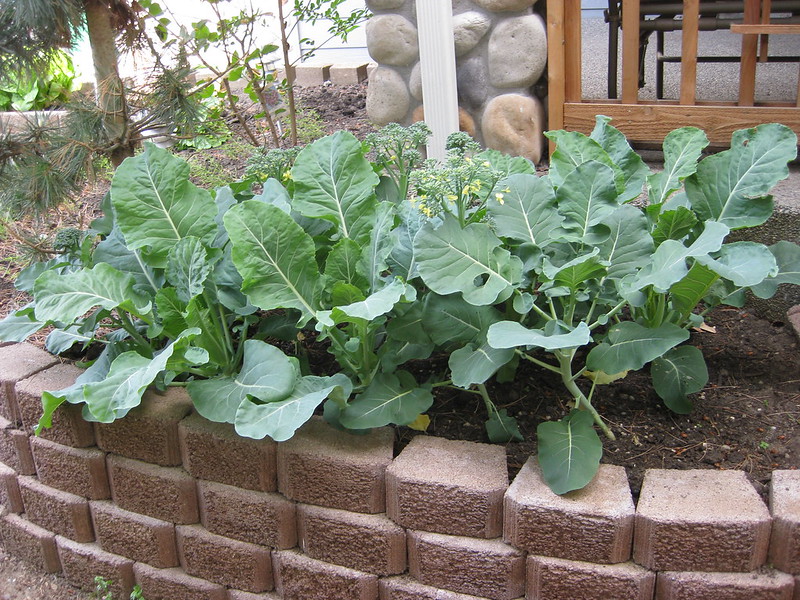
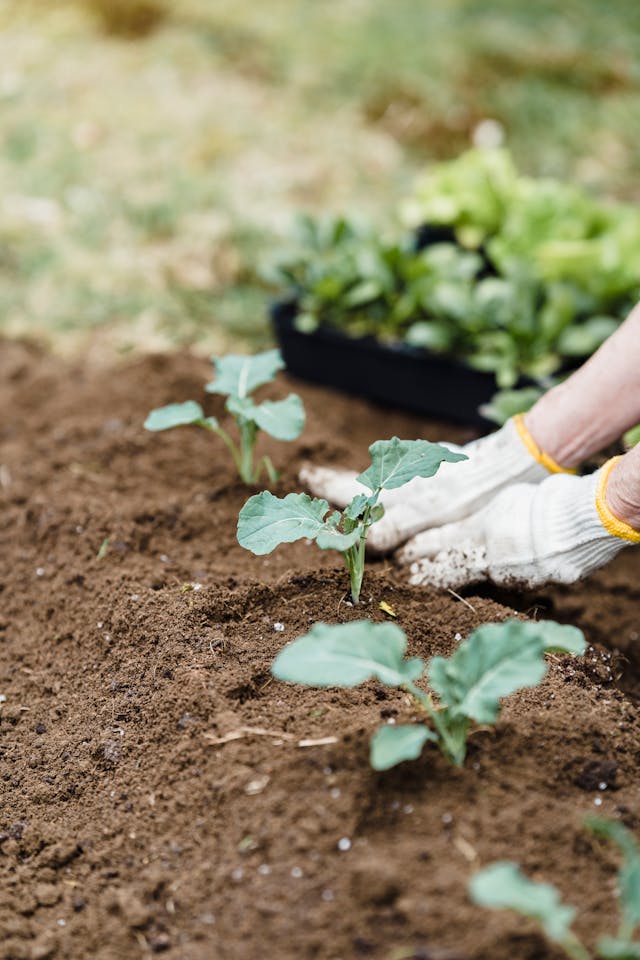
Broccoli plants growing in a raised bed. Photo: Rachael & Zane Ross / Flickr CC BY-NC-SA 2.0

Growing broccoli

Broccoli loves cool, crisp conditions, making it ideal for late autumn and winter planting in New Zealand.

Sow seeds or transplant seedlings from mid-autumn, and youโ€™ll be harvesting heads from June through to September, with August being a prime time in many regions.

You can still sow seeds or transplant seedlings in August or early September. Plug plants will also continue to thrive particularly in cooler areas or a chilly spring.

For best growth:

  • Plant in full sun
  • Use well-drained, compost-rich soil
  • Keep soil moist but not soggy
  • Space plants well to allow airflow and strong head formation

Photo: Gretta Hoffman, Pexels

Youโ€™ll know itโ€™s ready to harvest when the central head is tight, deep green, and about the size of a fist. Cut just above the first set of leaves. Many varieties produce smaller side shoots after the main head is removed, giving you bonus crops well into spring.

Broccoliโ€™s nutritional benefits

Broccoli truly earns its superfood status. Packed with vitamin C, fibre and antioxidants, broccoli is a winter immune-booster. Its compounds โ€“ sulforaphane, glucosinolates and indole-3-carbinol โ€“ help fight inflammation, support hormone balance and protect against cellular damage.

Key nutrients:

  • Vitamin C โ€“ For immune defence, collagen production, and iron absorption
  • Vitamin K โ€“ Vital for bone health and blood clotting
  • Folate โ€“ Essential for DNA repair and cell growth
  • Potassium and magnesium โ€“ Help regulate blood pressure and muscle function
  • Iron โ€“ Supports energy and oxygen transport
  • Calcium โ€“ Supports bone health

Powerful phytochemicals:

  • Sulforaphane โ€“ A compound linked to reduced inflammation, detoxification, and potential cancer-fighting properties
  • Lutein and zeaxanthin โ€“ Support healthy vision and protect against eye strain

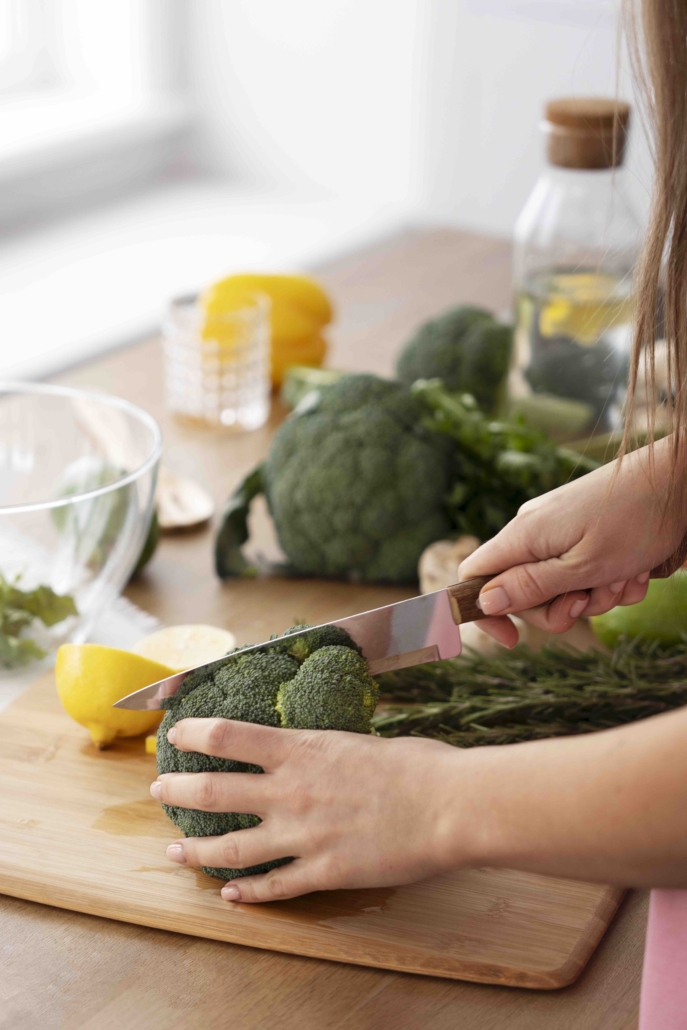
Photo: Freepik

The best ways to eat broccoli

Different cooking methods impact nutrient availability, so it pays to mix things up:

  • Light steaming helps preserve sulforaphane and vitamin C
  • Roasting enhances flavour but slightly reduces heat-sensitive nutrients like vitamin C
  • Raw broccoli (like in slaws or salads) keeps vitamin C levels high but may cause bloating or discomfort for people with sensitive digestive tracts.
  • Stalks and leaves are edible too: dice them into soups, stir-fries or make vegetable stock for extra fibre and flavour. I sneak these into bolognaise sauces, meat or vegetarian pies and rice dishes (donโ€™t tell my children).
  • NB: Older broccoli stalks or stems can be very fibrous.  If so, peel these before dicing and cooking.

Absorption tips

Pair broccoli with a source of healthy fat (like olive oil, avocado, or tahini) to absorb fat-soluble vitamins like Vitamin K. Combine it with vitamin C-rich foods (like lemon juice or capsicum) to boost plant-based iron absorption.

Why eat in season?

Choosing in-season broccoli means youโ€™re getting it at its freshest, most nutritious, and most affordable. It also supports local growers and reduces the environmental impact of long-haul transport. Whether you grow it yourself or pick it up from your local farmersโ€™ market, broccoli in August is a winter win โ€“ it just tastes better.

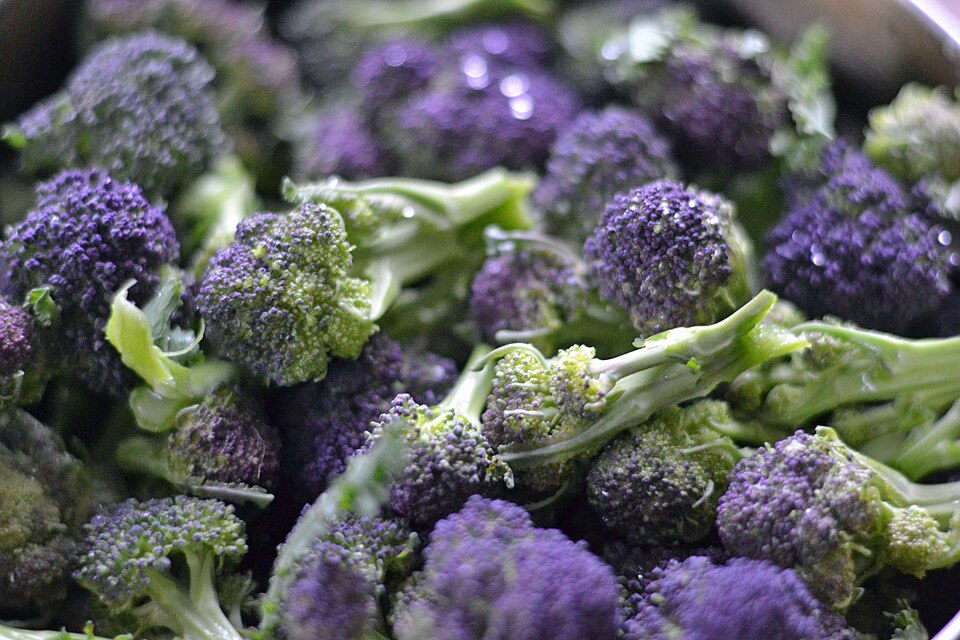
Purple sprouting broccoli โ€“ photo: Conall/Flickr

Broccoli recipes

Here are two easy ways to enjoy broccoli while itโ€™s at its peak.

Lemon and garlic broccoli

Serves 4 as a side dish.

  • Lightly steam florets from a medium head of broccoli for 4โ€“5 minutes.
  • Toss with 2 teaspoons of extra virgin olive oil, 2 cloves of minced garlic, a pinch of flaky sea salt, and a squeeze of fresh lemon juice.

Simple, fresh, and perfect as a side.

Creamy broccoli and pumpkin soup

Serves 4. This makes a beautifully textured soup with the broccoli florets and blended pumpkin.

Ingredients

  • 1 onion
  • 4 cloves garlic
  • 1 large teaspoon olive oil
  • 1 medium pumpkin or large butternut squash
  • 1 large broccoli head
  • 1 litre vegetable stock

Photo: Paula Sharp

Method

  1. Dice the onion and dice or mince the garlic, then sautรฉ in oil.
  2. Cut the pumpkin or squash into cubes.
  3. Chop the broccoli stem (save the florets for later), and simmer with the stock until soft. For a thicker soup, add less liquid. 
  4. Blend until smooth with a stick blender.
  5. Cut the rest of the broccoli into florets and steam them.
  6. Add florets to the soup and season well.
  7. Top with a sprinkle pumpkin seeds and a swirl of Greek yoghurt or coconut cream.

AUTHOR BIO: Paula Sharp is a nutritional therapist working one-to-one via Zoom to support womenโ€™s health, restore gut health and digestion, hormonal balance, skin and hair, sleep, shifting weight and health pre- and post-surgery. www.paulasharpnutrition.com

She is also a guest speaker, giving talks to companies on nutrition and mindset. In London she worked in the organic fruit and vegetable industry, and now she is based in Whakatฤne, growing her own extensive spray-free garden.

Photo at top of article: Alabama Extension, Wikimedia Commons


Research News tip: if you are pairing brassicas with living clover cover, a temperate strip-till trial found clover living mulch cut cabbage yields while rye dead-mulch held them โ€” see Living clover under cabbage can cost you the harvest.

https://organicnz.org.nz/wp-content/uploads/sites/2/2025/08/Broccoli_close_up_49200262862creditAlabamaExtension.jpg 639 960 membership https://organicnz.org.nz/wp-content/uploads/sites/2/2024/09/OrganicNZ-2024-Masthead.png membership2025-08-27 14:21:232026-08-24 09:09:04Broccoli: A Winter Hero

Love leeks!

29 Jul 25/in Free Online, Gardening, Health and Food

A champion winter vegetable 

Nutritional therapist Paula Sharp loves leeks. Here she introduces this often unsung hero, including gardening tips, recipes and nutritional benefits.

We hope you enjoy this free article from OrganicNZ.  Join us to access more, exclusive member-only content

Elegant, elongated with a mild onion flavour, leeks are a staple in New Zealand kitchens and gardens throughout winter. The leek is a cultivar of the broadleaf wild leek (Allium ampeloprasum), and is the largest vegetable cousin of garlic, chives, spring onions, onions, and shallots. Leeks are more subtle in taste to their pungent onion relative and add a savoury sweetness to food without overpowering other flavours.

Leeks arrived in New Zealand with settlers from the British Isles. Historically, they were cultivated by ancient Egyptians and were highly prized by the Romans. In Wales, the leek is a national symbol, worn on Saint Davidโ€™s Day and linked to historic battles and Welsh identity.

Growing leeks

In New Zealand, leeks are sown from early spring and harvested throughout the autumn and winter, with peak availability in June and July. They are well-suited to our cool, moist climates and thrive in loose, fertile soil. The plants take several months to mature and are ready to harvest when they reach 2โ€“3 cm in diameter, although smaller โ€˜baby leeksโ€™ are also prized for their tenderness. I love to use early, baby leeks interchangeably with late-planted spring onions.

The best growing conditions for leeks include full sun, and rich, well-drained soil with plenty of compost. They require regular watering and benefit from a technique called blanching โ€” mounding soil around the stems to keep them tender and pale. This process not only gives leeks their classic white base but also improves the flavour. To harvest, gently loosen the soil and pull up the plant by the base. Leeks can be stored in the fridge for several weeks, or left in the garden and harvested as needed, even in frosty conditions.

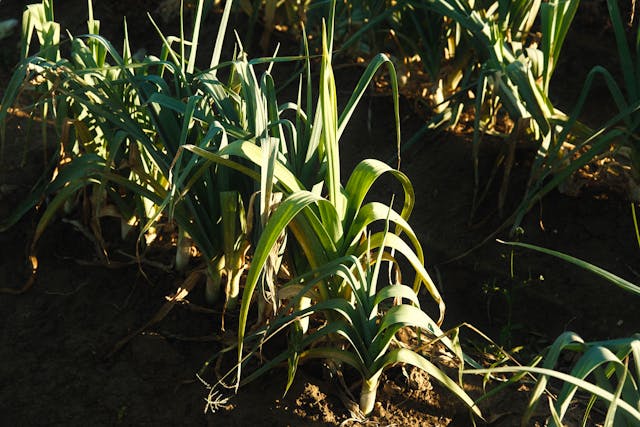
Rows of leeks showing the blanching technique. Image: Mat Reding /Pexels

Health benefits

Leeks pack a punch nutritionally. Nature again provides the right vegetables (and fruits) at the right time of year to support human health. They are dense in fibre, but itโ€™s the sulphuric smell of all alliums where the nutritional magic lies. This distinct smell acts as an insect deterrent while the vegetable is growing and is a delight for the gut microbiome when itโ€™s eaten.

These sulphuric compounds have antibacterial, antifungal and antiviral properties. The rich antioxidants of leeks (polyphenols and kaempferol) are heart-protective and have anti-inflammatory effects. The sulphur compounds (such as allicin) not only support cardiovascular health but also immune function.

Other health benefits of leeks are:

  • Vitamin K โ€“ for blood clotting and bone health
  • Vitamin A โ€“ supports vision and immune function
  • Vitamin C โ€“ helps with collagen formation and immune defence
  • Folate โ€“ for cell growth and development
  • Manganese and iron โ€“ supports metabolism and red blood cell production
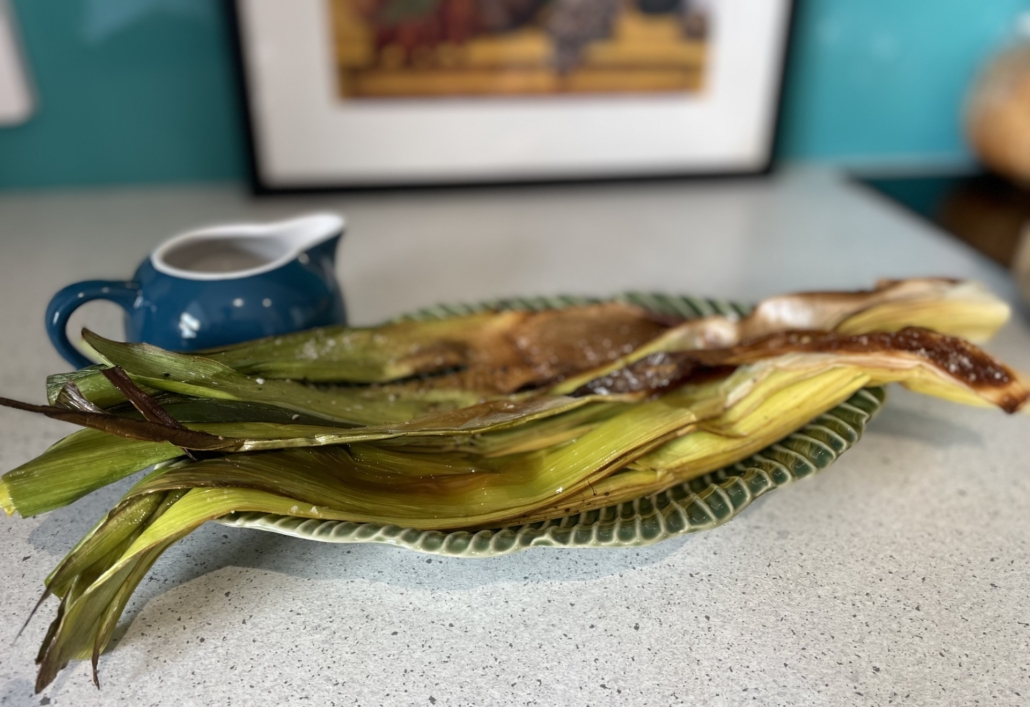
Roasted leeks with vinaigrette โ€“ recipe below (Photo: Paula Sharp)

Cooking that maximises nutrition

Most of these nutrients are concentrated in the lower white and light green portions of the leek. The more fibrous darker green tops are great in stocks, soups, or even finely chopped into stir-fries. Cooking leeks lightly โ€” by sautรฉing, steaming, or slow roasting โ€” preserves their medicinal qualities while softening their texture and enhancing their sweetness.

To maximise iron and vitamin A absorption, pair leeks with a source of vitamin C (like lemon juice or capsicum) or healthy fats such as olive or coconut oil.

Leeks are especially popular and well matched in potato and leek soup, a classic winter delight. Roasted leeks make a fantastic side dish, and combine beautifully with cheese, mustard, and herbs like thyme and tarragon.

Before cooking, always rinse leeks thoroughly. Their layered structure can trap soil and grit, particularly between the white and green sections. Slice them lengthwise and soak in water to remove any debris.

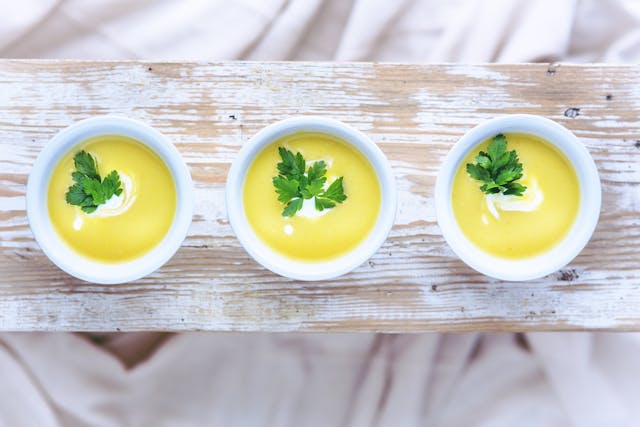
Potato, leek and coconut milk soup

Ingredients

  • 2 tbsp coconut oil or butter
  • 3 leeks, white and light green parts only, sliced
  • 2 garlic cloves, minced
  • 4 medium potatoes, peeled and diced
  • 1.2 litres vegetable or chicken stock
  • Salt and pepper to taste
  • ยฝ cup coconut milk
  • Chopped parsley to garnish
Image: kaboompics / Pexels

Method

  1. Heat oil in a large pot. Sautรฉ leeks and garlic until soft.
  2. Add potatoes and stock, bring to boil, then simmer for 20โ€“25 minutes.
  3. Blend with a stick blender until smooth, or use a potato masher for a chunkier consistency. 
  4. Stir in coconut milk, season, and garnish with parsley.

Roast leeks and mustard vinaigrette

Roast leeks are a taste sensation and can be a dinner party show stopper.

Ingredients

  • 4 medium leeks, trimmed and halved lengthwise
  • 2 tbsp coconut oil
  • Salt and pepper to taste

For the vinaigrette:

  • 1 tbsp Dijon mustard
  • 1 tbsp red wine vinegar
  • 1 tsp raw honey
  • 3 tbsp olive oil

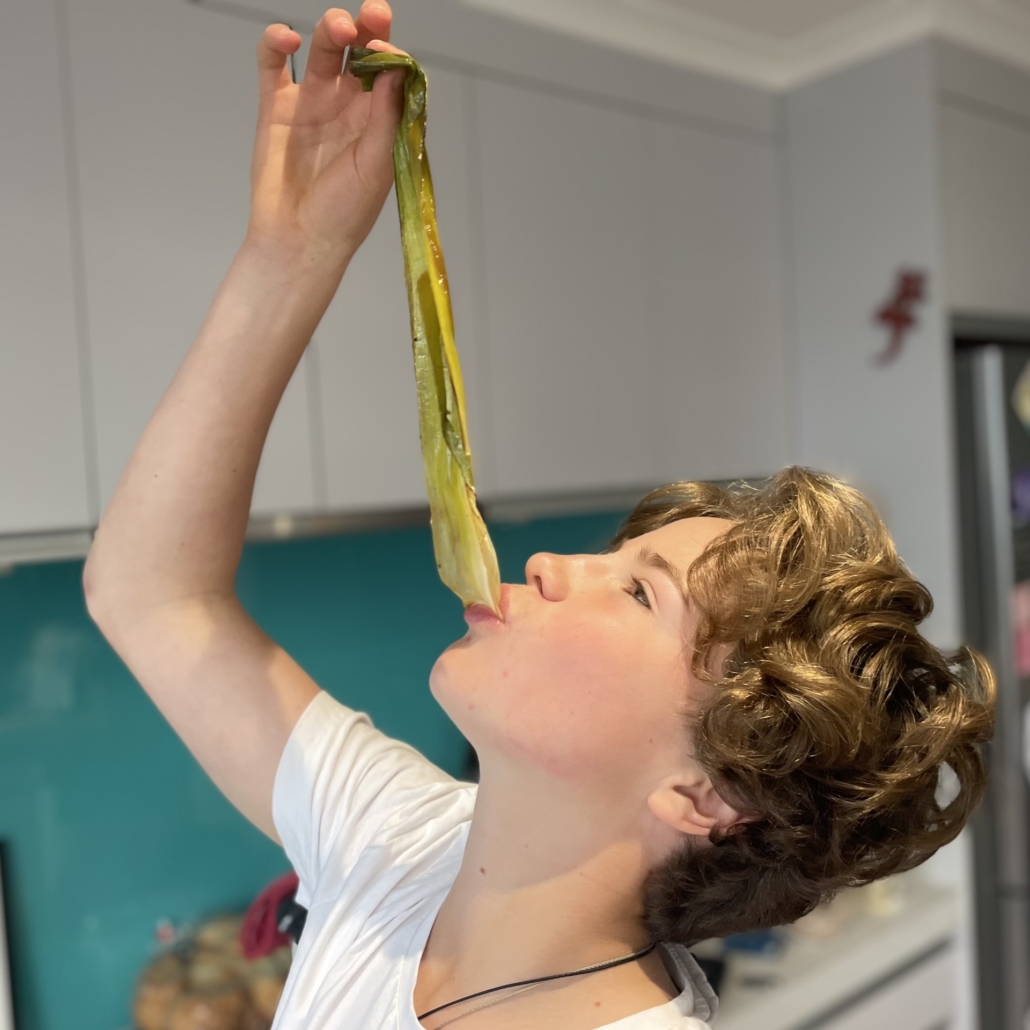
Lochlan Holding relishing some roasted leeks (Photo: Paula Sharp)

Method

  1. Preheat oven to 180ยฐC fan bake.
  2. Place leeks in a baking dish, with coconut oil, salt, and pepper.
  3. Roast for 20 minutes or until tender.
  4. Whisk mustard, vinegar, honey, and olive oil vinaigrette.
  5. Drizzle over warm leeks before serving.

AUTHOR BIO: Paula Sharp is a nutritional therapist working one-to-one via Zoom to support womenโ€™s health, restore gut health and digestion, hormonal balance, skin and hair, sleep, shifting weight and health pre- and post-surgery. www.paulasharpnutrition.com

She is also a guest speaker, giving talks to companies on nutrition and mindset. In London she worked in the organic fruit and vegetable industry, and now she is based in Whakatฤne, growing her own extensive spray-free garden.


https://organicnz.org.nz/wp-content/uploads/sites/2/2025/07/iStock-505651945credit-LDProd-lowres.jpg 1414 2121 membership https://organicnz.org.nz/wp-content/uploads/sites/2/2024/09/OrganicNZ-2024-Masthead.png membership2025-07-29 15:34:492025-07-29 15:34:50Love leeks!

Get-well-soon soup

19 May 25/in Free Online, Health and Food

By Philippa Jamieson 

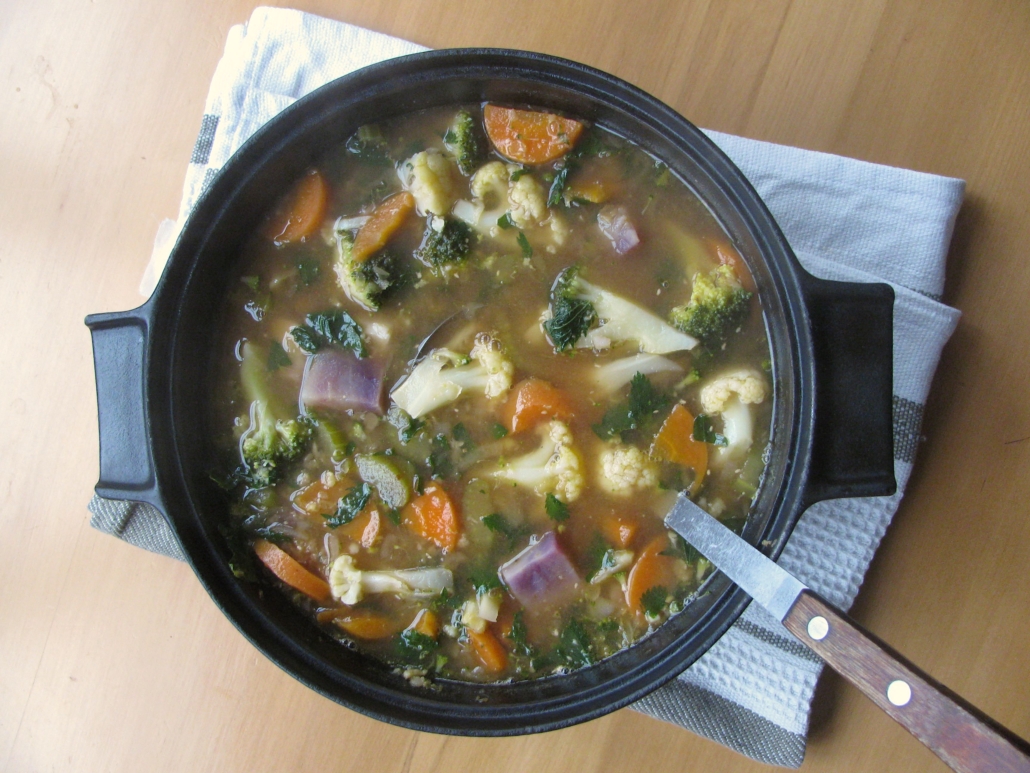
Any time I feel remotely unwell, I whip up a batch of this super flavourful and nourishing soup. Serves 4โ€“6.

This is a versatile soup. You can play around with quantities depending on your taste, and use whatever veges are in season: potatoes, pumpkin, parsnip, kลซmara, Jerusalem artichoke, yams, broccoli, cauliflower, mushrooms, kale, shredded cabbage.

Red lentils are quick to cook in this soup, but you could instead add cooked brown lentils, or cooked beans such as pinto or adzuki. 

For an even more Asian flavour, add some chopped Vietnamese mint while cooking, or garnish with freshly chopped coriander.

Recipe first published in Organic NZ, June/July 2018

We hope you enjoy this free article from OrganicNZ.  Join us to access more, exclusive member-only content

Ingredients 

  • 1                 large onion, finely chopped
  • 2โ€“3             garlic cloves, crushed
  • 1 T              ginger, grated
  • 1 T              soy sauce
  • 1 T              vinegar (balsamic or apple cider)
  • ยผ t              chilli (or more, to taste)
  • salt to taste
  • 1 T              coconut or olive oil
  • ยฝ cup         red lentils
  • 1 litre          stock or water
  • 2โ€“3 stalks   celery
  • 1                 large carrot, sliced
  • 2 cupsย ย ย ย ย ย ย  kลซmara, cubed
  • 2 cups        broccoli or cauliflower florets
  • 2 cups        chopped leafy greens such as kale, cabbage, spinach, silverbeet, puha or nettle
  • 1 T              miso, dissolved in ยฝ cup hot water
  • juice of 1 lemon
  • 2โ€“3 T          karengo seaweed, dried
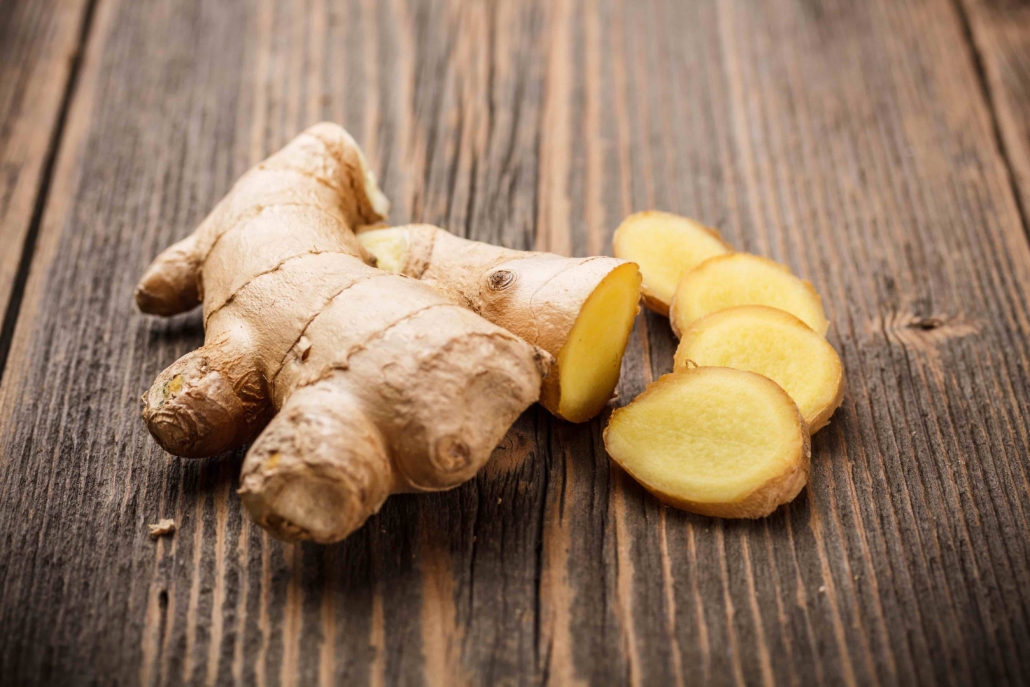
Fresh root ginger is warming and soothes the throat
This soup is a great way of using winter veges โ€“ or any veges depending on the season

Method

  1. Heat oil in a large heavy-bottomed saucepan, then add the first 7 ingredients.
  2. Put the lid on, reduce heat, and let the base ingredients โ€˜sweatโ€™ for 5-10 minutes.
  3. Add lentils and stock or water, and bring to a simmer.
  4. After 10 minutes, add celery and carrots.
  5. After another 5 minutes, add kลซmara.
  6. Once root veges and lentils are becoming soft, add broccoli and cook a further 5 minutes.
  7. Add leafy greens and cook 5 more minutes.
  8. Turn off heat, add lemon juice and miso, and stir through.
  9. Put some karengo to each personโ€™s bowl, then ladle in the soup.
Philippa Jamieson was editor of Organic NZ magazine (2008-2021) and is now the editor of the monthly e-news and website content.

https://organicnz.org.nz/wp-content/uploads/sites/2/2025/05/IMG_9295-scaled.jpg 1920 2560 membership https://organicnz.org.nz/wp-content/uploads/sites/2/2024/09/OrganicNZ-2024-Masthead.png membership2025-05-19 20:45:452025-05-27 00:32:15Get-well-soon soup

Categories

  • All Articles
  • News
  • Features
  • Gardening
  • Health and Food
  • Farming and Horticulture
  • Building and Technology
  • Free Online

Latest Articles

  • A life of plants, food and foraging
  • Ross Vintiner of Dali Olives holding a handful of Johnson-Su compost
    Organic probiotic for the soil
  • Biochar, black gold and bananas
  • Parsley on chopping board with knife
    Parsley: More than just a garnish
  • Hardening off seedlings in mid spring
    Growing Vegetables: Mid spring โ€” hardening off
  • Kumera slips - moon calendar 2026
    Moon Calendar September-October 2026
  • Cabbage and mulch strip-till field trial at IGZ
    Clover under cabbage reduces harvest โ€” rye mulch keeps yields
  • Full moon seen from Amberley, Canterbury, New Zealand
    Your plants can see the moon: Science that deepens the Moon Calendar
  • Lettuces and watering can in home garden
    Worm juice and soil fungi: why compost alone isnโ€™t enough for juicy lettuce
  • Mandarins in a bowl
    Mandarins: Winter vitamin boost
Soil & Health Association of NZ Established 1941

Proudly published by the Soil & Health Association NZ

  • About us
  • Contact us
  • Help us
  • Sign up to the Newsletter
ยฉ Copyright OrganicNZ | Soil and Health Association NZ.
  • Link to Facebook
  • Link to Instagram
  • Link to LinkedIn
  • Privacy Policy
  • Editorial Policy
Scroll to top Scroll to top Scroll to top