• Link to Facebook
  • Link to Instagram
  • Link to LinkedIn
Reset member access or visit Soil & Health NZ
Organic NZ
  • Articles
    • Features
    • Gardening
    • Health and Food
    • Farming and Horticulture
    • Building and Technology
    • News
  • Competitions
  • Donate
  • Login
  • Join Us
  • Click to open the search input field Click to open the search input field Search
  • Menu Menu

Tag Archive for: vitamin

Posts

Harvested rhubarb stalks; photo by Planet Fox, Pixabay

Rhubarb: An old-fashioned favourite

29 Oct 26/in Free Online, Gardening, Health and Food, Magazine Articles

Thereโ€™s something wonderfully nostalgic about rhubarb. It can bring back memories of grandparentsโ€™ gardens, bubbling pots of stewed rhubarb on the stove and homemade crumbles emerging from the oven. For others, itโ€™s that curious plant with enormous leaves and bright pink stalks that seems to grow without much encouragement.

Whatever your memories, rhubarb has a place in our spring kitchens. With its striking colour, sharp flavour and impressive nutritional qualities, this old-fashioned favourite has a lot to offer, as Paula Sharp discovers.

We hope you enjoy this free article from Organic NZ.  Join us to access more, exclusive member-only content

Fruit or vegetable?

Despite appearing in pies, jams, crumbles and desserts, rhubarb is botanically a vegetable. We simply treat it like a fruit because of its tart flavour and ability to pair beautifully with sweeter ingredients. Rhubarb belongs to the same plant family as buckwheat and sorrel.

Its edible stalks range from pale green to deep crimson, although colour isn’t necessarily an indication of sweetness. Some green varieties are just as delicious as their red counterparts.

Naturally nutritious
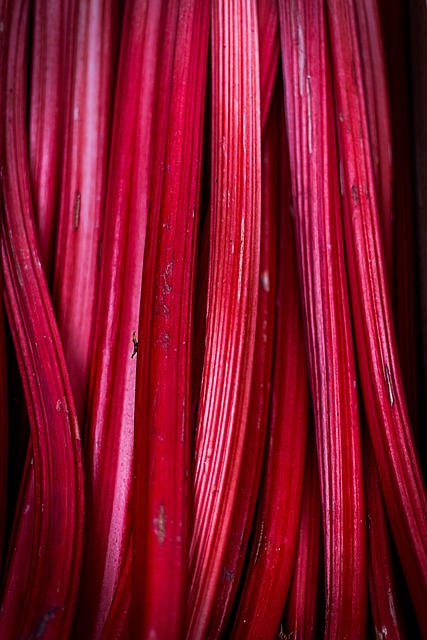
Rhubarb brings many worthwhile nutrients to the table. Rich in vitamin K, which plays an important role in blood clotting and bone health, rhubarb also provides dietary fibre to support healthy digestion.

It contains smaller amounts of vitamin C, potassium and calcium, along with naturally occurring plant compounds that contribute to its antioxidant properties.

Its fibre helps support regular bowel movements, for a healthy digestive system. Rhubarbโ€™s plant compounds, called polyphenols, including anthocyanins in some red varieties, contribute to its colour and antioxidant activity.

Image above: Rhubarb stalks, by Foundry | Pixabay

Some words of caution

Only eat the stalks of rhubarb. The leaves contain potentially toxic compounds and should never be eaten, by people or animals (e.g. chickens, sheep, cows etc.)

Rhubarb naturally contains oxalates, compounds that can contribute to calcium oxalate kidney stones in susceptible people. While the stalks are safe for most people to enjoy, anyone with a history of these kidney stones should limit their love of rhubarb. 

And while rhubarb itself is low in sugar, the generous spoonfuls we sometimes add to tame its tartness can quickly change that. My suggestion? Try gently cooking rhubarb with apples, orange zest or a little vanilla. These flavours soften its sharpness without needing quite so sugar. Or sweeten after itโ€™s been stewed with raw honey.

How to grow rhubarb

Rhubarb is a perennial, so it just keeps giving delicious stalks year after year. It prefers fertile, well-drained compost-enriched soil, consistent moisture and a sunny position.

In warmer areas, some afternoon shade can help protect plants from excessive summer heat.

Image: Kaori Nohara, Unsplash
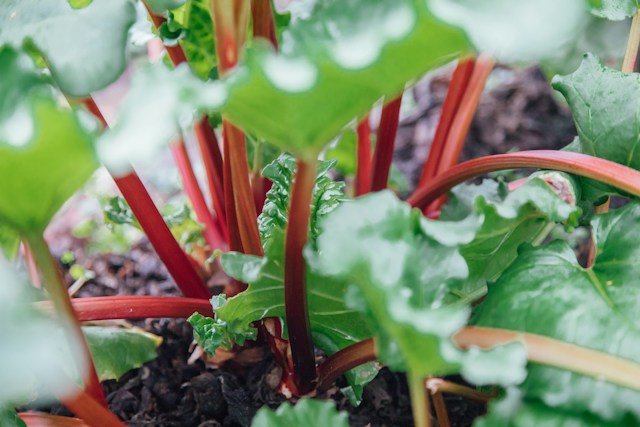
Plant rhubarb crowns with their growing buds near the soil surface and allow plenty of room for those magnificent leaves. Be patient with young plants. Avoid harvesting heavily during their first year so they can develop strong roots.

When harvesting established plants, one trick is to gently pull and twist the outer stalks from the base rather than cutting them. Leave several healthy stalks and leaves behind to keep the plant growing.

Serving and storing suggestions

Rhubarb is so versatile. Roast it with orange and cinnamon, spoon it over thick natural yoghurt, stir it through porridge or serve it alongside pork for a surprisingly delicious savoury combination. It also freezes beautifully. Simply wash, trim and chop the stalks, then freeze in portions ready for another day.

Rhubarb recipes

Roasted rhubarb, orange & ginger breakfast pots

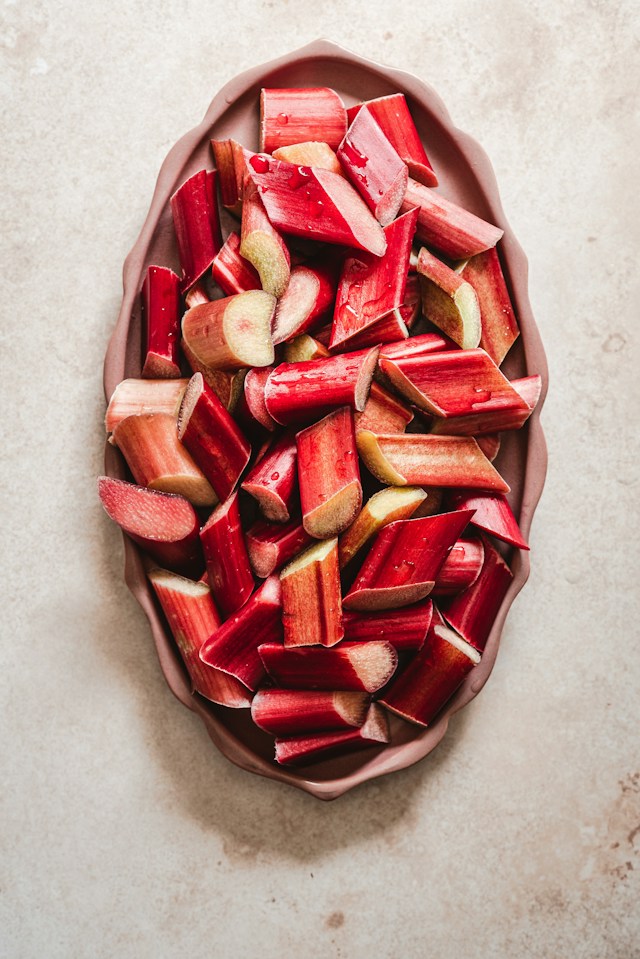
Roasting rhubarb concentrates its flavour while orange and ginger bring natural warmth and sweetness.

Serves 4 | 30 minutes

Ingredients

  • 400g fresh rhubarb, trimmed and cut into 3cm pieces
  • 1 large orange, zest and juice
  • 1โ€“2 tablespoons honey or maple syrup, to taste
  • 1 teaspoon freshly grated ginger
  • ยฝ teaspoon ground cinnamon
  • 400g thick unsweetened Greek yoghurt
  • ยฝ cup rolled oats
  • ยผ cup chopped walnuts or almonds
  • 1 tablespoon pumpkin seeds

Image: Natalie Behn, Unsplash
Method

  1. Preheat oven to 180ยฐC. Place rhubarb in a baking dish with orange juice, zest, honey, ginger and cinnamon. Toss gently.
  2. Cover loosely with foil and roast for 15 minutes.
  3. Remove foil and roast for another 5โ€“10 minutes until tender but still holding its shape.
  4. Toast the oats, nuts and pumpkin seeds in a dry frying pan until lightly golden. Allow to cool.
  5. Spoon Greek yoghurt into four glasses or bowls. Add warm or cooled rhubarb and finish with the toasted oat mixture.

Paula’s nutritional note: Greek yoghurt provides protein, and the oats, nuts and rhubarb contribute fibre. Together, they make a satisfying breakfast or dessert with a great balance of textures and flavours.

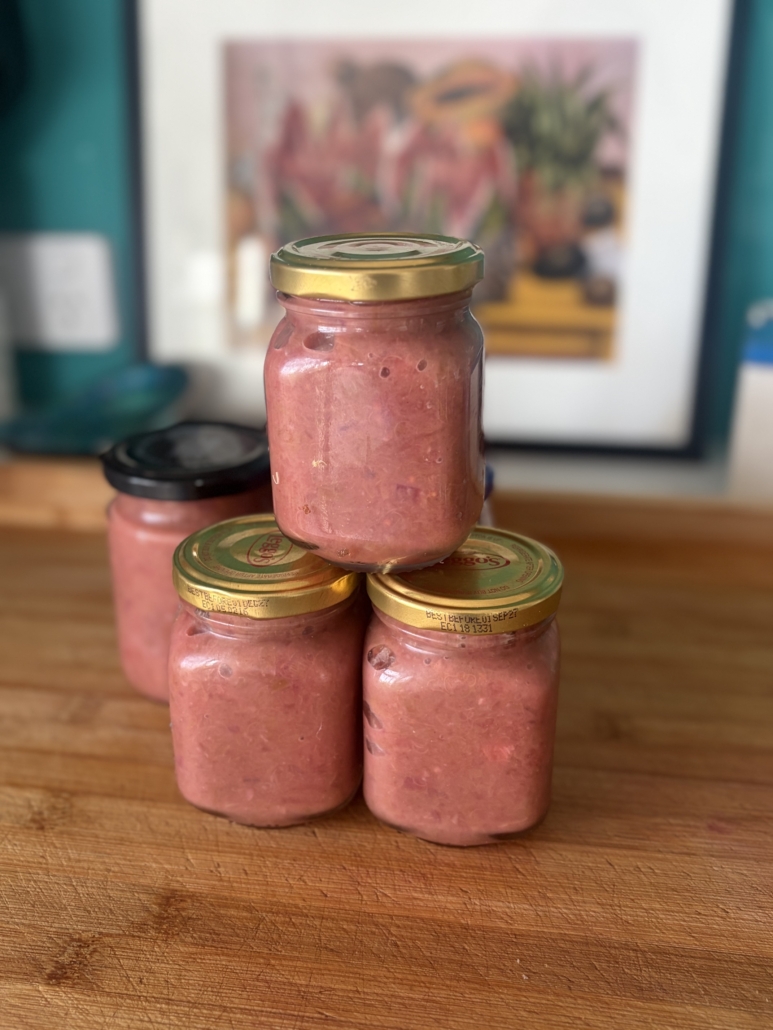
Rhubarb, red onion & ginger relish

Sweet, tangy and gently spiced, this relish is a wonderful way to enjoy rhubarb. Delicious with roast pork, chicken, sharp cheddar, homemade burgers or with cheeses.

45 minutes | Makes approximately 2 cups

Ingredients

  • 400g fresh rhubarb, trimmed and finely chopped
  • 1 large red onion, finely diced
  • 1 medium apple, peeled and grated
  • 2 tablespoons freshly grated ginger
  • 1 garlic clove, crushed
  • ยฝ cup apple cider vinegar
  • ยผ cup date syrup or maple syrup
  • 1 teaspoon mustard seeds
  • ยฝ teaspoon ground cinnamon
  • Pinch of ground cloves
  • ยฝ teaspoon sea salt
  • 1 tablespoon coconut oil

Image: Paula Sharp
Method

  1. Heat oil in a medium saucepan over a gentle heat.
  2. Add red onion and cook for 5 minutes until softened.
  3. Add garlic, ginger and mustard seeds. Stir for another minute until fragrant.
  4. Add chopped rhubarb, grated apple, vinegar, date or maple syrup, cinnamon, cloves and salt. Stir well and bring to a gentle simmer.
  5. Cook uncovered for 30โ€“40 minutes, stirring occasionally, until the rhubarb breaks down and the mixture becomes thick, glossy and jam-like.
  6. Taste and adjust the sweetness or acidity to your liking.
  7. Cool slightly before transferring to clean jars. Refrigerate promptly once cold.

Storage: Keep refrigerated and use within 2 weeks or freeze in small portions.

Paula’s nutritional note: Rhubarb and apple provide dietary fibre, red onion, ginger and garlic contribute beneficial plant compounds. Making your own relish allows you to control the amount of added sugar.


Paula Sharp

Want more seasonal nutrition inspiration?

Iโ€™m Paula Sharp, nutritional therapist and founder of Paula Sharp Nutrition, supporting women to nourish their health with sustainable food and mindset habits.

If youโ€™d like seasonal recipes, practical nutrition tips and evidence-based wellness insights delivered straight to your inbox, Iโ€™d love you to join my newsletter. Sign up at: www.paulasharpnutrition.com

TOP PHOTO: Planet Fox, Pixabay

https://organicnz.org.nz/wp-content/uploads/sites/2/2026/10/planet_fox-rhubarb-5155214_640.jpg 427 640 membership https://organicnz.org.nz/wp-content/uploads/sites/2/2024/09/OrganicNZ-2024-Masthead.png membership2026-10-29 15:15:232026-11-03 16:02:41Rhubarb: An old-fashioned favourite
Green herb dressing being poured over salad

Green Goddess Dressing, Dip or Sauce

19 Oct 26/in Free Online, Health and Food, Magazine Articles

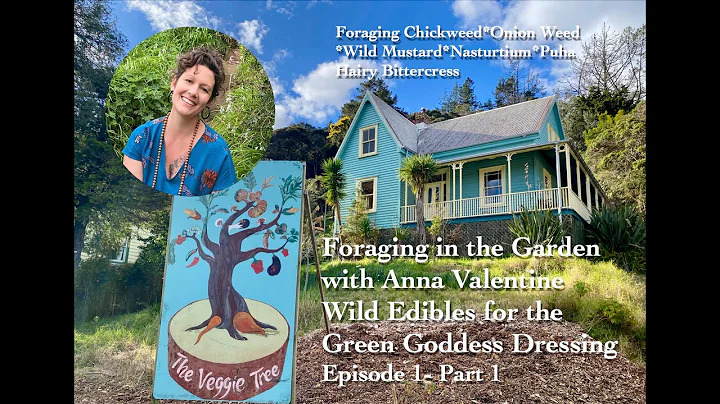
Anna Valentine has collaborated with Soil & Health on a series of videos for our YouTube channel, foraging in her home garden for late spring weedy edible greens, then whipping up a delicious, nutritious vegan and gluten-free dressing for a divine pasta lunch.

Hereโ€™s the recipe and links to the episodes with Anna.

We hope you enjoy this free article from Organic NZ.  Join us to access more, exclusive member-only content

Green Goddess dip or sauce 

This delicious nutritious dip can be a drizzle, salad dressing, or a cream cheese-like spread depending on the power of your blender and preference.

It is super versatile, and uses many common garden and wild weeds, but you can also mix and match with rocket, spinach, silver beet or kale. The ingredients can easily be modified according to your taste. I just head out to the yard and pick a big handful of what’s looking lush.

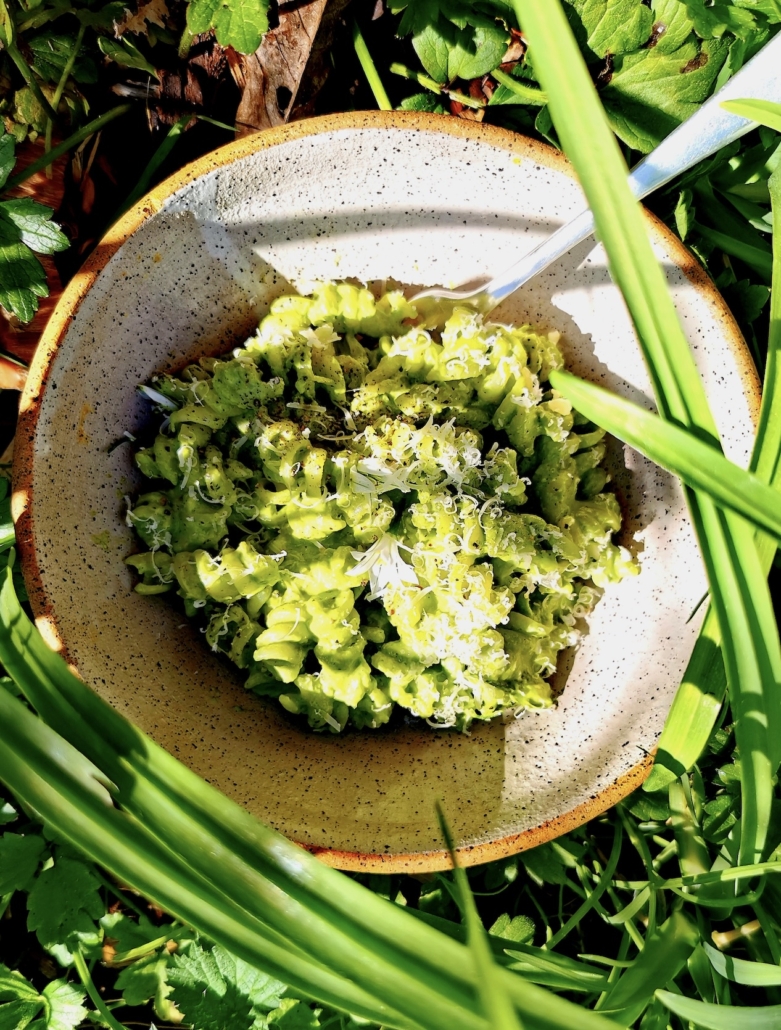
Today I gathered nasturtium, chickweed, onion weed, dandelion, oxalis, dock, plantain and wild mustard which are lush and abundant in my garden at the moment. We enjoyed it last night with tempeh nuggets, brown rice and mushrooms. You could have it with hot chips, steamed potatoes or kลซmara, with roast veges or an omelette or quiche, you could also stir it through pasta (as pictured below), or use it as a side to a cooked breakfast.ย 

Vegan | Gluten-free 

Makes 2 cups 

  • 2 cups wild weeds or other leafy greens, roughly chopped 
  • 1/2 cup cashews (soaked in hottest tap water for 1 hour then drained) 
  • Zest and juice 1 lemon 
  • 1/4 cup apple cider vinegar 
  • 1/4 cup water (optional depending on desired consistency) 
  • 2 cloves garlic, peeled 
  • 1/3 cup extra virgin olive oil and/or a mixture of hemp seed oil 
  • 1 tsp salt 
  • 1/4 tsp pepper 
  • 2 tablespoons nutritional yeast or finely grated parmesan (optional) 
Green Goddess dressing dip or sauce with pasta

Gather your ingredients and measure the following into a high-speed blender. Blitz until smooth and serve. It will thicken up a bit more in the fridge. 


Watch on YouTube

To watch Anna foraging for the weedy edible in this recipe and to see her making the dressing in her home kitchen, check out the videos linked below on the Soil & Health YouTube Channel. Donโ€™t forget to subscribe, like, and share if you appreciate this kind of content. 

Soil & Health YouTube channel 

  • Anna Valentine โ€“ Episode 1: Foraging in the Garden, part 1 (16 mins) 
  • Anna Valentine โ€“ Episode 2: Foraging in the Garden, part 2 (12 mins) 
  • Anna Valentine โ€“ Episode 2: Green Goddess Sauce & Dressing (16 mins) 

Anna Valentineโ€™s YouTube Channel 

The Veggie Tree website where you can find seasonal cookbooks, workshops, cook school classes, and more. 


TOP PHOTO: Aaron Blanco Tejedor, Unsplash


https://organicnz.org.nz/wp-content/uploads/sites/2/2026/08/aaron-blanco-tejedor-green-parsley-dressing-salad-kGkO3maydsg-unsplash.jpg 424 640 membership https://organicnz.org.nz/wp-content/uploads/sites/2/2024/09/OrganicNZ-2024-Masthead.png membership2026-10-19 10:19:512026-10-28 23:10:20Green Goddess Dressing, Dip or Sauce
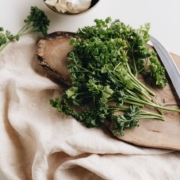
Parsley on chopping board with knife

Parsley: More than just a garnish

28 Aug 26/in Free Online, Health and Food, Magazine Articles

There are some foods that quietly get on with the job without demanding much attention.

Parsley is one of them. Paula Sharp shines a light on this humble herb that also deserves to be considered a vegetable.

We hope you enjoy this free article from Organic NZ.  Join us to access more, exclusive member-only content


Often sprinkled over a meal almost as an afterthought, this hardy little herb can be more than a pretty finishing touch. It brings flavour, colour and a surprising range of nutrients and plant compounds to the plate. It is particularly fabulous during winter to add a little more freshness and variety to our meals.

Growing parsley


Parsley is relatively easy to grow in most parts of New Zealand.

Give it reasonable sunshine, good soil and regular watering and it can keep producing through the cooler months.

It doesnโ€™t need much space, making it ideal for a garden, raised bed or even a pot outside the kitchen door.

Grow it from seed or seedlings โ€“ ask around your neighbourhood if anyone has self-sown seedlings to spare. Once itโ€™s established you can let it go to seed and watch it pop up of its own accord.

It is biennial, meaning it will set seed in its second year, so to ensure continuous supply you may need to sow or plant parsley a couple of years in a row.

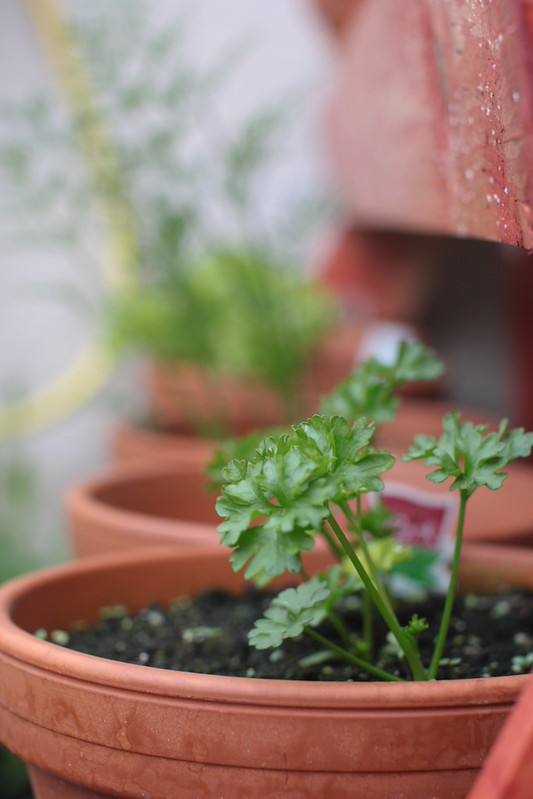
ABOVE: Parsley grows easily in a pot. Photo: Magnus Franklin, Flickr

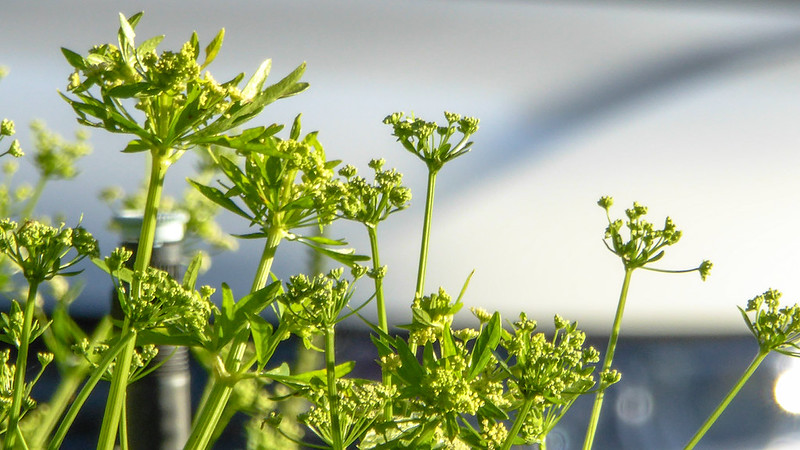
ABOVE: Parsley going to seed, by Theen Moy, Flickr

Packed with nutrients


If you already have parsley growing, here’s your encouragement to stop thinking of it as a garnish and start thinking of it as food.

Parsley may be small, but it is surprisingly nutrient-dense. It provides:

  • Vitamin K โ€“ important for normal blood clotting and maintaining healthy bones.
  • Vitamin C โ€“ contributes to normal immune function and helps the body absorb iron from plant foods.
  • Folate โ€“ needed for normal cell division and the formation of healthy red blood cells.
  • Carotenoids โ€“ Including beta-carotene, lutein and zeaxanthin, naturally occurring plant compounds.
  • A variety of phytochemicals โ€“ the natural compounds found in plants that contribute to their colour, flavour and aroma and help protect plants from environmental stress.

Eat a variety of plants

Of course, weโ€™re not going to meet all our nutritional needs from a handful of parsley. But thatโ€™s not really the point. One of my favourite nutrition messages is simply: eat a variety of plants.

Different plants provide different combinations of vitamins, minerals, fibre and phytochemicals. Rather than eating the same three or four vegetables week after week, look for easy ways to increase the variety on your plate. And this is where herbs are brilliant.

A generous handful of parsley adds another plant to your diet while bringing a completely different flavour and collection of plant compounds to the meal. Think of herbs as small but mighty contributors to dietary diversity.

You donโ€™t need to overhaul your diet. Add a handful of parsley here, some fresh herbs there, try a different vegetable next week and gradually your plant variety starts to grow.


VITAMIN K:
A note about vitamin K โ€“ parsley is particularly high in vitamin K. If you take warfarin or another vitamin-K-sensitive anticoagulant, the important thing isnโ€™t necessarily to avoid parsley altogether, but to keep your intake of vitamin-K-rich foods consistent and follow your healthcare professionalโ€™s advice.

Flavour and savour

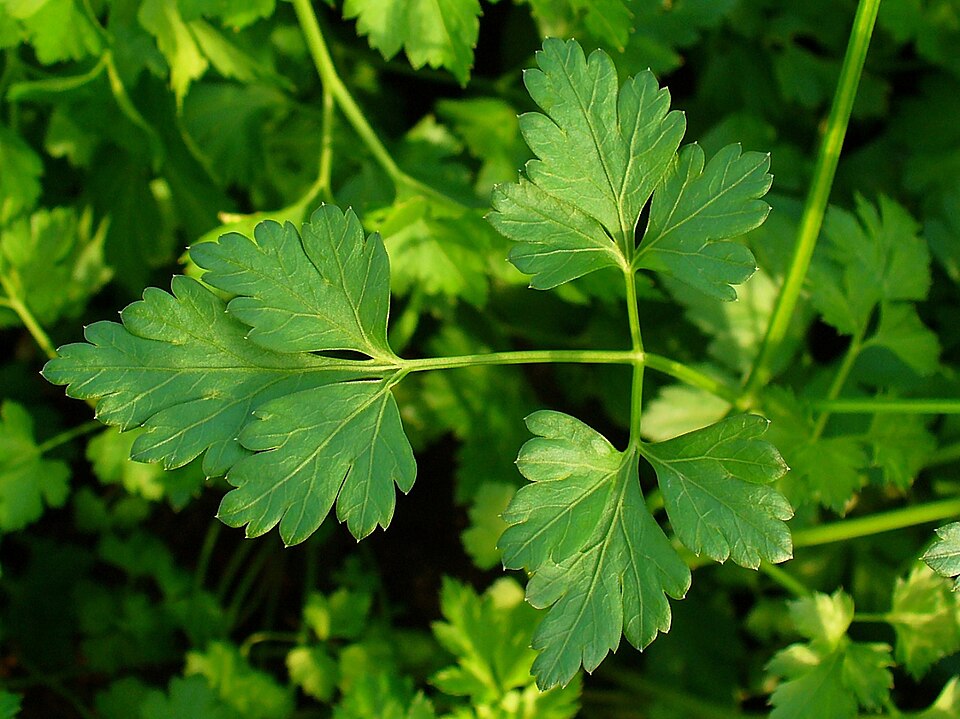
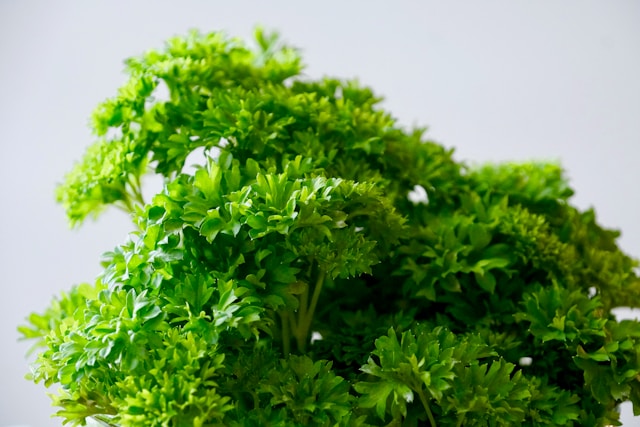
Did you know there are different types of parsley? The two most familiar are curly-leaf parsley, with its frilly leaves and slightly milder flavour, and flat-leaf or Italian parsley, which has broader leaves and a stronger, fresher flavour.

Both have a place in the kitchen, but flat-leaf parsley is particularly lovely when you want the herb itself to be a feature rather than simply a decoration.

ABOVE LEFT: Flat-leaf parsley (photo: H Zell, Wikimedia Commons), and RIGHT: curly-leaf parsley (Hanna Stolt, Unsplash)

Donโ€™t throw away the stalks. The tender stalks are perfectly edible and packed with flavour. Finely chop them into soups, sauces, stocks, casseroles, dressings or salads. Itโ€™s a simple way to reduce food waste while getting more from the bunch. Put parsley to work!

Serving suggestions


Fresh parsley can lift the flavour of winter foods beautifully. Try chopping a generous handful and adding it to:

  • Vegetable, chicken or lentil soup
  • Roasted kลซmara, pumpkin or carrots
  • Mashed potato or cauliflower
  • Scrambled eggs or omelettes
  • Homemade dips
  • Fish cakes or meatballs
  • Brown rice, quinoa or other grain salads
  • A simple lemon and olive oil dressing

It brings freshness, colour and flavour without needing much else. And there is something particularly satisfying about stepping outside just before dinner, snipping a handful of herbs and taking them straight into the kitchen.

Next time you see that little bunch of parsley sitting in the fridge, donโ€™t save it for decoration.

Chop it. Eat it. Enjoy it!

Sometimes the simplest foods are the ones we overlook.


Recipe


Parsley & lemon dressing


This takes just minutes to make and is a delicious way to use a generous amount of parsley rather than just a garnish.

Ingredients

  • 1 large handful fresh parsley, finely chopped
  • Juice and zest of 1 lemon
  • 3 tablespoons extra virgin olive oil
  • 1 small garlic clove, finely grated
  • 1 teaspoon Dijon mustard
  • A pinch of sea salt
  • Freshly ground black pepper

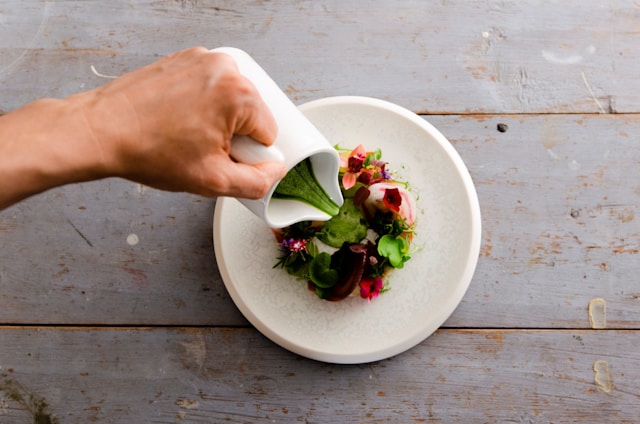
ABOVE: Aaron Blanco Tejedor, Unsplash

Method

  1. Mix everything together and drizzle over roasted vegetables, fish, chicken, potatoes or a warm grain salad.
  2. Store any leftovers in a sealed jar in the refrigerator and use within a few days.

Parsley tabbouleh

Serves 4. This is a show-stopper at a barbecue!

  • 1 cup cooked bulgur wheat, cooled
  • 2 large handfuls fresh flat-leaf parsley, finely chopped
  • ยฝ cup fresh mint leaves, finely chopped
  • 2 large tomatoes, finely diced
  • ยฝ small cucumber, finely diced
  • 2 spring onions, finely sliced
  • Juice of 1 large lemon
  • 3 tbsp extra virgin olive oil
  • ยฝ tsp ground cumin
  • Sea salt and freshly ground black pepper
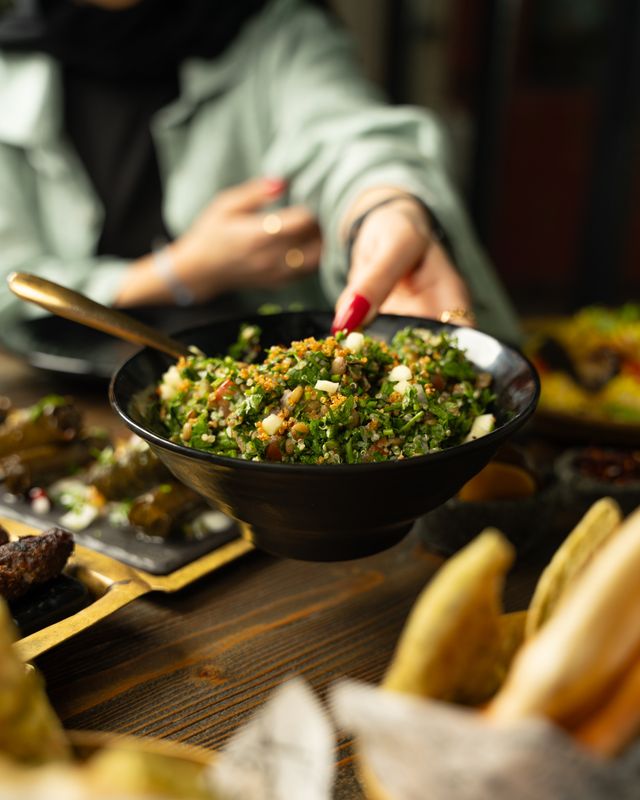
Someone passing a bowl of tabbouleh

ABOVE: Ali Dashti, Pexels

  1. Place the cooled bulgur in a large bowl and fluff with a fork.
  2. Add the parsley, mint, tomatoes, cucumber and spring onion.
  3. Whisk together the lemon juice, olive oil and cumin, then pour over the salad.
  4. Toss well and season with salt and pepper.
  5. Leave to stand for 15โ€“20 minutes before serving so the flavours can mingle.

Want more seasonal nutrition inspiration?

Iโ€™m Paula Sharp, nutritional therapist and founder of Paula Sharp Nutrition, supporting women to nourish their health with sustainable food and mindset habits.

If youโ€™d like seasonal recipes, practical nutrition tips and evidence-based wellness insights delivered straight to your inbox, Iโ€™d love you to join my newsletter. Sign up at: www.paulasharpnutrition.com

Photo at top of article:


https://organicnz.org.nz/wp-content/uploads/sites/2/2026/08/pexels-alleksana-parsley-board-knife-4113918.jpg 853 1280 membership https://organicnz.org.nz/wp-content/uploads/sites/2/2024/09/OrganicNZ-2024-Masthead.png membership2026-08-28 13:49:122026-08-28 13:49:14Parsley: More than just a garnish

Calendars for sale now!

Calendars for sale now!

Categories

  • All Articles
  • News
  • Features
  • Gardening
  • Health and Food
  • Farming and Horticulture
  • Building and Technology
  • Free Online

Latest Articles

  • Aromatherapy diffuser with candle at night
    Aromatherapy for better sleep
  • Butterflies and Moths of Aotearoa book cover image
    Butterflies and Moths of Aotearoa
  • Buy two calendars for less!
    2027 Calendars For Sale!
  • Harvested rhubarb stalks; photo by Planet Fox, Pixabay
    Rhubarb: An old-fashioned favourite
  • Pile of biodynamic cow horns
    Understanding Biodynamics
  • preparing to save seeds - moon calendar
    Moon Calendar November-December 2026
  • Green herb dressing being poured over salad
    Green Goddess Dressing, Dip or Sauce
  • The Health Detective’s Handbook
  • Savoy cabbage
    When cabbage is sexy!
  • Peter Butler
    Plant fiend
Soil & Health Association of NZ Established 1941

Proudly published by the Soil & Health Association NZ

  • About us
  • Contact us
  • Help us
  • Sign up to the Newsletter
ยฉ Copyright OrganicNZ | Soil and Health Association NZ.
  • Link to Facebook
  • Link to Instagram
  • Link to LinkedIn
  • Privacy Policy
  • Editorial Policy
Scroll to top Scroll to top Scroll to top