Organic Week 2026
1st-10th May
Organic Week is coming up during the first week of May and the Soil & Health Association has put together a vibrant programme of online events. The full schedule can be found here including links to register for events.
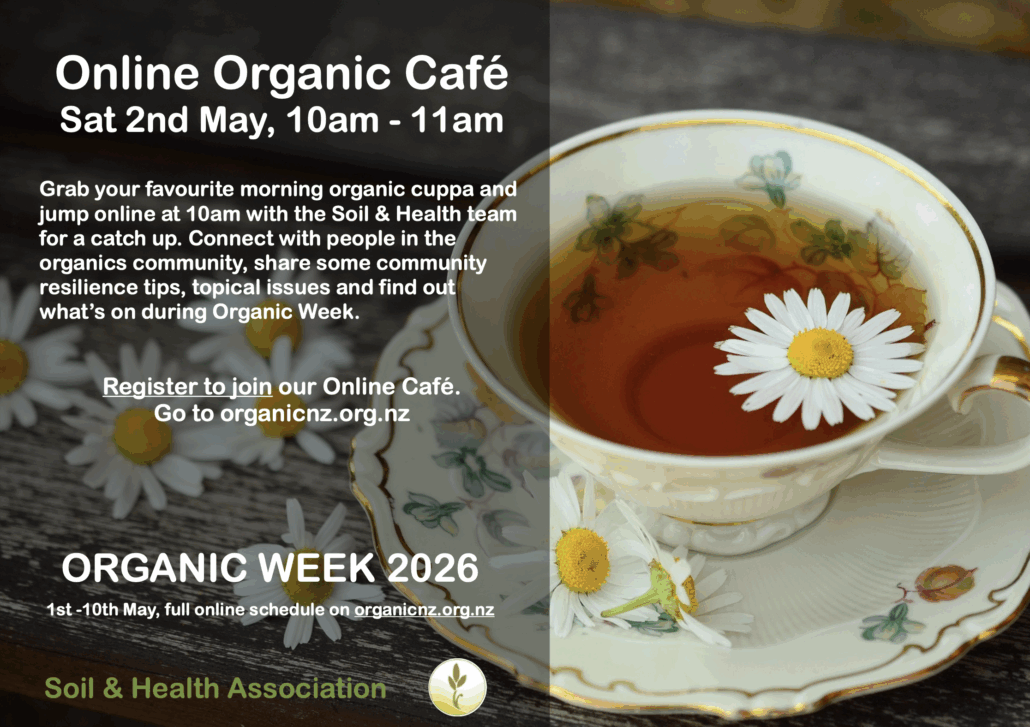
This year’s Organic Week invites you to connect, learn, and be inspired through a rich lineup of webinars, interviews, and a fun “Online Organic Café” where you can connect with the Team and others in the organics community.
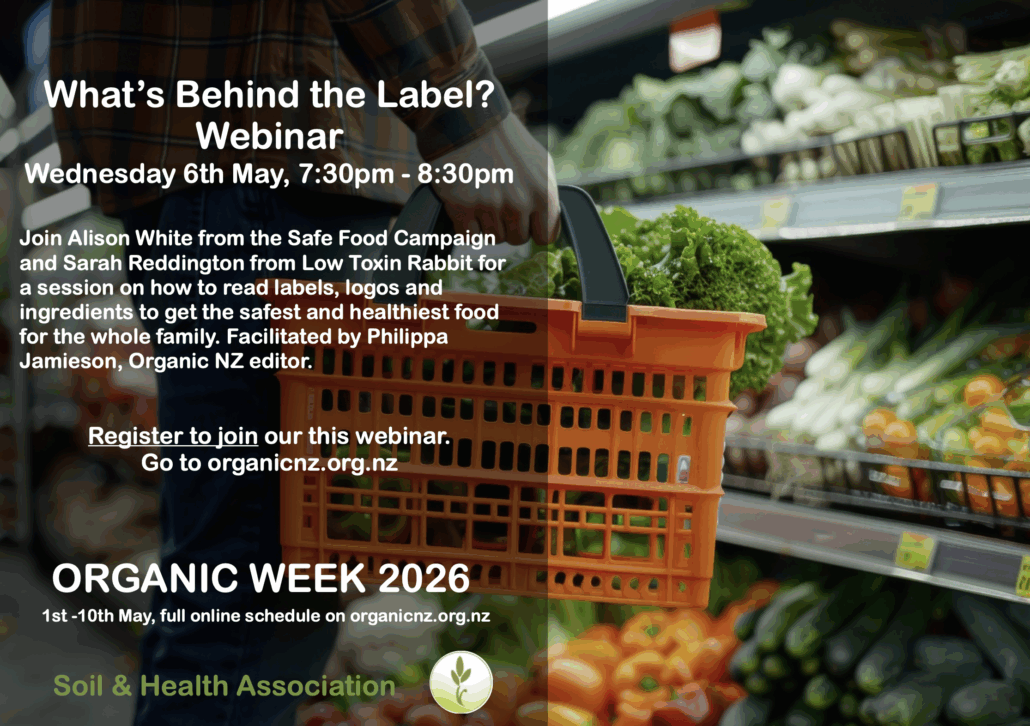
Learn how to make informed food choices in our “What’s Behind the Label?” webinar with Alison White from the Safe Food Campaign and Sarah Reddington from Low Toxin Rabbit.
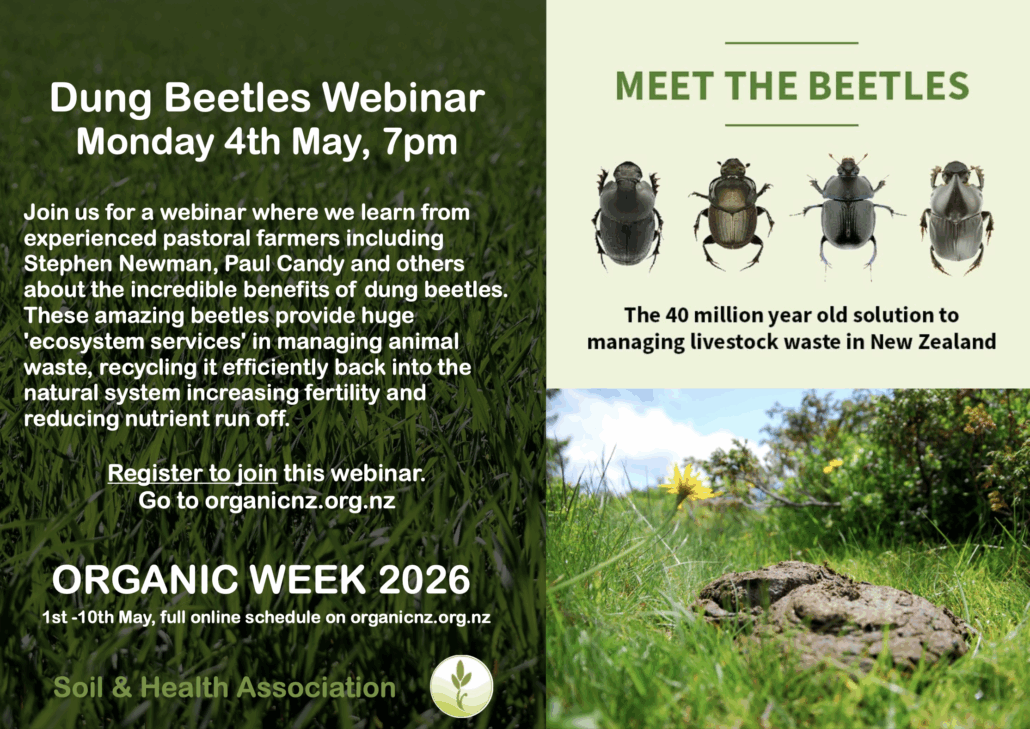
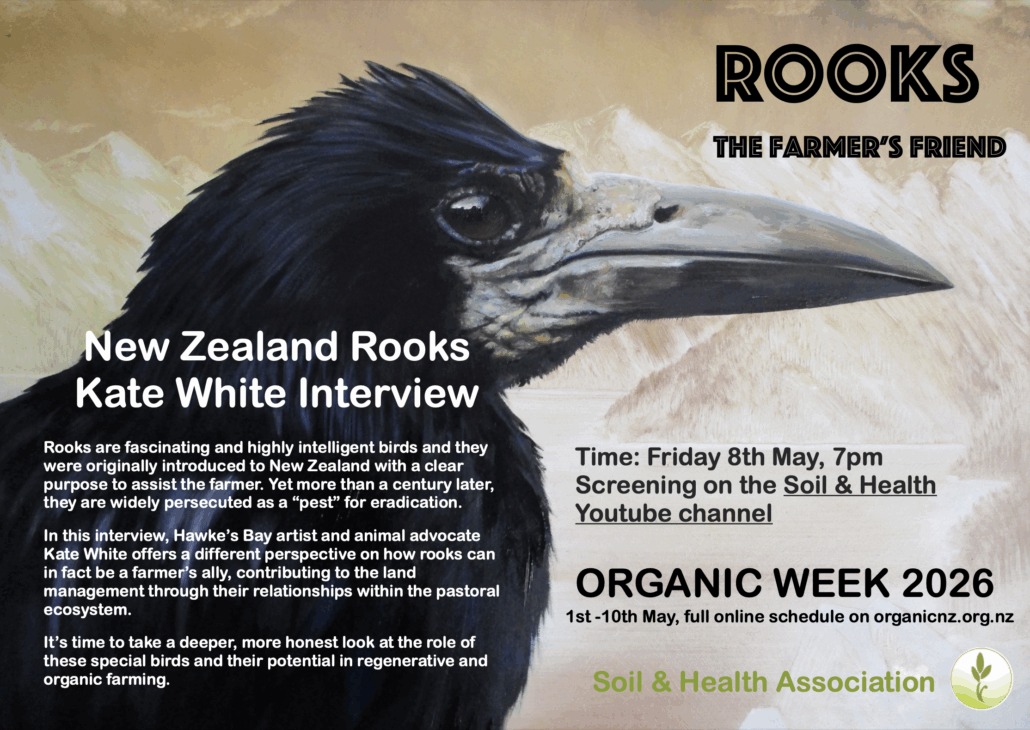
Explore the incredible benefits of dung beetles and hear from voices like Kate White on the potential of rooks in pastoral farming.
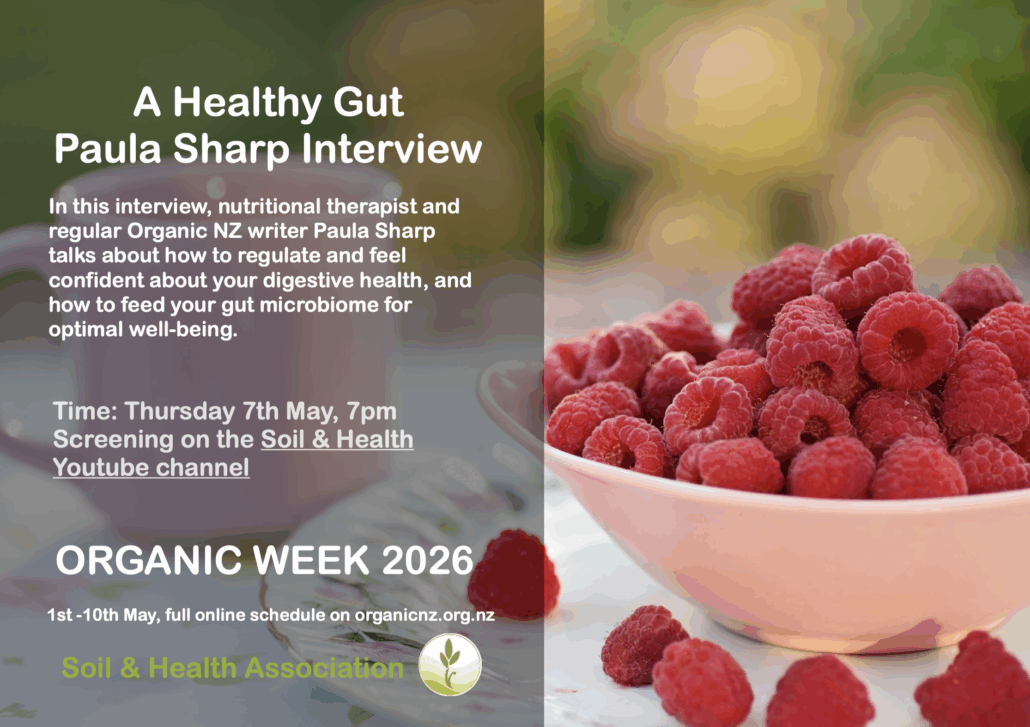
There will also be an interview with our regular writer, nutritional therapist Paula Sharp on gut health. Whether you’re an organic grower, eater, or advocate, there’s something for everyone.
Register for Webinars and the Organic Café
Register for the Online Organic Café
Register for the Dung Beetle Webinar
Register for the What’s Behind the Label Webinar
Interviews will play on the Soil & Health YouTube channel:
Rooks: Interview with Kate White
Gut Health: Interview with Paula Sharp
Regional Events – In Person
Other events are happening around the country during Organic Week to celebrate Organics and a thriving natural world. Please check details as prices and requirements for these events vary.
Bay of Plenty – Coromandel
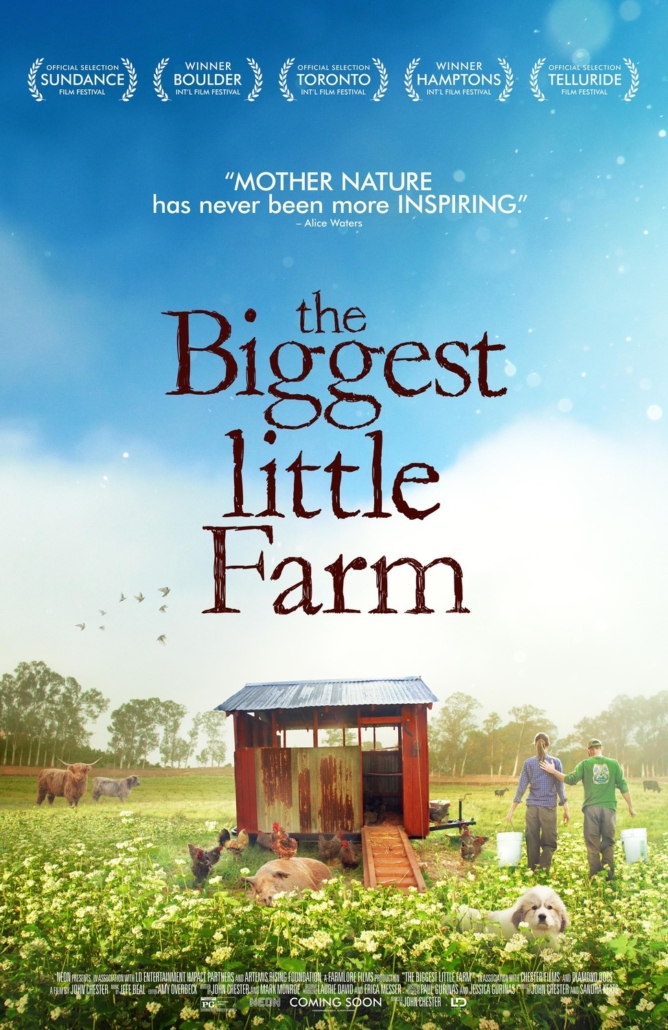
Film Screening: The Biggest Little Farm
1, 2 and 6 May 2026
To celebrate Organic Week, Thames Organic Shop and Left Bank Theatre are bringing the award-winning documentary ‘The Biggest Little Farm’ to Te Kauaeranga Thames.
On the opening night, Organic NZ Farmer of the Year 2021, Yotam Kay of Pakaraka Permaculture, will kick off the film with a short talk.
Come and be inspired by John, Molly and dog Todd’s journey to turn their 200 acre paddock into a living, breathing, regenerative farm.
- Friday 1 May, doors open 6.30pm; short talk by Yotam Kay at 7pm, then the film
- Saturday 2 May, 1pm
- Wednesday 6 May, 4pm
Left Bank Theatre, 659 Pollen St, Thames, phone 07 868 3142
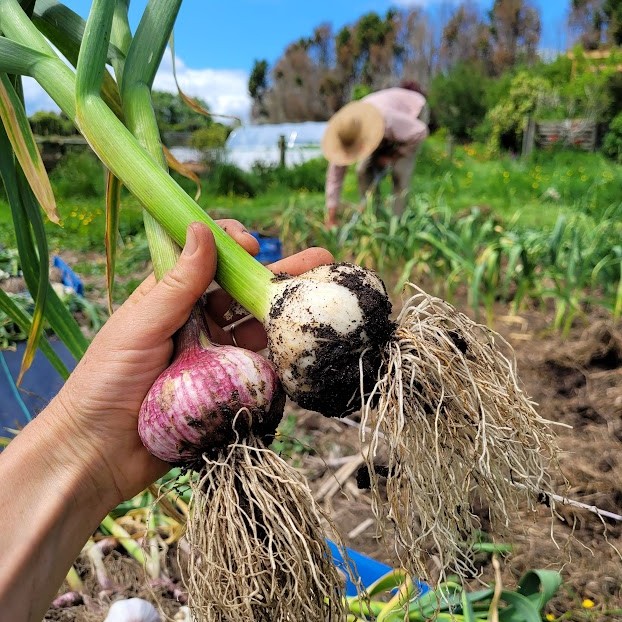
Garlic Growing Workshop from Lux Organics
3 May 2026
Learn successful garlic growing with experienced organic grower Jenny Lux. We will go through garden bed preparation, spacing, fertilisation and crop care, so you can have your best shot at growing decent garlic for year round supply.
10.30am to 12pm, 21 Kingsley Drive, Ngongotaha
REGISTER: https://openfoodnetwork.org.nz/lux-organics/shop#/shop_panel
Wellington Region
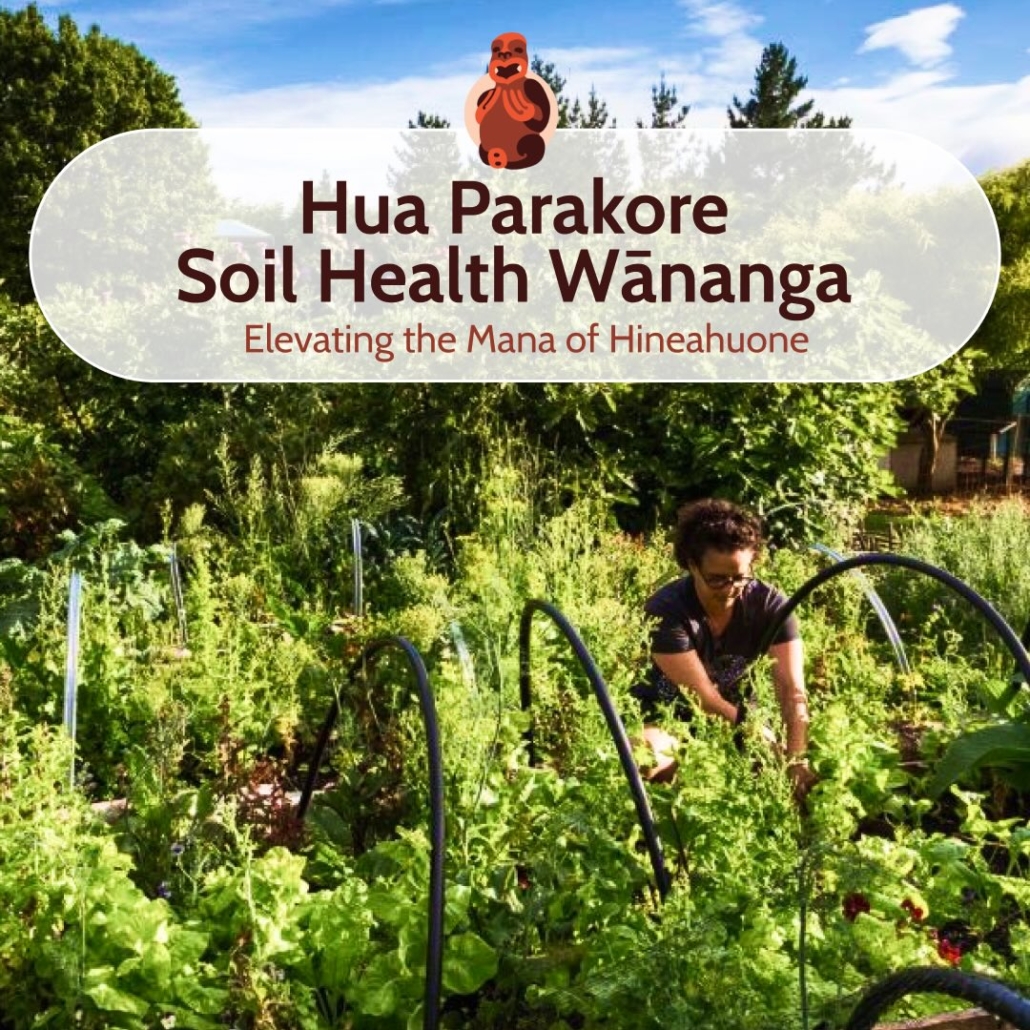
Hua Parakore Soil Health Wānanga
2-3 May
Through collective learning, building relationships and the sharing of local knowledge, our focus is to help you leave with greater confidence to apply hua parakore approaches in your own māra, support healthy soils, healthy kai and the wellbeing of whānau, whenua and future generations.
Join us for a very special Hua Parakore Soil Health Wānanga, led by hua parakore food grower Dr. Jessica Hutchings of Papawhakaritorito Trust.
Innermost Gardens, Mt Victoria, Te Whanganui-a-Tara
T Leaf T shop in Wellington
During Organic Week 1-7 May
T Leaf T shop in Wellington, 1 Manners St, will be offering free samples of organic tea during organic week. Pop by and try some samples!
Earthworkers Hort 101 — Mangaroa Te Awa Kairangi
4-8 May
Unlock the secrets of vibrant, living soil and join a thriving community of growers at Earthworkers Hort 101, a five-day immersive experience at Mangaroa Farms and Mahinga Kai that empowers you to transition to biology-first regenerative growing systems with confidence and ongoing support.
108 Whitemans Valley Road, Whitemans Valley, Upper Hutt 5371, New Zealand
REGISTER: https://www.earthworkers.org/events/hort-101-mangaroa-te-awa-kairangi-wellington-region
Pick your own veges
2 May
9am-11am at Mangaroa Valley Farm, Upper Hutt.
Book online: https://store.mangaroa.org/products/148376
Safe Food Stall
9 May
8.30am-12.30pm at Thorndon Farmers’ Market, Hill St. With organic food and tea tastings.
Marlborough
Biodynamic NZ and Seresin Estate
9 May, 10am – 1 pm
Join us for a hands-on morning of biodynamics at beautiful Seresin Estate, where we’ll come together to deepen our understanding and connect with the land.
This practical session will include:
- An introduction to biodynamic principles and practices
- A collaborative activity to prepare and bury approximately 150 BD horns
- A guided tour of the Seresin Estate for those interested
- Time to connect over a relaxed wine tasting to close the morning.
Whether you’re experienced in biodynamics or just beginning your journey, this is a welcoming space to learn, share, and contribute. Limited spaces, koha welcomed.
Learn more and register at: https://events.humanitix.com/bdnz-and-seresin-organic-week-2026
Northland
Every Bite with celebrity Chef Anna Valentine
8 May, 6 – 7:30pm
A tasty event that helps to create new habits to reduce food waste with the Everybite home programme. Hosted by Ecosolutions.
Kingston House, Kerikeri, Far North
EMAIL: Anouk@cbec.co.nz
Southland
Sweet Treats & Music Night
6 May
Live music with Sweet Sounds by Sadie and organic desserts by Chef Kate, at ComplEat Wellness, Invercargill.
Dine in or take away, bring your friends and family – limited seats available: booking is essential. Pop in store to book (24 Windsor St, Invercargill, phone 03 217 9010), or email compleatwellness@gmail.com to secure your spot.