Miner’s Lettuce – Claytonia Perfoliata
It is prolific, grows just about anywhere with minimal care, and self-seeds for the following season. Anna-Marie Barnes describes an easy-care plant that provides fresh greens all winter long.
We hope you enjoy this free article from OrganicNZ. Join us to access more, exclusive members-only content
Aptly otherwise known as ‘spring beauty’, Claytonia spp. are a genus of herbaceous flowering plants native to America and Asia. C. perfoliata has become naturalised across Britain, Australia, and New Zealand. Befitting its common names, Indian or miner’s lettuce, it was a valuable, nutritious staple for First Nation peoples and later, the miners of the Californian gold rushes, and likely arrived in New Zealand with the early Chinese gold miners. It is now a sought-after culinary species, with restaurateurs overseas forking out around USD$16.95 for a pound of the fleshy green leaves.
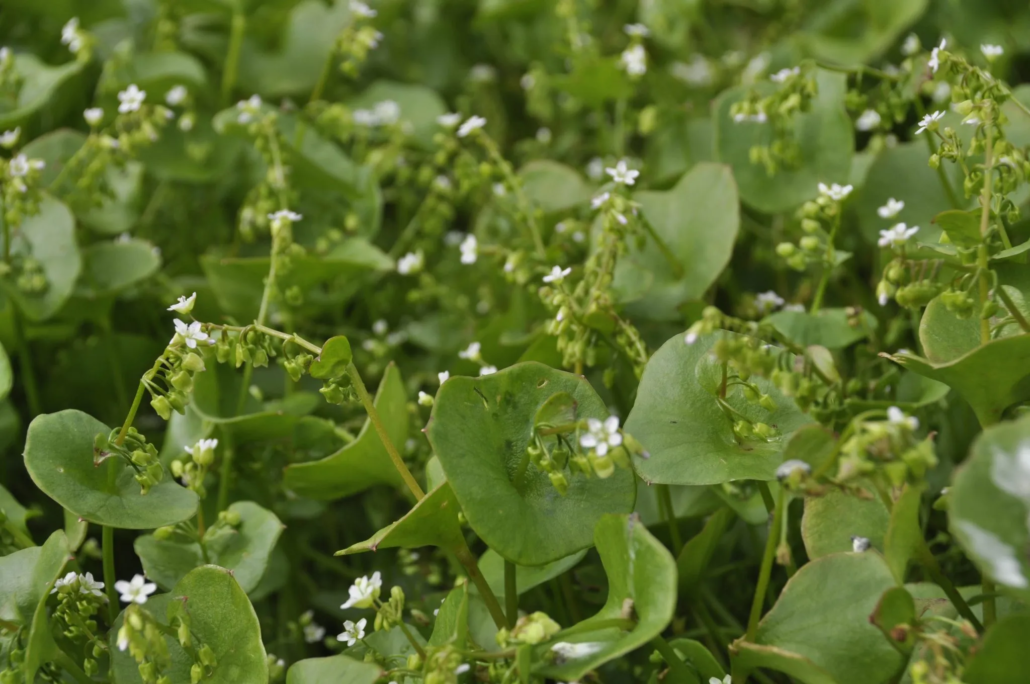
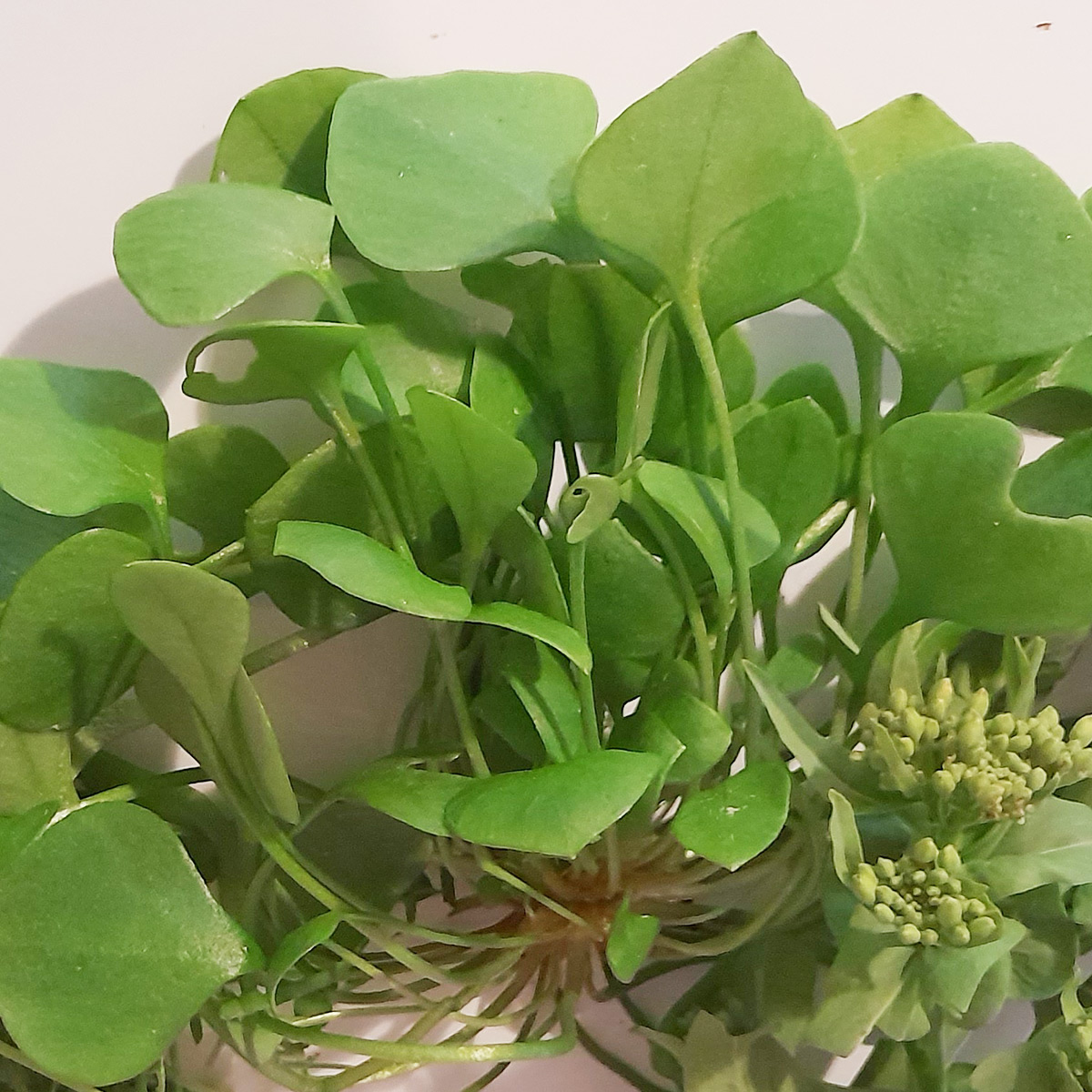
I first came across miner’s lettuce growing wild on the Port Hills, high above Christchurch. Taken by its unusually-shaped leaves, which completely encircle clusters of tiny white flowers when mature, I headed home to do some research and was pleased to find the seed readily available commercially. I’ve grown it ever since, and have spotted it growing along the edge of paths and in shady spots on many other walking tracks around the South Island. I’m always hesitant to harvest from these patches however, especially when the routes are popular with dog-walkers…
Plant family: Montiaceae Also known as: Indian lettuce, blinks, winter purslane, rooreh.
Relatives: The genus Claytonia used to be grouped in the Portulaceae, home to another well-known salad-weed-herb, purslane.
Native to: The western mountain and coastal regions of north America from southernmost Alaska and central British Columbia south to Mexico.
Miner’s lettuce germinates readily in autumn and crops right throughout winter in sheltered spots, producing well into spring before eventually bolting to seed. It forms cushiony rosettes of rounded spade-shaped leaves, with its stems sometimes taking on a pinkish tint in cooler climates.
The tiny white flowers are insect- pollinated. It’s one of those plants that if sown once, you’ll have it forever, as it self-seeds readily.
It makes a great groundcover, and being shallow-rooted, has the convenient quality of being super simple to remove if it begins to take over. Planted in the right spot, miner’s lettuce will thrive. In the shady, obviously nutrient-rich corners of a friend’s grandmother’s garden in Nelson, I’ve seen the leaves reach hand-span size.
Where to grow
Miner’s lettuce is a true plant of disturbed ground. It has a fondness for semi-shaded areas and damp soils. It will grow in drier spots but the plants will be smaller-leaved, have a tendency to bolt and/or incline towards bitterness. It is not nutrient-hungry and tolerates lows of down to -15°C. It may crop year-round in some climates.
Maintenance
Once you shallow-sow some tiny, shiny black miner’s lettuce seed, this plant will literally look after itself. It is the ultimate easy-care salad species – just sow and walk away. I’ve grown it in raised beds, removed the spent plants at the end of winter, re-sown another crop in the same bed, pulled that out at the end of summer, and as the autumn rains fall, so does the new crop of self- seeded miner’s lettuce rise. It makes a great edible, self- perpetuating winter cover crop – your soil will thank you for it too.
Harvest
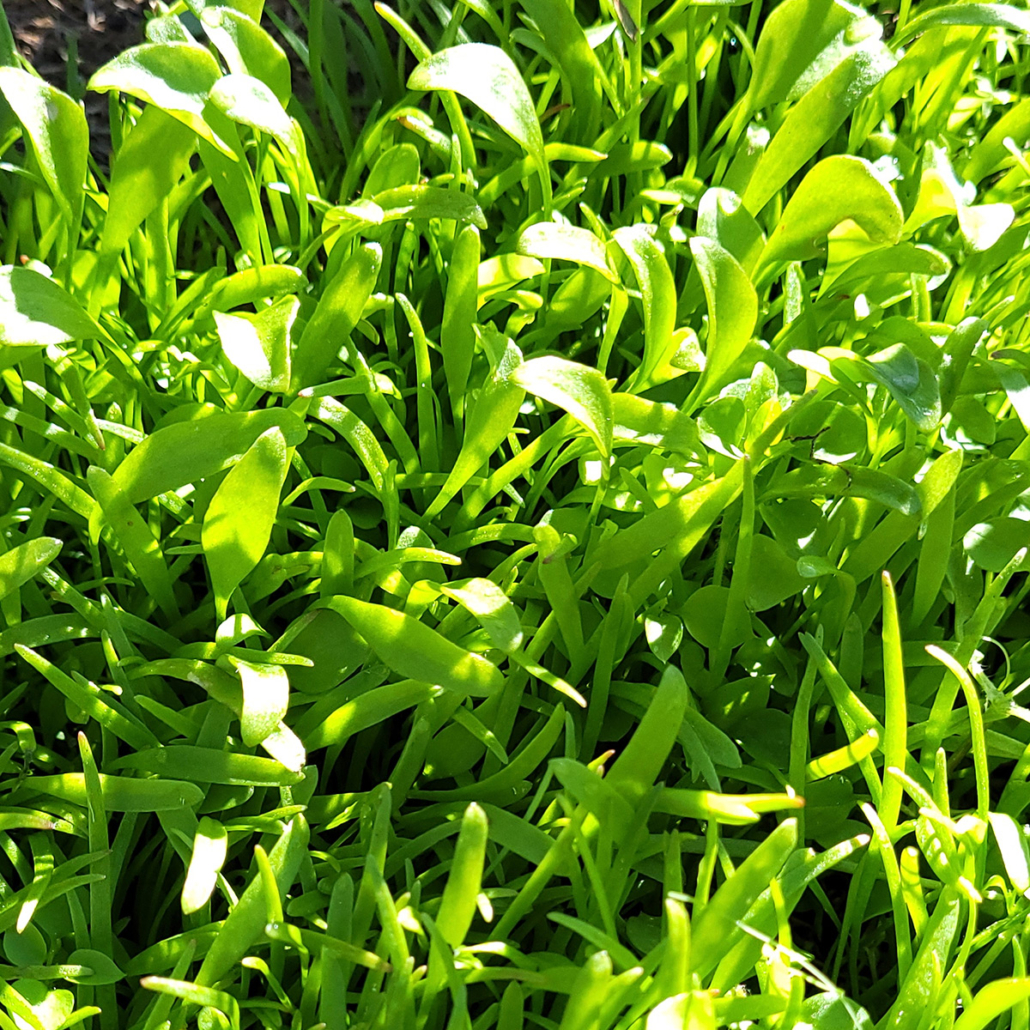
Miner’s lettuce should be ready to harvest from late autumn-early winter. You can pick individual leaves, or uproot entire plants. Remove the roots, give the leaves a quick rinse under the tap and you’re ready to serve. You can store harvested leaves in a plastic bag in the fridge for a few days, but I recommend harvesting and eating miner’s lettuce fresh.
The fleshy, succulent leaves have a pleasant, almost crisp texture and mild flavour, somewhat like a cross between spinach and chickweed. It is best served raw, as it wilts away to nothing when cooked. Great for salads, smoothies, and pesto stirred through pasta. Miner’s lettuce contains useful amounts of vitamins C and A and iron.
Where to source
Miner’s lettuce seed is available for purchase from various retailers – including Kings Seeds. Alternatively, obtain some almost-spent plants from a wild patch or friend’s garden at the end of winter and either collect the seed produced in a paper bag, or deposit the plants directly where you’d like miner’s lettuce to grow next autumn.
Anna-Marie Barnes is the New Zealand Tree Crops Association’s South Island Vice-President. She holds a Bachelor of Science (Primary Production) with a background in agroecology and entomology, and a Graduate Diploma of Teaching and Learning (Secondary). A lifelong gardener, she is a dedicated self-sufficiency enthusiast and endeavours to grow as much of her own produce as possible on a lifestyle block on the West Coast, with three unruly Orpington hens.
Photo Credit: Feature image Sheryn Dean.