• Link to Facebook
  • Link to Instagram
  • Link to LinkedIn
Reset member access or visit Soil & Health NZ
Organic NZ
  • Articles
    • Features
    • Gardening
    • Health and Food
    • Farming and Horticulture
    • Building and Technology
    • News
  • Competitions
  • Donate
  • Login
  • Join Us
  • Click to open the search input field Click to open the search input field Search
  • Menu Menu

Tag Archive for: climate change

Posts

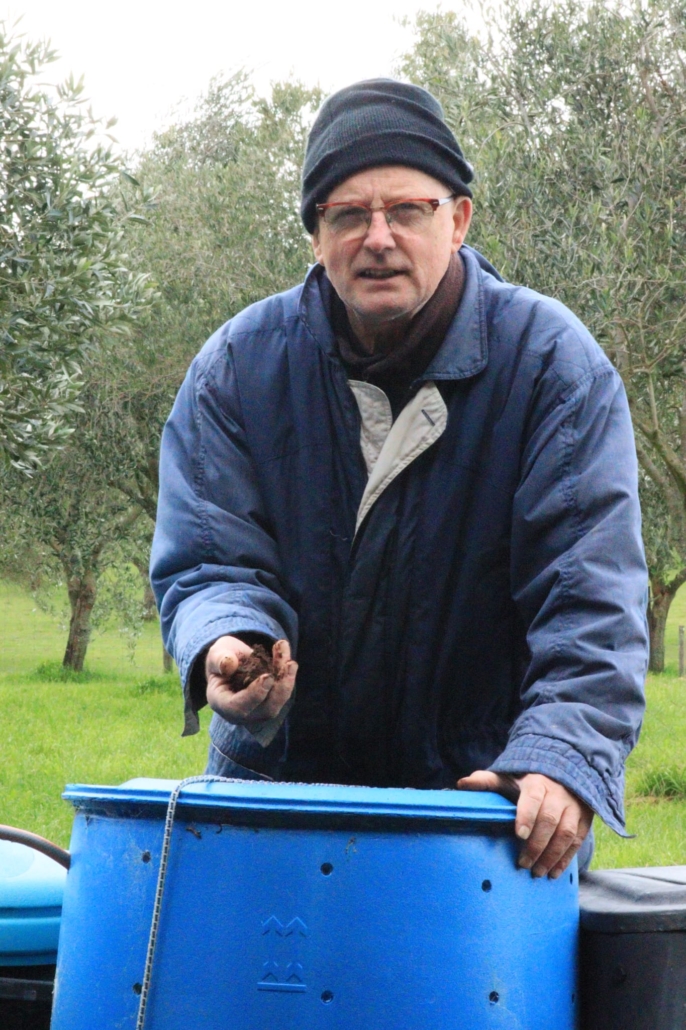
Ross Vintiner of Dali Olives holding a handful of Johnson-Su compost

Organic probiotic for the soil

24 Sep 26/in Farming and Horticulture, Free Online, Magazine Articles

By Ross Vintiner


Growers worldwide are experiencing two fundamental growing challenges – high and rising input costs, and climate extremes. Species, soil, plants, crops, food supply and affordability are all threatened.

Organics is well equipped to solve and lead solutions.


This article proposes one proven method – the Johnson-Su compost system – as an example of how growers of all stripes can reduce inputs and costs, improve soil health, resilience and yield, and reduce food costs and human contributions to climate extremes.

We hope you enjoy this free article from Organic NZ.  Join us to access more, exclusive member-only content

First, a little context

Since the 1940s, agricultural fertiliser input volumes and prices have risen dramatically in real terms, whereas production per input unit has declined. More fertiliser, less crop and greater cost per input unit applied. The result: higher food prices, poorer soil, health, species, environmental outcomes, and lower grower returns.

Climate extremes will intensify with an elevated El Niño weather pattern now in place. Resilience to adapt to fast-changing climate has become the grail of agriculture. As a result, a fundamental change is occurring to how we grow.

Mainstream and even progressive agronomists have until recently put huge productive store in soil and plant nutrition through fertiliser inputs. The soil as an ecosystem was lost to industrial agriculture. Thanks to those practising the wisdom of Rudolf Steiner, founder of biodynamics, Albert Howard, father of western organics, and indigenous systems, the soil is again being viewed more widely as a living, integrated organism rather than the dead chemical medium of dirt.

The living soil
Recent pioneers have applied scientific understanding of the soil food web, the soil ecosystem, to show how microbes are more critical to soil health and productive performance than fertiliser inputs. Everything we have in our environment today comes from microbes that have cycled carbon and minerals to grow life.

Despite this, fungi, for example, are being destroyed in modern agricultural soils – lowering plant immunity, eroding soil, reducing nutrient uptake, lessening water-holding capacity, producing food of poorer quality. There is a microbial species crisis.

Below our feet are armies of bacteria, fungi, protozoa, viruses, microbes far greater in number and importance to us than the stars above. But they are under threat. It is imperative that we save soil microbes to save ourselves.

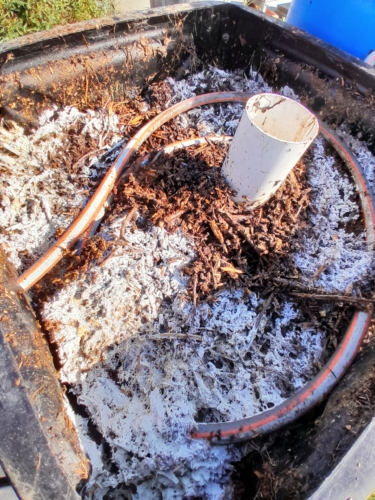
ABOVE: White fungal cap on a Johnson-Su compost

What are the best growing systems?

The Kete Ora Trust funded Plant & Food NZ to undertake a meta-analysis of world research findings to determine the best growing system to produce nutrient-dense food (read more here). Results were mixed.

Far clearer were these overwhelming findings:

  1. that organic and biodynamic growing increase microbial biomass, the total number of microbes in soil;
  2. that organics produces the highest percentage of soil organic matter (SOM), made in large part from microbes, compared to non-organic farming;
  3. and that organics often outperforms other farming systems, thanks to microbes, to help plants produce phytonutrients, vital natural protectors of plants, animals and us. Phytonutrients are antioxidants and anti-inflammatories for the body’s immunity.

Microbes play a huge role in growing soil organic matter (SOM) and the root rhizosphere, where most nutrient transfer happens between plant roots and the soil. Less than six percent of soil volume, SOM is also a key driver of soil oxygen, soil water-holding capacity (reducing the need for irrigation), beneficial soil structure (less compaction), and fertility. The more and diverse the microbes, the more carbon and the healthier and more productive SOM, soil, plant and crop. Soil plant nutrients are only a tiny fraction of total soil mass.

The Johnson-Su compost system

Enter a professor and his partner, fully aware of these points and the United Nation’s case that one third of the earth’s soils are severely degraded, largely due to modern farming practices that destroy soil microbes.

Dr David Johnson and Hui-Chun Su developed a low-cost system that brings lifeless soils back to life. This is a paradigm shift. Rather than a nutrient fertiliser, Johnson-Su compost functions as a high-biology, fungal-dominant microbial inoculant. Up to 2500 species of bacteria and 400 species of fungi can be produced. That is much greater than most composts, which are normally bacteria dominant. A full complement of soil microbe species helps a soil system function properly.

A Johnson-Su compost heap is not turned, but is aerated via vertical pipes, and matures over many months. Just a kilogram of this compost will go a long way in your garden, and can be applied either as a straight compost, compost extract ground drench or foliar spray. An easy web or YouTube search will show you how to make and use Johnson-Su compost in your garden, farm or orchard.

Think of the Johnson-Su composting method as a soil probiotic. We highly value nutritional probiotics as cultured inoculants to improve our gut microbiome. Helpful microbes control the growth of potentially harmful ones. The same principles work with Johnson-Su compost applied to the soil or plant. A small amount of the clay-like compost can be added as extract in water to power the plant’s immune system and increase its ability to grow and produce.
In the Johnson-Su method, beneficial microorganisms are reintroduced to the soil usually in the form of compost extract or seed inoculants. The extracted microbes build a diverse SOM, enable much greater plant uptake of native and introduced nutrients, improve yields, assist soil oxygen and water retention. Extract improves seed germination and growth rates, while also increasing carbon sequestration.

This is a free, open-source system. It is proven and at work in many countries around the world. It can be used in the garden and at scale, with some farms in the US, Europe and Australia applying extract to thousands of hectares. For reasons already outlined, the microbial heavy Johnson-Su compost works best organic.

It’s also an easy system. The static pile compost requires no turning. Feedstock is often free. The compost bioreactor is inexpensive to make and has no odour. There is no leaching or contamination.

Our experience in the olive grove

What I have found using this easy compost method for three years on a commercial olive grove is a 50% reduction in organic fertiliser inputs, along with high growth and yield rates, and green grazing pasture all year.

Our soil has gone from being bacterial dominant to a fungal:bacteria ratio of 4:1, equivalent to the forest floor. Trees require fungal dominant soils. Garden soils require a 1:1 ratio. All soils and roots need beneficial fungi and other microbes to function, exchanging sugar for nutrients, communicating via networks.

Our feedstock is chipped ramial (side fruiting) branches from Italian alders, with 20% leaf coverage. A range of inputs can be used, from leaves to olive and grape pomace, to wood chips, ensuring a high carbon over nitrogen ratio. The static compost pile is aerated with pipes and kept around 70% moist. Worms are added after a heating stage.
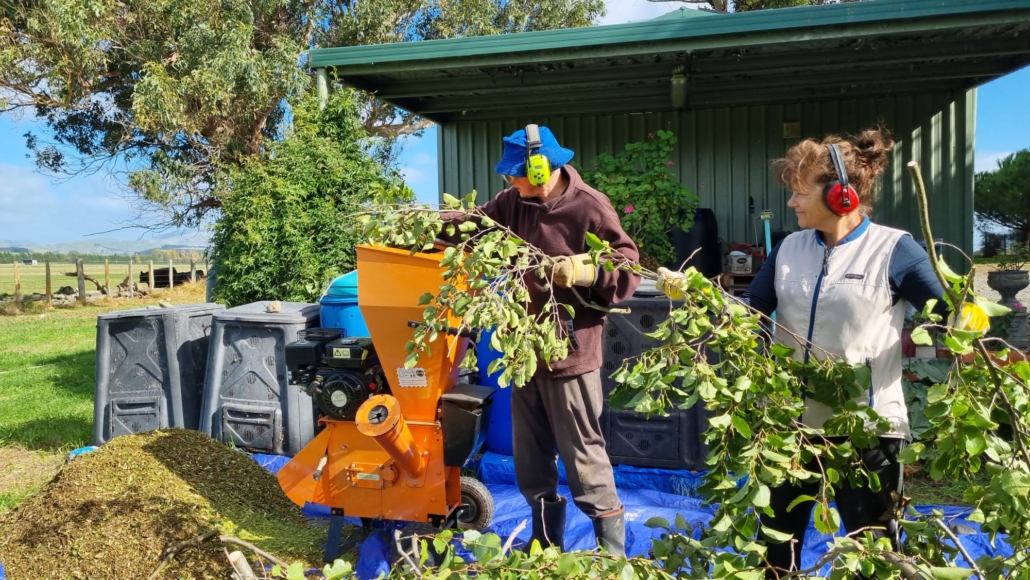
Johnson-Su is far more than compost. Please read the research. Make a batch of Johnson-Su compost this month, let it sit for nine months at least, apply and enjoy the results. You will be helping to save soil microbes.

Just when we most need to lower growing inputs and costs, and to help mitigate and build resilience against climate extremes, here is one tool to help. Organics and nature can lead not only to grow far better, but also to save species and soil, and feed us as nature intended. No GE required.
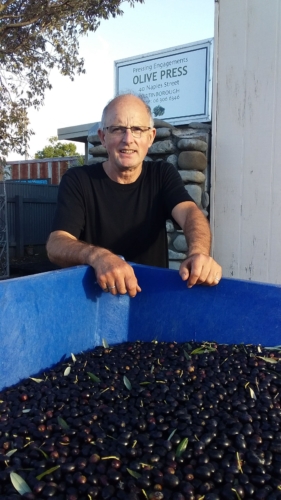

Ross Vintiner of Dali Olives

Ross Vintiner asks questions and sometimes answers come. He took a broken olive grove that now ranks in the top 100 best groves in the world, organic and biodynamic by choice. Nature’s answer.

www.daliolives.co.nz 

Text and photos: Ross Vintiner


https://organicnz.org.nz/wp-content/uploads/sites/2/2026/09/IMG-20260809-WA0001.jpg 1365 2048 membership https://organicnz.org.nz/wp-content/uploads/sites/2/2024/09/OrganicNZ-2024-Masthead.png membership2026-09-24 15:50:072026-09-24 15:51:41Organic probiotic for the soil

Shovel-ready solutions to fight climate change

11 May 21/in Farming and Horticulture

It’s vital we scale up organic, regenerative agriculture to reverse climate change, writes Andre Leu. 

There is a long-term disaster far worse than the Covid-19 pandemic. The pandemic will end in a few years, but the world will lose many millions more to sickness, hunger, poverty and catastrophic weather events because of the unprecedented climate emergency.  

Despite the global economic shut down as a response to the pandemic, the world reached a record of 417.2 parts per million of carbon dioxide (ppm CO2) in the atmosphere in May 2020 – the most in over three million years. 

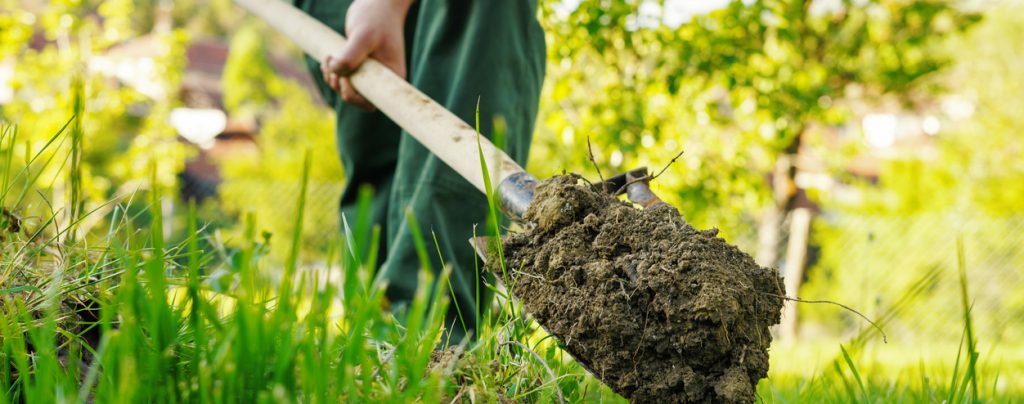
image of shovel with soil.
The soil holds almost three times the amount of carbon than the atmosphere and biomass (forests and plants) combined. 

It’s time to get on with drawing down the excess CO2 by scaling up existing regenerative agriculture practices, especially organic systems.   

Why regenerative agriculture?  

Regenerative agriculture is based on a range of food and farming systems, especially organic agriculture, that use the photosynthesis of plants to capture CO2 and store it in the soil as soil organic matter. The soil holds almost three times the amount of carbon than the atmosphere and biomass (forests and plants) combined. 

We owe this to future generations and to all the rich biodiversity on our precious living planet. 

Three best-practice regen ag systems 

There are numerous regenerative farming systems that can sequester CO2 from the atmosphere through photosynthesis, and turn this into soil organic matter through the actions of plant roots and soil biology – the soil microbiome. The simple back-of-the-envelope calculations used for the three examples below show the considerable potential of best-practice regenerative systems to reverse the climate emergency. All of these systems can be certified organic. 

BEAM composting system 

BEAM (biologically enhanced agricultural management), developed by Dr David Johnson of New Mexico State University, produces compost with a high diversity of soil microorganisms, using the Johnson-Su bioreactor. Multiple crops grown with BEAM show it can sequester 37,700 kg of CO2 per hectare per year. 

BEAM can be used in all soil-based food production systems, including annual crops, permanent crops and grazing systems, including arid and semi-arid regions. If BEAM was extrapolated globally across agricultural lands it would sequester 185 Gt of CO2 per year. 

The BEAM bioreactor is a composting system using mainly wood chips and leaves. It’s fungally dominated, regularly irrigated, aerobic but requires no turning. It can be made using readily available materials – for more information including a video showing how to make one, see regenerationinternational.org/bioreactor. 

No kill, no till  

Singing Frogs Farm in California (singingfrogsfarm.com) is a highly productive ‘no kill no till’, richly biodiverse, certified organic, agroecological horticulture farm on three acres. The key to their no-till system is to cover the planting beds with mulch and compost (instead of ploughing them or using herbicides), and planting directly into the compost, along with a high biodiversity of cash and cover crops that are continuously rotated to break weed, disease and pest cycles. 

According to Chico State University they have increased the soil organic matter from 2.4% to an optimal 7–8% in six years. This farming system is applicable to more than 80% of farmers around the world, as the majority of farmers have less than two hectares. If the Singing Frogs Farm system was extrapolated globally across arable and permanent crop lands it would sequester 179 Gt of CO2 per year.  

Regenerative grazing 

Around 68% of the world’s agricultural lands are used for grazing. The published evidence shows that correctly managed pastures can build up soil carbon faster than many other agricultural systems and this is stored deeper in the soil. This very important for New Zealand where grazing systems are a significant part of the economy.  

Research by published Machmuller et al. showed that regenerative grazing systems sequestered 29,360 kg of CO2 per hectare per year. If these regenerative grazing practices were implemented on the world’s grazing lands they would sequester 98.6 Gt of CO2 per year. 

Ending the climate emergency 

Transitioning a small proportion of global agricultural production to these evidence-based, best-practice, regenerative systems will sequester enough CO2 to reverse climate change and restore the global climate. 

  • 10% of agricultural lands under BEAM could sequester 18.5 Gt of CO2 per year. 
  • 10% of smallholder farms across arable and permanent croplands using Singing Frogs Farm’s no-kill no-till systems could sequester 18 Gt of CO2 per year.  
  • A further 10% of grasslands under regenerative grazing could sequester 10 Gt of CO2 per year. 

This would result in 46.5 Gt of CO2 per year being sequestered into the soil – which is a lot more than the amount of sequestration needed to draw down the 25.61 Gt of CO2 that is currently being emitted.  

  • Check out our article on Regen Ag for New Zealand

Shovel-ready solutions 

These back-of-the-envelope calculations show the considerable potential of scaling up proven high performing regenerative systems. These examples are ‘shovel-ready’ solutions as they are based on existing practices. There’s no need to invest in expensive, potentially dangerous and unproven technologies such as carbon capture and storage, or geo-engineering.  

We are in a climate emergency and we don’t have the luxury of wasting precious time on intellectual arguments about whether this is possible or to convince skeptics and land managers unwilling to change. 

It’s time to get on with drawing down the excess CO2 by scaling up existing regenerative agriculture practices, especially organic systems. This is very doable and achievable. It would require minimal financial costs to fund existing institutions, training organisations and relevant NGOs to run courses and workshops. Most importantly this then needs to be scaled up through proven farmer-to-farmer training systems. The evidence shows that these types of peer-to-peer systems are the most effective way to increase adoption of best practices. 

The widespread adoption of best-practice regenerative agriculture systems should be the highest priority for farmers, ranchers, governments, international organisations, elected representatives, industry, training organisations, educational institutions and climate change organisations. We owe this to future generations and to all the rich biodiversity on our precious living planet. 

About the author

André Leu became international director of Regeneration International (RI) in 2017. Previously he was president of IFOAM – Organics International, the international umbrella organisation for the organic sector. Travelling and working in more than 100 countries over 40 years, André has gained an extensive knowledge of farming and environmental systems around the world. He and his wife Julia run an organic tropical fruit farm in Daintree, Australia.

0 0 Staff Writer https://organicnz.org.nz/wp-content/uploads/sites/2/2024/09/OrganicNZ-2024-Masthead.png Staff Writer2021-05-11 13:39:562026-04-29 12:15:53Shovel-ready solutions to fight climate change

Categories

  • All Articles
  • News
  • Features
  • Gardening
  • Health and Food
  • Farming and Horticulture
  • Building and Technology
  • Free Online

Latest Articles

  • Ross Vintiner of Dali Olives holding a handful of Johnson-Su compost
    Organic probiotic for the soil
  • Biochar, black gold and bananas
  • Parsley on chopping board with knife
    Parsley: More than just a garnish
  • Hardening off seedlings in mid spring
    Growing Vegetables: Mid spring — hardening off
  • Kumera slips - moon calendar 2026
    Moon Calendar September-October 2026
  • Cabbage and mulch strip-till field trial at IGZ
    Clover under cabbage reduces harvest — rye mulch keeps yields
  • Full moon seen from Amberley, Canterbury, New Zealand
    Your plants can see the moon: Science that deepens the Moon Calendar
  • Lettuces and watering can in home garden
    Worm juice and soil fungi: why compost alone isn’t enough for juicy lettuce
  • Mandarins in a bowl
    Mandarins: Winter vitamin boost
  • 2026 Example calendar covers
    2027 Calendars
Soil & Health Association of NZ Established 1941

Proudly published by the Soil & Health Association NZ

  • About us
  • Contact us
  • Help us
  • Sign up to the Newsletter
© Copyright OrganicNZ | Soil and Health Association NZ.
  • Link to Facebook
  • Link to Instagram
  • Link to LinkedIn
  • Privacy Policy
  • Editorial Policy
Scroll to top Scroll to top Scroll to top