Mushrooming with next-gen homesteaders
Lenny Prinz and Jodi Collins are next generation homesteaders living in Ōpōtiki, Eastern Bay of Plenty. In 2009, Lenny started as a fungiculturalist: growing mushrooms and cultivating their spawn. Jodi is a potter and artist, committed to growing the couple’s children with the principles of sustainability and child-led learning.
Lenny has expanded the utility of farmed mushrooms by developing compostable packaging using mycelium, as an alternative to polystyrene. Jodi also works using zero-waste principles. In her creative work she upcycles and recycles to produce art with humour and meaning, and more formal pieces.
Nutritional therapist Paula Sharp met Lenny and Jodi at an oyster mushroom workshop, and tells their story here.
We hope you enjoy this free article from OrganicNZ. Join us to access more, exclusive member-only content
Organic lifestyle
Ōpōtiki, gateway to the East Cape, has become home for Lenny and Jodi’s family. Their homestead was built in 1907 and now boasts a huge spray-free vegetable garden using agroforestry methods. There are ducks, young chickens turning over the compost heap, while mature hens roam and lay their eggs (unpredictably at times) near their mobile coop.
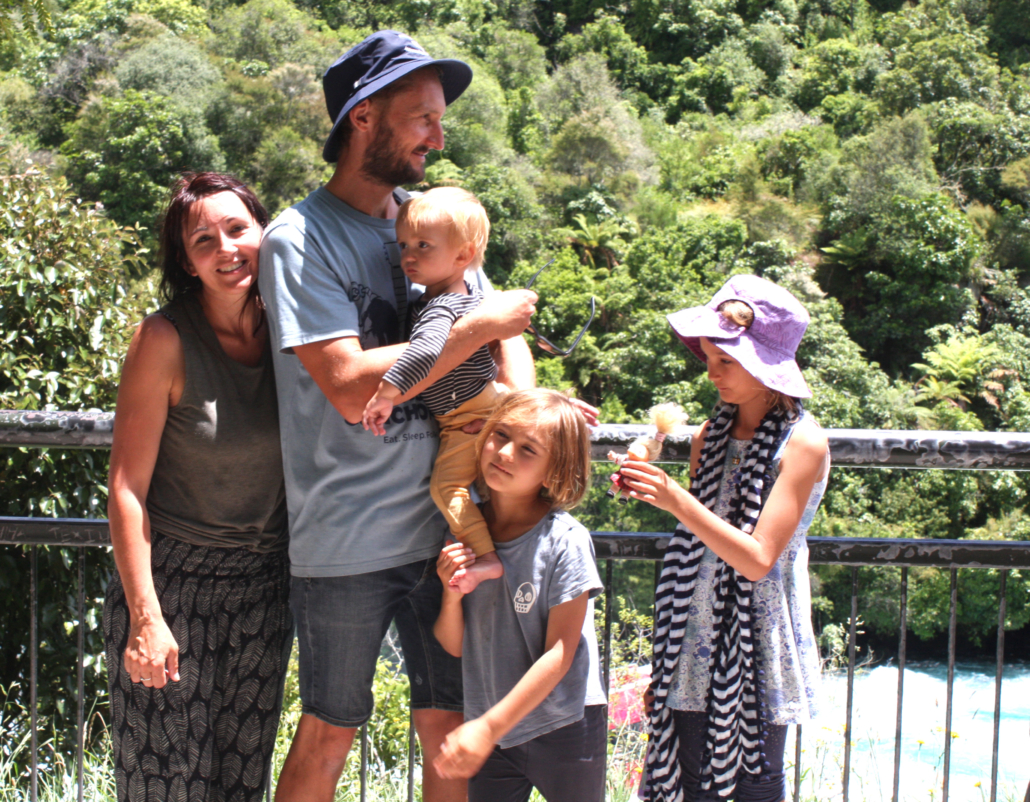
Three generations live here: Lenny’s father, Lenny and Jodi, and their three children, Juliana (10), Albaer (7) and Iver (2). Life is hectic as they balance planting, growing and harvesting with hunting, home schooling, creativity, mushroom cultivation, the science of mycelium, and agroforestry education.
Lenny’s parents emigrated from Germany in 1990 in the wake of Chernobyl’s creeping contamination concerns. They chose to settle in Whakatāne and later Pikowai, near Matatā, in order to provide an organic lifestyle for their family. Lenny, now is his 30s, is doing the same thing for his family. Lenny and Jodi’s ethos is multi-layered: to connect people with the land and growing, to invest in the future of their family and community, and to live a sustainable and honest life.
Jodi is an advocate for homeschooling, and can offer advice for parents and carers in the homeschooling network, or considering being part it.
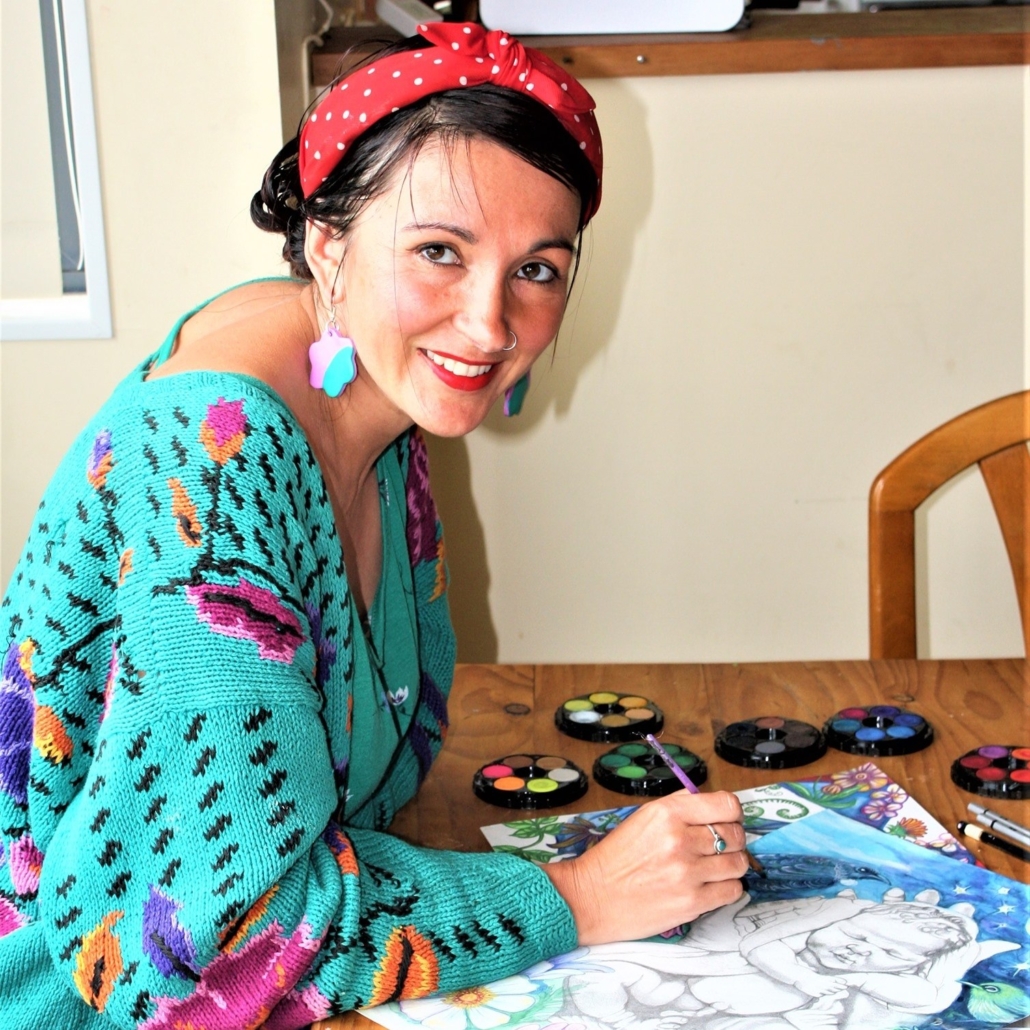
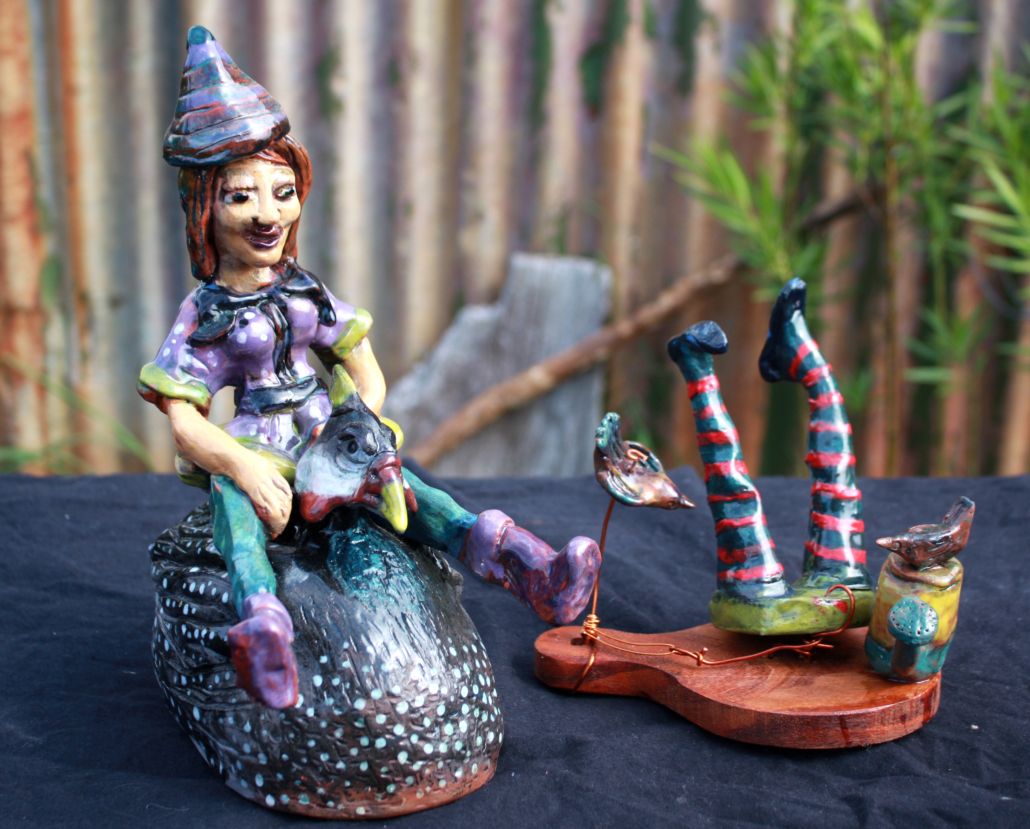
Right – Some of Jodi’s playful creations
Spawning and supporting
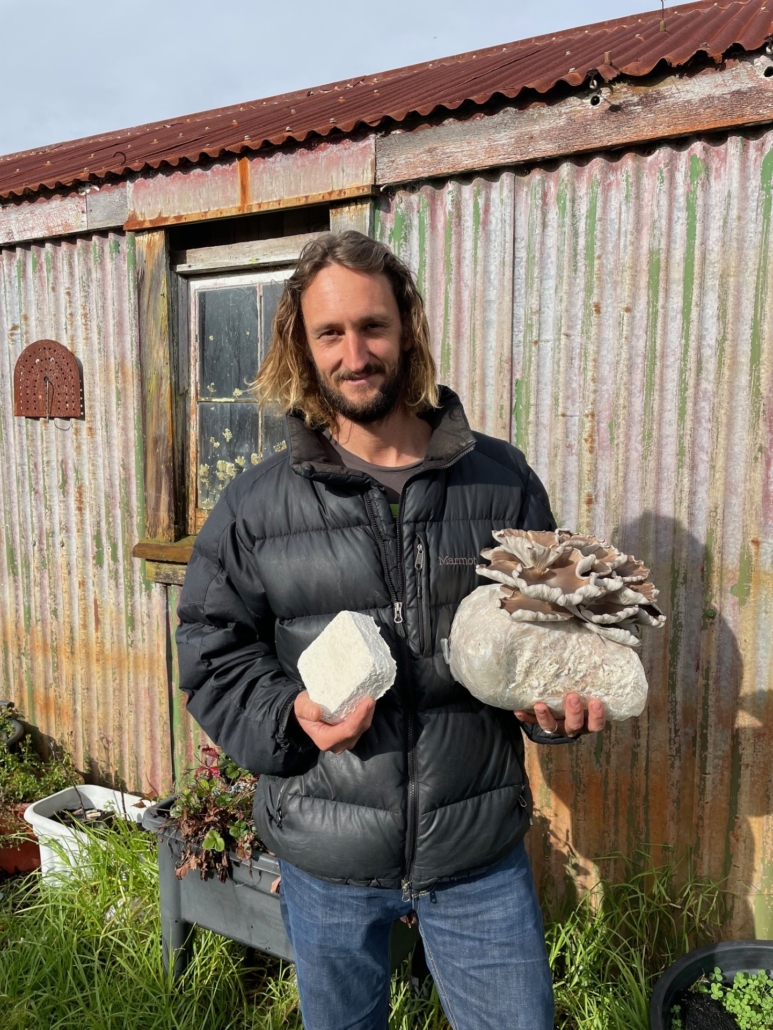
In his small sterile (and mobile) laboratory, Lenny grows mushroom spawn. Fourteen years of experience, previously in Raglan, mean that Lenny is an expert in his field. Pink and grey oyster and native tawaka (poplar) mushrooms are currently his most popular.
It takes approximately 14 days to grow Petri dish spawn to colonised substrate ready to fruit. The substrate is a carrier product (for example straw or sawdust), and it’s colonised when the spider web strands of mycelium grow through it. One of Lenny’s business activities is to send spawn and colonised substrate around New Zealand to different growers. They fruit the mushrooms and sell them or use them within their own businesses.
Lenny is driven to support regional growers, particularly now as many small entities have suffered in the post-covid period. Many business costs are increasing, but Lenny is reviewing how to make his products cheaper and more affordable so they can reach more people and help the survival of small businesses. He also coaches and mentors start-up growers to be fully functioning businesses, teaching people how to grow from spawn to then market mushrooms and/or grow their own spawn for marketing purposes.
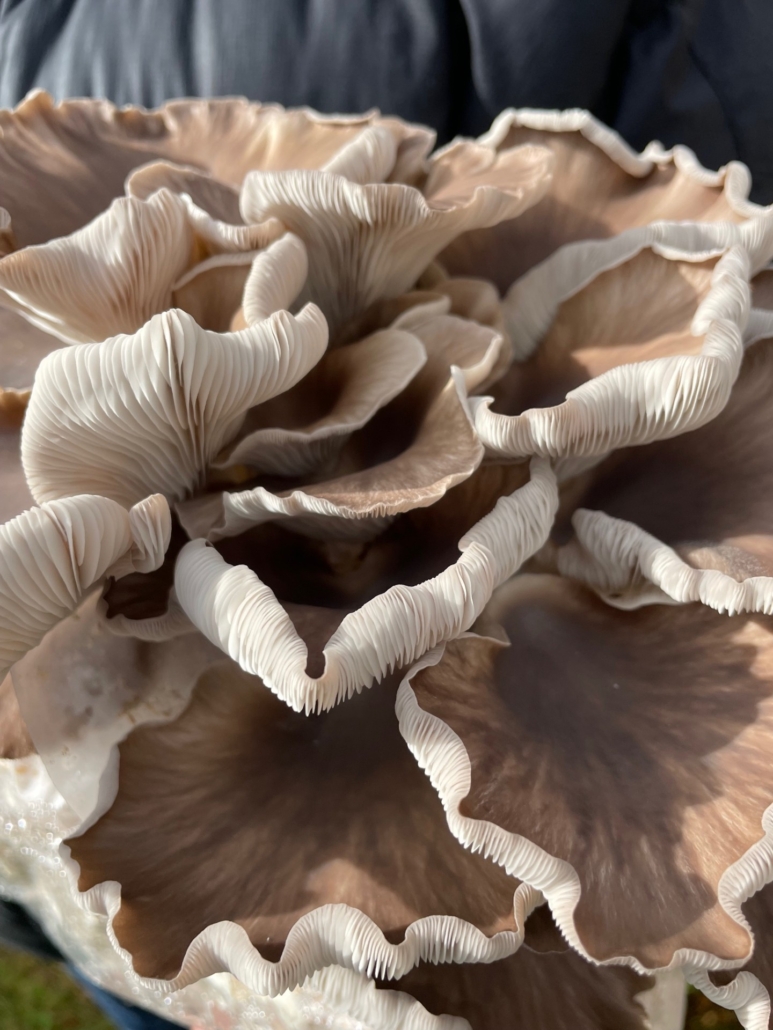
Right – Close-up of oyster mushrooms.
Native mushrooms
Lenny is successfully experimenting with native edible mushrooms in order to supply spawn or mushroom fruit to the New Zealand culinary market. He spends time foraging, on the hunt for endemic species that he can replicate as spawn, picked from local surroundings. New Zealand’s strict biosecurity laws mean there’s no opportunity to import different mushroom varieties, but this doesn’t faze him in the least. “We just need to eat closer to home. I want to make our native mushrooms available to Kiwis.”
Native edibles that Lenny cultivates besides the tawaka and oyster varieties are the New Zealand native shiitake, pekepeke-kiore (New Zealand lion’s mane), enoki, hakeke (wood ear), garden giants (or wine caps because of their colour), turkey tail and the New Zealand reishi (of the Ganoderma family).
Lenny is interested in the nutritional and medicinal value of mushrooms. His most popular medicinal varieties are turkey tail, reishi and hakeke. Turkey tail is a tough, leathery mushroom that is best brewed as a tea or tincture and supports immunity. New Zealand reishi is renowned for its immune-boosting qualities too and supports sleep. Wood ear or hakeke is used to treat colds, reduce fevers, and to strengthen the cardiovascular system. (If you’re new to medicinal mushrooms, always consult a professional before use).
Soil health, mycorrhiza and carbon sinks
The link between mushrooms and other produce is very clear to Lenny; it’s soil health. Good quality soil produces nutrient-dense vegetables, fruit and animals. Mushrooms, specifically mycorrhiza fungi, have a big part to play in soil quality.
Most mushrooms (button, oyster, reishi etc) live and feed on dead matter, whereas mycorrhizal mushrooms grow in close, symbiotic relationships with the living roots of plants or trees. Mycelium strands of the fungi attach themselves to the root of the host, expanding the reach of the root to absorb and transport nutrients and water to the tree. In return, the tree provides the mycorrhiza with sugars and starches produced through photosynthesis.
We would recognise mycorrhizal fungi as the edible fruiting bodies of mushrooms such as truffles, chanterelles and porcini. There are many more which are not edible. Edible mycorrhiza are notoriously difficult to cultivate, but all grow well in the wild. There is even more magic to this relationship: these fungi act as natural carbon sinks. They can hold carbon produced by the host in their tissues and the surrounding soil. Like biochar, mycorrhizal fungi have a part to play in our carbon solution.
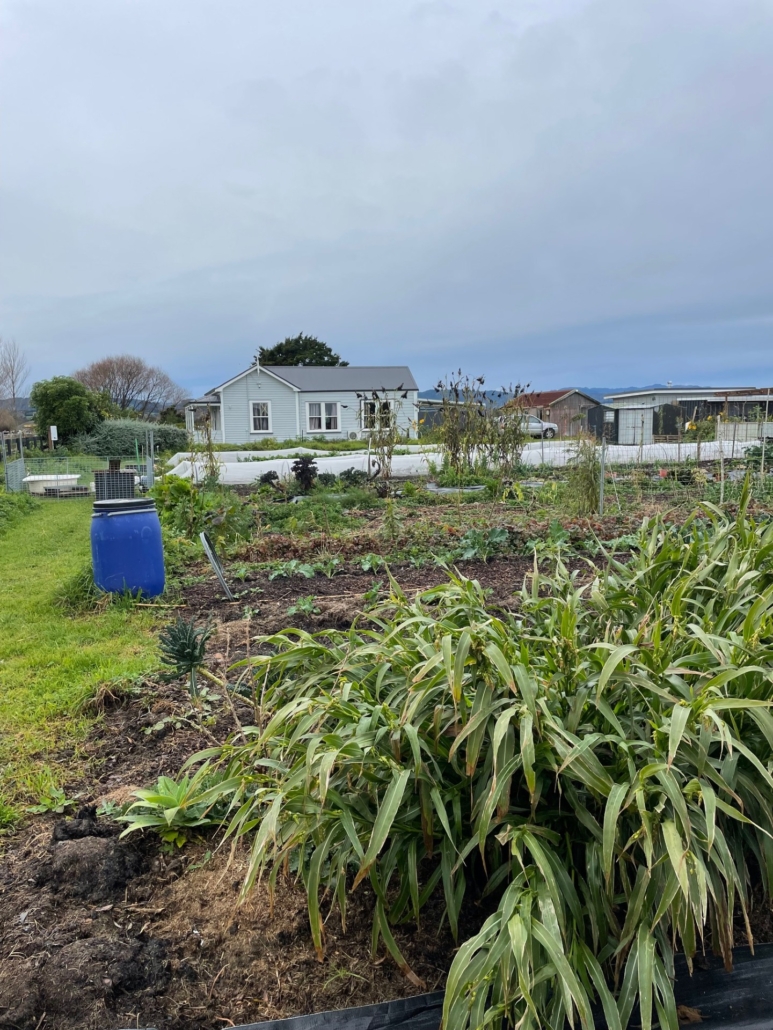
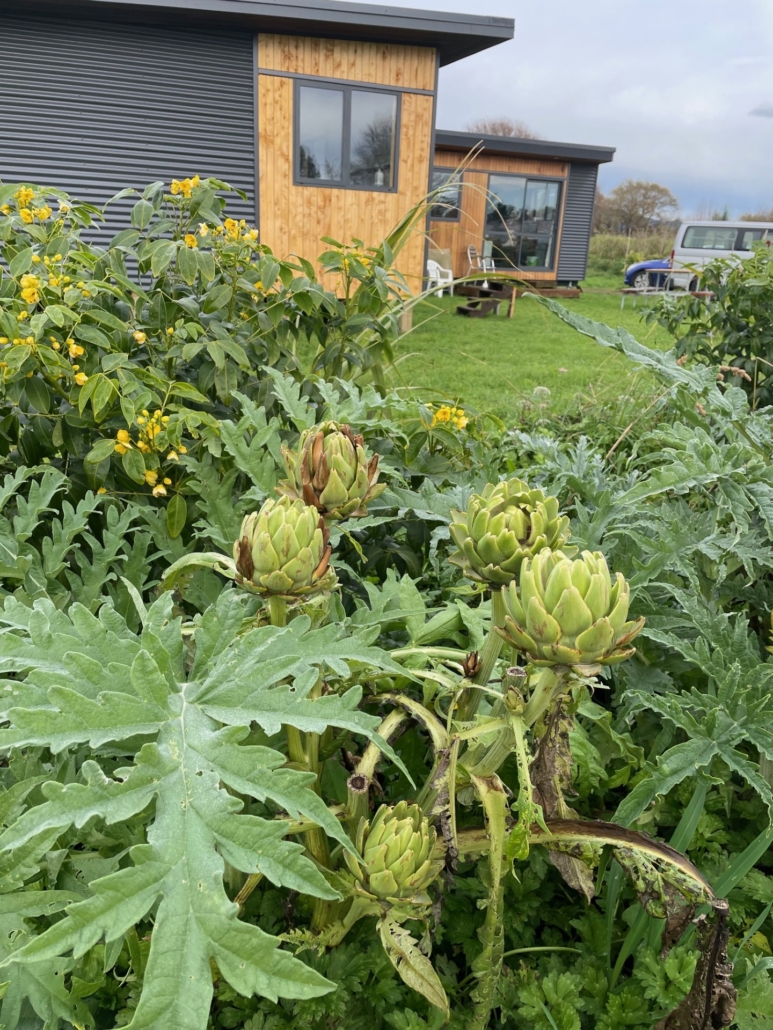
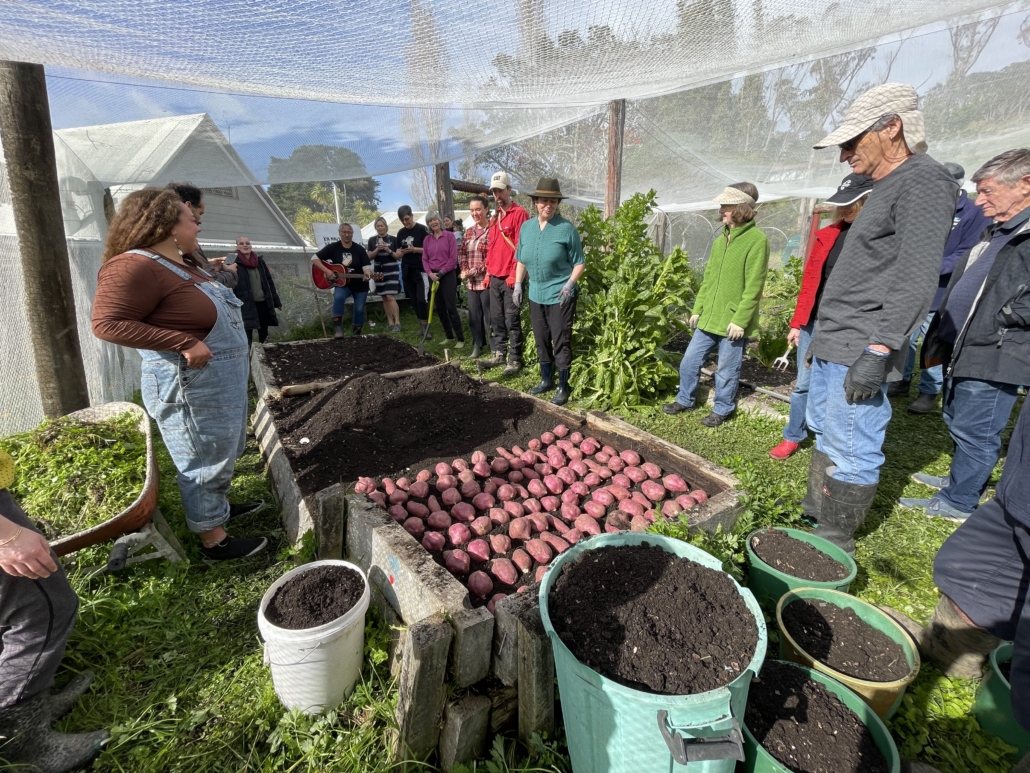
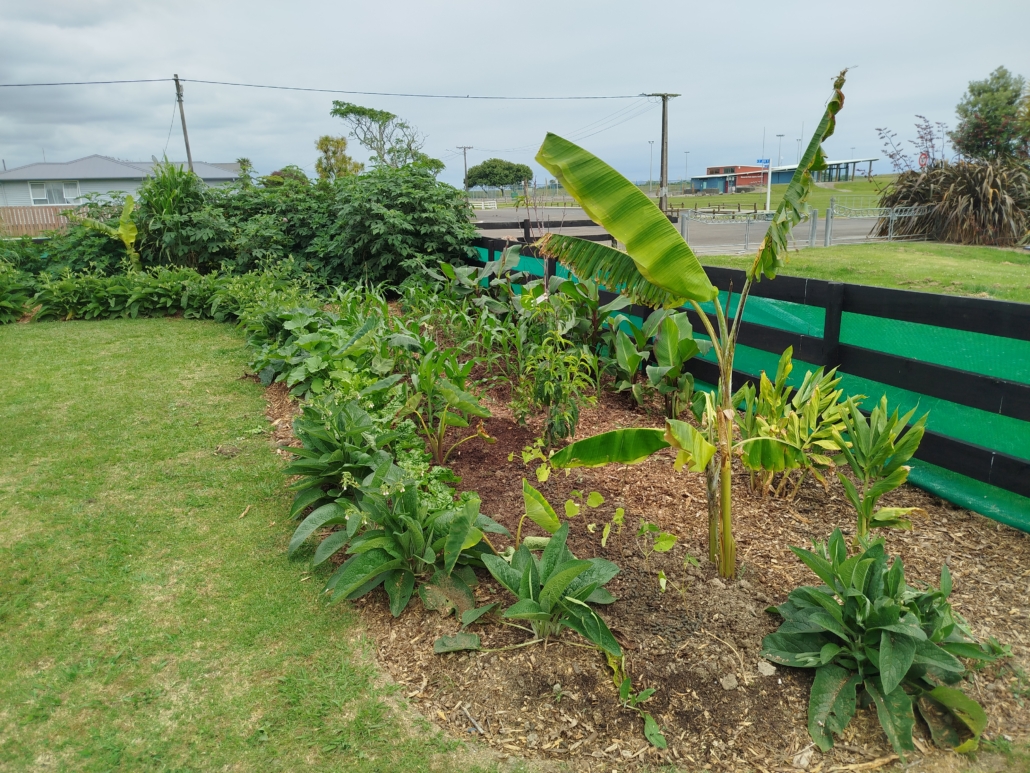
ABOVE: Left – Lenny was involved in the installation of this no-dig vegetable garden at the McKenzie family’s home as part of Te Pātaka Kai a Toi mentorship project
Right – Globe artichokes at Jodi and Lenny’s family farm
Sharing the knowledge
Lenny shares his knowledge as a sustainable gardener and mushroom educator. He supports regional growers, and coaches start-up enterprises to fully functioning businesses.
On his land he runs mushroom growing workshops and shares sustainable gardening tips with curious people. He doesn’t keep secrets around his growing techniques but shares his knowledge and experience so others can try it out in their own gardens or with their mushroom growing. For example, after years of using different activated straw as his growing compound for the mushroom mycelium, he has found a soya and pine pellet mix which is affordable, less time consuming and more sustainable.
Gardening and community food sovereignty
Similarly, he shares his version of food forestry, using his land as his example; it works for him. Lenny and Jodi use a variety of growing practices. They’ve created a vegetable garden using companion planting, organic matter, no-till farming practices and agroforestry (larger plants sheltering vulnerable leafy greens and providing pollinating insect food). And it’s working to keep the soil healthy and crops abundant – last season the kūmara patch produced some tubers weighing as much as six kilos each!
Lenny and Jodi have planted a fruit orchard and sell spray-free seedlings cheaply. They’re always thinking of how to give back to the land and its people. More recently Lenny has worked with Ihi Kura Gym to create a garden supplying food to its members, and with Te Ao Hou Trust to project manage local growing ventures. Lenny is helping to grow growers, using the foundations of food sovereignty.
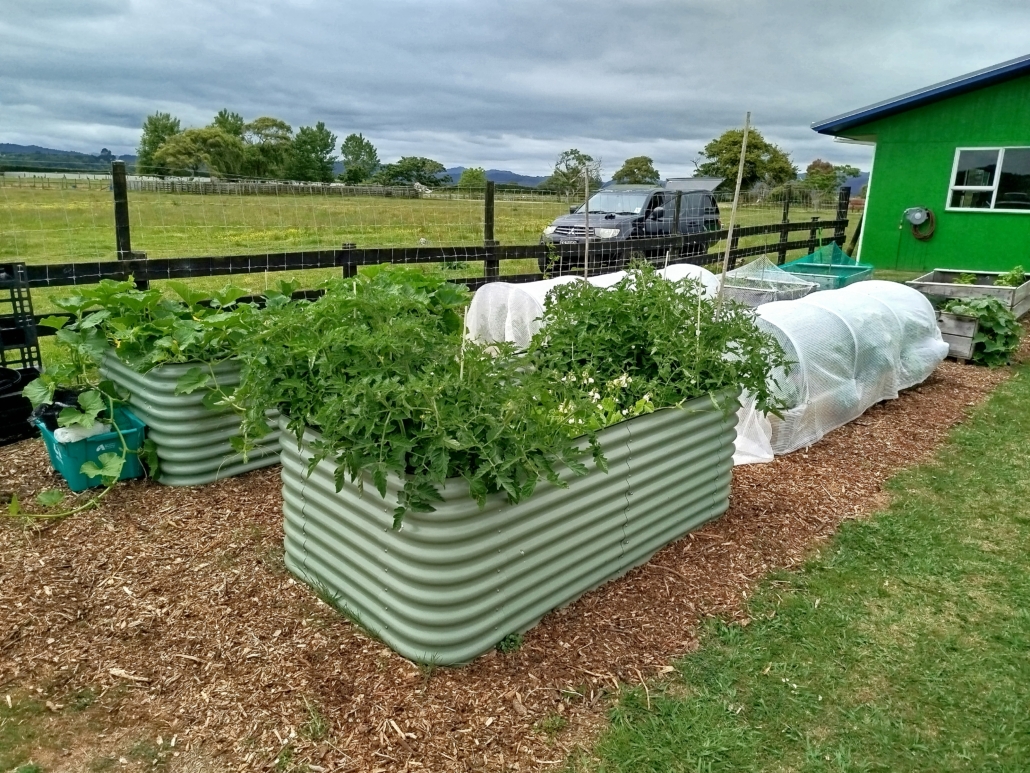
Right – raised beds at Ihi Kura Gym, Ōpōtiki
Compostable fungi packaging
Over the years, Lenny has immersed himself in the science of mushrooms and the various uses for mycelium and mushroom compounds. Perhaps the cap on the top of his fungi is that he’s part of a team spearheading compostable packaging.
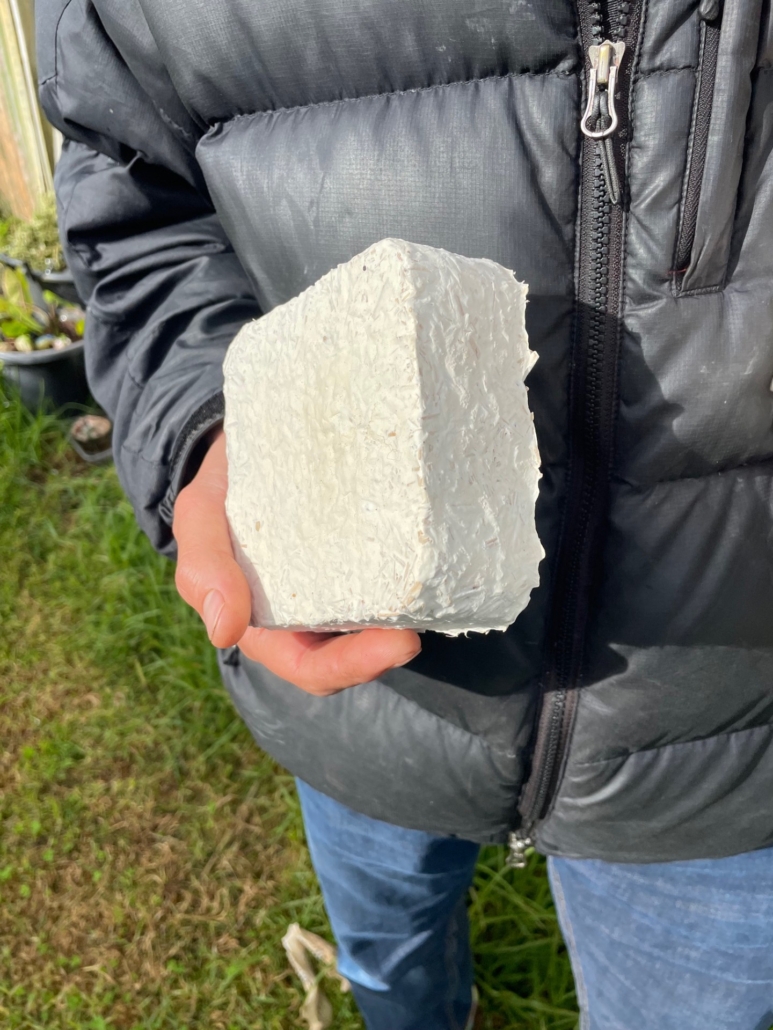
As chief technology officer for the company BioFab, Lenny has been instrumental in developing an alternative packaging material made from agricultural waste and mycelium, aimed at replacing polystyrene. This multi-use product can be domestically or commercially composted within 30 days.
BioFab recently located its operations to Australia in order to broaden its reach in the Australasian packaging market. Its mission is ‘to significantly reduce the harm toxic materials are causing to the planet and encourage a world where waste streams regenerate, rather than destroy our natural environment.’ www.biofab.bio/
Growing humanity
Perhaps even more important than growing mushrooms, fruit and vegetables is that Lenny Prinz and Jodi Collins are growing humanity. They’re focused on the health and wellbeing of their family, their community, New Zealanders and making change globally. And there’s no doubt this inspiring couple are making a positive difference.
Contacts
Lenny Prinz Mushrooms 021 063 8463 prinzmushrooms@gmail.com
Jodi Collins: misspopinjaycreations@gmail.com Instagram @happybonesart Facebook @misspopinjay
Do you speak mushroom?
- Cap: The top of the mushroom, gills underneath.
- Casing layer: A layer of water-holding material, layered on top of a substrate to promote mushroom growth.
- CO2: Carbon dioxide gas is exhaled by mushrooms.
- Colonise: Mycelium is grown from one substrate to the next. Once the intended substrate is completely dense with white, it is fully colonised and ready to produce mushrooms or be transferred onto the next substrate.
- Culture: A pure mushroom strain.
- Flush: When mushroom substrates produce mushrooms.
- Fruit-body, fruiting body, mushroom: The edible part of the mushroom
- Gills: The underside of the cap, thin lines
- Incubation: Period of time between substrate inoculation to mushroom.
- Mycelium: This is the bulk of the mushroom; it is a fine root like structure that secretes enzymes digesting material externally.
- Mycology: The study of fungi.
- Pasteurisation: Process that kills most spores and other non-beneficial organisms in bulk substrate.
- Spawn: Sterilised grain or sawdust with a selected mushroom culture grown through it.
- Spores: Mushroom ‘seeds’. Tiny microscopic single celled reproductive product that are dropped from the gills of the mushroom.