If your lettuce beds already get compost and still look a bit thin by midsummer, new research suggests the missing partners may be sitting in your worm farm and in the fine white threads of soil fungi. A trial published in the New Zealand Journal of Crop and Horticultural Science found that worm-farm liquid (vermiwash) plus arbuscular mycorrhizal fungi, used together with compost, grew better head lettuce than compost alone.
The rest of this Research News article is for Soil & Health members.Join us for full access.
https://organicnz.org.nz/wp-content/uploads/sites/2/2026/08/feature.png10241536david.mcneillhttps://organicnz.org.nz/wp-content/uploads/sites/2/2024/09/OrganicNZ-2024-Masthead.pngdavid.mcneill2026-08-03 15:00:232026-08-08 17:50:03Worm juice and soil fungi: why compost alone isnโt enough for juicy lettuce
This article was first published by Earthworkers and is republished here with their kind permission.
We hope you enjoy this free article from OrganicNZ. Join us to access more, exclusive member-only content
I have always been a details-oriented sort of person. As a child I remember planting flowers with my Mum, learning all of their names and pressing them in a flower press. I later I revelled in learning how to identify and use the three names of all our native vascular flora (Mฤori, English and scientific). My first career was in plant ecology, after I did a Masters in that area looking at the relationships between soil and the regeneration of kauri forest after fire.
Moving between the details and the big picture, I became seriously concerned about climate change around the time of my late twenties. Not just mildly concerned as I had been in my youth, but in-your-face, losing-sleep, suffering-existential-fear-and-anxiety level of concern.
Of course, this had coincided with finding a husband who was a big-picture thinker and having two wonderful baby boys. I did not end up giving up at that point, but I decided that when I got back to paid work, I would be dedicating my time to a career in climate action.
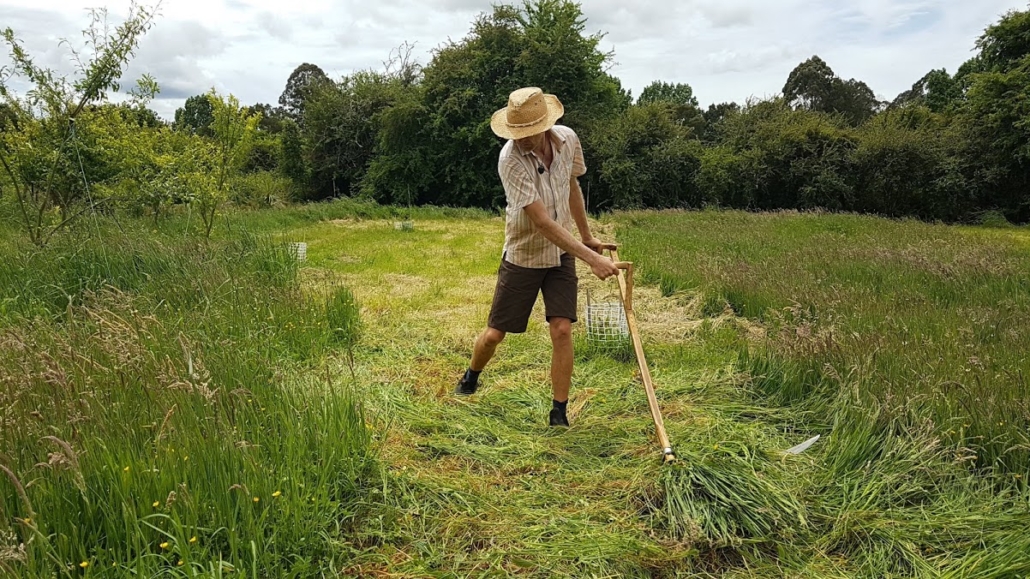
Above: Richard scything grass
Growing vegetables
I moved from field-based plant ecology work to growing and selling organic vegetables, as a home-based profession that could keep me close to our kids and our food. Richard helped me establish Lux Organics, a small-scale organic market garden on the outskirts of Rotorua. He initially kept his day job as an ecologist, but then joined me full-time in the business for three years. My parents got involved, providing a generational backbone to the business.
We grew beautiful vegetables for our community, and by the time the Covid crisis and lockdowns occurred, we were able to pivot to vege boxes, bringing them to peoplesโ doors with our electric van. We started hiring seasonal staff in 2020, which meant a succession of people learning the organic growing methods with us. By 2023 we had added solar panels to our shed, powering our household, vegetable chiller and van with the sun.
This has been a journey of creating a business that minimises carbon emissions while growing food. Hand tools, electric tools and hands in the soil have been our main inputs. The productivity of our soil has been the foundation of our business (as it is for all farming) and we have strived to care for it, taking soil tests each year, and learning about every aspect of soil health along the way.
When you grow a crop for market, and especially when you grow over 40 of them (!), there are a lot of questions and uncertainties about how to manage the soil, what might be affecting the outcomes youโre seeing, how to solve problems, and how to keep producing all through the seasons.
These veins of query are what led me to the five-day Earthworkers Regenerative Horticulture 101 course in the winter of 2021. I attended with two of my staff and I encountered a whole group of amazing people involved in different sorts of projects who were on my wavelength.
I discovered new terms which opened up my mind to the soil ecosystem in a new way. Quorum sensing, cation exchange, paramagnetism, root exudates, polycropping. I have kept in touch with the group ever since (online and in person), and this has led to multiple fertile exchanges and more farm visits, opportunities to learn and even to help others. Itโs a magic human interaction!
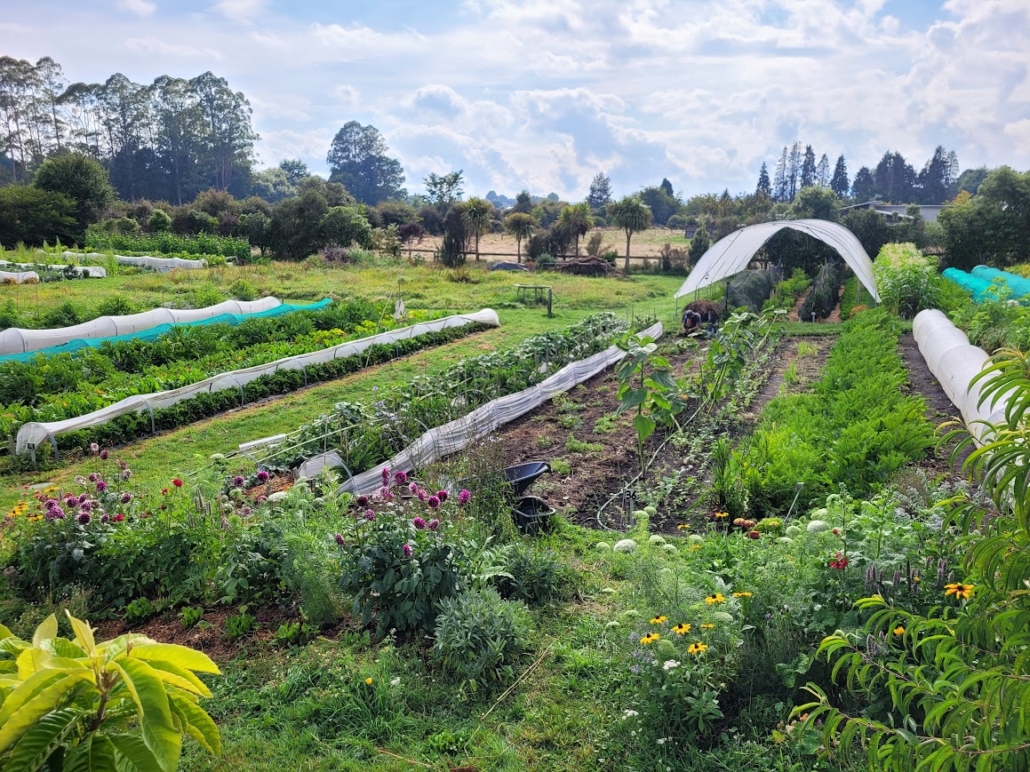
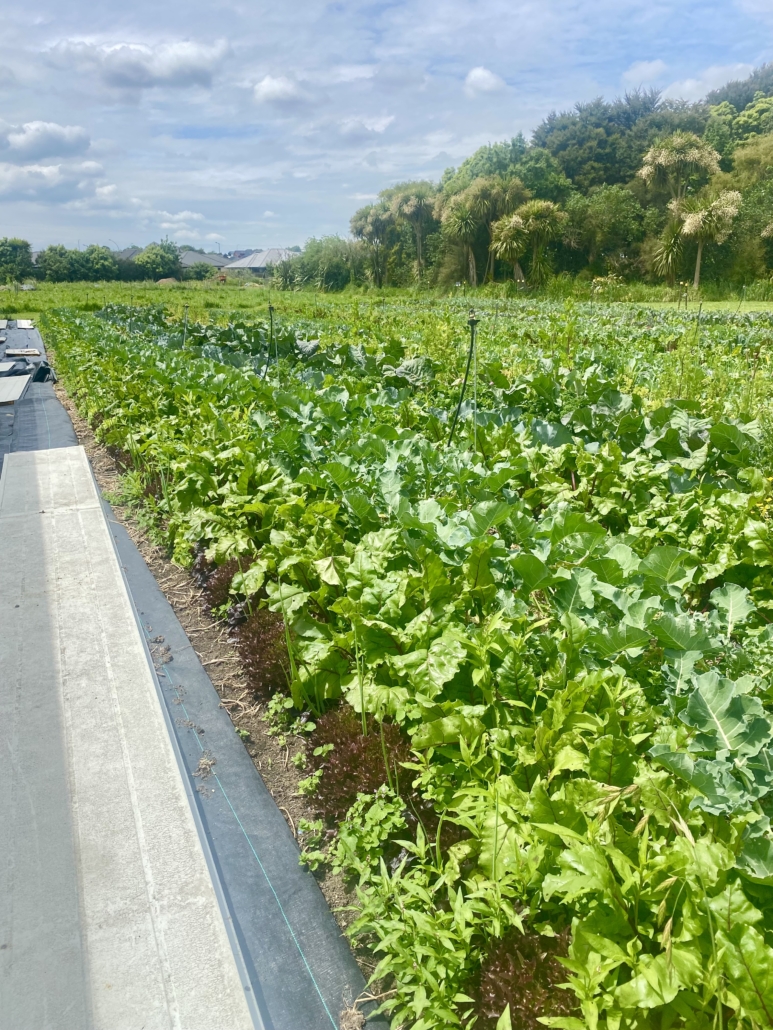
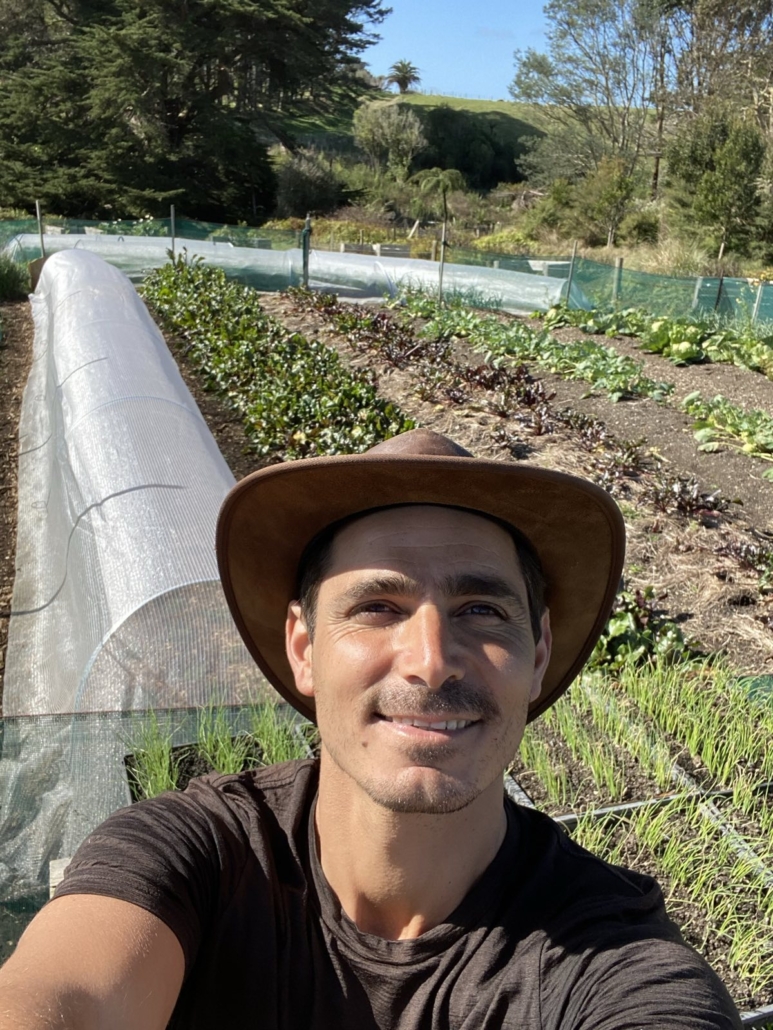
ABOVE: Lux Organics market garden, February 2025
In recent years, with the domestic recession, business has been tough, as local people cut their organic vegetable spending. Looking at in a big picture way, itโs a manifestation of how people cannot/do not make longer-term environmental and health choices when they are poor and worried about their daily survival. Our business relies only on its connection with the local food system, rather than export.
While we experienced a huge high after the Covid crisis, when people suddenly became concerned about the sustainability of their local food supply, we are now in a phase of relentless cost-cutting. Our customer base has concentrated to only those who value food produced in a way that is free from contamination, and which looks after land.
Now that I have been working in practical agroecology on my own land for over nine years, I am curious about taking my soil knowledge deeper and broader, to have a wider impact. It’s one of those cliches… the more you learn, the more you realise you don’t know, and it becomes impossible to give simple explanations any more.
I would now never say, “ah, just use compost and everything will be fine”. There’s a lot more to growing, and to soil, than most of us really, truly understand. Related Research News: why compost alone isnโt enough for juicy lettuce (worm juice + mycorrhizae). My curiosity burns and I want to know which levers to pull to achieve the healthiest crops and soil. Looking again to the bigger picture, how we manage soil on our productive land is the probably the most important aspect of New Zealandโs climate emissions profile.
This is why I’ve dedicated pretty much all of my market garden earnings in 2025 so far to further study and investing in my own knowledge growth.
I have taken papers at the University of Waikato in soil science and hydrological management, and I have attended specialist courses by regenerative educators (Graeme Sait from Nutri-tech Solutions, and Nicole Masters from Integrity Soils).
I am building up a research library and reaching out to soil mentors for the next step in my career. I even bought a microscope from a fellow Earthworker (thank you Coral).
All of this new learning is feeding directly into the next stage of my journey โ growing my skills, confidence, and contribution through the Earthworkers community.
Over the next few months, Iโll be deepening my learning through the new Regenerative Horticulture 201 and Future Agronomists courses, working directly with Daniel Schuurman as we develop and pilot both programmes. My goal is to grow my capacity as a biology-first regenerative agronomist โ someone who can read the soil, guide other growers, and support the shift toward biology-led farming across Aotearoa.
In 2024 I mentored for For the Love of Bees on their year-long Communities of Regenerative Learning programme, which opened a new path for me as a mentor within the sector. That experience, and my continued involvement supporting new growers through the post course Earthworkers WhatsApp network, has shown me how powerful it is when we stay connected โ helping one another, sharing knowledge, and learning together every day out in the field.
I look forward to doing Regenerative Horticulture 201 in 2026 and keeping up my active learning and practice. Growing in soil is a bit like general lifeโฆ you canโt follow one set recipe. Things keep moving and changing, and you have to be observant, responsive and kind.
Jenny Lux is a former chair of the Soil & Health Association. Find Lux Organics online here.
Earthworkers has launched
The natural evolution of For the Love of Bees, Earthworkers has a new hub to support biology-first regenerative horticulture in Aotearoa.
After a year of development they have launched a brand new website, and a full learning pathway.
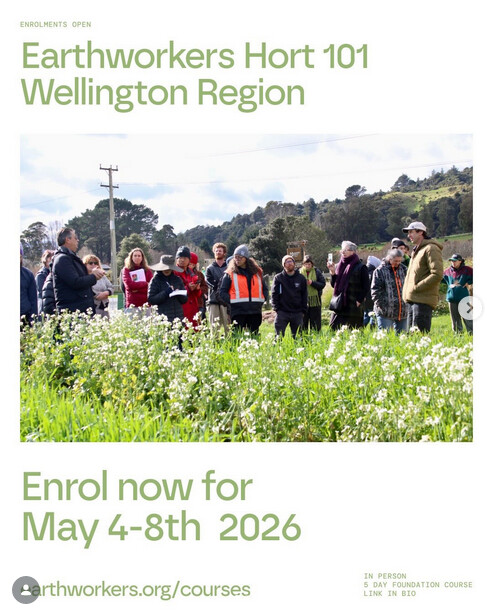
Enrolments are now open for 2026:
The foundation course Hort 101 (4โ8 May, Mangaroa Te Awa Kairangi โ Wellington region)
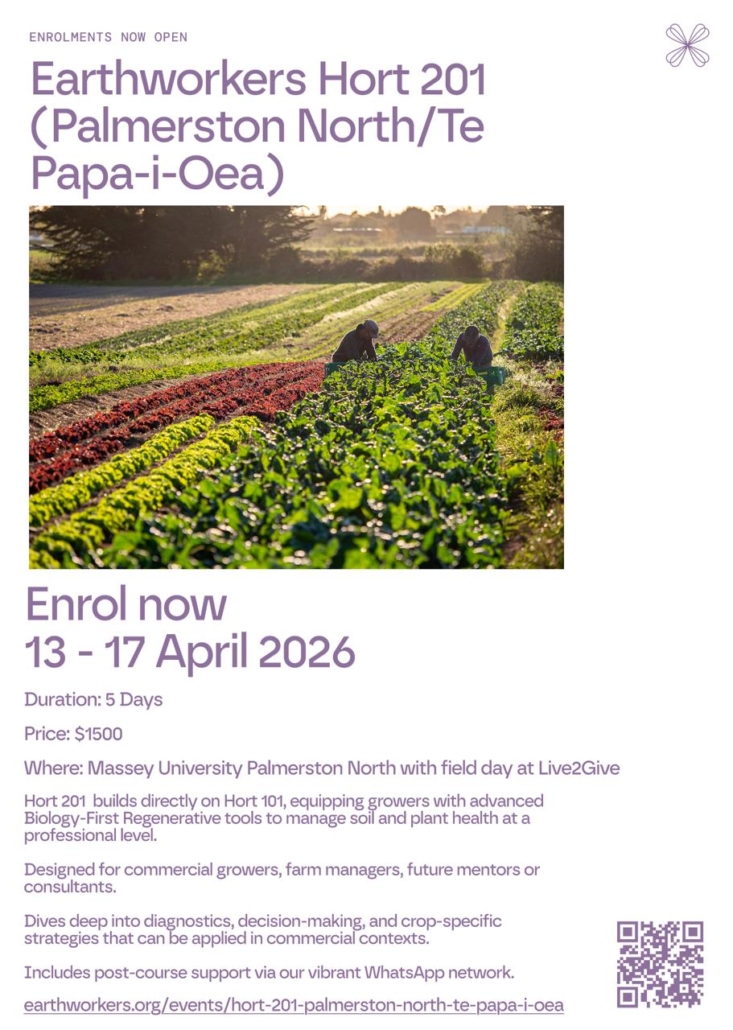
The advanced course Hort 201 (13โ17 April, Palmerston North, in partnership with Live2Give)
Both courses come with post-course support via a WhatsApp chat network to help growers transition to resilient, profitable, biology-first regenerative systems.
Earthworkers’ first alumni blog, Cultivating Knowledge Together, features Jenny Luxโ an experienced grower and organic advocate who will be one of the first participants in our new Hort 201 and Future Agronomists programmes, designed to grow New Zealandโs next generation of biology-first agronomists.
https://organicnz.org.nz/wp-content/uploads/sites/2/2025/12/Jenny-Lux-2025-low-res-scaled.jpg25602560membershiphttps://organicnz.org.nz/wp-content/uploads/sites/2/2024/09/OrganicNZ-2024-Masthead.pngmembership2025-12-19 07:41:332026-08-03 15:02:06Loving soil, but also learning soil
Home gardener Michelle Coenradi has four worm farms on the go. Here she outlines the benefits, and offers some tips from her experience.
We hope you enjoy this free article from OrganicNZ. Join us to access more, exclusive member-only content
I am passionate about my worms. There are so many benefits to worm farming, and itโs something you can do almost anywhere, even on a balcony. Worm farms produce two types of fertiliser: a liquid (sometimes called tea or juice) and a more solid one (vermicast). Recent Research News on worm juice plus mycorrhizae for juicier lettuce explores how that liquid pairs with soil fungi and compost. I leave the siphon open and sit a bucket underneath to collect the liquid.
Benefits of worm juice and vermicast
Enhances soil fertility.
Promotes plant growth.
Deters pests and diseases.
Improves soil structure โ contains microorganisms and enzymes that improve soil aeration and water retention, leading to better root development.
Rich in readily available nutrients like nitrogen, phosphorus and potassium, as well as trace elements.
Improved aeration and drainage results in reduced soil compaction
Enhances the activity of beneficial microbes which are essential for nutrient cycling and overall soil health.
Cost-effective fertiliser that you can make yourself.
Vermicast is pH neutral.
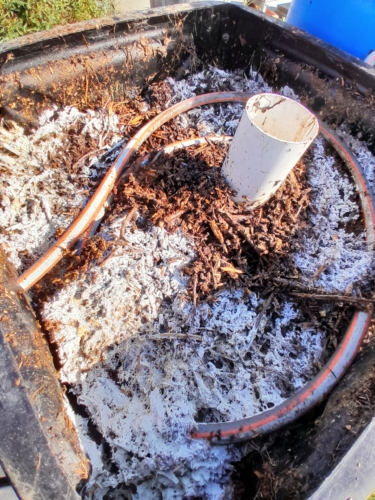
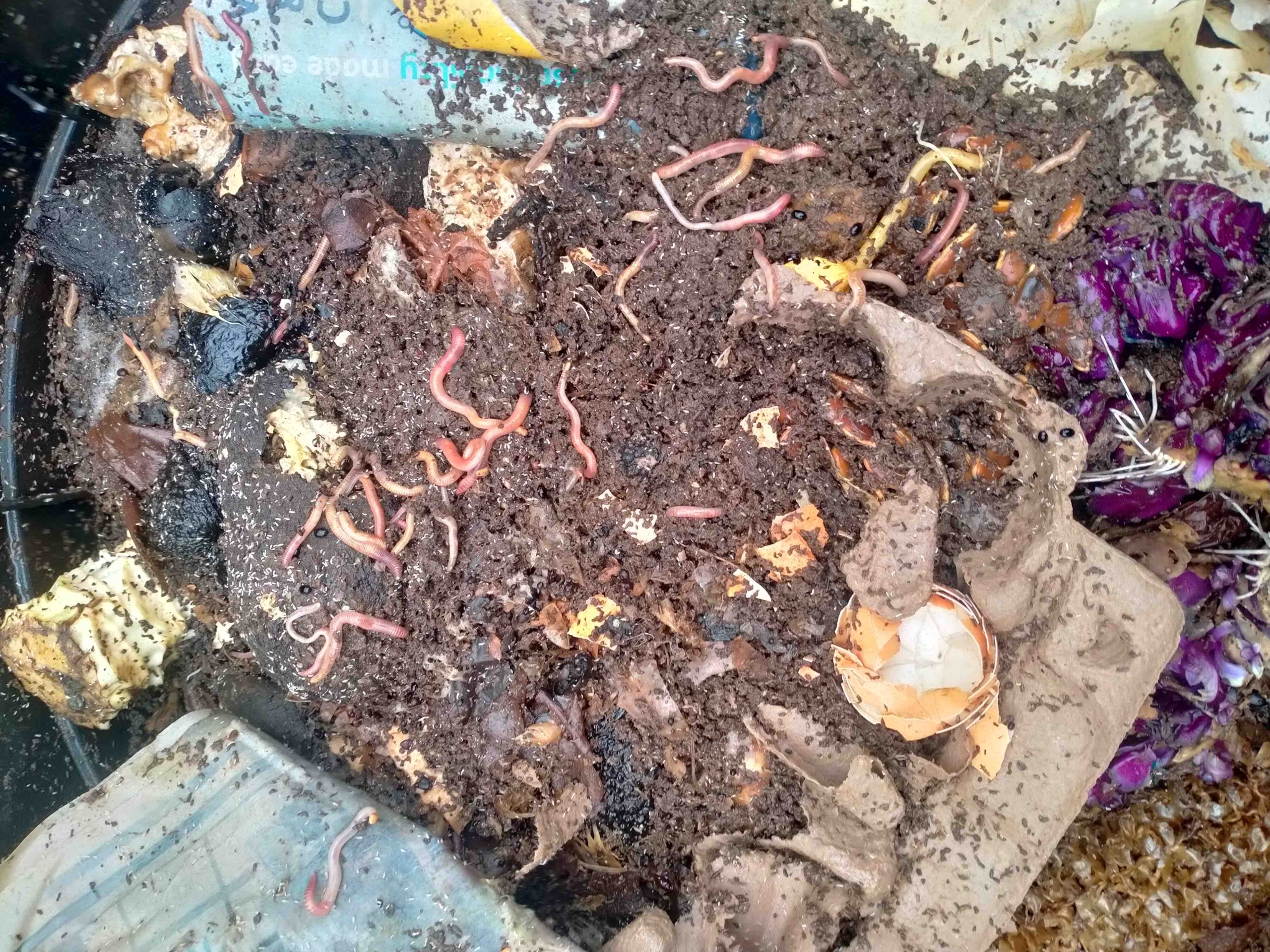
ABOVE: Inside one of Michelleโs worm farms (Photos: Michelle Conraedi)
A healthy home for your worms
Worms need a dark, moist and well aerated environment and a temperature between 15โ25ยบC. You can put in shredded paper for them to live and breed in, or a worm mat which can be purchased at hardware stores.
Worms love anything curved or round to nest in and keep themselves warm, especially avocado and watermelon skins, and pumpkin is a hit as well.
What do they like to eat?
70% nitrogen-rich โgreen wasteโ like fruit and vege scraps, eggshells, coffee grounds and tea bags (make sure theyโre compostable ones). Avoid citrus fruit and the onion family.
30% carbon โbrown wasteโ, like newspaper and cardboard.
You can feed them daily but I tend to feed weekly.
When I put scraps in I sprinkle Tumbleweed worm compost conditioner over the top. This keeps the pH balanced โ you can tell if the worms are struggling with an alkaline imbalance because they lose their colour and start turning white. You can also use garden lime sparingly.
The vermicast is referred to as black gold, indicating its value in the garden. I find worms are hardy and easy care; you really canโt go wrong with a worm farm and they are so rewarding.
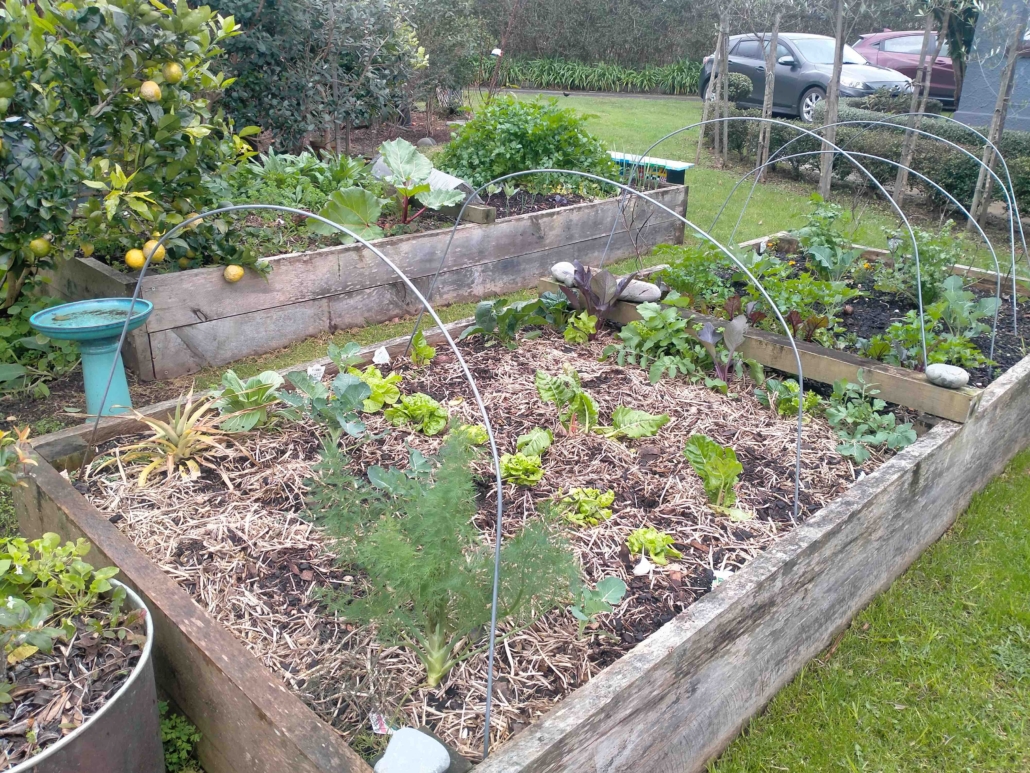
ABOVE: Michelle’s vegetable garden flourishes with the addition of vermicast and liquid from her worm farms.
More information
There is lots more information about worm farming online, such as these tips from the Compost Collective.
As he deepens his knowledge of organic and regenerative horticulture and the links with soil, food and health, Chris McIntosh has found his life journey coming full circle.
We hope you enjoy this free article from OrganicNZ. Joinus to access more, exclusive member-only content
Seeds planted in childhood
Raised on his grandparentsโ farm, Chris McIntosh had a childhood steeped in traditional practices. โThey cooked everything from scratch, preserved food, and had animals,โ he recalls. His grandfather, a market gardener from Holland, unknowingly planted the seeds of horticulture in him. These experiences became his happiest childhood memories and set the foundation for his later passion for growing food.
As a chef, Chrisโs approach to food was always health-driven. โMost chefs focus on flavor. My first question is, โIs this healthy?โโ
Health challenges forced him to scrutinise ingredients and their sources. โWhen you start asking where food comes from, it becomes pretty scary.โ This curiosity and necessity drove his journey into horticulture.
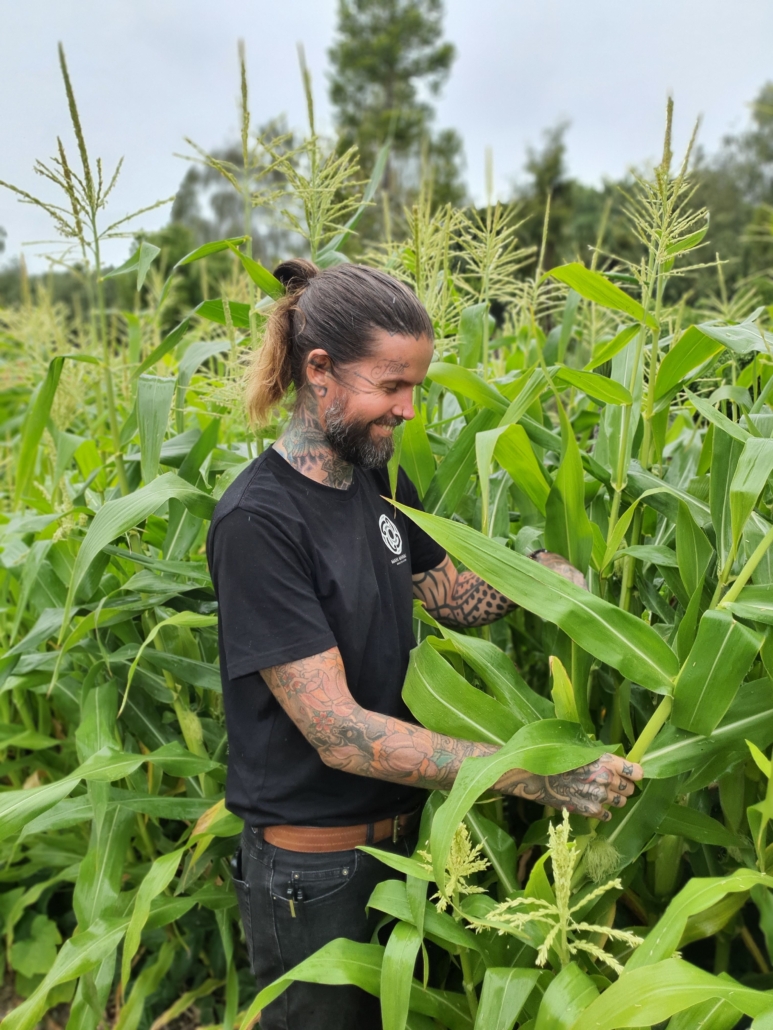
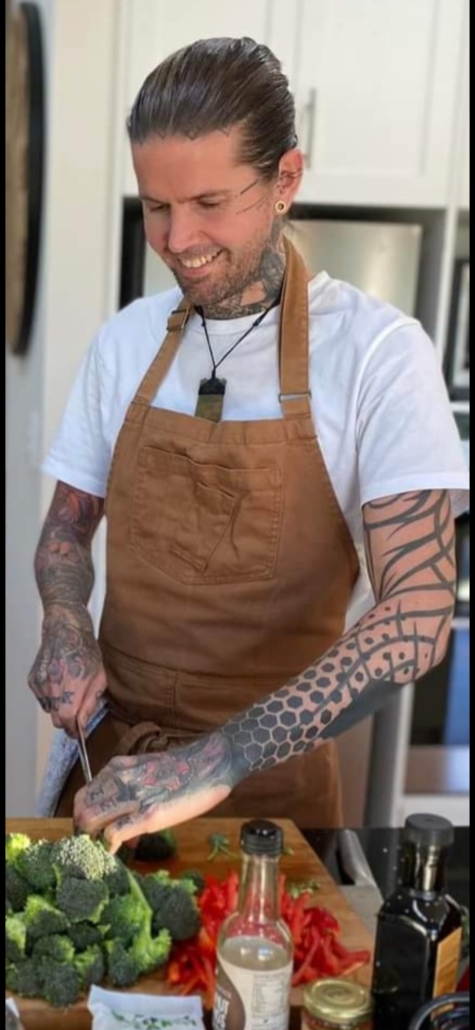
ABOVE: Left – Chris is well pleased with the corn crop at Ethos in January 2025. Photo: Wade Aukett, Anglican Action Right – Chris in the Ethos kitchen
Starting with Earth Stewards
Chris found the culinary industry to be a toxic environment, so he left, and took a leap of faith. He had no job but had always dreamed of starting a farm. A friend introduced him to Warwick Hutchinson, who offered him land to begin Earth Stewards, a certified organic urban farm project in Hamilton inspired by North American regenerative farming pioneers like Curtis Stone and Jean-Martin Fortier.
โI approached the farm with methods I learned online,โ Chris explains. But the labour-intensive practices of broadforking and double digging werenโt sustainable. He pivoted to no-till horticulture, laying heavy compost directly on the soil, which worked well initially. Over the years of growing Chris has realised that one size does not fit all in horticultural practices.
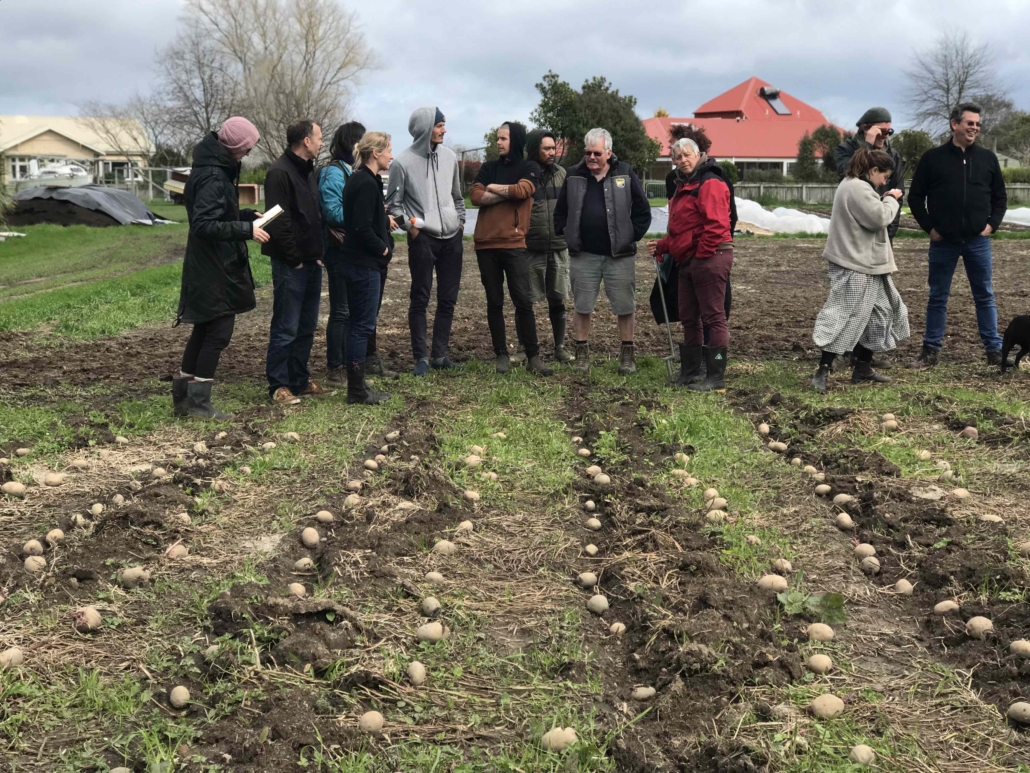
ABOVE: Chris (centre, arms folded) with a group visiting Earth Stewards in 2019. Photo: Sarah Smuts-Kennedy
Ethos: A new chapter
Chrisโs second urban farm project reflects his deeper understanding of horticulture. Itโs a cafรฉ called Ethos, located within the social enterprise of Mahi Mihinare โ Anglican Action farm, also in Hamilton.
โStarting another growing project gives me a chance to apply everything Iโve already learned. But it also makes me realise there is so much more I want to know about regenerative horticulture.โ
From creating his own potting mix to understanding soil chemistry, he emphasises the importance of getting it right from day one. โIf you donโt get a good start, you donโt get a good outcome.โ
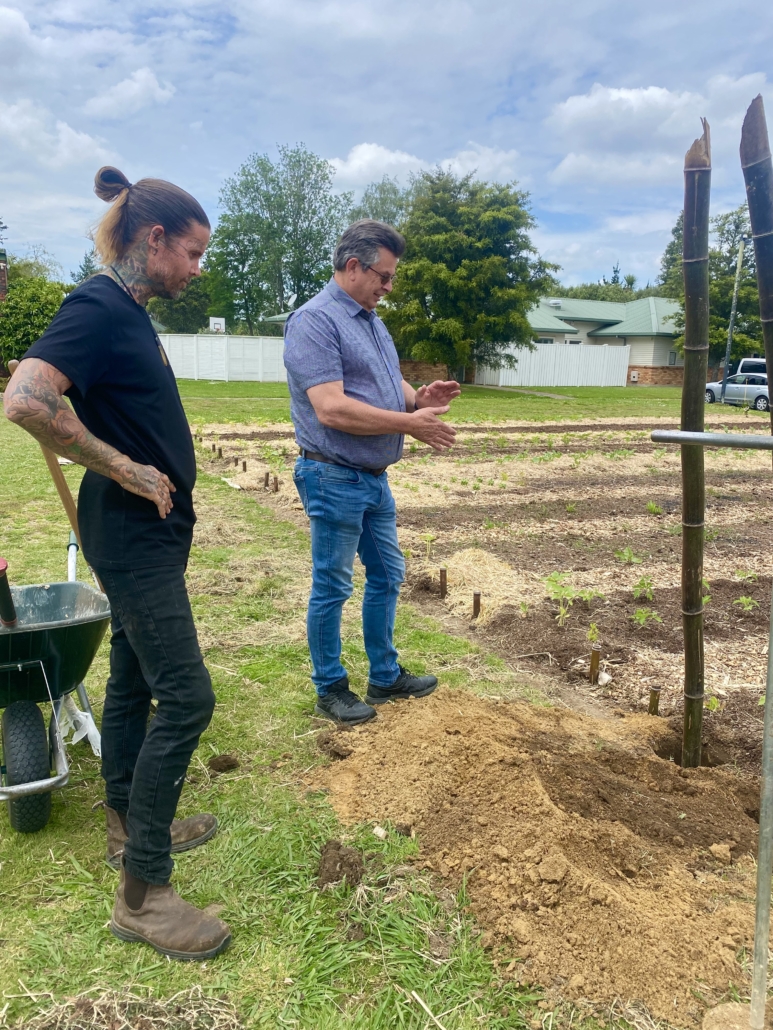
Soil testing has become really essential, something he has learnt from the mistakes he has made which have taught him valuable lessons. โThis season for example, one bad input material has affected all our growing beds, and Iโve had to spend months trying to recover from it.โ This was bought-in compost that turned out to be very poor quality.
The Ethos project also gives Chris the freedom to explore the connection between food culture and horticulture. โFood culture is born around what we can grow in season locally, not what we can import. Iโm trying to find my identity within the food industry and our culture.โ
The integration of this new urban farm with the Ethos cafรฉ means he is focused on using surplus produce to create preserves adding value to their produce. โThis way, we make the most of what we grow, while educating customers on seasonal, local food.โ
Lessons learned
Key takeaways from Chrisโs journey include:
Observation is a horticulturistโs greatest tool: โNature is always speaking to us. Everything in nature is perfect. Why am I so arrogant to think I know better?โ
Holistic thinking: Health, soil, and community are interconnected. โYou canโt just focus on one aspect and hope the rest falls into place.โ
Importance of systems: โAs a chef, Iโve learned the value of good systems. Without them, nothing flows, whether in the kitchen or in the garden.โ
Hosting the Earthworker Course
Chris is extending his learning, connection and growth not only by participating in the Earthworker Course, but at the same time by offering to host the course coming up in late March at the Mahi Mihinare conference facilities where Ethos is located.
โI want to be part of the biology-first regenerative horticulture movement and learn from others on this path. I already have a few years of urban farming under my belt, and I recently completed the Nutri Tech Solutions course in Australia with Graeme Sait, but I know Daniel [Schuurman] has more to teach me here on my own site, and I also sense being part of the Earthworker network will be invaluable for growing my confidence and ability as a horticulturist.โ
He sees this as an opportunity to refine his skills and contribute to a broader community of regenerative growers. โI hope to support other projects and participate in further education opportunities to become an agronomist like Graeme Sait and Daniel.โ
โIโve spent years practicing, but now I want to understand how the system works beneath the soil. To become a good steward of it.โ โ Chris McIntosh
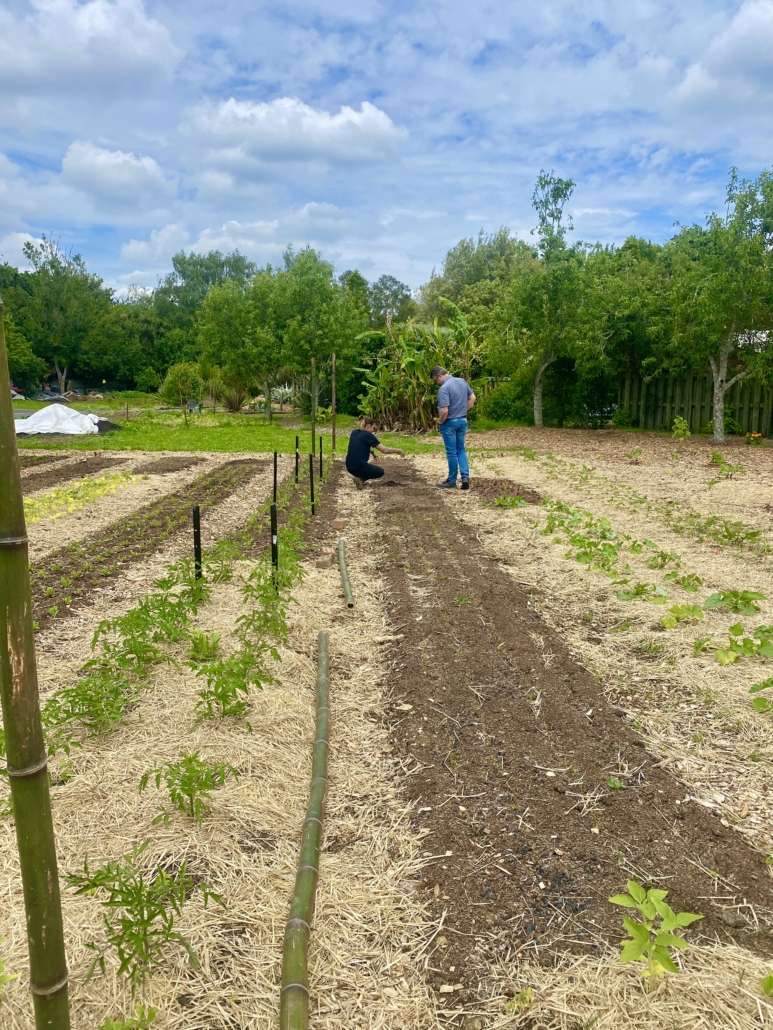
ABOVE: Spring garden at Ethos Cafe gardens. Photo: Wade Aukett, Anglican Action
Mentorship: Daniel Schuurmanโs support
A key figure in Chrisโs journey has been Daniel Schuurman, the lead teacher and mentor for Earthworkers. Daniel has over 45 years of lived experience as a grower, giving him a long-range perspective as an agronomist and consultant. He began supporting Chris during his time at Earth Stewards and has continued to guide him through the challenges of his new project at Ethos.
โDanielโs depth of knowledge and ability to connect science with lived experience have been invaluable,โ Chris says. โHis mentorship has helped me navigate complex challenges and saved my arse a few times. Slowly his support is helping me build necessary foundational knowledge. โ
ABOVE: Chris and Daniel at the vege gardens at Ethos discussing how to remedy the impact of the poor quality bought-in compost. Photos: Sarah Smuts-Kennedy
A transformative opportunity
The Earthworker course will be a transformative opportunity to deepen his understanding and connect him with like-minded growers. โI have a million questions a week, and being part of the Earthworker Alumni network will allow me to tap into a growing community of regenerative practitioners who prioritise ecosystem and community restoration.โ For more information about the Earthworker Alumni network, see the first article in this series here.
Chris is excited to learn specific practical skills, including:
Making his own biological inoculations for seeds and brewing applications for soil and foliar use.
Understanding the nitrogen cycle and how minerals like phosphorus interact with fungi.
Improving his composting techniques to prepare for creating his own seed-raising mix, inspired by Earth Stewards manager Coral Ramiro.
Developing effective mulching strategies to improve soil health and water retention.
How nutrition affects plant health, impacts on a plantโs ability to photosynthesise, be pollinated effectively, and encourage its relationship with soil microbes.
The five-day immersion into the chemistry and biology of thriving horticultural systems is particularly exciting for Chris. โIโve spent years practicing, but now I want to understand how the system works beneath the soil. To become a good steward of it.โ
Chris feels passionate about making biology-first regenerative horticulture his lifeโs work. Heโs especially eager about the prospect of joining a small cohort of Earthworker Alumni in 2025, participating in a research group that will receive expert coaching to achieve a higher level of mastery. โThis is an incredible opportunity to deepen my expertise and contribute to the future of regenerative horticulture.โ
The bigger picture
Chrisโs vision extends beyond his garden. He dreams of a world where people reconnect with the land and embrace community living. โEveryone has moved away from horticulture because of the materialistic dream of city life. Weโve lost our connection to the very thing that sustains us.โ
By hosting the Earthworker course and sharing his journey, Chris hopes to inspire others to return to the land and take responsibility for their food and health. โIf we work with nature instead of against it, we can create a sustainable future for ourselves and our communities.โ
Sarah Smuts-Kennedy is the founder of For the Love of Bees and OMG (Organic Market Garden in central Auckland), and co-founder of the Earthworkers programme.
Earthworkers Hort 101
24โ28 March 2025, Hamilton
Hosted by:
Coral Ramiro and team at Earth Stewards
Brit and James Stembridge of Tomtit Farm
Chris McIntosh at Ethos Cafรฉโs new start-up farm
These three farms will showcase regenerative farming practices in action. Participants in the course will learn from these growers who have experience of managing farms and offer models of whatโs possible using biology-first regenerative methods.
https://organicnz.org.nz/wp-content/uploads/sites/2/2025/01/20250121_142918-cropped-med-res-scaled.jpg11632560membershiphttps://organicnz.org.nz/wp-content/uploads/sites/2/2024/09/OrganicNZ-2024-Masthead.pngmembership2025-01-23 11:41:062025-01-23 11:41:07From paddock to plate and back again
Coral Ramiro is the manager of Earth Stewards certified organic urban farm in Kirikiriroa Hamilton, and an alumna of the Earthworkers Hort 101 programme.
She tells her story to Sarah Smuts-Kennedy.
We hope you enjoy this free article from OrganicNZ. Joinus to access more, exclusive member-only content
Coralโs journey to organic regenerative growing
Sarah began by asking Coral how she became a regenerative grower and how the Earthworkers course helped shape her path.
โMy journey into regenerative farming began far from the soil and was an unexpected turn,โ says Coral. โI actually trained as an interior designer in Spain, but had to move to London in 2008 after the recession made it impossible to find any work there. It was in London while living in a tiny flat with no access to nature, that I started to notice I was developing a longing for a connection to the outdoors.โ
So when the opportunity arose to volunteer at one of Londonโs educational farms, Coral joined the team.
โI have always been a vegan, passionate about sustainable food systems, so I quickly gravitated towards the growing team, where I discovered a deep sense of belonging with like-minded individuals who shared a desire to create a food system that nourishes both people and the planet.โ
ABOVE: Left – polycropping at Earth Stewards; right – Coral Ramiro Photos: Sarah Smuts-Kennedy
Challenges: catalysts for change
But despite her growing passion, she faced challenges breaking into the sector due to a lack of experience. This was a catalyst for Coral and her partner embarking on their big OE (overseas experience), first going to Australia before ultimately landing in New Zealand.
โI completed my Permaculture Design Certificate (PDC) at Whanganui Eco School before I was lucky to secure my first role in the sector at Earth Stewards in 2019, just as the farm was getting off the ground,โ says Coral.
During Covid-19 Earth Stewards lost its manager and Coral was encouraged to step up and take the reins. It was a daunting task, but luckily six months later, she was invited to take the Earthworkers Hort 101 course, which proved to be a pivotal moment in her career.
Earthworkers course: valuable learning
โThe course really opened doors for me,โ says Coral. โIt helped me become an informed decision-maker. I need to understand something before I can truly embrace it. The course gave me the base knowledge of why we do what we do, especially when it comes to growing regeneratively and organically. I came away with answers that gave me clarity and confidence in my role as a market garden manager.โ
One of the key takeaways for Coral was understanding the science behind regenerative practices, particularly the relationship between soil microbiology, chemistry, minerals, and nutrients.
โIt was overwhelming at first. I had a headache for days trying to absorb all the new information, but by the end of the course, I really understood how everything fits together.โ
As a creative person, Coral also loved how polycropping allowed her to apply her design skills to farming.
โI get a lot of joy from the colour patterns that appear across the beds over the growing season. We got really excited at Earth Stewards as a team about planning our polycrops, and it gave us a simple way to contribute and learn together.โ
โI need to understand the why behind what we doโwhy we grow in ways toย protect the soil and the whole ecosystemโ โ Coral Ramiro
Supportive network of growers
In addition to the valuable knowledge gained, the Earthworkers course provided her with the opportunity to connect with other like-minded growers.
โThrough the course, I met Jenny Lux of Lux Organics and Brit from Tomtit Farms, and weโve formed a lasting, supportive connection. Our farms collaborate by sharing produce, seedlings, and knowledge, and weโve visited each otherโs farms, like Jennyโs in Rotorua. Itโs been a reminder that weโre not alone. Being part of a network of like-minded growers makes all the difference, especially in a field where the challenges can feel isolating.โ
Coral has found the Earthworkers support network to be crucial for her and the Earth Stewards team, especially when it comes to managing pest and disease pressures.
โHaving access to the post-course WhatsApp group has been vital. Itโs reassuring to see other growers experiencing the same challengesโit makes you feel better about the difficulties youโre facing.โ
ABOVE LEFT: Earthworkers participants at Highwic House, left to right: Coral Ramiro, Richard Conyngham, Jenny Lux, Pippa Hayes and Kaitlyn Lamb ABOVE RIGHT: Coral, standing in the centre, and Brit Stembridge at the front, with other Earthworker participants at Highwic House, learning โflipping bedsโ with no-till systems. Photos: Sarah Smuts-Kennedy
Stepping up to share knowledge and innovation
โBrit and I are excited to host the 2025 Earthworkers Hort 101 course at Earth Stewards and Tomtit Farms. The Earthworkers course was a game-changer for us, and being able to see these practices in action at the FTLOB (For the Love of Bees) model farm OMG in Auckland really made it feel real and achievable. Now, as we step into hosting the course on our own farms, we hope to inspire local growers in Waikato to embrace biology-first regenerative growing systems.โ
Coralโs enthusiasm for soil science as a result of the Earthworkers course led her to undertake more study with Dr Elaine Ingham via the Soil Food Web. Participants in the next Earthworkers course in March 2025 will be able to see some of the research project she did.
Earth Stewards is certified organic with OrganicFarmNZ. It has come a long way since its early days, and Coral and the team will share some of the farmโs innovations with course participants in March.
Enhancing soils with compost and cover crops
โOne of the things weโre really proud of is our ability to grow all the inputs we need to produce high-quality compost. Weโre now self-sufficient in compost production, which we use for our seed-raising mix. Knowing that we control the quality of our seedlings has made a huge difference.โ
โWeโve also had our first successful season managing our cover crops, allowing us to have in-situ mulch on most of our beds. This has drastically improved our moisture management and weed control, while also providing nutrition to the plants as they grow.โ โThis season while we were planting out our seedlings we experienced the soil being bouncy underfoot for the first time, and found preparing for planting carrots much easier. Over time we are seeing a change in the physical conditions of the farm as a result of the practices we are using.โ
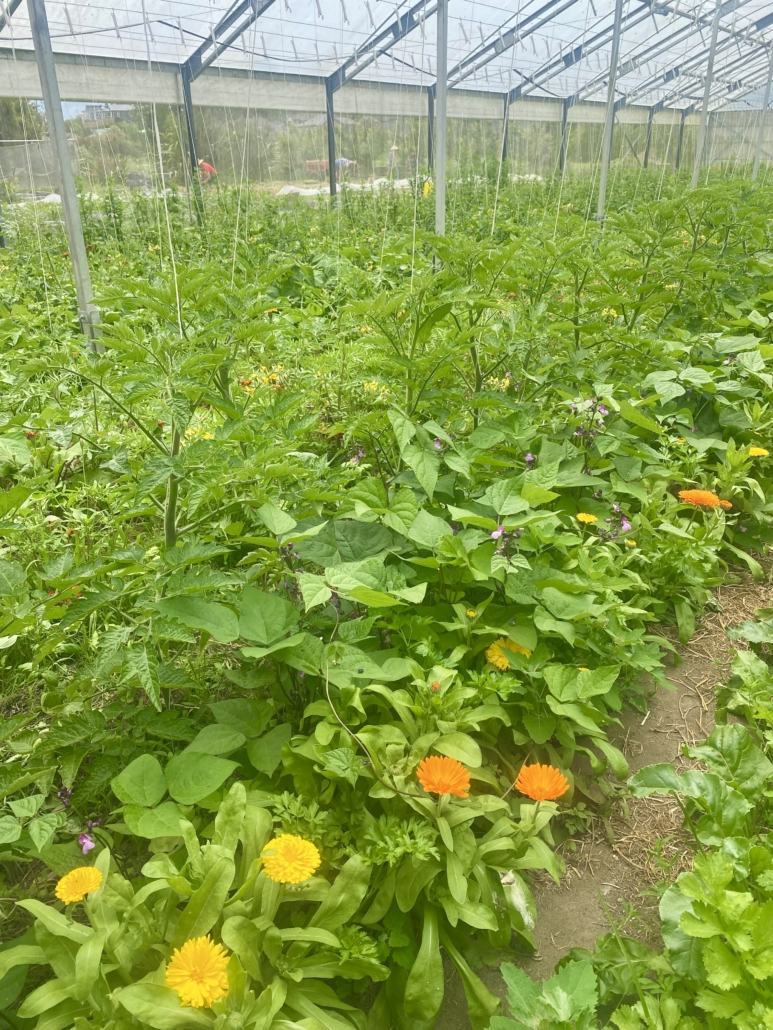
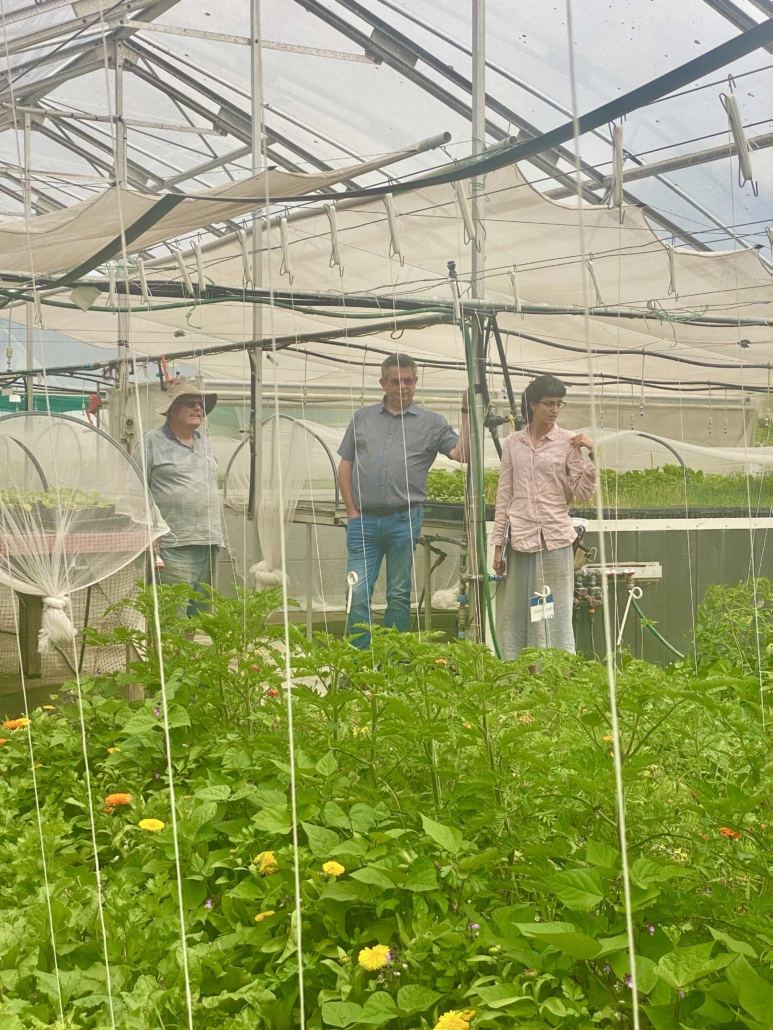
ABOVE: Abundant growth in the Earth Stewards greenhouse. Photos: Sarah Smuts-Kennedy
Finding the best sales model
At Earth Stewards they have also made real progress with their sales system, which they discovered is just as important as the growing.
โWe started out doing farmersโ markets and had just started implementing the CSA (community supported agriculture) model as Covid started,โ Coral recalls. โIn a few weeks we went from doing a few CSA boxes to over 100, which put us under untenable pressure. It took us a while to find the right balance, and model, for selling our produce, but now we have a thriving shop on site which is open one day a week with talk of opening another day.โ
โOn sunny days there is a queue to buy produce which comes from a few local growers we are collaborating with. This gives us a very practical way to contribute to local growers who are also needing to sell their produce.โ
The importance of a sense of community in organic regenerative farming is huge. Farming can be isolating, especially when youโre committed to healing the ecosystem the community gets even smaller. But for Coral and others the Earthworkers network has helped them feel supported and connected to others who are facing similar challenges.
โTogether, weโre learning, growing, and turning our farms into models of biology-first regenerative practice.โ
Earthworkers Hort 101
24โ28 March 2025, Hamilton
Hosted by:
Coral Ramiro and team at Earth Stewards
Brit and James Stembridge of Tomtit Farm
Chris McIntosh at Ethos Cafรฉโs new start-up farm
These three farms will showcase regenerative farming practices in action. Participants in the course will learn from these growers who have experience of managing farms and offer models of whatโs possible using biology-first regenerative methods.
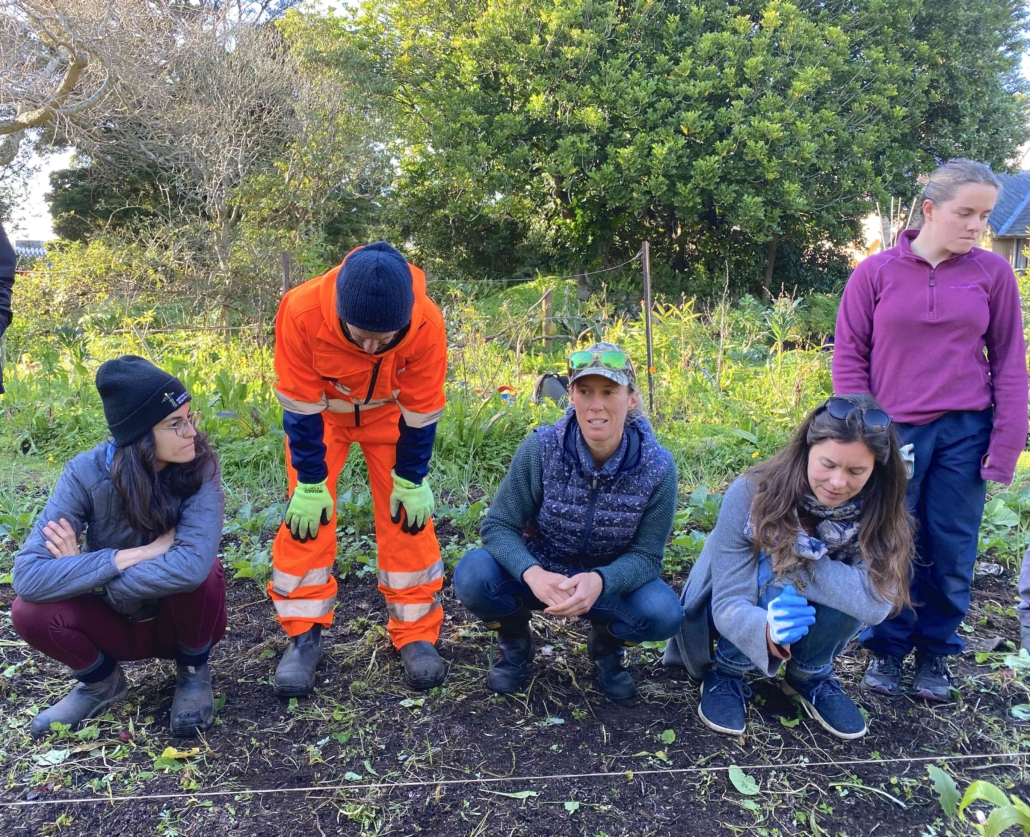
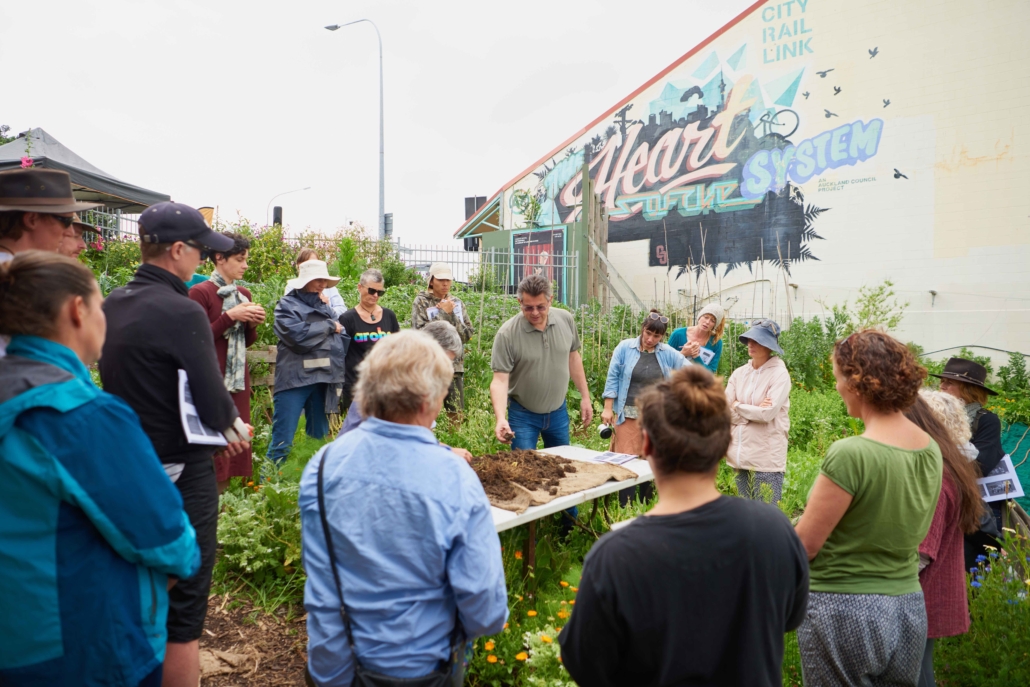
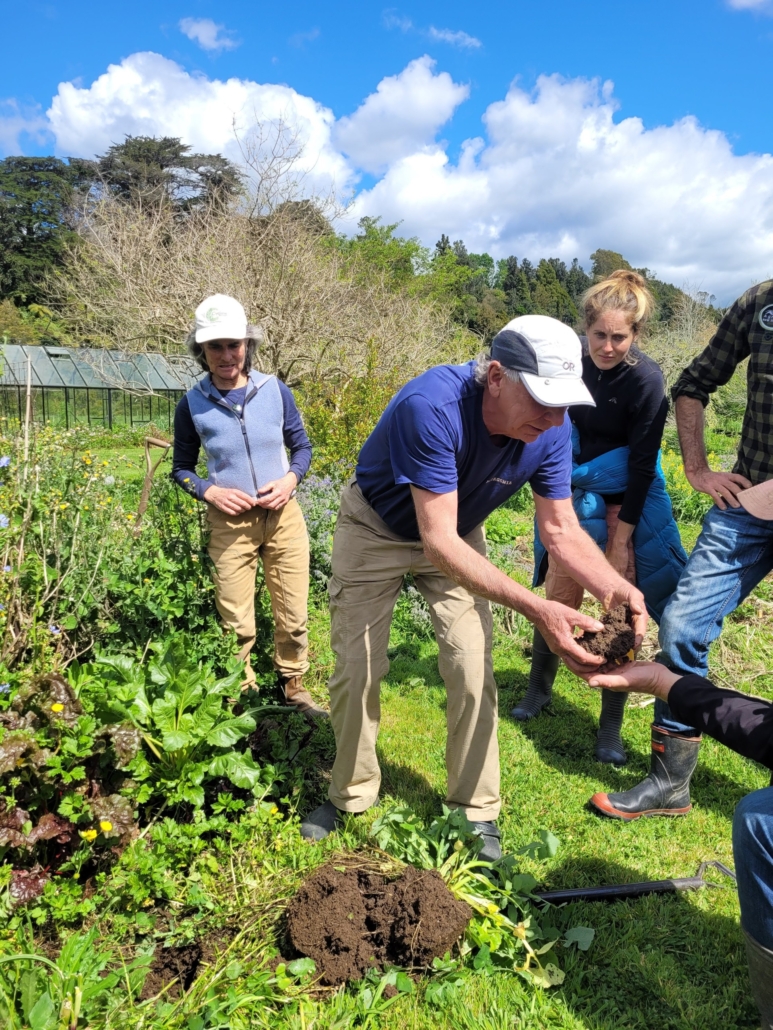
ABOVE: Earthworkers lead agronomist Daniel Schuurman showing soil samples to Earthworkers participants at OMG in central Auckland. Photo: Kate Micaela
Earthworkers alumni โ continuing the journey
Since it was launched in 2020 the five-day Earthworkers Hort 101 course has encouraged nearly 200 alumni to turn food production into an ecosystem restoration tool. Continuing this support via post-course mentoring they have established a network of optimistic like-minded growers who help each other in the day-to-day stresses and joys of learning how to work alongside nature to feed their local communities.
As a result, Earthworkers lead agronomist Daniel Schuurman and Earthworkers co-founder Sarah Smuts-Kennedy are developing the Earthworkers Educational Pathway to include opportunities for those wanting to take their learning to the next stage.
In 2024 For the Love of Bees (FTLOB) ran the Communities of Regenerative Learning (CORL) programme) in Tฤmaki Makaurau, supporting six urban growing projects engaging alumni to step into mentoring roles. In 2025 this is being rebranded as the Earthworkers Alumni Research Group and will support a small group of alumni who want to deepen their knowledge using their own projects to do this.
Sarah Smuts-Kennedy is the founder of For the Love of Bees and OMG (Organic Market Garden in central Auckland), and co-founder of the Earthworkers programme.
https://organicnz.org.nz/wp-content/uploads/sites/2/2024/12/Earthstewards-Coral-Ramiro-cropped-scaled.jpg17822560Staff Writerhttps://organicnz.org.nz/wp-content/uploads/sites/2/2024/09/OrganicNZ-2024-Masthead.pngStaff Writer2024-12-18 11:19:302025-04-03 16:33:10Working with the earth
Chaos Springs at Waihi run regular workshops about soil health, composting, and creating on-farm fertility. Jenny Lux reports on a recent workshop.
We hope you enjoy this free article from OrganicNZ. Joinus to access more, exclusive member-only content
Chaos Springs workshops
I have been an avid follower of Chaos Springs since I first went there in 2014 on a field trip as a student doing an evening class in Level 3 organic primary production. Recently I did a cheeky entry into one of their competitions for a free place in a workshop and I won!
So on a sunny spring Friday in October I attended the Creating On-Farm Fertility workshop taught by Steve and Jenny Erickson. This proved to be equally useful and stimulating to me, a market gardener, as it was to the many pastoral farmers, orchardists and general public attending, who all had a common interest in living off the land in some way.
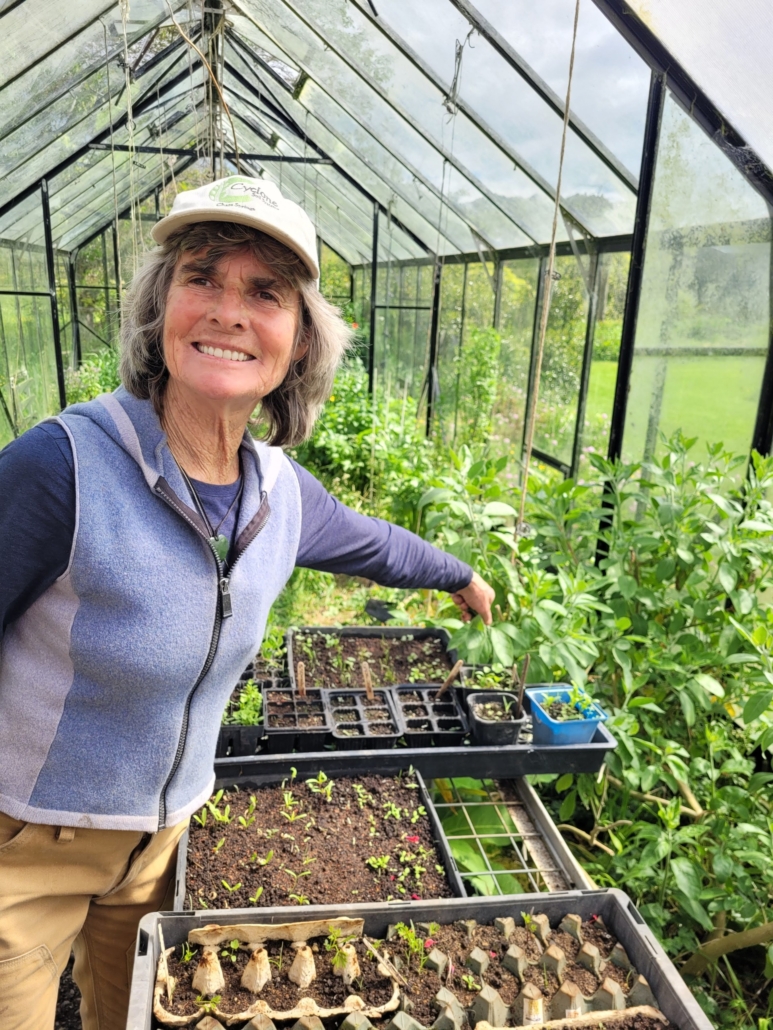
ABOVE: Jenny Erickson (left) and Steve Erickson by the vege garden, looking at the health and quality of the soil. Behind Jenny is a huge lemon verbena.
The biological engine
It all comes back to what Steve calls the โbiological engineโ and getting that really humming. Itโs an analogy that suits a mechanic like Steve, who is the man behind the innovative Cyclone multi-task sprayer. This machine allows you to combine compost, minerals and fertilisers in a liquid format for a single application onto land, and can handle particles up to 15mm โ an amazing tool!
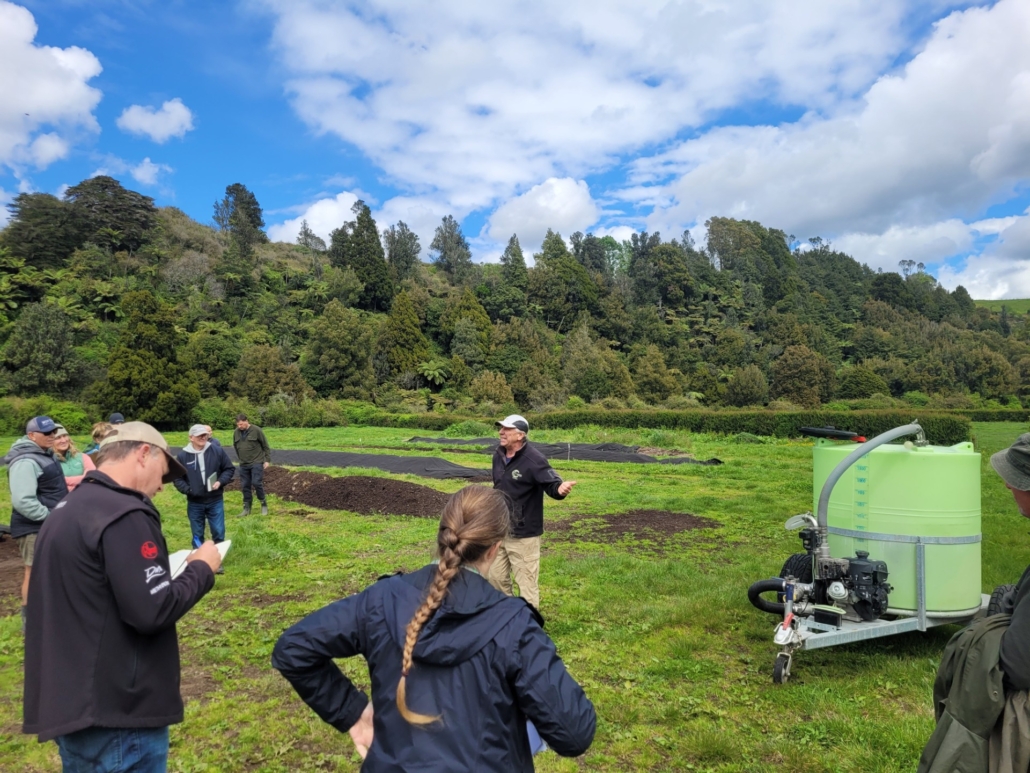
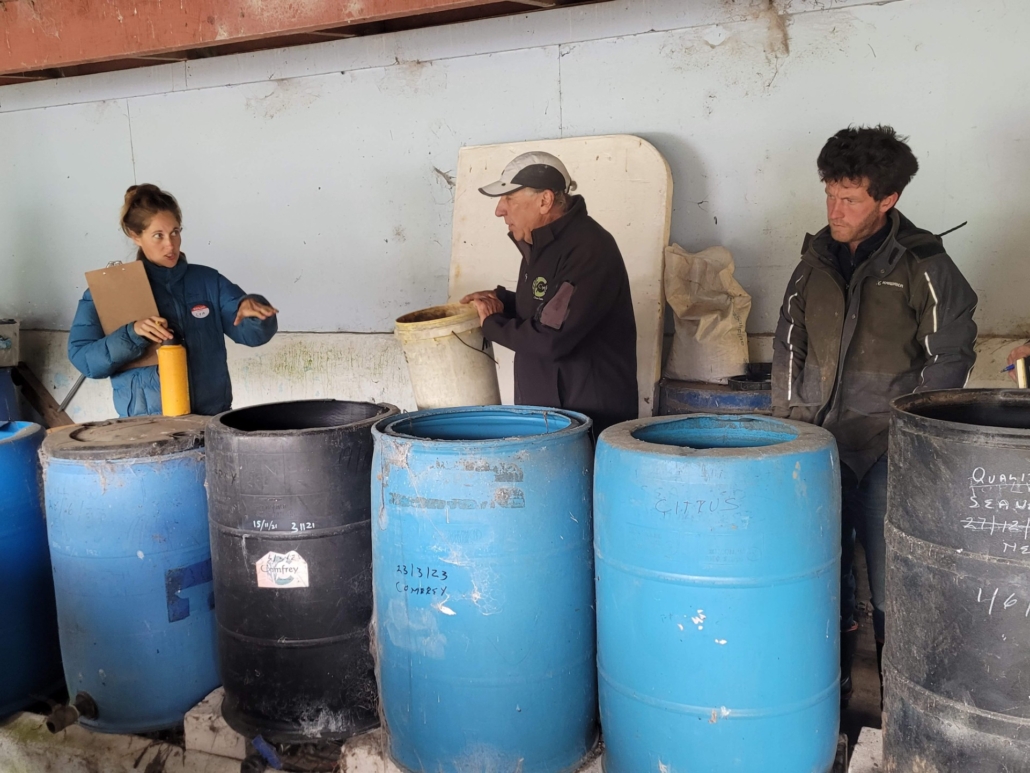
Steve (centre) with workshop group and the Cyclone at rightSteve Erickson (centre) with barrels of comfrey extract
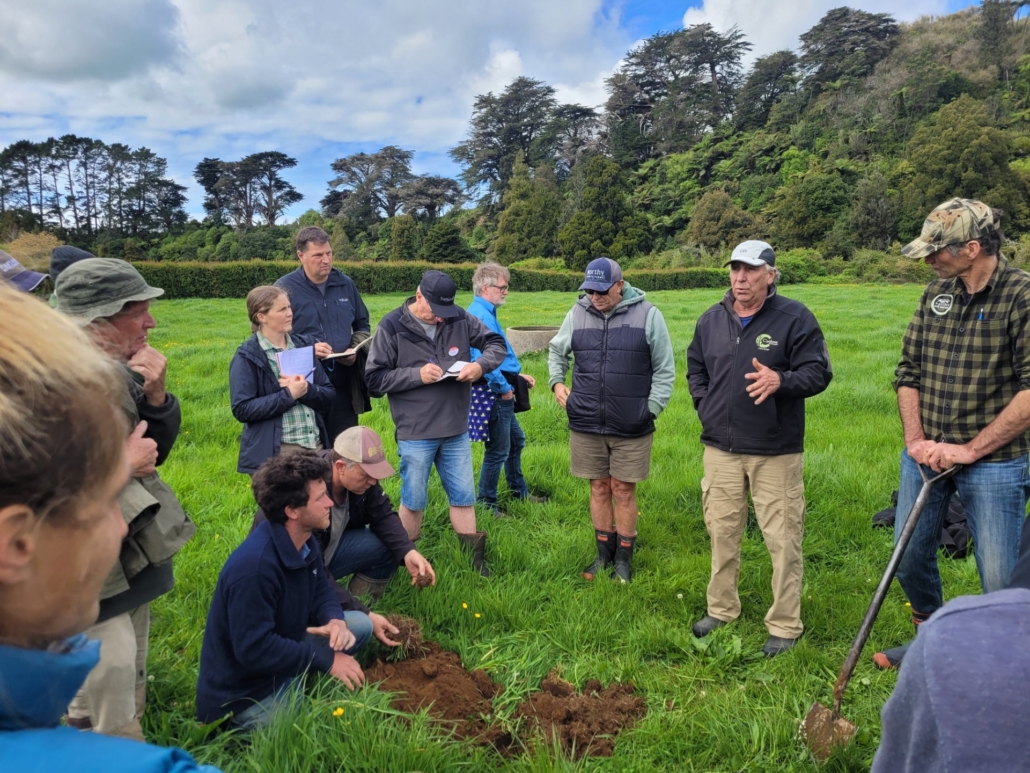
The day began with a couple hours of lectures, and a sumptuous morning tea, followed by a BYO packed lunch and a farm tour. We started looking at the plant extract facility, then onto the commercial composting area (with a demo of the Cyclone), and a walk through some paddocks to dig holes and observe soil structure and visible biological activity. We finished at Jennyโs biodynamic home garden, where you could see and also feel the energy of plants growing in balance.
This Chaos Springs workshop attracted a lot of practitioners with many years of knowledge, so there was a really rich exchange of ideas and advice. My only criticism was that it didnโt really seem long enough!
If you are managing any piece of land, I would highly recommend attending one of the Chaos Springs workshops. There is an on-farm composting workshop coming up on 29 November.
Jenny Lux, immediate past co-chair of Soil & Health, is an organic market gardener at Rotorua.
ABOVE: Jenny Erickson with her ashwagandha plant inside her glasshouse.ABOVE: Steve Erickson of Chaos Springs (second from right) speaks of his journey in pasture management over the last 22 years, from a fairly degraded base of ragwort-infested conventional dairy pasture on clay, to a currently thriving mixed sward on a darker clay-loam that provides optimal nutrition for his animals and is maintained only twice a year with a biological liquid spray, all made on farm.
Raglan organic grower, compost maker, gardening educator and permaculture landscape designer Shai Brod shares his compost-making and spring gardening tips with Mynda Mansfield.
Shai Brod
The following content is only available to logged-in members – log in here. Not a member? Join us to gain access to a wide range of content.
Mynda Mansfield is a writer and long-time organic gardener who lives in Raglan. She runs a homeschool group for 12 children using Waldorf education principles, and has published a book called A Eurythmy Teacherโs Handbook.
Historian and Soil & Health National Council member Matt Morris chronicles the genesis of the Soil & Health Association, and the impact we have made on organics in New Zealand.
We hope you enjoy this free article from OrganicNZ. Join us to access more, exclusive members-only content.
The Soil & Health Association of New Zealand (publisher of Organic NZ) formed in 1941 as the New Zealand Humic Compost Club. Since then, the organisation has changed its name several times, always responding to the issues of the day and the need to stay relevant. It became the Organic Compost Club in the 1950s, the Soil Association in 1970, and finally the Soil & Health Association of New Zealand in 1987. Of course, it is likely the name will change again in the future, certainly the organisation is undergoing significant change right now.
But when we think about the future of Soil & Health, it can be helpful to understand more about the past. What were the key drivers behind the formation of this organisation, and is there anything we can learn from them? To understand this, we really need to look at least as far back as the 1920s, if not further. In brief, a number of matters were causing significant concern in New Zealand (Pฤkehฤ) society, and throughout the British Empire after the traumatic years of World War One. People had gained the idea that the world was fragile.
This fragility was characterised in numerous ways, chief among them being a belief that the declining birth rate was a reflection of declining virility: the idea of โracial degenerationโ. Suspected causes of this included that food quality had declined. At the same time, it was becoming all too clear that farming practices were, in some places, leading not only to extensive biodiversity loss, but also to soil erosion.
During this period, Sir Albert Howard, director of the Institute of Plant Industry in India, perfected the Indore compost heap โ a scientific advance of considerable importance in India. His initial findings were published in his book The Waste Products of Agriculture (1931) and reiterated in more popular form in An Agricultural Testament (1943). His publications reached a wide international audience and unquestionably influenced discourse in New Zealand. His work was paired with Robert McCarrisonโs claims about causes of apparently perfect health in the Hunza people by G.T. Wrench in his The Wheel of Health: A study of the Hunza people and the keys to health (1938). Howard continued to join the dots between declining human health and declining soil fertility, while his solution โ compost โ would correct both of these and stabilise eroding soils as well.
In New Zealand, a dentist by the name of Dr Guy Chapman founded the Food Reform Society in 1922, looking to improve the eating habits of New Zealanders. The following year, Forest & Bird began its activities โ focused initially on forest loss and its impact on native fauna. While the aims of these two organisations may seem dissimilar, during the 1930s they started to coalesce around the same theme: soil health.
The subject of soil health, and particularly soil erosion, became topical during this time in New Zealand as in the rest of the Empire. The Esk Valley floods of 1938 resulted in excessive and devastating silting in the valley, followed by โdust bowlโ conditions the following year. This stimulated much cause for reflection: forest clearance for farming had wreaked havoc โ a situation that had been predicted back in 1913 by the Royal Commission on Forestry led by ecologist Leonard Cockayne. Forest and Birdโs publications included content on soil erosion and Lance McCaskill, a mouthpiece for the organisation, promoted this message more widely during the 1940s.
It is little surprise, then, that someone in New Zealand would want to promote Albert Howardโs innovation. That person was Guy Chapman, who had founded the New Zealand Food Reform Society, and who, since then, had also formed the New Zealand Womenโs Food Value League (1937). And it is also little wonder that his New Zealand Humic Compost Club would draw in avid Forest and Birders, like Yeo Tresillian Shand whose pamphlet The Crime Against the Land was a kind of Bible for the early composters.
The timing was also incredibly consequential for the longevity of the new movement. In 1941, the British Empire was losing the war โ Dunkirk had just happened (1940) and German physical prowess was contrasted against pasty, unhealthy looking Brits. The eugenicist obsession in Germany prior to the war โ captured in the phrase โBlood and Soilโ โ was seen as one reason for their success in dominating Europe so quickly once war broke out.
More importantly, the New Zealand government predicted possible food shortages on the home front, given so much primary production was being redirected to supporting American troops stationed in the Pacific. This resulted in a range of measures, including the Dig for Victory campaign, which encouraged householders to grow their own food. But the war also meant imported phosphatic fertilisers were not available; the logical result being the promotion of composting as a way to build a physical virile population by ensuring home-grown veges and fruit would be nutritionally sound.
Guy Chapman became the national chair of the Dig for Victory campaign, and the government produced official gardening guides that promoted Albert Howard-style hot compost heaps. It may seem extraordinary to us now that the Soil & Healthโs origins involved such a high level of government endorsement โ even leading a government programme โ but without this history it is quite possible that the movement would have died out not long after the war ended in 1945. While Albert Howard had hoped his compost would reform farming throughout the Empire, actually his message was mostly picked up by home gardeners who ensured his enduring legacy.
At some point in the 1950s, the Compost Club changed its name to the New Zealand Organic Compost Society. The word โorganicโ in this context was at the time something of an innovation. The name change hinted at a key change in the movement โ from being โcompost-mindedโ to being โchemical-freeโ. The post war period was awash with new chemical products and messages about โscientificโ and labour-saving approaches to gardening that the composters naturally reacted against.
In 1970, the New Zealand Organic Compost Society changed its name to the Soil Association, drawing a direct connection with the British organisation of the same name, founded in 1946 by Eve Balfour, author of The Living Soil (1943), who was also Patron of the New Zealand organisation.
By now the earlier openness of the movement had closed down somewhat: organic and chemical gardeners found it difficult to see eye to eye. However, this horticultural cold war started to thaw somewhat in the early 1980s when it became apparent that organic farming was gaining traction internationally. At this time, the Soil Associationโs focus shifted from being a series of organic gardening clubs to promoting a vision for a commercial organic farming sector. It may be a surprise to learn that Federated Farmers were the first organisation to bring together practitioners and researchers of organic farming. Perhaps it is a bigger surprise to learn that it is far from clear whether the certification programme we now know as BioGro would have got off the ground without this early support from Federated Farmers and significant input into the wider organic movement from the then National Government and the neo-liberal Fourth Labour Government that followed.
A critical figure at this time was Bob Crowder, whose Biological Husbandry Unit (BHU โ founded on a micro scale in 1977) at Lincoln University provided research and demonstration muscle not previously available in this country. Neither should we forget Chris and Jenny May, who along with Dave Woods (and Bob) really got BioGro off the ground, or Perry Spiller who worked tirelessly to bring in much needed funding to extend the impact of the organisation. For example, Project Gro (Giving to Research in Organics) raised over $50,000 for the BHU alone, and funded an Association Education Officer.
By the late 1990s, Soil & Health turned to protecting this still-young commercial organic sector from the spectre of genetically modified organisms, as well as the ongoing risks of spray drift from conventional farms and other chemical users. Meriel Watts (author of The Poisoning of New Zealand, 1984) was appointed Association director, while Brendan Hoare became president in 1998. In 1999, the Green Party developed a confidence and supply arrangement with the Labour Government, and Soil & Health won contracts to establish new initiatives funded through that agreement. One of those ultimately became the certification organisation OrganicFarmNZ, while another focused on developing edible gardening in the school curriculum. Once again, the organisation had official backing.
Not much later, Soil & Health spearheaded the Organic Federation of New Zealand, which later became Organics Aotearoa New Zealand โ a peak sector group that could liaise directly with the government on behalf of member organisations. An outcome of this collaboration is the Organic Products and Production Act, which became law in 2023. Once again, Soil & Health played its part in representing the interests of consumers and small growers in the consultations.
What lessons can be learned when we review our own history? One is that our core message โ that human health depends on soil health โ never gets old. It is as relevant now as it was in 1941. Another is that Soil & Health has had some tremendous successes. It is incredible to think that composting has become an embedded practice for so many directly due to the hard work of those early compost advocates. We have supported the creation of organic certification programmes underpinning our organics industry and our lobbying has been successful in keeping GMOs out of New Zealandโs environment. Our work has led directly to the Organic Products and Production Act, enshrining key principles of the sector in law.
But above all, it is the hard work and generosity of our passionate members and volunteers that stands out in this incredible, rich history. We have the power to continue making an important and much-needed impact in our country, so, if youโre not already, now is the time to get involved! Please join us in Wellington at the Organic Futures Symposium, the OrganicNZ Awards, and of course our critical Special General Meeting.
https://organicnz.org.nz/wp-content/uploads/sites/2/2020/06/SHA.png297299Staff Writerhttps://organicnz.org.nz/wp-content/uploads/sites/2/2024/09/OrganicNZ-2024-Masthead.pngStaff Writer2024-05-06 17:04:412025-03-28 15:24:17The rise, reasoning, and role of Soil & Health Association of NZ