• Link to Facebook
  • Link to Instagram
  • Link to LinkedIn
Reset member access or visit Soil & Health NZ
Organic NZ
  • Articles
    • Features
    • Gardening
    • Health and Food
    • Farming and Horticulture
    • Building and Technology
    • News
  • Competitions
  • Donate
  • Login
  • Join Us
  • Click to open the search input field Click to open the search input field Search
  • Menu Menu
Blog - Latest News

Worm Farming Tips

27 Aug 25/in Free Online, Gardening

Home gardener Michelle Coenradi has four worm farms on the go. Here she outlines the benefits, and offers some tips from her experience.

We hope you enjoy this free article from OrganicNZ.  Join us to access more, exclusive member-only content

I am passionate about my worms. There are so many benefits to worm farming, and it’s something you can do almost anywhere, even on a balcony. Worm farms produce two types of fertiliser: a liquid (sometimes called tea or juice) and a more solid one (vermicast). Recent Research News on worm juice plus mycorrhizae for juicier lettuce explores how that liquid pairs with soil fungi and compost. I leave the siphon open and sit a bucket underneath to collect the liquid.

Benefits of worm juice and vermicast

  1. Enhances soil fertility.
  2. Promotes plant growth.
  3. Deters pests and diseases.
  4. Improves soil structure – contains microorganisms and enzymes that improve soil aeration and water retention, leading to better root development.
  5. Rich in readily available nutrients like nitrogen, phosphorus and potassium, as well as trace elements.
  6. Improved aeration and drainage results in reduced soil compaction
  7. Enhances the activity of beneficial microbes which are essential for nutrient cycling and overall soil health.
  8. Cost-effective fertiliser that you can make yourself.
  9. Vermicast is pH neutral.

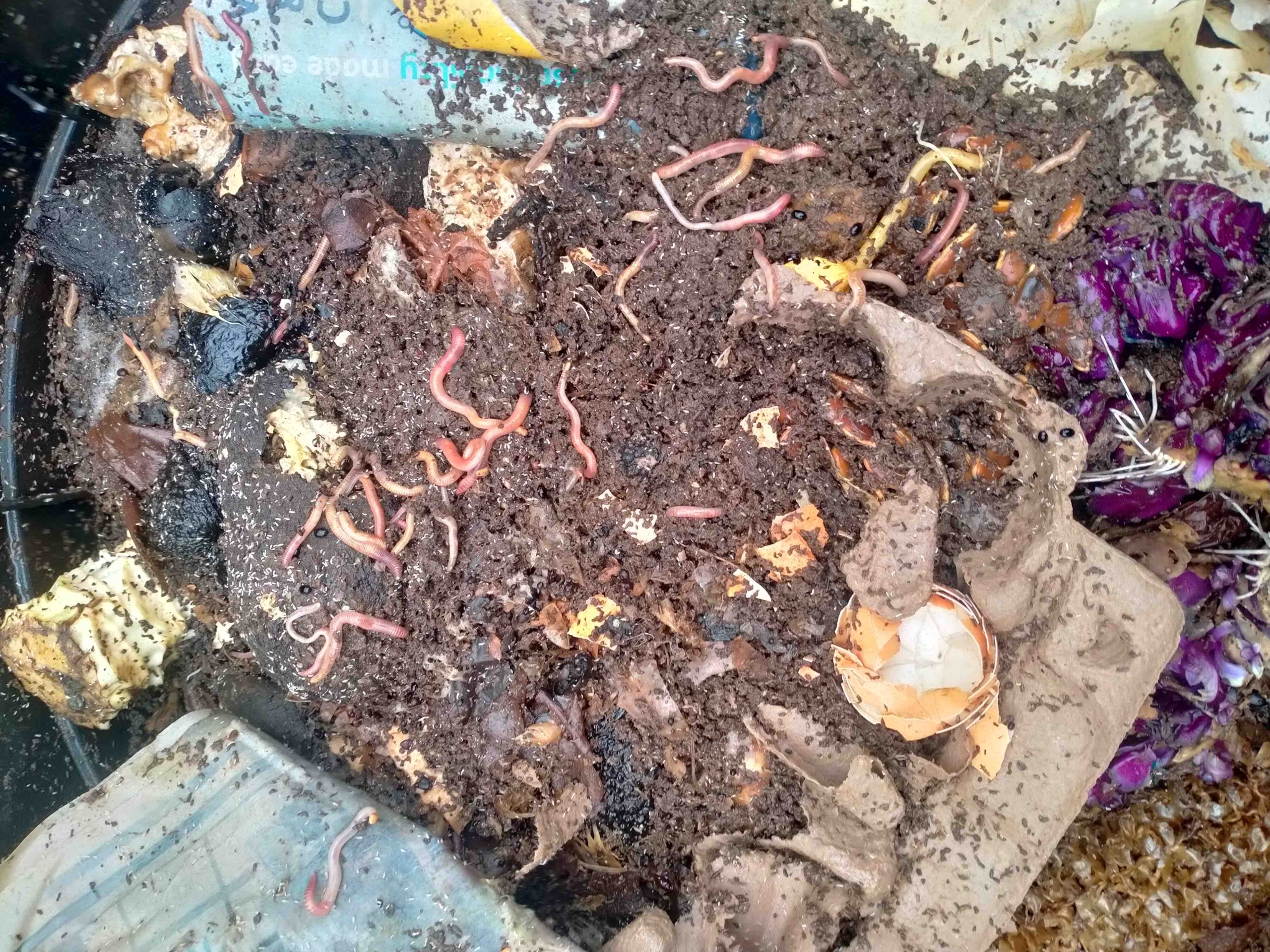
ABOVE: Inside one of Michelle’s worm farms (Photos: Michelle Conraedi)

A healthy home for your worms

Worms need a dark, moist and well aerated environment and a temperature between 15–25ºC. You can put in shredded paper for them to live and breed in, or a worm mat which can be purchased at hardware stores.

Worms love anything curved or round to nest in and keep themselves warm, especially avocado and watermelon skins, and pumpkin is a hit as well.

What do they like to eat?

  • 70% nitrogen-rich ‘green waste’ like fruit and vege scraps, eggshells, coffee grounds and tea bags (make sure they’re compostable ones). Avoid citrus fruit and the onion family.
  • 30% carbon ‘brown waste’, like newspaper and cardboard.

You can feed them daily but I tend to feed weekly.

When I put scraps in I sprinkle Tumbleweed worm compost conditioner over the top. This keeps the pH balanced – you can tell if the worms are struggling with an alkaline imbalance because they lose their colour and start turning white. You can also use garden lime sparingly.

The vermicast is referred to as black gold, indicating its value in the garden. I find worms are hardy and easy care; you really can’t go wrong with a worm farm and they are so rewarding.
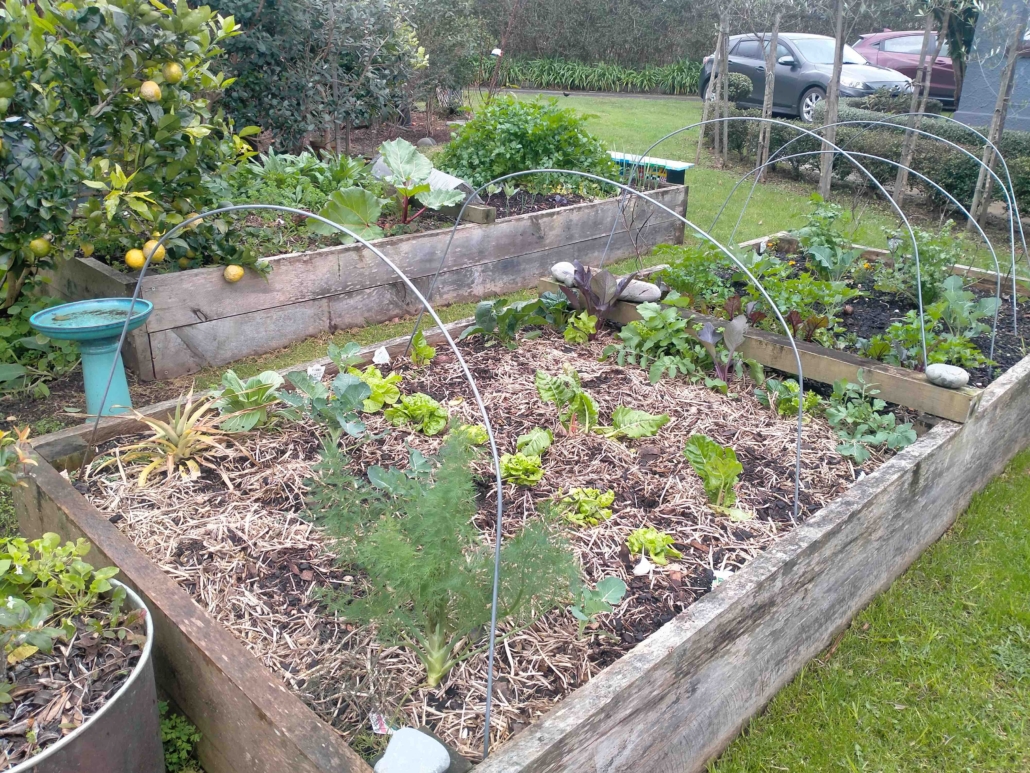
ABOVE: Michelle’s vegetable garden flourishes with the addition of vermicast and liquid from her worm farms.

More information

There is lots more information about worm farming online, such as these tips from the Compost Collective.

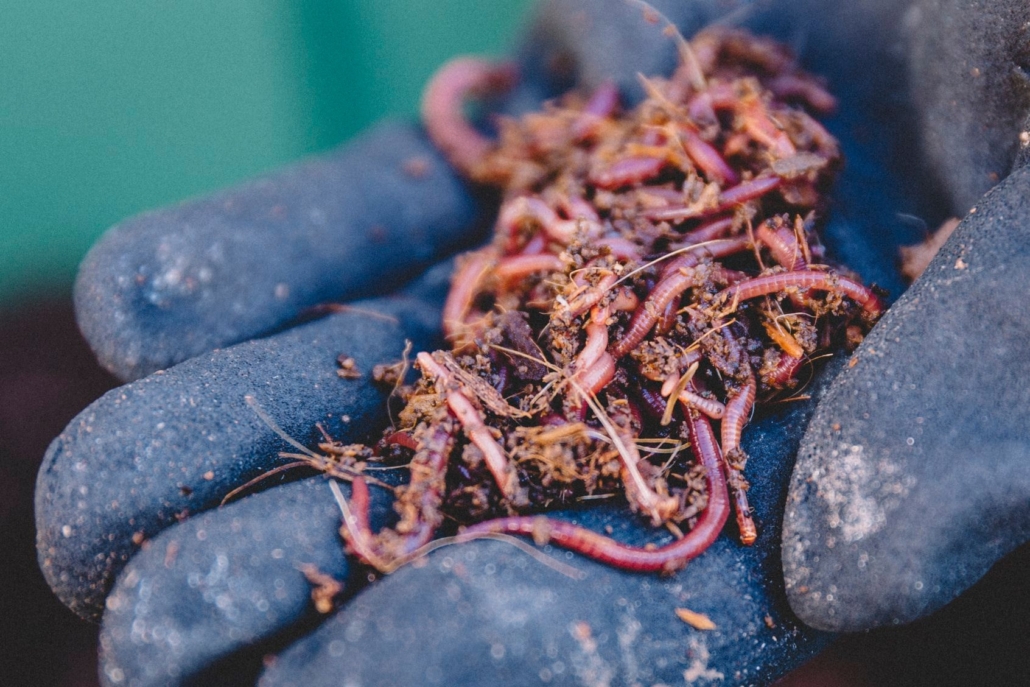
Photo at top: Compost Collective


Tags: compost, composting, Free to read online, gardening, organic fertiliser, organic gardening, worm farming, worms
https://organicnz.org.nz/wp-content/uploads/sites/2/2025/08/Worms-close-up-Compost-Collective.jpg 1128 1692 membership https://organicnz.org.nz/wp-content/uploads/sites/2/2024/09/OrganicNZ-2024-Masthead.png membership2025-08-27 15:33:162026-08-03 15:02:00Worm Farming Tips
You might also like
Broad bean new growth showing leaf curl and shrivelling. Waihi Bush an Organic Legacy with a new Global Scope
Teaspoon of Soil Life Underground – A Guide To Aotearoa’s Soil Food Web
Living Better, Together
Broad bean new growth showing leaf curl and shrivelling. Behind the scenes of the Organic Act
Broad bean new growth showing leaf curl and shrivelling. Sweet as Can Bee — The TranzAlpine Organic Honey Buzz
Broad bean new growth showing leaf curl and shrivelling. Organics around the world
Broad bean new growth showing leaf curl and shrivelling. Keep your garden safe from killer compost
Broad bean new growth showing leaf curl and shrivelling. Ceres Organics — A small company with a BIG purpose

Categories

  • All Articles
  • News
  • Features
  • Gardening
  • Health and Food
  • Farming and Horticulture
  • Building and Technology
  • Free Online

Latest Articles

  • Butterhead lettuce growing in rich living soil
    Worm juice and soil fungi: why compost alone isn’t enough for juicy lettuce
  • Mandarins in a bowl
    Mandarins: Winter vitamin boost
  • 2026 Example calendar covers
    2027 Calendars
  • Illustration of tractor spraying pesticides in a paddock, with people, animals, bush, stream and wildlife next to it
    Parable of the paddock edge
  • Green kiwifruit
    Kiwifruit: Treasures in red, gold and green
  • matariki
    Moon Calendar July-August 2026
  • runny honey dripping from spurtle into jar
    The Queen Bee of Ōhope
  • Box of aubergines (eggplants)
    Aubergines
  • Seed saving with Monique
    Moon Calendar May-June 2026
  • Feijoas top view cut and uncut
    Fantastic feijoas
Soil & Health Association of NZ Established 1941

Proudly published by the Soil & Health Association NZ

  • About us
  • Contact us
  • Help us
  • Sign up to the Newsletter
© Copyright OrganicNZ | Soil and Health Association NZ.
  • Link to Facebook
  • Link to Instagram
  • Link to LinkedIn
  • Privacy Policy
  • Editorial Policy
Link to: Broccoli: A Winter Hero Link to: Broccoli: A Winter Hero Broccoli: A Winter Hero Link to: Organic Gardening Link to: Organic Gardening Organic Gardening Guide by Organic NZOrganic Gardening
Scroll to top Scroll to top Scroll to top