• Link to Facebook
  • Link to Instagram
  • Link to LinkedIn
Reset member access or visit Soil & Health NZ
Organic NZ
  • Articles
    • Features
    • Gardening
    • Health and Food
    • Farming and Horticulture
    • Building and Technology
    • News
  • Competitions
  • Donate
  • Login
  • Join Us
  • Click to open the search input field Click to open the search input field Search
  • Menu Menu

Tag Archive for: gardening

Posts

Small, sweet, and mightyย 

18 Dec 25/in Free Online, Health and Food, Magazine Articles

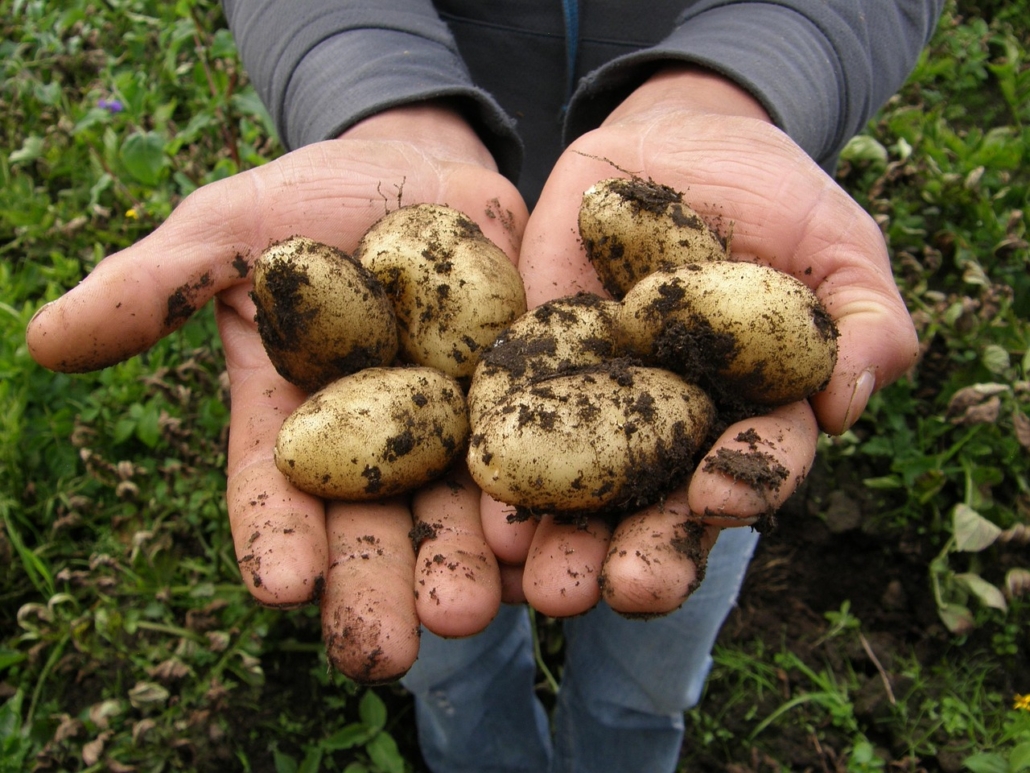
Nourishing new potatoes

Nutritional therapist Paula Sharp enthuses about the nutrition and flavour of the humble potato when in its seasonal โ€˜newโ€™ incarnation, and shares a delicious potato salad recipe.

We hope you enjoy this free article from OrganicNZ.  Join us to access more, exclusive member-only content

Thereโ€™s something joyful about the arrival of new potatoes. Their appearance marks the shift into early summer โ€” that moment when gardens start to speed up, days stretch out, and meals feel lighter, fresher, and closer to the earth. In New Zealand, new potatoes sit in a special place in our food culture: earlyโ€season, delicate, full of flavour, and a perfect fit for our festive tables. 

From an organic perspective, theyโ€™re a beautiful example of how nutrient density, flavour, and sustainable farming intersect. Grown without synthetic fertilisers or pesticides, organic new potatoes offer us a clean, wholesome staple that supports soil health, biodiversity, and local growers, while delivering exceptional nutrition on the plate. 

What makes a potato new? 

โ€˜Newโ€™ potatoes are planted and harvested earlier than main-crop potatoes, usually from late October through to early January, depending on region and soil warmth.

Rather than being cured like storage potatoes, they come straight to market with paper-thin skins and a moisture-rich interior. This is why they cook quickly, hold their shape well in salads, and have that signature creamy, subtly sweet flavour. 

Their fragile skins are more than just a culinary bonus; they retain more vitamins and minerals compared with older, stored potatoes. Their freshness window is short, so in season matters. 

New potatoes are more than an ingredient, in my opinion, theyโ€™re a story of soil, sustainability, and nourishment.

As we move into the festive season and the height of our growing year, they invite us to slow down, eat seasonally, and reconnect with the land beneath our food. 

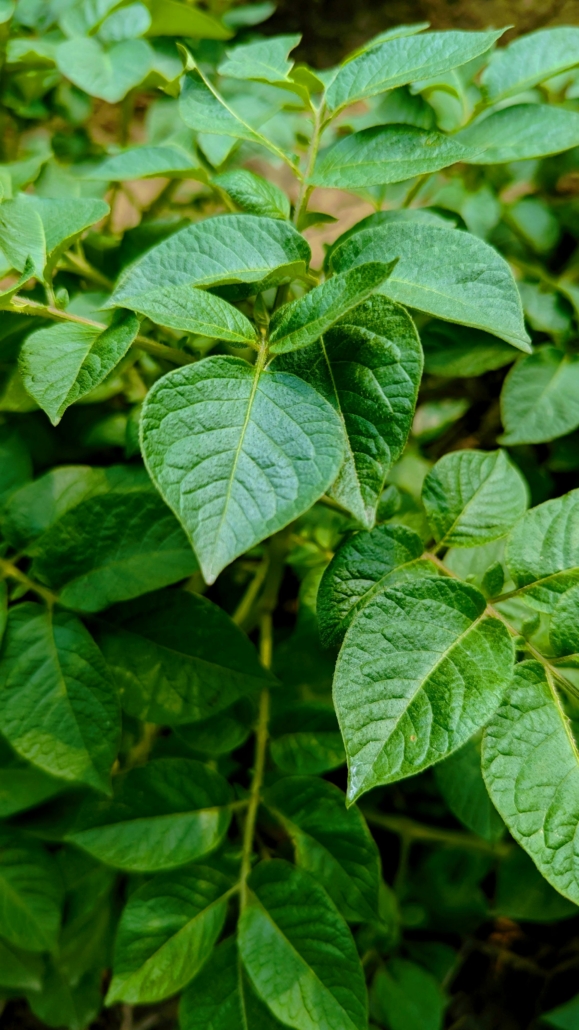
Photo: Potato foliage, by Anik Hasan, Pexels

Growing new potatoes in early summer 

Across the Bay of Plenty, Pukekohe, Northland, Hawkeโ€™s Bay, North Otago and other temperate climates, new potatoes thrive in warm soils with good drainage and plenty of organic matter.

Planting happens from late winter through mid-spring. Early varieties mature quickly, often ready within 60 to 90 days. Some of the common varieties are Jersey Benne, Cliffs Kidney, Rocket and Swift. 

Mulching, companion planting, and natural pest management are key in organic systems. Many organic growers use biological controls, beneficial insects, and proper spacing to reduce disease and improve airflow. The result is a nutrient-dense crop produced in a way that enhances, rather than extracts from, the land. 

Why organic matters for potatoes 

Potatoes are among the crops most commonly treated with fungicides, herbicides, and sprout inhibitors in conventional systems.

Choosing organic means youโ€™re supporting growers who prioritise soil structure, microbial health, and ecosystem balance, and it reduces your exposure to these chemicals. Organic potatoes come from systems where soil nutrition is built naturally through compost, cover crops, and crop rotation. This richer soil profile contributes to higher micronutrient content and superior flavour. 

Photo: sbj04769 | Pixabay

Higher in nutrition

While potatoes are often lumped into the โ€˜carbโ€™ category, new potatoes offer considerably more. Because theyโ€™re so fresh, they retain a higher proportion of: 

  • Vitamin C โ€“ supports immunity, skin repair, and iron absorption.ย (Vitamin C degrades with heat but, depending on cooking time and method, new potatoes are likely to retain more than stored potatoes.)
  • Potassium โ€“ crucial for heart function, nerve signalling, and maintaining healthy blood pressure. 
  • B vitamins โ€“ especially B6, essential for hormonal balance, mood regulation, and metabolism. 
  • Dietary fibre (especially when the skin is left on) โ€“ helps with digestion, blood sugar steadiness, and gut microbiome resilience. 

New potatoes naturally contain resistant starch, a type of fibre that feeds beneficial gut bacteria and supports metabolic health. Interestingly, resistant starch levels increase when potatoes are cooked and cooled โ€” making new potatoes ideal for summer salads and picnic dishes. 

In the kitchen: versatile, quick, and festive

With New Zealandโ€™s cherry season lasting only a few weeks, from mid-December into early January, savouring them New potatoes shine when their skins are left on. A simple steam or boil is often enough. Toss with herbs, lemon, good olive oil, or cultured cream for an instant seasonal dish. 

Theyโ€™re also ideal for festive cooking, Christmas tables, barbecues, shared platters, and light summer lunches. Their ability to hold shape without becoming floury makes them perfect for salads.

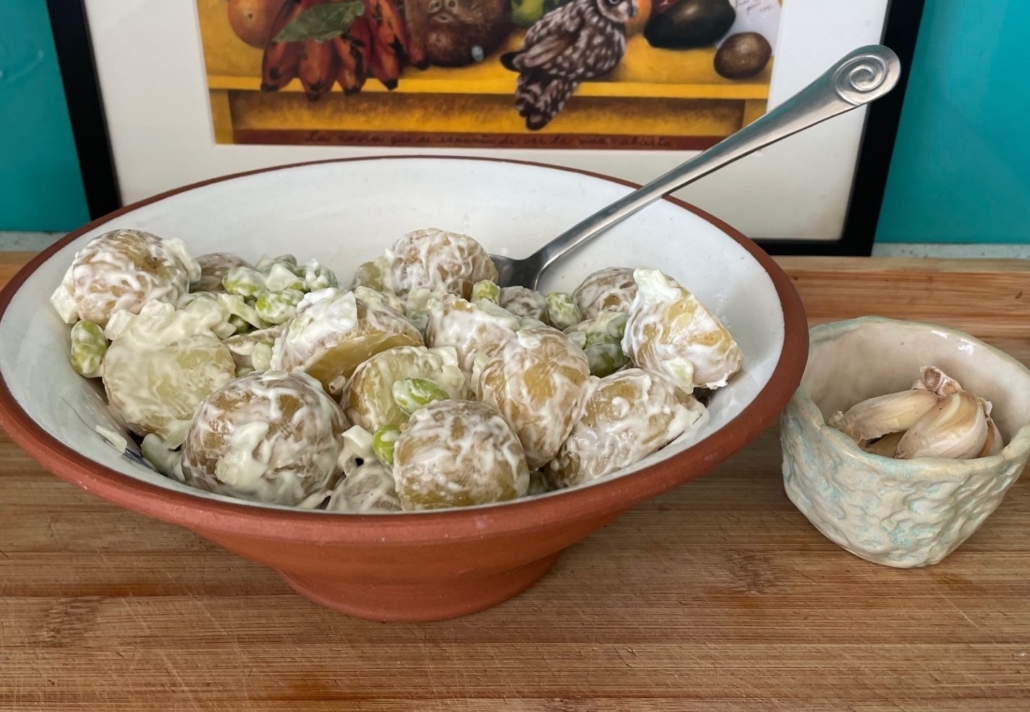
Creamy new potato salad

with edamame, herbs & lemon 

Photo: Paula Sharp

Ingredients

  • 1 kg new potatoes 
  • 1 cup shelled edamame beans (frozen) 
  • 3 spring onions, finely sliced 
  • ยผ cup fresh dill, chopped 
  • ยผ cup parsley, chopped 

Dressing

  • ยฝ cup whole-egg mayonnaise (or vegan mayo) 
  • 2 Tbsp Greek or coconut yoghurt 
  • zest of 1 lemon 
  • Juice of ยฝ lemon 
  • 1 tsp Dijon mustard 
  • Sea salt and cracked pepper to taste 

Method

  1. Boil potatoes whole until just tender. Drain and cool slightly.
  2. In a bowl, add frozen edamame beans, cover with boiling water, cover with a lid for approximately 3 minutes.
  3. Slice cooled potatoes into halves or quarters (keep the skin on).
  4. In a large bowl, add potatoes, edamame, spring onions, dill, and parsley. 
  5. Whisk dressing ingredients together. Pour over salad and gently fold to combine.
  6. Refrigerate 30 minutes before serving. 

AUTHOR BIO

Paula Sharp is a nutritional therapist supporting womenโ€™s health, digestion, hormones, skin, sleep, and energy through one-to-one consultations via Zoom. Sheโ€™s also a local guest speaker in the Bay of Plenty and regular writer for Organic NZ.

Join Paulaโ€™s free newsletter โ€“ Sharp Bite โ€“ for weekly nutrition tips, seasonal recipes, and mindset inspiration.

Photo at top of article: Alexei_other | Pixabay


https://organicnz.org.nz/wp-content/uploads/sites/2/2025/12/potatoes-6980000_1280.Alexei_other.jpg 853 1280 membership https://organicnz.org.nz/wp-content/uploads/sites/2/2024/09/OrganicNZ-2024-Masthead.png membership2025-12-18 21:51:202025-12-22 17:07:16Small, sweet, and mightyย 

Homegrown Fruit: Pests and disease-reducing strategies

28 Nov 25/in Free Online, Gardening, Magazine Articles

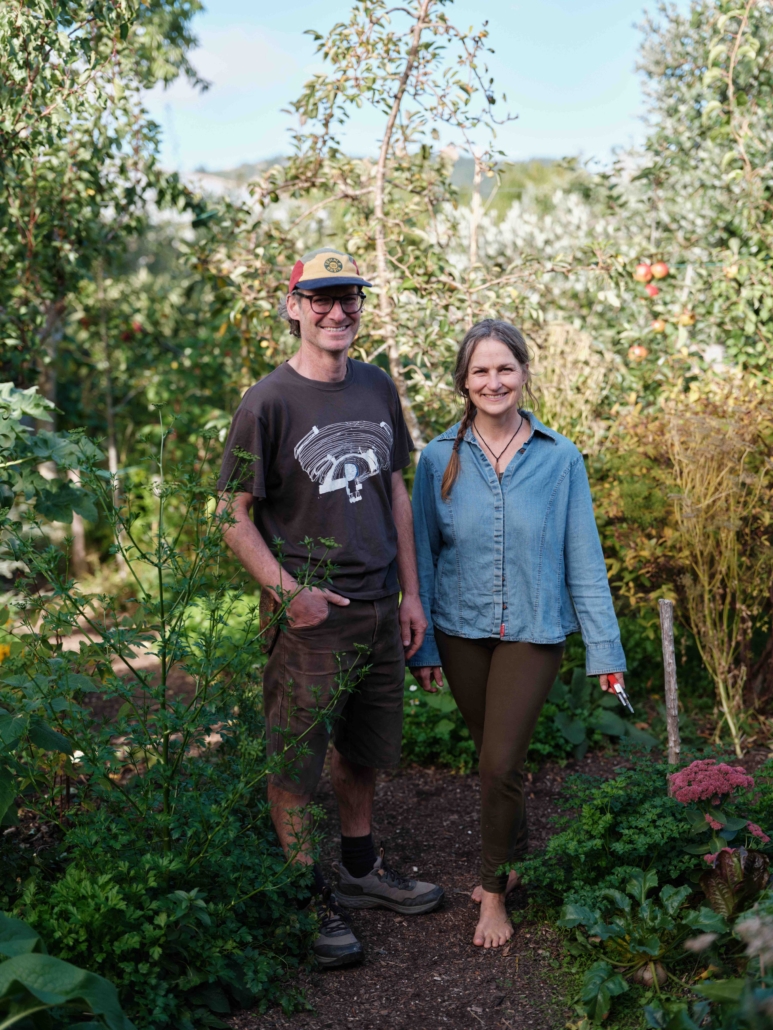
By Kath Irvine and Jason Ross

Homegrown Fruit: A practical guide is an accessible and comprehensive guide to growing fruit trees, bushes, vines and brambles in Aotearoa New Zealand.

The authors have a wealth of experience between them, and guide readers through everything from planning a home orchard, to specific types of fruit and their requirements, to care and pruning, pest, disease and weed control, and much more.

The following is a section on strategies to reduce pests and disease, extracted with permission from Homegrown Fruit: A practical guide, by Kath Irvine and Jason Ross (K+J Books, 2025) $58 RRP

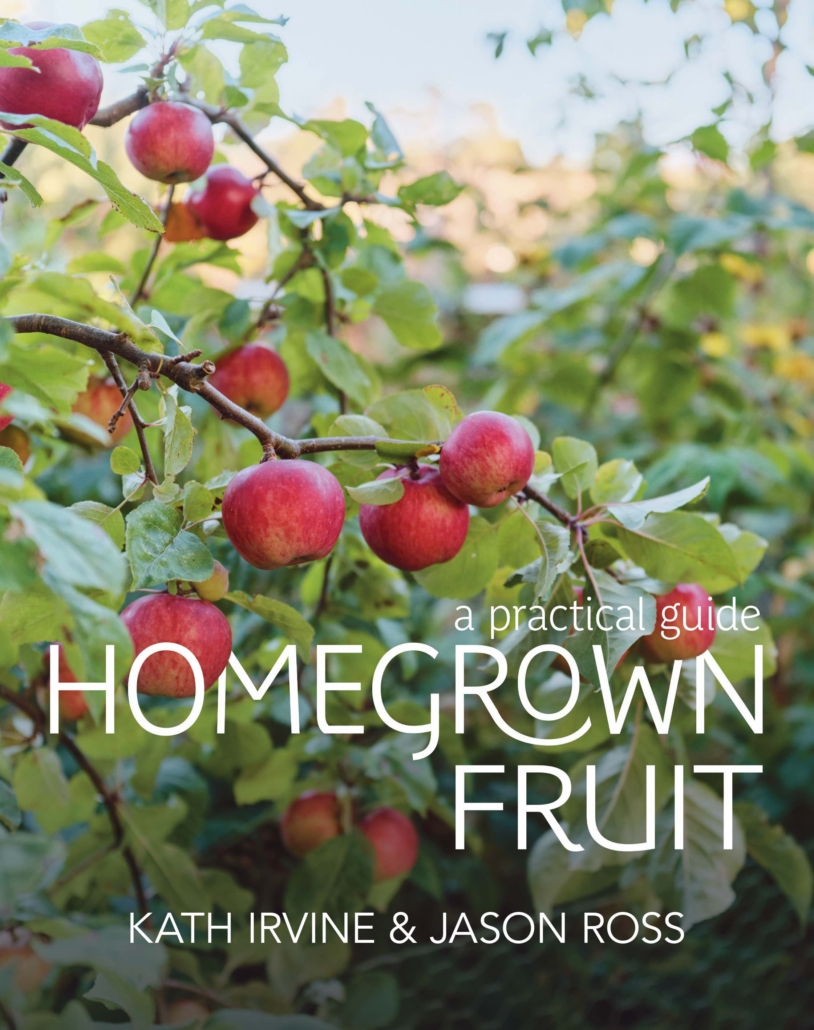
ABOVE: Cover image of Homegrown Fruit, and Jason Ross and Kath Irvine (Mickey Ross Photography)

We hope you enjoy this free article from OrganicNZ.  Join us to access more, exclusive member-only content

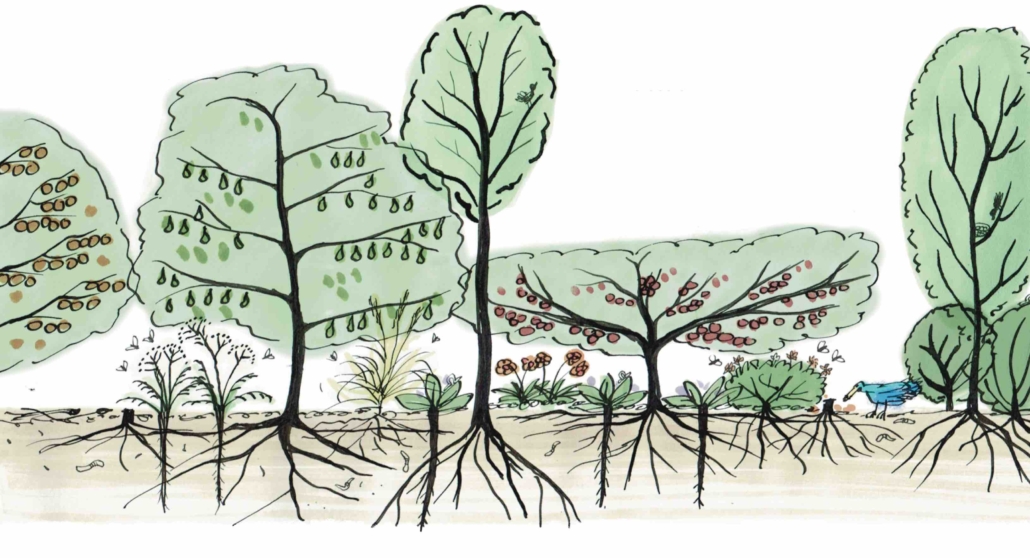
Weโ€™re big fans of sidestepping pests and disease โ€“ thatโ€™s why weโ€™re so keen on well-suited varieties, and on staying in touch with our trees and keeping health humming along. Even so, pests and disease do happen! Little bits here and there are no worries, but more than that and itโ€™s a good idea to ponder why. Itโ€™ll be a stress of some sorts โ€“ weak vigour, overfeeding, extreme weather, or because the tree isnโ€™t planted in its happy place.

If a tree continues to get hammered every year in spite of all your love, feel free to chop it down, mulch it up, and try another variety. That in itself is an excellent pest- or disease-reducing strategy โ€“ to only grow trees that thrive easily. The younger your orchard is, the more important it is to act on the first signs of pest or disease. The more established, diverse, and healthy your orchard, the more important it is to watch and let things take their natural course. If at any point tree health starts to be compromised, step in with our solutions below.

ABOVE: Illustration by Jason Ross

Pest-reducing strategies

Before you rush in to squash or spray, find out about the bugs you see on your fruit trees and make sure they are foe. You will find most are orchard friends. Itโ€™s really useful to understand what the different phases of bug life cycles look like โ€“ both for pests and predators. The juveniles can look radically different to the adults.

5 spray-free strategies

Our goal is to manage all pest problems without sprays, to lean into the wondrous network of unseen support thatโ€™s constantly in motion in our orchards.

Predatory insects

Keep a wide variety of pests in check with a wide variety of predatory and parasitic insects: parasitic wasps, hoverflies, ladybirds, praying mantis, spiders, dragonflies, damselflies, assassin bugs, lacewings, various beetles, frogs, and even earwigs โ€“ the more the merrier! Entice them in with a spray-free, wild haven, a year-round supply of nectar and pollen, and of course, some pests to eat!

Wild birds

Birds are a quid pro quo โ€“ while you may want to protect your ripening crop from them, the rest of the time birds like wax-eyes, starlings, chaffinches, and fantails are voracious gobblers of insects.

Digital control

Squashing grubs, caterpillars, or aphids is a quick and easy solution on a young tree, a dwarf or espaliered tree, or a reachable vine. Curled or folded leaves are a sign that a grub or caterpillar lurks within โ€“ open them up to see. Dimpled leaves indicate a sucking insect is at play โ€“ flip them over to check. Webbing is another sign โ€“ poke about and be nosy! You donโ€™t need to squash every single pest: get the bulk of them, or the ones within reach โ€“ leave a few for the predators. Keep at it during your check-ins.

Fruit and spur thinning

Thinning reduces pest numbers by removing their habitat โ€“ the cosy home thatโ€™s created where fruits touch.

Chickens and ducks

Chickens scratch up and gobble overwintering grubs and larvae. Ducks love slugs and snails, and both forage on a broad range of pests, from aphids to grasshoppers.

Two safer sprays: Neem and Bt

While itโ€™s our goal to be spray-free, there are times when we are both very grateful to have Neem and Bt in our toolkit. Both must be ingested to work, so the only insects that come to grief are the ones sucking or chewing the foliage or fruits. Bees and predatory or pollinating insects arenโ€™t eating foliage or fruits, so they stay out of harmโ€™s way. Many natural insecticides, like pyrethrum, garlic, or rhubarb spray, are contact killers โ€“ they nail everything they touch. We donโ€™t recommend them.

The key to success with Neem and Bt is to completely cover the foliage when you spray, and to follow up with a couple of repeat sprays to catch the next gen of egg hatchings. Repeat sprays are essential! Use your observations to guide you as to how many repeats you need.

SPRAYING TIPS
Spray at dawn or dusk, in dry weather. Use a fresh mixture each time โ€“ make a small batch so that you use it all. Rinse out your sprayer afterwards, especially the nozzle, and leave it open and upside-down to air out and dry.

Neem

Use for all sucking insects: aphids, woolly aphids, scale, thrips, passionvine hoppers, green vegetable bug, and cherry/pear slug (sawfly larvae).

  • Passionvine hopper adults are impervious to spray โ€“ catch them at the juvenile โ€˜fluffy bumโ€™ stage. Repeat at three-day intervals. By the third spray, the population will be greatly reduced. Continue in this way until there are none left.
  • Woolly aphids are a more intense pest because they suck on both roots and tops. If there are tell-tale cottony growths around the root crown, apply Neem granules to the soil at the base of the tree in tandem with using Neem sprays

Bt

Bt is short for Bacillus thuringiensis. Itโ€™s the active ingredient in many caterpillar-specific sprays. Use it for raspberry bud moth, leaf roller caterpillar, codling moth, and guava moth.

Codling moth and guava moth get a special mention because natural predators are in short supply in NZ, and they arenโ€™t so much a reflection of stress as they are a reflection of a neighbourhood thatโ€™s heaving with them. Success comes from doing a range of things that target different stages of their life cycles.

  • Spray with Neem + Bt together, weekly from petal fall.
  • Check over young fruits for tiny entry holes where larvae have burrowed in. There may also be frass โ€“ tiny piles of sawdust-like excrement โ€“ at these sites. Remove fruits and feed them to your chooks or drown them in a barrel of water.
  • Immature fruits that fall often contain larvae โ€“ send your pigs in or pick them up; this stops the next generation of moths emerging.
  • In winter, let chooks in to hunt overwintering larvae โ€“ wax-eyes and ground beetles also help with this. Needless to say, clean up all windfalls in case they contain larvae.
  • Prevent guava moth by covering trees with insect mesh soon after pollination, when fruitlets start to develop.

Homegrown Fruit: A practical guide, by Kath Irvine and Jason Ross (K+J Books, 2025) $58 RRP

https://organicnz.org.nz/wp-content/uploads/sites/2/2025/11/HomeGrownFruitcropped.jpg 876 2241 membership https://organicnz.org.nz/wp-content/uploads/sites/2/2024/09/OrganicNZ-2024-Masthead.png membership2025-11-28 12:49:372025-11-28 12:51:53Homegrown Fruit: Pests and disease-reducing strategies
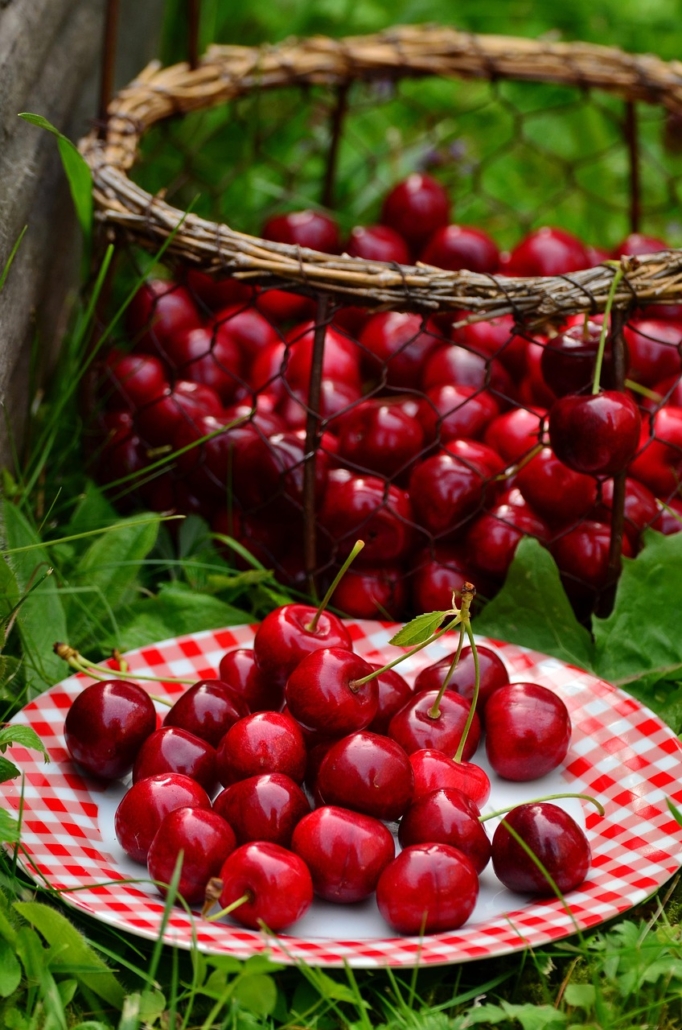
Basket of cherries

Cherries on top

28 Nov 25/in Free Online, Health and Food, Magazine Articles

A nutritional powerhouse wrapped in summer sweetness

Thereโ€™s a moment each summer in New Zealand when the fruit bowls shift โ€“ apples and pears take a step back, and cherries step into the spotlight. Their glossy skins, deep ruby tones, and tart sweetness signal summer days. For growers, cherries are a labour of love. For eaters โ€“ especially those who value organic, seasonal produce โ€“ theyโ€™re a small but mighty gift from the orchard, and one of the most nutrient-dense fruits of the season.

Nutritional therapist Paula Sharp shares her nutritional knowledge and two delicious recipes.

We hope you enjoy this free article from OrganicNZ.  Join us to access more, exclusive member-only content

The New Zealand cherry landscape

Cherries thrive where winters are cold, summers are dry, and the soil drains freely โ€“ in my mind making Central Otago the undisputed cherry heartland of New Zealand. The regionโ€™s sharp seasonal contrasts enhance flavour development, producing cherries that are firm, intensely sweet, and wonderfully aromatic.

Smaller organic orchards in Hawkeโ€™s Bay, Canterbury and Marlborough also contribute to the national harvest, though cherries remain one of the more climate-sensitive crops. A single late frost or a burst of heavy rain near harvesting can have consequences for the whole orchard. This vulnerability is part of what makes cherries precious – and why many organic growers invest heavily in soil health, biodiversity, and regenerative practices to increase resilience.

A nutritional deep dive

While they may be small, cherries offer a remarkably wide spectrum of nutrients and plant compounds. Their benefits go far beyond their sweetness:

1. Anthocyanins: Plant Power

The deep red-purple pigments in cherries come from anthocyanins โ€“ a group of antioxidants linked with reduced inflammation, improved circulation, and even enhanced brain health. These compounds help protect the fruit from UV stress and heat, and offer similar protective benefits in the human body.

Anthocyanins can also support cardiovascular health by improving blood vessel elasticity and lowering oxidative stress.

2. Natural melatonin for better sleep

Cherries, particularly tart varieties, contain natural melatonin – the hormone that helps regulate sleep-wake cycles. While New Zealand grows mostly sweet cherries, these still contain small but meaningful amounts of melatonin alongside tryptophan and serotonin precursors. For those who struggle with disrupted summer sleep, incorporating cherries into afternoon snacks or evening desserts can be delicious and supportive.

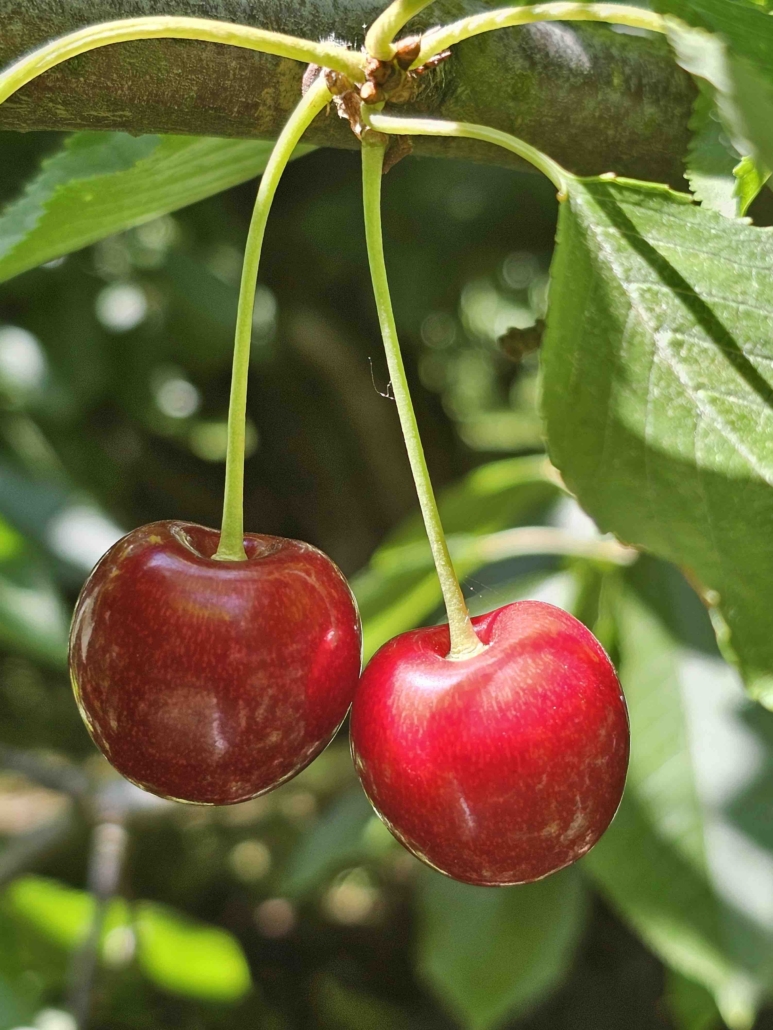
Photo: Hasmik Ghazaryan Olson, Unsplash
3. Joint and muscle support

Organic cherries contain polyphenols that may help reduce exercise-induced muscle soreness and support joint comfort. This is particularly relevant in summer when people are more active (and gardening intensely.)

4. Vitamin C and collagen support

A single cup of fresh cherries delivers a generous dose of vitamin C, which is essential for immune health and collagen production. This supports skin vitality, ideal in summer.

5. Gut health benefits

Cherries contain soluble and insoluble fibre, supporting healthy digestion and stable blood sugar levels. Their polyphenols also act as prebiotics, feeding beneficial gut bacteria. For those eating more meaty barbecues, fast food, or rich festive meals, this gentle fibre boost can be a digestively welcome.

The organic advantage

Organic cherry orchards often prioritise biodiversity, soil biology, compost-based nutrition, and minimal intervention. The result? Fruit that may contain slightly higher levels of certain antioxidants. Organic growing also avoids synthetic pesticides, reducing the chemical load on both the environment and humans; this is significant for cherries as they are eaten whole, skin-on, and often in generous handfuls.

Make the most of the short season

With New Zealandโ€™s cherry season lasting only a few weeks, from mid-December into early January, savouring them becomes a practice in seasonal appreciation.

  • Buying: Look for taut skin, deep colour and bright stems.
  • Storing: Keep unwashed in the fridge to maximise freshness.
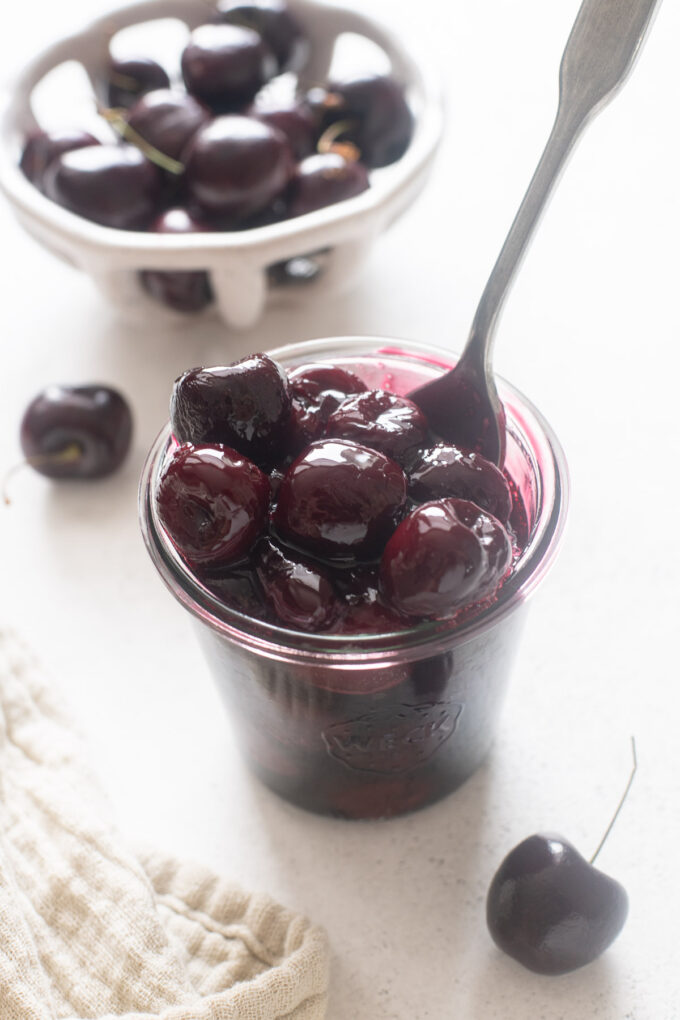
  • Eating: Enjoy fresh, bake into summer desserts, pit and freeze for smoothies, or simmer into compotes for yoghurt and porridge.

Cherries highlight how good nutrition isnโ€™t just about nutrients, itโ€™s also about flavour, freshness, and eating in step with the seasons.

Great varieties for home growers

If you’re planting your own cherry tree, especially in regions with few frosts or higher humidity, these varieties offer the best blend of productivity, flavour, and lower maintenance:

  • Stella: The classic home-garden choice. Self-fertile, productive, and forgiving. Good-sized fruit with excellent sweetness and a reliable crop most years.
  • Lapins: Great for gardeners who want larger fruit and strong disease resistance. Also self-fertile, which simplifies orchard planning. Handles variable weather better than many other cultivars.
  • Sweetheart: Perfect for those who want cherries later in the season. Upright growth makes it easier to manage in smaller gardens, and fruit holds well on the tree.
  • Compact or Dwarf Varieties: Increasingly available in New Zealand nurseries, and ideal for urban gardens or smaller spaces. Look for dwarf forms of Stella or Lapins where offered.

Seasonal cherry recipes

Here are two easy ways to enjoy fresh cherries in season.

Fresh cherry, rocket & almond salad  

A bright, summery salad, perfect for Christmas hosting.

Serves: 4 | Prep time: 10 minutes

Ingredients

  • 2 cups fresh cherries, pitted and halved
  • 3 large handfuls rocket (or mixed baby greens)
  • ยฝ cup sliced almonds, lightly toasted
  • 80g soft goat cheese or feta, crumbled
  • 1 small red onion, very thinly sliced
  • A handful of fresh mint leaves, torn

Dressing

  • 2 tbsp extra-virgin olive oil
  • 1 tbsp balsamic vinegar (or cherry vinegar if you have it)
  • 1 tsp runny honey
  • Pinch of sea salt and cracked pepper

Method

  1. Whisk dressing ingredients together.
  2. In a serving bowl, layer rocket, cherries, onion, almonds and mint. 
  3. Drizzle with dressing and gently toss.
  4. Top with goatโ€™s cheese and serve immediately.

Photo: Conger Design, Pixabay

Warm spiced cherry compote

Fabulous with yoghurt, porridge, pancakes or as a dessert topping. This compote freezes well.

Serves: 4 | Prep time: 5 minutes | Cook time: 10 minutes

Ingredients

  • 3 cups fresh (or frozen) cherries, pitted
  • 2 tbsp water
  • 1 tbsp maple syrup or honey (optional)
  • ยฝ tsp cinnamon
  • ยผ tsp vanilla extract
  • 1 tsp lemon zest
  • Small pinch of ground cloves (optional โ€“ very Christmassy)

Method

  1. Add cherries and water to a small saucepan.  Bring to a gentle simmer. 
  2. Stir in maple syrup/honey, cinnamon, vanilla, lemon zest and cloves. 
  3. Continue to simmer until cherries soften and release their juices (approximately 8-10 minutes).
  4. Serve warm or cold. Refrigerate for up to four days.

Photo: Marcie Bidou, Flavor the Moments


AUTHOR BIO

Paula Sharp is a nutritional therapist supporting womenโ€™s health, digestion, hormones, skin, sleep, and energy through one-to-one consultations via Zoom. Sheโ€™s also a local guest speaker in the Bay of Plenty and regular writer for Organic NZ.

Join Paulaโ€™s free newsletter โ€“ Sharp Bite โ€“ for weekly nutrition tips, seasonal recipes, and mindset inspiration.

Photo at top of article: Oliver Hale, Unsplash

https://organicnz.org.nz/wp-content/uploads/sites/2/2025/11/svklimkin-eeALx8VLsTw-unsplash-lowres-scaled.jpg 1726 2560 membership https://organicnz.org.nz/wp-content/uploads/sites/2/2024/09/OrganicNZ-2024-Masthead.png membership2025-11-28 12:34:372025-11-28 12:36:20Cherries on top

Strawberries: Sweet, sustainable, and full of summer joy

30 Oct 25/in Free Online, Health and Food, Magazine Articles

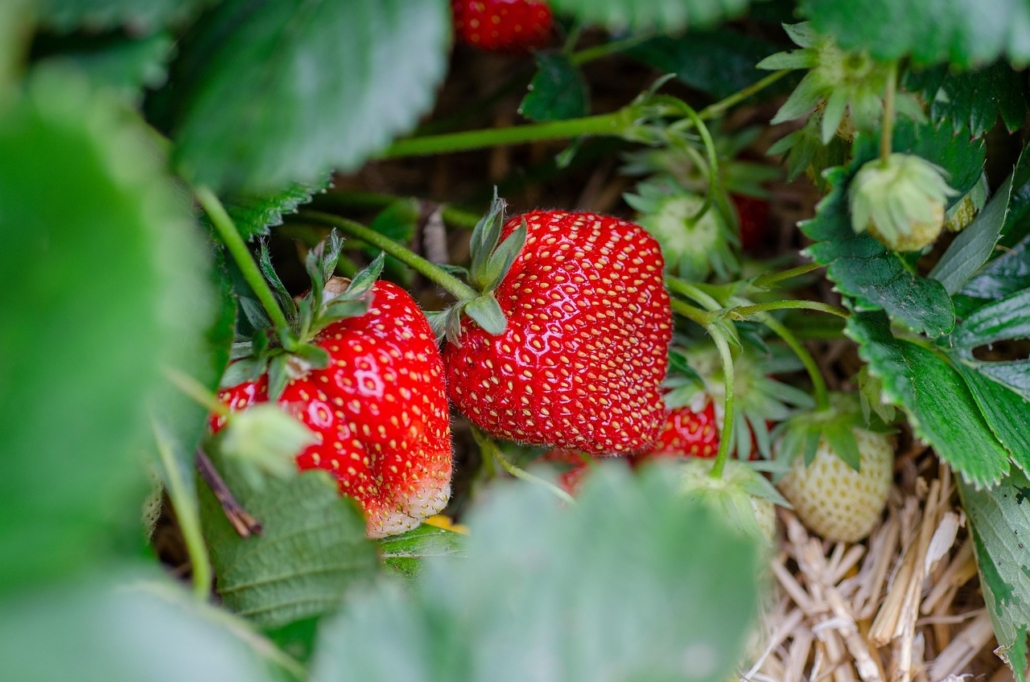
Few fruits capture the feeling of summer like strawberries. Their vibrant red colour, delicate fragrance, and juicy sweetness make them one of our favourite seasonal fruits. In New Zealand, the strawberry season runs from September to April, with the peak harvest in November and December, filling gardens and markets with the scent of sunshine.

Beyond their taste and beauty, strawberries have a rich history, impressive nutrition profile, and are easy to grow, as nutritional therapist Paula Sharp writes.

We hope you enjoy this free article from OrganicNZ.  Join us to access more, exclusive member-only content

A brief history of strawberries

The Romans enjoyed strawberries as food and medicine, using them to calm inflammation and aid digestion. By the Middle Ages in Europe, they had become a symbol of purity and perfection โ€“ carved into churches and served at banquets.The modern strawberry, Fragaria ร— ananassa, has its roots in eighteenth century France, where two wild species โ€“ the small, flavourful North American Fragaria virginiana and the larger Chilean Fragaria chiloensis โ€“ accidentally cross-pollinated. The result was the plump, fragrant berry we know today.

Early European settlers brought strawberries to New Zealand, where the climate and soil suited them beautifully. Today, areas like Waikato, Auckland, and the Bay of Plenty are famous for their fields of the fruit, yet nothing compares to growing your own and tasting the sweetness straight from the plant.

Why grow spray-free or organic?

Strawberries are one of the most heavily sprayed crops worldwide. Their thin skin and low-growing habit make them vulnerable to pests and fungal diseases, but chemicals arenโ€™t the only โ€“ or best โ€“ solution. Growing your own spray-free or organically means your berries are free from synthetic residues, and youโ€™re supporting soil health, pollinators, and biodiversity.

Healthy soil grows healthier plants โ€” and better-tasting fruit. Strawberries grown naturally have a more intense aroma, deeper flavour, and higher nutrient levels than their conventionally farmed counterparts.

How to grow strawberries naturally

Strawberries thrive in full sun and free-draining soil rich in compost. They do well in raised beds, containers, or hanging baskets โ€” perfect for small gardens or patios.

The best time to plant strawberries in Aotearoa New Zealand is from late autumn through early spring, when the soil is still workable but not too cold.

In warmer regions like Auckland, Bay of Plenty, and Northland, ideally plant May to July so the young plants can establish roots before flowering. In cooler areas like Canterbury and Otago, plant a little later, July to October, once frosts ease.

Photo: Katharina N, Pixabay

Growing tips

  • Enrich the soil: Mix in well-rotted compost before planting.
  • Mulch: Use straw, pine needles, or pea straw to keep fruit clean and weeds down.
  • Eggshells: Crushed eggshells deter slugs and snails while adding calcium to the soil.
  • Feed regularly: Water fortnightly with liquid seaweed or compost tea for strong growth.
  • Netting: Protect fruit from birds using fine mesh secured tightly to avoid trapping wildlife.
  • Remove the first flowers after planting to help the plants focus on root growth and strength (for bigger, sweeter berries later in the season.).
  • Renew plants: Replace every three years using healthy runners for new stock.
  • Harvest strawberries when fully red and fragrant (typically begins from November to February, in milder regions fruit can continue into April).
  • Strawberries wonโ€™t ripen further once picked.

Nutrition that shines

One cup of strawberries gives your full daily vitamin C needs โ€“ excellent for immune support and collagen production. Theyโ€™re also rich in antioxidants like anthocyanins, which protect against inflammation, and ellagic acid, known for its skin and heart health benefits.

Their natural sweetness satisfies sugar cravings while supporting blood sugar balance thanks to fibre and water content. Folate, manganese, and potassium round out their nutrient profile, helping energy and mood stay steady through the warmer months.

Eat them fresh, blend them into smoothies, toss into salads, or make into compotes and desserts โ€“ strawberries are as versatile as they are delicious.

A fruit worth growing

Homegrown strawberries are one of lifeโ€™s simple pleasures. I call them natureโ€™s lollies โ€“ sweet, sun-warmed, and full of vitality.

By choosing to grow spray-free or organic, youโ€™re nourishing your body and caring for the land. Each bite is a reminder that good food, good soil, and good health are deeply connected.

Seasonal strawberry recipes

Here are two easy ways to enjoy fresh strawberries in season.

Strawberry & basil balsamic salad  

Light and fragrant. Serves 2โ€“3.

Ingredients

  • 2 cups fresh strawberries, halved
  • 1 small ball mozzarella (about 100 g), torn
  • 1 handful basil leaves
  • 1 tbsp extra virgin olive oil
  • 1 tsp balsamic vinegar or glaze
  • Pinch of sea salt and black pepper

Method

  1. Arrange strawberries, mozzarella, and basil on a platter.
  2. Drizzle with olive oil and balsamic vinegar.
  3. Season lightly and serve immediately.

Photo: May Zhu, Pinterest

Strawberry chia breakfast pots

A light make-ahead breakfast or snack. Makes 2 servings.

Ingredients

  • 1 cup fresh strawberries, chopped
  • 1 cup milk of choice (almond, oat or dairy)
  • 3 tbsp chia seeds
  • 1 tsp maple syrup or honey
  • ยฝ tsp vanilla extract

Optional: Greek yoghurt and extra strawberries for topping

Method

  1. Blend half the strawberries with milk, sweetener, and vanilla.
  2. Stir in chia seeds and remaining strawberries.
  3. Pour into two jars, stir after 10 minutes, then refrigerate overnight.
  4. Top with yoghurt and extra berries before serving.

Photo: Freepik


AUTHOR BIO

Paula Sharp is a nutritional therapist supporting womenโ€™s health, digestion, hormones, skin, sleep, and energy through one-to-one consultations via Zoom. Sheโ€™s also a local guest speaker in the Bay of Plenty and regular writer for Organic NZ.

Join Paulaโ€™s free newsletter โ€“ Sharp Bite โ€“ for weekly nutrition tips, seasonal recipes, and mindset inspiration.

Photo at top of article: Oliver Hale, Unsplash

https://organicnz.org.nz/wp-content/uploads/sites/2/2025/10/oliver-hale-strawberries-unsplash-1.jpg 1280 1920 membership https://organicnz.org.nz/wp-content/uploads/sites/2/2024/09/OrganicNZ-2024-Masthead.png membership2025-10-30 10:03:422025-11-24 16:56:37Strawberries: Sweet, sustainable, and full of summer joy

The Floral Dream

29 Oct 25/in Free Online, Gardening, Magazine Articles

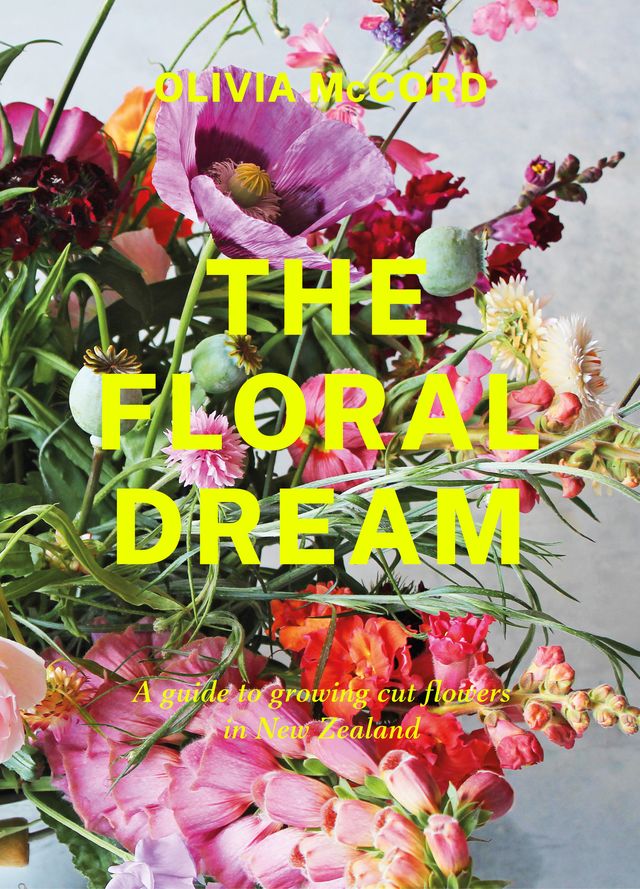
Olivia McCord, author of this beautiful new book, The Floral Dream, uses organic practices in her flower growing.

“My initial introduction to growing was through kiwifruit. We established a kiwifruit orchard from scratch, and it is now a fully certified organic orchard.”

This gorgeous book is bursting with colour and inspiration, as well as being a practical, comprehensive guide to growing cut flowers.

The following is extracted with permission from The Floral Dream: A Guide to Growing Cut Flowers in New Zealand by Olivia McCord (Potton & Burton) $49.99 RRP

We hope you enjoy this free article from OrganicNZ.  Join us to access more, exclusive member-only content

Sourcing plants

There are numerous ways that you can start your dream cutting garden, and it will be dictated by the way you source your plants. What will ultimately determine the way you source your plants will be your scale of operation. If you are a small home gardener it is feasible to spend a little more on a seedling as you will be planting fewer as opposed to a small scale flower farmer who will require multiple seedlings of each variety.

The key is to plan what you want to grow so you can ensure you are sourcing your plants at the right time they are available. For example dahlias, a hugely popular item, will go on pre-sale in winter when you need to secure them to ensure you donโ€™t miss out on the varieties you were after come summer time.

Growing from seed

When I first started growing flowers I was incredibly daunted by growing from seed and believed that it was for very experienced growers only. Fast forward a few years and I now own a cut flower seed business, so it is safe to say I became a quick convert to growing from seed.

The reason I love growing from seed is the large selection of plants available (a lot of garden stores do not offer a decent cut flower range) and the inexpensive cost. The trick to growing from seeds if you are starting out is to choose annuals (perennials can be fussier) and follow the basic guidelines laid out later in this book.

You do not require fancy equipment or a greenhouse to get a range of seeds germinating.

Above: Olivia McCord

Growing from plugs

This is generally reserved for small scale flower farmers. Plugs are small seedlings of a particular variety grown in large trays. There are a number of nurseries (like Gray Floral listed in the appendix) around the country that will wholesale trays of plugs to growers. However, there are minimum quantities so this option is not feasible for home growers

Seedlings

Seedlings are fantastic as a quick way to get started as someone has done the initial work for you. They are more expensive but if you are growing a handful of plants this expense is relatively small. Just ensure you are mindful about selecting the right variety. A lot of local gardening stores sell plants in their potted colour section for pots. Therefore if you are choosing a zinnia for example you might be selecting a dwarf bedding variety that will not grow an appropriate stem for a cut flower.

There are a number of nurseries around the country starting to offer cut flower seedlings which have been noted in the back of the book.

Bulbs, tubers and corms

Bulbs, tubers and corms are a fantastic way to grow cut flowers as they are often reliable bloomers. The key is to work out what you want to plant in advance, as most spring flowering bulbs are on sale late autumn, and summer flowering bulbs are selling in winter. More information is detailed on how to grow these later in this chapter.

Cuttings and sharing

A fabulous way to grow your garden is through cuttings and sharing plants with other gardeners. I myself have taken cuttings from my neighbourโ€™s โ€˜limelightโ€™ hydrangeas and grown them on to fill my garden.

Whilst annuals can be difficult to grow in this manner, perennials lend themselves to dividing. Chrysanthemums are a wonderfully easy plant to propagate through cuttings, so join your local gardening groups and go to garden open days. They are wonderfully welcoming groups and an excellent way to grow your garden and learn valuable knowledge.

Potted plants

Potted plants, which are mature plants, are the most expensive way to add to your garden. However, it is sometimes the best option. Whilst I donโ€™t recommend buying annuals this way, as they will only last a season, buying a potted perennial, shrub or especially trees, saves you a lot of time.

I personally like to buy most of my roses as potted plants rather than cuttings as it saves me a large amount of time and adds instant flowers.

Photos: Olivia McCord


https://organicnz.org.nz/wp-content/uploads/sites/2/2025/10/Scabiosa.jpg 683 1024 membership https://organicnz.org.nz/wp-content/uploads/sites/2/2024/09/OrganicNZ-2024-Masthead.png membership2025-10-29 15:59:152025-10-29 15:59:16The Floral Dream

Asparagus in season: From garden to table

24 Sep 25/in Free Online, Gardening, Health and Food, Magazine Articles

Few vegetables announce spring quite like asparagus. With its tender green spears and delicate flavour, asparagus is one of New Zealandโ€™s most celebrated seasonal treasures.

Nutritional therapist Paula Sharp introduces this spring star, including gardening tips, recipes and nutritional benefits.

We hope you enjoy this free article from OrganicNZ.  Join us to access more, exclusive member-only content

A brief history

Asparagus (Asparagus officinalis) has been enjoyed for thousands of years. Native to the Mediterranean, it was prized by the ancient Egyptians, Greeks, and Romans for its flavour and medicinal properties. The Romans were so fond of it that they had an โ€˜asparagus fleetโ€™ to quickly transport the spears to distant outposts.

By the sixteenth century it had spread across Europe, and later to the New World. Today, asparagus is enjoyed globally, with New Zealand growers producing some of the freshest and most flavourful asparagus in the Southern Hemisphere.

Harvested from September to December, asparagus thrives in regions such as Waikato, Canterbury, and Hawkeโ€™s Bay, where sandy soils and long sunshine hours provide the perfect growing conditions.

Nutritional benefits

This slender spear is as nourishing as it is delicious. Asparagus is low in calories but high in vitamins A, C, E, and K, as well as folate โ€“ vital for energy and cell repair.

Itโ€™s rich in antioxidants that help protect the body from free-radical damage and contains prebiotic fibre, which supports healthy digestion and feeds the beneficial bacteria in your gut.

Its natural diuretic properties make it light and cleansing, ideal for a springtime reset.

Gardening tips for organic growers

Asparagus is a perennial crop โ€“ once established, it can produce for 15โ€“20 years. It requires patience, but the rewards are worth it. Planting time is from mid September on, as the soil temperatures rise.

  • Site and soil: Choose a sunny, sheltered spot with free-draining, sandy soil. Asparagus dislikes wet feet. Work in plenty of compost and organic matter before planting.
  • Planting: Start with crowns (one-year-old roots). Plant them in trenches 20cm deep, spreading the roots out like a starfish, and cover lightly with soil. Gradually fill in the trench as shoots appear.
  • Spacing: Allow 40cm between plants and one metre between rows โ€“ asparagus needs room to spread.
  • Patience pays: Donโ€™t harvest for the first two years, allowing plants to establish strong root systems. From year three, you can harvest spears for about six weeks each spring.

  • Organic care: Mulch well to keep weeds down and moisture in. Feed annually with compost or seaweed. In winter, after the ferny foliage dies back, cut it down and top-dress with organic matter.
  • Growing your own asparagus is an investment, but once itโ€™s in, youโ€™ll be rewarded with tender, chemical-free spears every spring.

Photo: AnRo0002 / Wikimedia Commons

ABOVE: Asparagus spears, if not harvested, will grow into a ferny plant, and later in the season produce red berries.

Images: Kohei Tanaka / Pixabay and Nennieinszweidrei / Pixabay

DID YOU KNOW?
Purple asparagus is grown in New Zealand too โ€“ itโ€™s sweeter and higher in antioxidants than the green variety. (Aphrodisiac history: In nineteenth-century France, grooms were served three courses of asparagus before their wedding night!)
Storage tip: Trim hard ends and then stand the asparagus spears upright in a glass with 2โ€“3cm of water in the fridge.  Cover loosely with a plastic bag. It can stay crisp for up to 5 days.

Images: Timolina / Freepik and Michaela St / Pexels)

Cooking with asparagus

Asparagus is wonderfully versatile. It can be steamed, roasted, grilled, stir-fried, or even shaved raw into salads. Its delicate flavour pairs beautifully with lemon, mint, eggs, seafood, and olive oil. Quick cooking helps retain its vibrant green colour and crisp texture.

Quick cooking: Overcooking dulls colour and flavour. Just a few minutes is enough to bring out its best.

A simple preparation trick: hold a spear at both ends and bend gently โ€“ it will naturally snap at the point where the woody end begins. Save those woody ends for stock.

Why eat in season?

It simply tastes better.  Choosing local, seasonal asparagus ensures maximum flavour, nutrition, and freshness. By buying asparagus from your local grower or farmersโ€™ market between September and December, youโ€™re supporting sustainable farming while enjoying one of natureโ€™s finest spring offerings.

Asparagus is more than just a seasonal vegetable โ€“ it tastes like spring! It is a nutrient-rich powerhouse vegetable, and a very rewarding plant for gardeners. Whether roasted with garlic or tossed in a zesty salad, asparagus brings vitality to the plate and reminds us that the best food is seasonal, local, and grown with care.

Asparagus recipes

Here are two easy ways to enjoy fresh asparagus in season.

Lemon & garlic roasted asparagus

Serves 4. Simple, fresh, and perfect as a side.

Ingredients

  • 500g fresh asparagus spears
  • 2 tbsp coconut oil
  • 2 cloves garlic, finely chopped
  • Juice and zest of ยฝ a lemon
  • ยผ tsp sea salt
  • ยผ tsp cracked black pepper
  • 2 tbsp grated Parmesan cheese (optional)

Method

  1. Preheat oven to 200ยฐC (fan bake).
  2. Add coconut oil to a baking tray and heat (until liquid)
  3. Trim asparagus and arrange on the tray, add garlic, and season with salt and pepper.
  4. Toss gently.
  5. Roast for 12โ€“15 minutes until just tender.
  6. Finish with lemon juice, zest, and Parmesan if desired.

Image: Alleksana / Pexels

Asparagus, Feta and Mint Salad

Serves 4.

Ingredients

  • 400g fresh asparagus spears
  • 100g baby spinach leaves
  • 80g feta cheese, crumbled
  • ยผ cup fresh mint leaves, torn
  • 2 tbsp extra virgin olive oil
  • 1 tbsp balsamic vinegar
  • 1 tsp honey
  • ยผ tsp sea salt
  • ยผ tsp cracked black pepper

Method

  1. Trim asparagus ends off and save for stock.
  2. Blanch the spears in boiling water for 2 minutes.
  3. Refresh in iced water, drain, and cut into 3โ€“4cm pieces.
  4. In a large bowl, combine spinach, asparagus, feta, and mint.
  5. To make the dressing, put the last five ingredients in a jar and shake.
  6. Pour dressing over salad, and toss gently.

AUTHOR BIO: Paula Sharp is a qualified nutritional therapist dedicated to helping women feel their best through every stage of life.

She works one-to-one via Zoom with clients around the world, supporting womenโ€™s health in areas such as gut and digestive repair, hormonal balance, skin and hair vitality, restorative sleep, sustainable weight management, and recovery before and after surgery.

Alongside her private practice, Paula is a guest speaker and writer. Her career began in London, where she worked in the organic fruit and vegetable industry, which sparked a lifelong passion for seasonal, spray-free produce. Now based in Whakatฤne, she tends her own extensive organic garden, putting her philosophy of โ€˜food as medicineโ€™ into daily practice.

For more seasonal recipes and womenโ€™s wellness insights, explore Sharp Bite, Paulaโ€™s blog at www.paulasharpnutrition.com โ€“ a fresh bite of inspiration for healthier, more joyful living.

Photo at top of article: Almaje / iStock


https://organicnz.org.nz/wp-content/uploads/sites/2/2025/09/iStock-2151664316lowres-scaled.jpg 1589 2560 membership https://organicnz.org.nz/wp-content/uploads/sites/2/2024/09/OrganicNZ-2024-Masthead.png membership2025-09-24 22:57:562025-09-24 22:57:58Asparagus in season: From garden to table

Worm Farming Tips

27 Aug 25/in Free Online, Gardening

Home gardener Michelle Coenradi has four worm farms on the go. Here she outlines the benefits, and offers some tips from her experience.

We hope you enjoy this free article from OrganicNZ.  Join us to access more, exclusive member-only content

I am passionate about my worms. There are so many benefits to worm farming, and itโ€™s something you can do almost anywhere, even on a balcony. Worm farms produce two types of fertiliser: a liquid (sometimes called tea or juice) and a more solid one (vermicast). Recent Research News on worm juice plus mycorrhizae for juicier lettuce explores how that liquid pairs with soil fungi and compost. I leave the siphon open and sit a bucket underneath to collect the liquid.

Benefits of worm juice and vermicast

  1. Enhances soil fertility.
  2. Promotes plant growth.
  3. Deters pests and diseases.
  4. Improves soil structure โ€“ contains microorganisms and enzymes that improve soil aeration and water retention, leading to better root development.
  5. Rich in readily available nutrients like nitrogen, phosphorus and potassium, as well as trace elements.
  6. Improved aeration and drainage results in reduced soil compaction
  7. Enhances the activity of beneficial microbes which are essential for nutrient cycling and overall soil health.
  8. Cost-effective fertiliser that you can make yourself.
  9. Vermicast is pH neutral.

ABOVE: Inside one of Michelleโ€™s worm farms (Photos: Michelle Conraedi)

A healthy home for your worms

Worms need a dark, moist and well aerated environment and a temperature between 15โ€“25ยบC. You can put in shredded paper for them to live and breed in, or a worm mat which can be purchased at hardware stores.

Worms love anything curved or round to nest in and keep themselves warm, especially avocado and watermelon skins, and pumpkin is a hit as well.

What do they like to eat?

  • 70% nitrogen-rich โ€˜green wasteโ€™ like fruit and vege scraps, eggshells, coffee grounds and tea bags (make sure theyโ€™re compostable ones). Avoid citrus fruit and the onion family.
  • 30% carbon โ€˜brown wasteโ€™, like newspaper and cardboard.

You can feed them daily but I tend to feed weekly.

When I put scraps in I sprinkle Tumbleweed worm compost conditioner over the top. This keeps the pH balanced โ€“ you can tell if the worms are struggling with an alkaline imbalance because they lose their colour and start turning white. You can also use garden lime sparingly.

The vermicast is referred to as black gold, indicating its value in the garden. I find worms are hardy and easy care; you really canโ€™t go wrong with a worm farm and they are so rewarding.

ABOVE: Michelle’s vegetable garden flourishes with the addition of vermicast and liquid from her worm farms.

More information

There is lots more information about worm farming online, such as these tips from the Compost Collective.

Photo at top: Compost Collective


https://organicnz.org.nz/wp-content/uploads/sites/2/2025/08/Worms-close-up-Compost-Collective.jpg 1128 1692 membership https://organicnz.org.nz/wp-content/uploads/sites/2/2024/09/OrganicNZ-2024-Masthead.png membership2025-08-27 15:33:162026-08-03 15:02:00Worm Farming Tips

Strawberries โ€“ย a self-sufficient crop

26 May 25/in Free Online, Gardening

By Gillian Swinton 

Images and text from The Good Life by Gillian Swinton, photography by Francine Boer Photography and Gillian Swinton. Published by Allen & Unwin NZ, RRP $45.00.

We hope you enjoy this free article from OrganicNZ.  Join us to access more, exclusive member-only content

Planting strawberries in winter might sound ridiculous, but it is a great activity to do while the garden is dormant. When your strawberry plants are in the ground, you should notice runners coming off each mature plant. These runners are future strawberry plants, meaning that if you look after your plants, strawberries can become yet another self-sufficient crop.

Strawberry plants are going to remain in your garden for a few years, so consider where youโ€™re placing them. Wherever you plant them, they will need a bit of love in the beginning to ensure they fruit in summer. Iโ€™ve chosen to plant ours in the paddock next to our garlic crops, as they make great companions. Keep in mind they will need protection from birds, so growing them in a berry house or in an area you can easily cover is key!

Hamish harvests strawberries from under the bird netting

To obtain runners, find a healthy strawberry plant and locate the running stem from the original plant. There may be a few plants on one runner, and you can take them all. Look for little roots and healthy crowns developing at the base. I trim these down and plant them in a seed-raising mix until spring when the soil temperatures rise.

You could do this in autumn or spring, but I find taking the runners in winter, then keeping them in good soil and well fed with seaweed tonic, means I can build healthy roots in time for a head start in spring.

I also build their future garden beds, ready for the runners when it gets warmer. For my strawberry bed, I:

  • fork the ground gently to get some air into the soil.
  • add compost.
  • add chicken poop โ€” itโ€™s acidic, which strawberries love!
  • add leaf mulch and grass clippings โ€” grass clippings in winter are fine to add as there are no seeds. Mixing them with leaves makes a powerhouse combo.
  • add weed matting. This will protect the plant, suppress weeds and stop any fruit in summer from sitting on the ground. Many gardeners dislike using weed matting, but we use it happily for our strawberry beds. You could replace weed matting with wool or a heavy mulch of pea straw. We get some big winds in spring, so pegging down weed matting helps keep our organic materials from being blown away, as well as retaining soil moisture.
  • blow-torch holes into the matting. Melting the matting seals the holes and makes it easier for us to plant the runners.
  • add an irrigation line under the weed matting, to be hooked up in spring when the runners are planted.

When it comes time to plant in spring, get the young plants and plant in the holes in the matting. You may have to dig down through the layers, but make sure not to cover the crown (the stem where the leaves develop from) with soil. Water in with seaweed tonic and keep plants well irrigated through spring and summer.

New plants wonโ€™t yield much fruit in their first year, but they will do better in years two and three. Keep covered with netting to prevent birds (and dogs) from getting in. With some care each year, you shouldnโ€™t have to buy strawberries or strawberry plants again!

Cover of The Good Life by Gillian Swinton


https://organicnz.org.nz/wp-content/uploads/sites/2/2025/05/FrancineBoerPhotography-Lauderburn2.0073.lowres-scaled.jpg 2560 1707 membership https://organicnz.org.nz/wp-content/uploads/sites/2/2024/09/OrganicNZ-2024-Masthead.png membership2025-05-26 12:44:282025-07-04 16:24:29Strawberries โ€“ย a self-sufficient crop

Join the No-Mow movement!

16 Apr 25/in Free Online, Gardening

Dr John Fluxโ€™s neighbour once called to see if he had died โ€“ because the grass had grown so long! The Lower Hutt ecologist is an advocate of the no-mow movement because of its many environmental benefits, and describes here how he has implemented it for the past four years in his garden and on the footpath verge.

We hope you enjoy this free article from OrganicNZ.  Join us to access more, exclusive member-only content

ABOVE: Green desert: The house with lawns as bought in 2016.

The origin of lawns

Lawns are said to derive from Marie-Antoinetteโ€™s wish to show she was rich. The habit spread to English nobility, and then everyone else. Naturalists, the early ecologists, realised how lifeless they were: W H Hudson wrote in 1919: โ€œI am not a lover of lawnsโ€ฆ Rather would I see daisies in their thousands, ground ivy, hawkweed, and even the hated plantain with tall stems, and dandelionsโ€ฆ than lawn grass.โ€

The benefits of No-Mow

Today ecologists list many advantages of No-Mow:

  • an improved habitat for insects, and the birds reptiles, fish, and frogs that rely on them;
  • less petrol for mowing (5% of our carbon footprint);
  • increased carbon sequestration, continuing for many years;
  • reduced flooding (Cyclone Gabrielle damage was due to cut grass mud-flow, and forest trash);
  • it stays green and lowers the risk of wind-blown embers spreading fires;
  • and it saves money.

So I started to implement No-Mow in 2021 to show these advantages.

Implementing No-Mow

The first step was to ask the city mayor for permission not to mow the grass verge beside the footpath. He said to contact the environment section, who all thought it a good idea; but verges came under transport. Their only condition was clear views for motorists turning the corner, so the height limit was one metre. Check your local council rules if you want to put No-Mow in practice on your verge or berm.

The second step should be easy: just sit back and watch what happens. But Western humans are born to interfere with nature to make things โ€˜betterโ€™. Resist the temptation, or at least try a No-Mow patch. (Do not expect stability โ€“ in New Zealand ecological succession ends in forest, and you may prefer tussock.) I confine gardening to watering, weeding, and fertilising raised beds with compost; no sprays of any kind. We know ragwort is a dreadful weed that will spread everywhere, but it didnโ€™t, as explained later, and monarch butterflies love the two or three plants that flower each year (as pictured in the photo at the top of this article).

ABOVE: The roadside verge in 2021 (top) and 2025 (lower image)

Unexpected benefit: two apple crops a year

When we bought this house in 2016 it was in clear view from the gate, but today only the front door is visible. The neat brown lawn now reaches your knees and stays green. I was very surprised at the rate native trees grew once No-Mow established a complete ground cover that prevented the soil drying. They reached four to five metres in five years.

Apple trees (Sturmer, Coxโ€™s Orange, and Russet) are pruned to two metres high, and all three produce two crops a year, summer and late autumn. Other gardeners have not reported this, so it does not seem to be a result of climate change, but pears, plums, figs, and feijoas still bear one crop a year.

Dr John Flux with a Sturmer apple tree in his No-Mow garden. The apples are ripe now (April 2025), andย the second crop will be the normal time in August.

Managing the No-Mow garden

This front garden remains No Mow apart from clearing grass against the house for ventilation, and 30cm wide tracks I cut regularly with a push mower for access to prune, pick fruit, and show visitors round. These tracks are now a mix of short grass and white clover.

Most lawns are mixtures of about five grasses, e.g. brown top, fescues (chewings and creeping red), sweet vernal and turf ryegrass is a common lawn. Other species are chosen for a hard-wearing surface (playing fields) or different climates (kikuyu is frost tender). Our berm had kikuyu accidentally introduced in a load of topsoil by the original owner; it dominates that bit of No-Mow (see photo above) and is good for attracting attention โ€“ such as when a neighbour called to ask if I had died.

An experiment

On part of my lawn I set up an experiment: half was mowed, weeded, and watered, as normal. The other half has not been touched in any way since 2021 (see below). Each year the No-Mow area grasses grow about 20cm high and flower heads reach 30โ€“50cm. Sparrows and finches enjoy the seeds until it all dies back to the green base over winter.

For the photos below, I cut the flap of grass that normally covers the orange bricks to show the thick underlay, which is ideal for delaying and filtering runoff in heavy rain. Visitors are impressed that no weeds have managed to invade this patch, despite all the dandelions growing and seeding on the mown lawn opposite. It explains why ragwort in the front garden remains an isolated clump. And I hand out copies of God, St Francis, and Lawns (google it!).

Still, problems remain. Ivy spread over a quarter acre of our previous garden, so I pick out every bit I find here. Kikuyu crawls in from the berm, under the fence and under the No-Mow plants. It is very hard to kill; I chuck it back over the fence where it came from. Muehlenbeckia australis climbs everywhere, but can be traced back and cut lower down. M. complexa is the worst, spreading at ground level in all directions looking for any plant to climb in a twisting spiral. I hope copper butterflies arrive soon to eat it, although many insects probe the tiny flowers.

ABOVE: The near side (lower part of both images) shows a normal lawn grass mix that has been cut, weeded, watered as needed.
The far side (upper part of both images) shows an identical lawn, completely untouched since 2021, and nothing has changed. Some people expect No-Mow to become wild, but after the first year nothing changes. The lawn flowers and dies back to the same level.

Bountiful biodiversity

Looking across the garden from the front gate to the steps into the house gives a typical view of half the garden. The photo below shows, from left: pale green whau (Entelea arborescens), Muehlenbeckia australis climbing on a dead tree, M. complexa, Castlepoint daisy Brachyglottis spp, pate (Schefflera digitata), Coxโ€™s Orange apple, mฤpou (Myrsine australis) growing easily through cocksfoot grass with flowers two metres tall, pear, and the tall bare trunk of mountain papaya (Vasconcellea pubescens).

The grass below the trees is being shaded out, and a closed canopy will lead to a totally different ground cover. What will happen?

Ecology education

I try to get people interested in ecology โ€“ which has been taught in every school in Russia since 2001, and in China. It explains why cutting berms is now illegal throughout Scotland, and many cities in England do not allow lawns anywhere, only shrubs and meadow flowers.

Chinaโ€™s leader in ecological urbanism, Kongjian Yu, completed 200 โ€˜sponge citiesโ€™ by allowing rivers room to spread; stop-banks only make the next flood worse. Two simple rules from Barry Commoner that I find useful are: Everything is connected; and Nature knows best (The Closing Circle, 1971). To illustrate this, below is a predator circle in my garden.


ABOVE: Predators, like weeds, are never simply good or bad: even introduced wasps โ€“ they stop cabbage white caterpillars eating brassicas. Pictured from left to right are: 1) spider eating spider, 2) wasp eating spider, 3) praying mantis eating wasp. 4) spider eating praying mantis.
Dr John E C Flux was an ecologist in the Ecology Division of DSIR for 35 years, Landcare Research for two years, and NZ Ecological Research Associates for 10 years, with a special interest in hares and starlings.
NZ Ecological Research Associates was a company set up at at AgResearch’s Wallaceville campus in Upper Hutt by a group of about 30 redundant DSIR staff, from Ecology, Botany, and Soil Bureau. There were also a few members in Auckland and Nelson, and the group worked on a wide range of things -including spiders on offshore islands, heather on Mt Ruapehu, swamp plants, pest control in orchards, new highway locations, and overseeing Zealandia’s fence construction. It disbanded about 15 years ago.

https://organicnz.org.nz/wp-content/uploads/sites/2/2025/04/Monarch-butterflies-ragwort-John-Flux-no-mow-garden.jpg 992 955 membership https://organicnz.org.nz/wp-content/uploads/sites/2/2024/09/OrganicNZ-2024-Masthead.png membership2025-04-16 14:23:052025-04-17 13:18:52Join the No-Mow movement!

Living Better, Together

27 Mar 25/in Building and Technology, Free Online

The Cohousing Revolution

In an increasingly disconnected world, many people are seeking ways to live more closely with both the environment and one another. For Simone Woodland, a dream to create a different way of life led to the Tฤkaka Cohousing project in Golden Bay. 

Hannah Schenker tells the story. 

We hope you enjoy this free article from OrganicNZ.  Join us to access more, exclusive member-only content
ABOVE: Simone Woodland and her daughter Frida

The birth of a dream 

Simone Woodlandโ€™s dream began to take shape in 2017 when she applied to become an Edmund Hillary Fellow, and travelled to New Zealand. Driven to live more harmoniously with herself, others, and the land, she discovered cohousing. Her vision became clear: she could create a supportive community for her family to live in, while regenerating the land. From this seed, Tฤkaka Cohousing was born.

Originally from the UK, Simone trained in architecture and urban design before becoming disheartened by the industry and shifting to social entrepreneurship. In Aotearoa, she began exploring alternative, minimalist living through her early business Tiny Lifestyle.

Her passion for community building and sustainability deepened as she transformed this into another business, Elemental Design and Build, further honing her knowledge and interest in eco-conscious, natural construction. To bring her cohousing vision to life, she drew on these experiences and co-founded Mลhua Ventures, a housing development company owned by a charity, Te Hapori Hauora Community Land Trust.

But her love of community started much earlier. โ€œWhen I was a kid, my dad hosted annual street parties in our little cul-de-sac,โ€ says Simone. “It brought all of our neighbours together around a bonfire, sharing kai and doing silly things like three-legged races. It broke down barriers and we became friendly with our neighbours. He showed me that you can create community wherever you are.โ€

ABOVE: Tฤkaka Cohousing from the air

The benefits of cohousing

Cohousing offers a refreshing alternative to traditional suburban living. The concept originated in Denmark in the early 1970s and has since spread globally. It is a community-based housing model where individuals own private homes but share common spaces and facilities. It blends personal privacy with social connection, fostering collaboration, sustainability, and a supportive environment. Residents actively contribute to decision-making and community life, creating a stronger, more connected neighbourhood.

Loneliness is a growing issue in New Zealand, exacerbated by our individualistic society. A 2018 Stats NZ survey found over 650,000 New Zealanders experienced loneliness at least some of the time in the past four weeks. (https://loneliness.org.nz/nz/facts/many-kiwis-feel-lonely/). 

Cohousing can help counteract that. Living in a close-knit neighbourhood opens up possibilities for interactions that foster personal growth, increasing the health and wellbeing of residents, promoting intergenerational connection.

Cohousing also offers environmental, social, and economic benefits. Sharing facilities reduces individual costs and space needs, while sharing green spaces means you donโ€™t have to grow and tend everything on your own.

ABOVE: Residents meeting outside the three-bedroom duplex homes
ABOVE: Sharing a meal in the Common House

How Tฤkaka Cohousing works

Homes are sold at cost with individual unit titles, which banks recognise for mortgage approvals. Residents own their own home and the land directly beneath it, and a share of the common land and facilities, managed by a body corporate.

Architecture and urban planning principles are used to create a pedestrian-friendly layout, with car parking kept to the outside of the neighbourhood. The physical design promotes social interaction in โ€œbump spacesโ€, allowing spontaneous interactions to occur in daily life. This means you donโ€™t always have to pre-arrange catch-ups and cuppas and diarise everything โ€“ it happens quite naturally.

The first neighbourhood has 34 fully occupied duplex homes, with a mix of single and double-storey two- and three-bedroom layouts. Two more neighbourhoods are planned for construction in 2026 and 2027, with a similar mix of options now open for expressions of interest. 

ABOVE: Left – Exterior of the two-bedroom, single-level duplex.
Right – Interior showing dining and living area
ABOVE: Left – Interior from living area showing mezzanine above
Right – Kitchen

Recipe for success

A big part of why Tฤkaka Cohousing has succeeded is Simoneโ€™s approach of creating a dedicated company to drive the project forward. Rather than relying on a group of peers to navigate the complexities of development โ€“ something that often leads to slow progress or burnout โ€“ she founded Mลhua Ventures, a company with the experience and knowledge needed to deliver the vision.

Through the company, she is able to maintain the momentum of the project, while being a resident herself gives her firsthand experience of what works and what can be improved as the development grows.

The project is currently entering its second phase, with two further 18-home cohousing neighbourhoods to be built on the remaining land along Meihana Street, near Tฤkaka township. Seven hectares of land surrounding the neighbourhoods will be regenerated into publicly accessible parkland through a community land trust.

ABOVE: A carpeted mezzanine in the Common House offers comfy lounge space for board games and movie nights.

Spotlight on sustainability

The duplexes at Tฤkaka Cohousing feature Terra Lana insulation made from recycled sheep’s wool, thicker walls to increase insulation, concrete floors for added thermal mass, and non-toxic paint from The Natural Paint Co. โ€œThe health of the whฤnau living in our homes is our top priority,โ€ says Simone. โ€œItโ€™s about creating spaces that are not just energy-efficient but truly healthy to live inโ€”warm, dry, and well-insulated.โ€

The Common House was built by Elemental Design and Build, guided by Graeme Scott’s passion for traditional timber framing. This off-grid natural build was crafted using untreated, non-toxic and sustainably sourced heartwood lusitanica (Cupressus lustitanica โ€“ related to macrocarpa)  for the framing, staircase, railings and balustrade, and a couple of extra-long pieces of macrocarpa heartwood for framing, all stained with Osmo natural wood stain. 

All of the wood was milled on site, keeping transport and carbon footprint to a minimum, and its natural non-toxic qualities preserve the health and wellbeing of the builders and contractors during construction, and the residents who use the space. Eucalyptus was sourced from Riwaka for flooring, skirting and architraves. Inside the walls is regular H1.2 boron-treated timber. The external weatherboards are macrocarpa (not milled on site, sourced from Totally Timber, and stained with a natural oil stain).

The walls are made using hempcrete panels, manufactured by Kohu Hemp using their own formula of hemp hurd and hydrated lime, and coated in lime plaster by Solid Earth. Hemp is a crop that enhances soil health, and grows in just three months. It creates a breathable, natural product with high insulation values. Hempcrete sequesters carbon dioxide for 50 years.

Additionally, the project acknowledges the importance of mana whenua (local iwi) as kaitiaki (guardians), integrating cultural connections into its development. Mลhua Ventures is owned by Te Hapori Hauora, Mลhua Community Land Trust โ€“ a registered charity.

Te Hapori Hauora governs the land surrounding the cohousing neighbourhoods and has a tripartite structure, with representatives from mana whenua, the cohousing neighbourhood, and the wider Mลhua (Golden Bay) community. The Trust is planning to create a publicly accessible parkland and community facilities on the land surrounding the cohousing neighbourhood, regenerating the whenua for generations to come.

ABOVE: Willing workers installing hempcrete panels
ABOVE: Getting the whole family involved โ€“ hempcreting the Common House

Cohousing in Aotearoa NZ

Cohousing in Aotearoa is still finding its feet, but the momentum is growing as more people realise the benefits of living in community. Pioneering projects like Earthsong (32 terrace homes and apartments in Auckland) and Toiora (21 passive homes in Dunedin) have shown whatโ€™s possible, but many other initiatives still struggle with the usual roadblocks โ€“ funding, land access, and red tape. Despite these challenges, the desire for a more connected, sustainable way of living is stronger than ever.

โ€œWe are now expanding our horizons to support other communities with their plans to create sustainable, alternative housing solutions,โ€ Simone says. Mลhua Ventures has an experienced, professional team that can help with understanding project feasibility, project management, and community building. โ€œWe would love to hear from other communities we can support.โ€

Who lives here?

Residents come from diverse backgrounds and life stages. For Kirsty and Duane, the desire to explore alternative education for their two children led them to cohousing. Recognising the need for community support in their unschooling and life learning approach, they found Tฤkaka Cohousing to be the perfect fit. โ€œWe all live such a rich life,โ€ says Kirsty, highlighting the benefits of a safe, supportive environment where children thrive and connect with people of all ages.

โ€œThe kids are constantly playing with their friends, are safe to walk, bike ride, and run around the neighbourhood without any worries about cars,โ€ she says. โ€œTheyโ€™re learning and connecting with everyone all the time and have developed some amazing friendships, not just with the other children, but also other adults, while gardening or attending working bees. Their contribution is valued, and their opinion is considered.โ€

For some, the location is the biggest drawcard. Golden Bay is known for its beautiful landscapes bordered by two National Parks, for the sacred waters of Waikoropupลซ Springs, and its friendly and creative community.

โ€œItโ€™s the ease of access,โ€ says resident Mazarine Fitzgerald, โ€œto be able to connect with yourself, and nature, and the land.โ€ For her, what makes Tฤkaka so special is also the โ€œsense of community, real friendship and belonging, and all the wholesome events that happen here.โ€ 

ABOVE: Residents Mazarine Fitzgerald (left) and Kate Burness (right)

Shared facilities and gardens

The Common House is central to community life, hosting everything from social gatherings to morning dance sessions. It offers shared laundry facilities, a meeting space, kitchen, extra storage, a bedroom for guests, and hosts monthly meetings and potluck dinners.

Gardens are another shared resource, allowing residents to grow and share produce, and reduce their reliance on external sources. โ€œWe get together for working bees, we plant, weed, and harvest food,โ€ says Simone. โ€œI love it because Iโ€™m learning so much about gardening. Doing it together lightens the load and benefits more than just yourselves, and the kids are growing up knowing where yummy fresh food comes from.โ€

Tฤkaka Cohousing is more than just a housing development โ€“ itโ€™s a community that embodies the values of connection, collaboration, and environmental stewardship. For Simone and many others, it represents a new way of living that aligns with their principles and their vision for a better future. With its blend of shared resources, healthy homes, and a supportive social dynamic, Tฤkaka Cohousing is proving that the future doesnโ€™t have to be a solo journey โ€“ it can be a shared experience. 

ABOVE: Sharing gardens reduces the load for all, while increasing the amount of produce to share. Residents, left to right: Phoebe Fulton, Mazarine Fitzgerald and Deb Rolston
Hannah Schenker is a freelance writer, proofreader, and team assistant at Mลhua Ventures. Sheโ€™s also mama to a beautiful five-year-old, living a life rich in family and creativity.

https://organicnz.org.nz/wp-content/uploads/sites/2/2025/03/DJI_0169-scaled.jpg 1600 2560 membership https://organicnz.org.nz/wp-content/uploads/sites/2/2024/09/OrganicNZ-2024-Masthead.png membership2025-03-27 14:34:272025-03-28 12:23:38Living Better, Together
Page 2 of 512345

Categories

  • All Articles
  • News
  • Features
  • Gardening
  • Health and Food
  • Farming and Horticulture
  • Building and Technology
  • Free Online

Latest Articles

  • Lettuces and watering can in home garden
    Worm juice and soil fungi: why compost alone isnโ€™t enough for juicy lettuce
  • Mandarins in a bowl
    Mandarins: Winter vitamin boost
  • 2026 Example calendar covers
    2027 Calendars
  • Fantail on tree branch
    Parable of the paddock edge
  • Green kiwifruit
    Kiwifruit: Treasures in red, gold and green
  • matariki
    Moon Calendar July-August 2026
  • runny honey dripping from spurtle into jar
    The Queen Bee of ลŒhope
  • Box of aubergines (eggplants)
    Aubergines
  • Seed saving with Monique
    Moon Calendar May-June 2026
  • Feijoas top view cut and uncut
    Fantastic feijoas
Soil & Health Association of NZ Established 1941

Proudly published by the Soil & Health Association NZ

  • About us
  • Contact us
  • Help us
  • Sign up to the Newsletter
ยฉ Copyright OrganicNZ | Soil and Health Association NZ.
  • Link to Facebook
  • Link to Instagram
  • Link to LinkedIn
  • Privacy Policy
  • Editorial Policy
Scroll to top Scroll to top Scroll to top