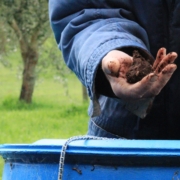
Organic probiotic for the soil
By Ross Vintiner
Growers worldwide are experiencing two fundamental growing challenges – high and rising input costs, and climate extremes. Species, soil, plants, crops, food supply and affordability are all threatened.
Organics is well equipped to solve and lead solutions.
This article proposes one proven method – the Johnson-Su compost system – as an example of how growers of all stripes can reduce inputs and costs, improve soil health, resilience and yield, and reduce food costs and human contributions to climate extremes.
We hope you enjoy this free article from Organic NZ. Join us to access more, exclusive member-only content
First, a little context
Since the 1940s, agricultural fertiliser input volumes and prices have risen dramatically in real terms, whereas production per input unit has declined. More fertiliser, less crop and greater cost per input unit applied. The result: higher food prices, poorer soil, health, species, environmental outcomes, and lower grower returns.
Climate extremes will intensify with an elevated El Niño weather pattern now in place. Resilience to adapt to fast-changing climate has become the grail of agriculture. As a result, a fundamental change is occurring to how we grow.
Mainstream and even progressive agronomists have until recently put huge productive store in soil and plant nutrition through fertiliser inputs. The soil as an ecosystem was lost to industrial agriculture. Thanks to those practising the wisdom of Rudolf Steiner, founder of biodynamics, Albert Howard, father of western organics, and indigenous systems, the soil is again being viewed more widely as a living, integrated organism rather than the dead chemical medium of dirt.
The living soil
Recent pioneers have applied scientific understanding of the soil food web, the soil ecosystem, to show how microbes are more critical to soil health and productive performance than fertiliser inputs. Everything we have in our environment today comes from microbes that have cycled carbon and minerals to grow life.
Despite this, fungi, for example, are being destroyed in modern agricultural soils – lowering plant immunity, eroding soil, reducing nutrient uptake, lessening water-holding capacity, producing food of poorer quality. There is a microbial species crisis.
Below our feet are armies of bacteria, fungi, protozoa, viruses, microbes far greater in number and importance to us than the stars above. But they are under threat. It is imperative that we save soil microbes to save ourselves.
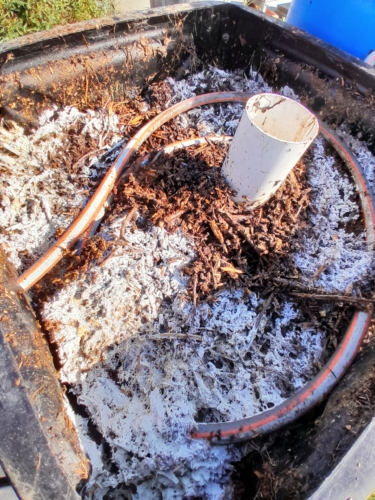
ABOVE: White fungal cap on a Johnson-Su compost
What are the best growing systems?
The Kete Ora Trust funded Plant & Food NZ to undertake a meta-analysis of world research findings to determine the best growing system to produce nutrient-dense food (read more here). Results were mixed.
Far clearer were these overwhelming findings:
- that organic and biodynamic growing increase microbial biomass, the total number of microbes in soil;
- that organics produces the highest percentage of soil organic matter (SOM), made in large part from microbes, compared to non-organic farming;
- and that organics often outperforms other farming systems, thanks to microbes, to help plants produce phytonutrients, vital natural protectors of plants, animals and us. Phytonutrients are antioxidants and anti-inflammatories for the body’s immunity.
Microbes play a huge role in growing soil organic matter (SOM) and the root rhizosphere, where most nutrient transfer happens between plant roots and the soil. Less than six percent of soil volume, SOM is also a key driver of soil oxygen, soil water-holding capacity (reducing the need for irrigation), beneficial soil structure (less compaction), and fertility. The more and diverse the microbes, the more carbon and the healthier and more productive SOM, soil, plant and crop. Soil plant nutrients are only a tiny fraction of total soil mass.
The Johnson-Su compost system
Enter a professor and his partner, fully aware of these points and the United Nation’s case that one third of the earth’s soils are severely degraded, largely due to modern farming practices that destroy soil microbes.
Dr David Johnson and Hui-Chun Su developed a low-cost system that brings lifeless soils back to life. This is a paradigm shift. Rather than a nutrient fertiliser, Johnson-Su compost functions as a high-biology, fungal-dominant microbial inoculant. Up to 2500 species of bacteria and 400 species of fungi can be produced. That is much greater than most composts, which are normally bacteria dominant. A full complement of soil microbe species helps a soil system function properly.
A Johnson-Su compost heap is not turned, but is aerated via vertical pipes, and matures over many months. Just a kilogram of this compost will go a long way in your garden, and can be applied either as a straight compost, compost extract ground drench or foliar spray. An easy web or YouTube search will show you how to make and use Johnson-Su compost in your garden, farm or orchard.
Think of the Johnson-Su composting method as a soil probiotic. We highly value nutritional probiotics as cultured inoculants to improve our gut microbiome. Helpful microbes control the growth of potentially harmful ones. The same principles work with Johnson-Su compost applied to the soil or plant. A small amount of the clay-like compost can be added as extract in water to power the plant’s immune system and increase its ability to grow and produce.
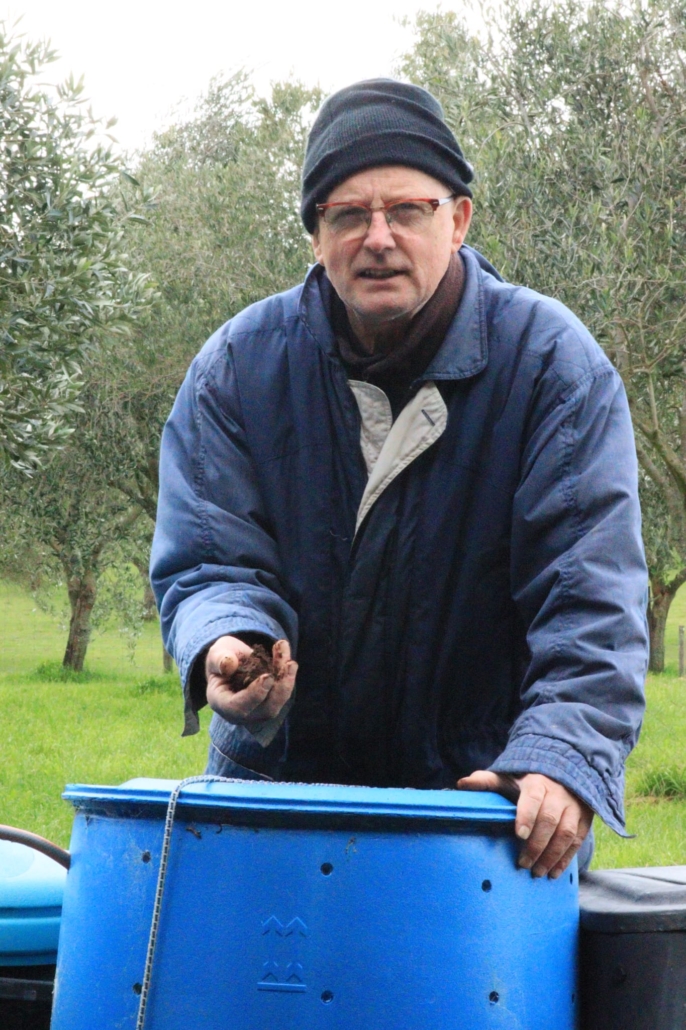
In the Johnson-Su method, beneficial microorganisms are reintroduced to the soil usually in the form of compost extract or seed inoculants. The extracted microbes build a diverse SOM, enable much greater plant uptake of native and introduced nutrients, improve yields, assist soil oxygen and water retention. Extract improves seed germination and growth rates, while also increasing carbon sequestration.
This is a free, open-source system. It is proven and at work in many countries around the world. It can be used in the garden and at scale, with some farms in the US, Europe and Australia applying extract to thousands of hectares. For reasons already outlined, the microbial heavy Johnson-Su compost works best organic.
It’s also an easy system. The static pile compost requires no turning. Feedstock is often free. The compost bioreactor is inexpensive to make and has no odour. There is no leaching or contamination.
Our experience in the olive grove
What I have found using this easy compost method for three years on a commercial olive grove is a 50% reduction in organic fertiliser inputs, along with high growth and yield rates, and green grazing pasture all year.
Our soil has gone from being bacterial dominant to a fungal:bacteria ratio of 4:1, equivalent to the forest floor. Trees require fungal dominant soils. Garden soils require a 1:1 ratio. All soils and roots need beneficial fungi and other microbes to function, exchanging sugar for nutrients, communicating via networks.
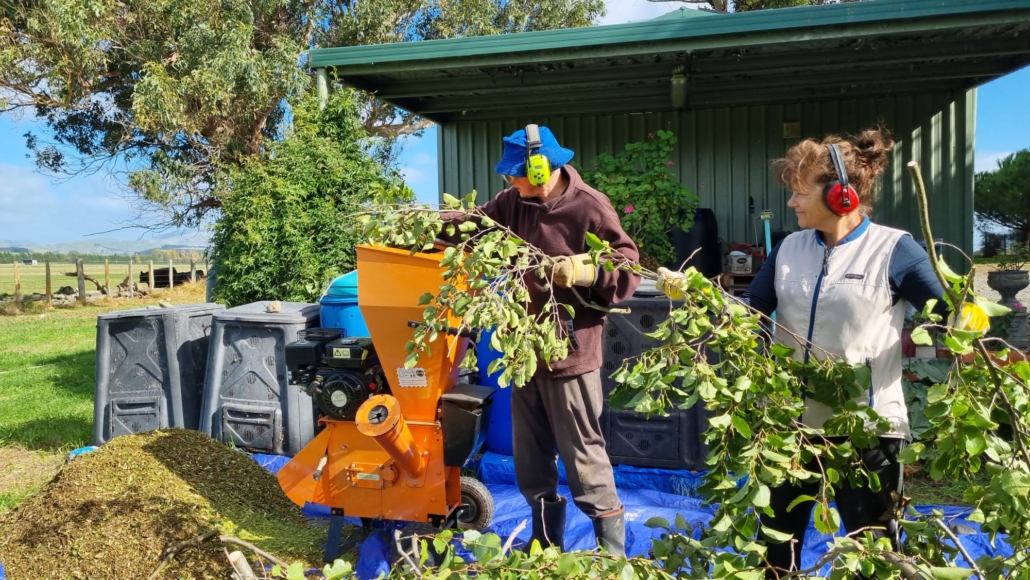
Our feedstock is chipped ramial (side fruiting) branches from Italian alders, with 20% leaf coverage. A range of inputs can be used, from leaves to olive and grape pomace, to wood chips, ensuring a high carbon over nitrogen ratio. The static compost pile is aerated with pipes and kept around 70% moist. Worms are added after a heating stage.
Johnson-Su is far more than compost. Please read the research. Make a batch of Johnson-Su compost this month, let it sit for nine months at least, apply and enjoy the results. You will be helping to save soil microbes.
Just when we most need to lower growing inputs and costs, and to help mitigate and build resilience against climate extremes, here is one tool to help. Organics and nature can lead not only to grow far better, but also to save species and soil, and feed us as nature intended. No GE required.
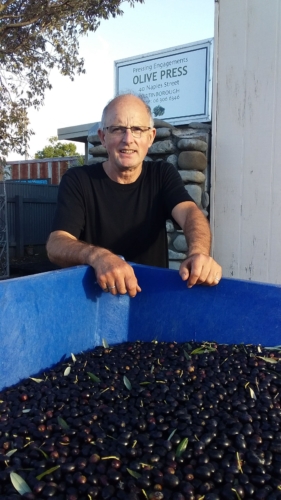
Ross Vintiner asks questions and sometimes answers come. He took a broken olive grove that now ranks in the top 100 best groves in the world, organic and biodynamic by choice. Nature’s answer.
Text and photos: Ross Vintiner