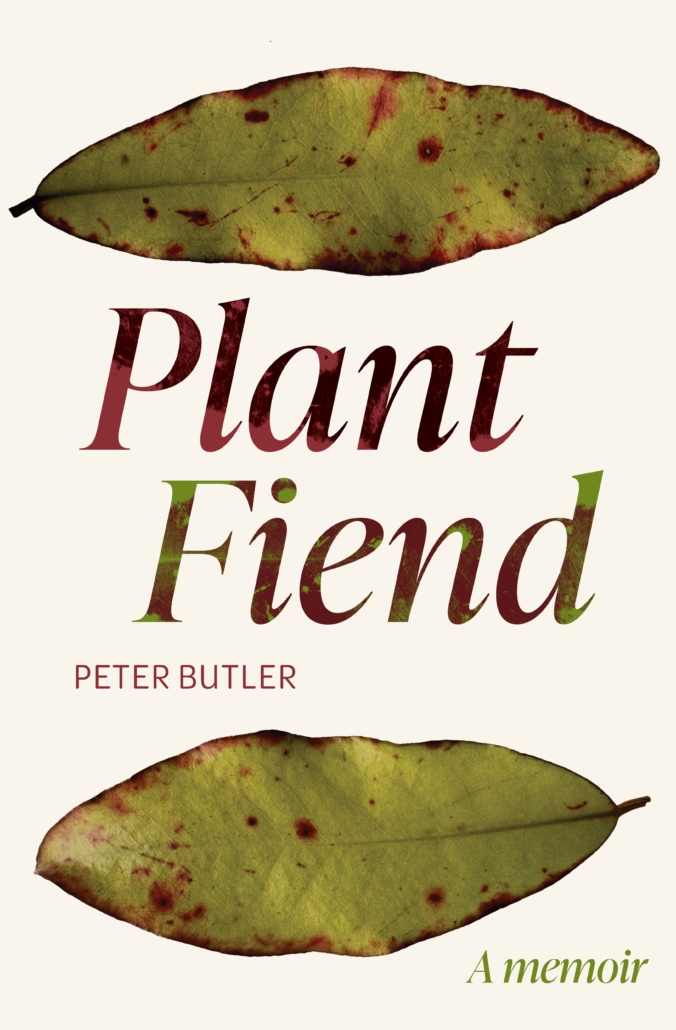
Plants of all sorts play their parts in this lively memoir by Peter Butler – from the plants that led to his imprisonment, to those he’s planted for income, enjoyment, or carbon sinks.
Butler is an entrepreneur with a zest for life, and an ebullient raconteur.
We hope you enjoy this free article from OrganicNZ. Join us to access more, exclusive member-only content
This extract is taken with kind permission from newly published memoirPlant Fiendby Peter Butler, Potton & Burton, $40, available in bookstores nationwide.
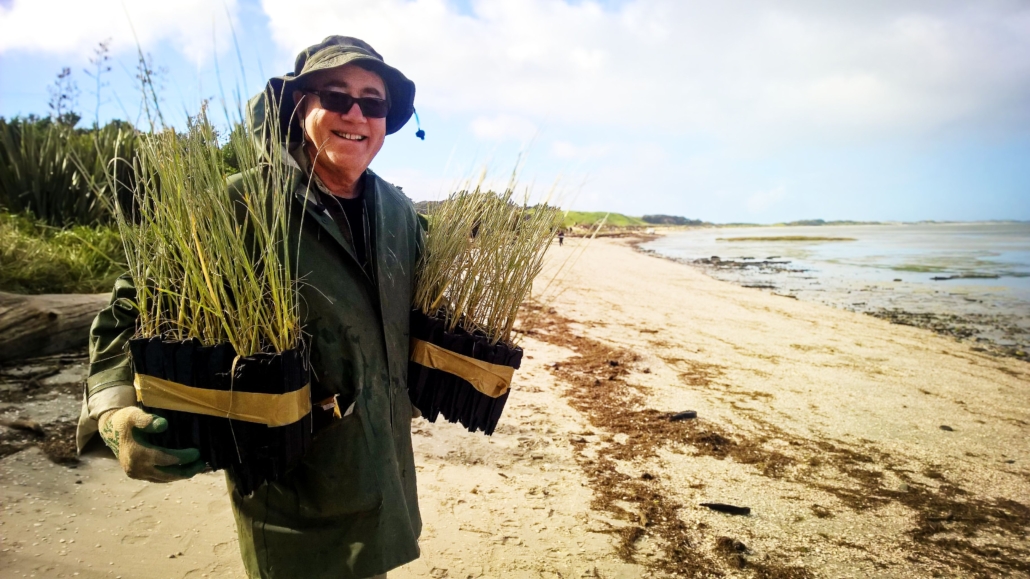
The HealthPost Nature Trust volunteers have just named their feistiest new fluttering shearwater chick, Butler, after me. It’s the one that fights and pecks at feeding time. These burrowing seabirds are not rare, but have been able to breed only on offshore islands since mammalian predators were introduced to New Zealand.
Our charitable trust is translocating and hand-feeding chicks to re-establish the first colony back on the mainland, within the Wharariki Ecosanctuary, at Cape Farewell on the west coast of Golden Bay.
It’s not a compliment to be named after this scrappy bird; I’m not proud of these traits reflected in me, but I’ve learned to accept and even use them. When my mother gave birth to my younger brother, she worried that she wouldn’t be able to survive another one like me – but he turned out not to be the sort of pre-schooler she needed to tie to the clothesline pole. I was a bit feral – I chopped the hair off my sister’s favourite doll and learned to catch bees in my cupped hands without getting stung. Who knows where these characteristics come from? I was born with the umbilical cord around my neck – a reasonably common thing but apparently I went blue, and it was touch and go. Perhaps this contributed to me approaching life as a challenge.
Plants are my solace, silent companions that emanate calm. I like to be around them, look at them, taste their flavours, breath the oxygen they produce, inhale their various scents. Just like a crowd of people, a crowd of plants has a collective smell – there will be the odd flower that layers its whiff over the crowd, just like a woman with a loud perfume. You can usually pick the woman, but the plant can be nondescript, such as māhoe (whiteywood), whose strong-smelling little cream flowers emerge directly from its branches.
After rain, you can enjoy the rich, dark smell of all the composting (rotting, if you must) that has been catalysed by the moisture. It’s the musk of fungi breathing and insects farting. We all know the pleasure of walking beneath trees on a hot day – and it’s not just the shade but also the quality of the enriched air that gives us a lift. The biophilia theory, that humans have an intrinsic need to connect with nature, and plants in particular, for physiological well-being, has been repeatedly established through simple experiments.
This search for solace through working with, or being in the company of, plants and the wild is a theme that has run through my life. The hills surrounding the Maitai River in Nelson were my early teenage playground. I attended a secondary school with a lodge set in beech forest surrounded by mountains, where bands of boys were trusted to explore. The keenest of us organised our own multiday tramping trips. Always hard, always exhilarating. And then escaping the claustrophobia of university in Christchurch was as simple as taking my books across the road to the magnificent botanical gardens. Working holidays were in a Queenstown that had not yet been crammed with tourists and millionaires.
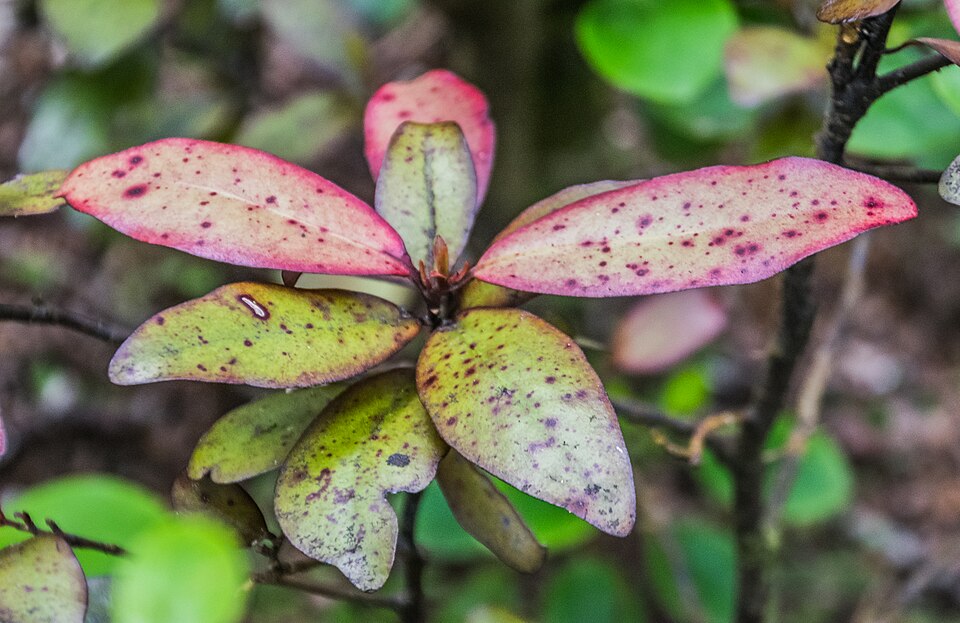
My stuttering attempts at a creative career in Auckland were substituted for life on a remote bush block in Golden Bay, track-making for the Forest Service and mining for gold. I experimented with lots of different crops in an attempt to make a living off the best of our dirt, spending decades developing the world’s only horopito farm, and in every visit back to that farm I still experience infusions of exquisite calm.
ABOVE: Horopito (Pseudowintera colorata), Tongariro National Park. Photo: Krzysztof Golik, Wikimedia Commons
Now there is Nature Trust, which is a bit like work, quite hard at times, but our ecosanctuary, high on the cliffs of Cape Farewell, feels like a Noah’s Ark, and we’re working to transform Farewell Spit into a Garden of Eden.
Author bio
Peter Butler grew up in Timaru and studied Political Science and History at the University of Canterbury before moving to a remote forest in Nelson’s Golden Bay. There, he threw himself into entrepreneurial activities, not all of which were successful. However, his relentless determination paid off with the creation of highly regarded natural health companies Forest Herbs Research and HealthPost.
Beyond horticultural and business activities, Butler has produced a feature documentary and written four books. He is now passionately engaged in improving the biodiversity of the Wharariki Farewell Spit area as chair of HealthPost Nature Trust. His memoir, Plant Fiend, chronicles his audacious, colourful life.
Growers worldwide are experiencing two fundamental growing challenges – high and rising input costs, and climate extremes. Species, soil, plants, crops, food supply and affordability are all threatened.
Organics is well equipped to solve and lead solutions.
This article proposes one proven method – the Johnson-Su compost system – as an example of how growers of all stripes can reduce inputs and costs, improve soil health, resilience and yield, and reduce food costs and human contributions to climate extremes.
We hope you enjoy this free article from Organic NZ. Join us to access more, exclusive member-only content
First, a little context
Since the 1940s, agricultural fertiliser input volumes and prices have risen dramatically in real terms, whereas production per input unit has declined. More fertiliser, less crop and greater cost per input unit applied. The result: higher food prices, poorer soil, health, species, environmental outcomes, and lower grower returns.
Climate extremes will intensify with an elevated El Niño weather pattern now in place. Resilience to adapt to fast-changing climate has become the grail of agriculture. As a result, a fundamental change is occurring to how we grow.
Mainstream and even progressive agronomists have until recently put huge productive store in soil and plant nutrition through fertiliser inputs. The soil as an ecosystem was lost to industrial agriculture. Thanks to those practising the wisdom of Rudolf Steiner, founder of biodynamics, Albert Howard, father of western organics, and indigenous systems, the soil is again being viewed more widely as a living, integrated organism rather than the dead chemical medium of dirt.
The living soil
Recent pioneers have applied scientific understanding of the soil food web, the soil ecosystem, to show how microbes are more critical to soil health and productive performance than fertiliser inputs. Everything we have in our environment today comes from microbes that have cycled carbon and minerals to grow life.
Despite this, fungi, for example, are being destroyed in modern agricultural soils – lowering plant immunity, eroding soil, reducing nutrient uptake, lessening water-holding capacity, producing food of poorer quality. There is a microbial species crisis.
Below our feet are armies of bacteria, fungi, protozoa, viruses, microbes far greater in number and importance to us than the stars above. But they are under threat. It is imperative that we save soil microbes to save ourselves.
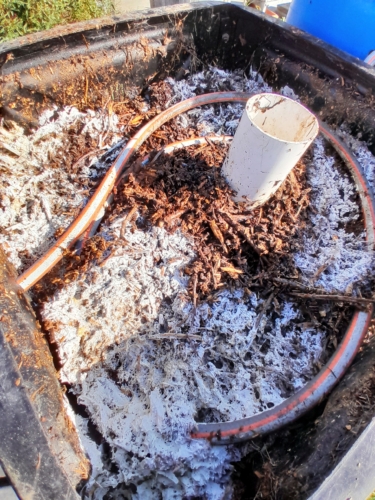
ABOVE: White fungal cap on a Johnson-Su compost
What are the best growing systems?
The Kete Ora Trust funded Plant & Food NZ to undertake a meta-analysis of world research findings to determine the best growing system to produce nutrient-dense food (read more here). Results were mixed.
Far clearer were these overwhelming findings:
that organic and biodynamic growing increase microbial biomass, the total number of microbes in soil;
that organics produces the highest percentage of soil organic matter (SOM), made in large part from microbes, compared to non-organic farming;
and that organics often outperforms other farming systems, thanks to microbes, to help plants produce phytonutrients, vital natural protectors of plants, animals and us. Phytonutrients are antioxidants and anti-inflammatories for the body’s immunity.
Microbes play a huge role in growing soil organic matter (SOM) and the root rhizosphere, where most nutrient transfer happens between plant roots and the soil. Less than six percent of soil volume, SOM is also a key driver of soil oxygen, soil water-holding capacity (reducing the need for irrigation), beneficial soil structure (less compaction), and fertility. The more and diverse the microbes, the more carbon and the healthier and more productive SOM, soil, plant and crop. Soil plant nutrients are only a tiny fraction of total soil mass.
The Johnson-Su compost system
Enter a professor and his partner, fully aware of these points and the United Nation’s case that one third of the earth’s soils are severely degraded, largely due to modern farming practices that destroy soil microbes.
Dr David Johnson and Hui-Chun Su developed a low-cost system that brings lifeless soils back to life. This is a paradigm shift. Rather than a nutrient fertiliser, Johnson-Su compost functions as a high-biology, fungal-dominant microbial inoculant. Up to 2500 species of bacteria and 400 species of fungi can be produced. That is much greater than most composts, which are normally bacteria dominant. A full complement of soil microbe species helps a soil system function properly.
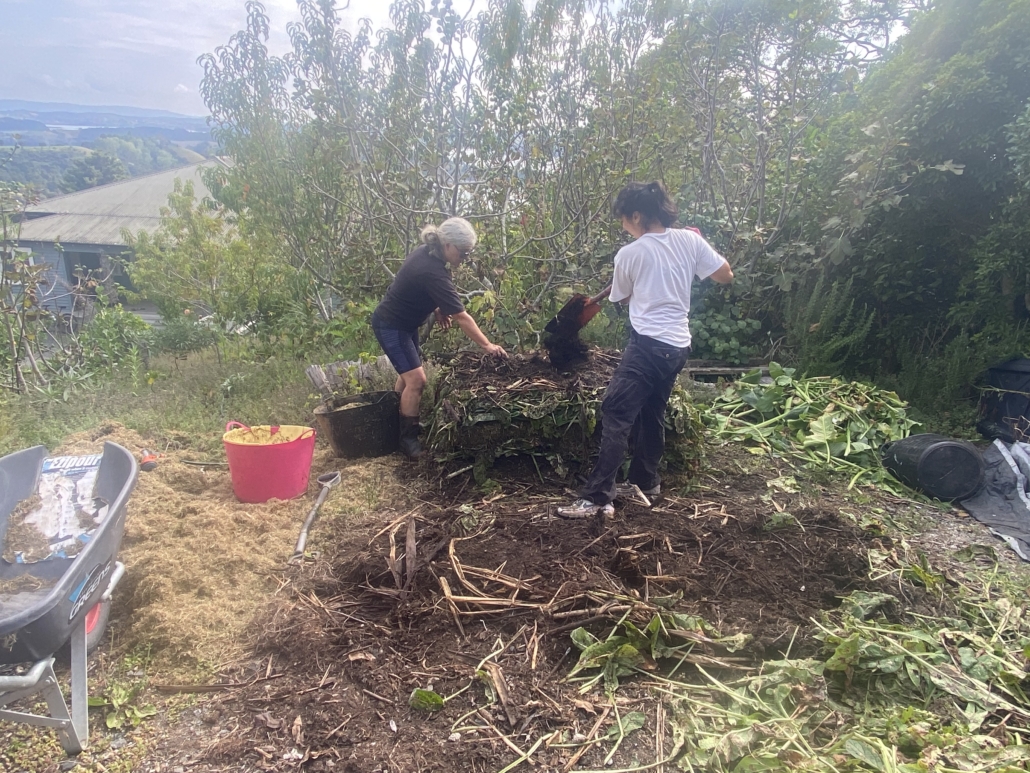
A Johnson-Su compost heap is not turned, but is aerated via vertical pipes, and matures over many months. Just a kilogram of this compost will go a long way in your garden, and can be applied either as a straight compost, compost extract ground drench or foliar spray. An easy web or YouTube search will show you how to make and use Johnson-Su compost in your garden, farm or orchard.
Think of the Johnson-Su composting method as a soil probiotic. We highly value nutritional probiotics as cultured inoculants to improve our gut microbiome. Helpful microbes control the growth of potentially harmful ones. The same principles work with Johnson-Su compost applied to the soil or plant. A small amount of the clay-like compost can be added as extract in water to power the plant’s immune system and increase its ability to grow and produce.
In the Johnson-Su method, beneficial microorganisms are reintroduced to the soil usually in the form of compost extract or seed inoculants. The extracted microbes build a diverse SOM, enable much greater plant uptake of native and introduced nutrients, improve yields, assist soil oxygen and water retention. Extract improves seed germination and growth rates, while also increasing carbon sequestration.
This is a free, open-source system. It is proven and at work in many countries around the world. It can be used in the garden and at scale, with some farms in the US, Europe and Australia applying extract to thousands of hectares. For reasons already outlined, the microbial heavy Johnson-Su compost works best organic.
It’s also an easy system. The static pile compost requires no turning. Feedstock is often free. The compost bioreactor is inexpensive to make and has no odour. There is no leaching or contamination.
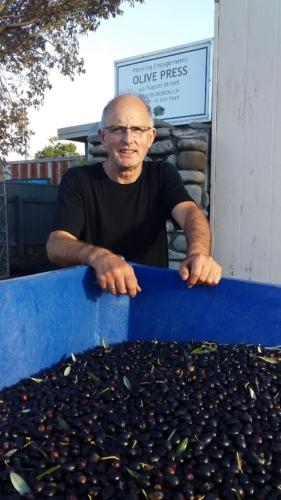
Our experience in the olive grove
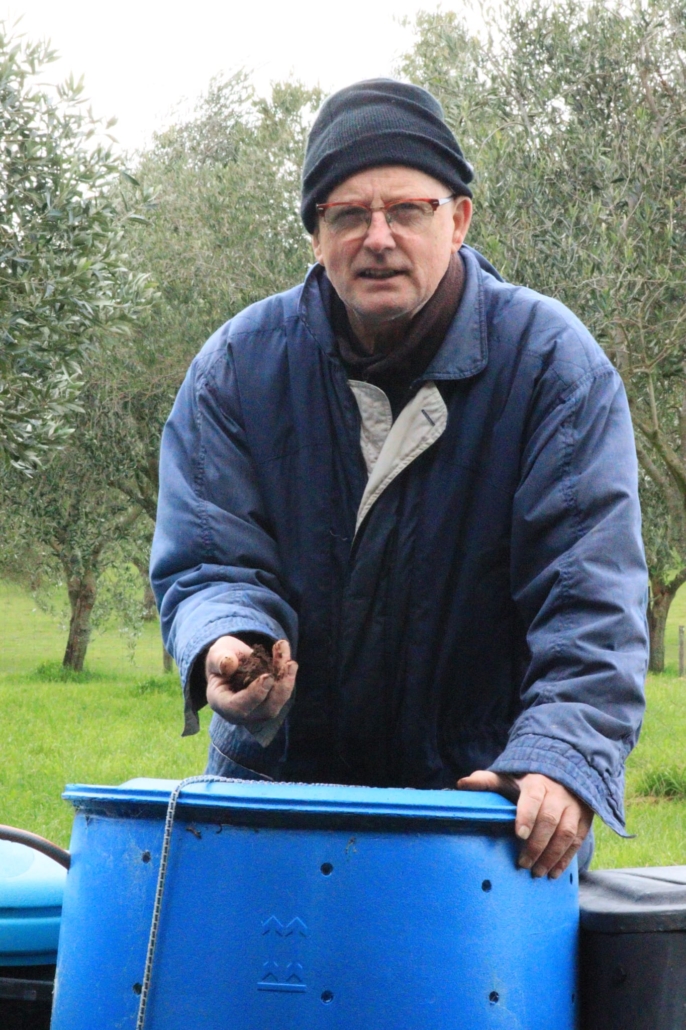
What I have found using this easy compost method for three years on a commercial olive grove is a 50% reduction in organic fertiliser inputs, along with high growth and yield rates, and green grazing pasture all year.
Our soil has gone from being bacterial dominant to a fungal:bacteria ratio of 4:1, equivalent to the forest floor. Trees require fungal dominant soils. Garden soils require a 1:1 ratio. All soils and roots need beneficial fungi and other microbes to function, exchanging sugar for nutrients, communicating via networks.
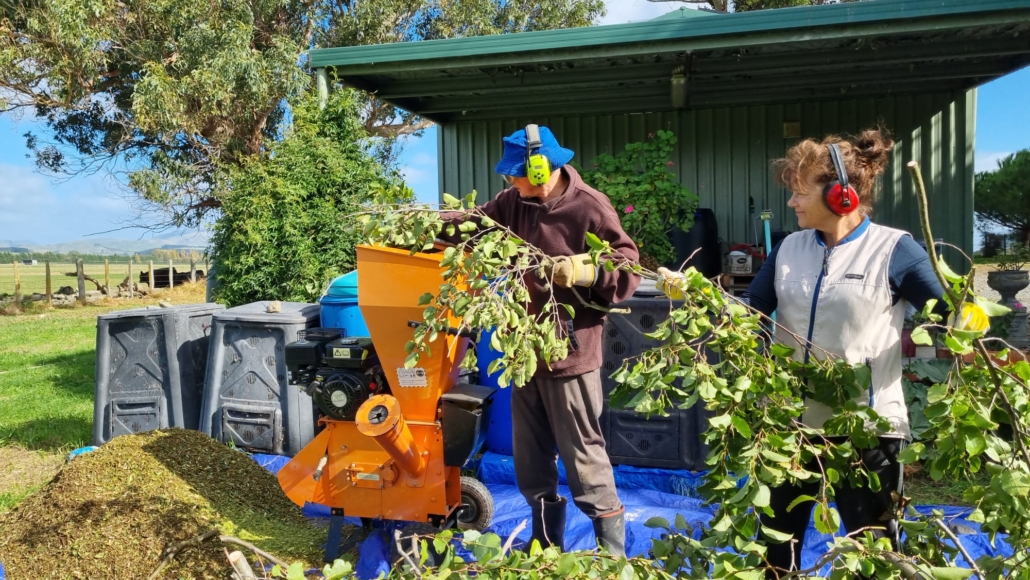
Our feedstock is chipped ramial (side fruiting) branches from Italian alders, with 20% leaf coverage. A range of inputs can be used, from leaves to olive and grape pomace, to wood chips, ensuring a high carbon over nitrogen ratio. The static compost pile is aerated with pipes and kept around 70% moist. Worms are added after a heating stage.
Johnson-Su is far more than compost. Please read the research. Make a batch of Johnson-Su compost this month, let it sit for nine months at least, apply and enjoy the results. You will be helping to save soil microbes.
Just when we most need to lower growing inputs and costs, and to help mitigate and build resilience against climate extremes, here is one tool to help. Organics and nature can lead not only to grow far better, but also to save species and soil, and feed us as nature intended. No GE required.
Ross Vintiner asks questions and sometimes answers come. He took a broken olive grove that now ranks in the top 100 best groves in the world, organic and biodynamic by choice. Nature’s answer.
https://organicnz.org.nz/wp-content/uploads/sites/2/2026/09/IMG-20260809-WA0001.jpg13652048membershiphttps://organicnz.org.nz/wp-content/uploads/sites/2/2024/09/OrganicNZ-2024-Masthead.pngmembership2026-09-24 15:50:072026-09-24 15:51:41Organic probiotic for the soil
This article was first published by Earthworkers and is republished here with their kind permission.
We hope you enjoy this free article from OrganicNZ. Join us to access more, exclusive member-only content
I have always been a details-oriented sort of person. As a child I remember planting flowers with my Mum, learning all of their names and pressing them in a flower press. I later I revelled in learning how to identify and use the three names of all our native vascular flora (Māori, English and scientific). My first career was in plant ecology, after I did a Masters in that area looking at the relationships between soil and the regeneration of kauri forest after fire.
Moving between the details and the big picture, I became seriously concerned about climate change around the time of my late twenties. Not just mildly concerned as I had been in my youth, but in-your-face, losing-sleep, suffering-existential-fear-and-anxiety level of concern.
Of course, this had coincided with finding a husband who was a big-picture thinker and having two wonderful baby boys. I did not end up giving up at that point, but I decided that when I got back to paid work, I would be dedicating my time to a career in climate action.
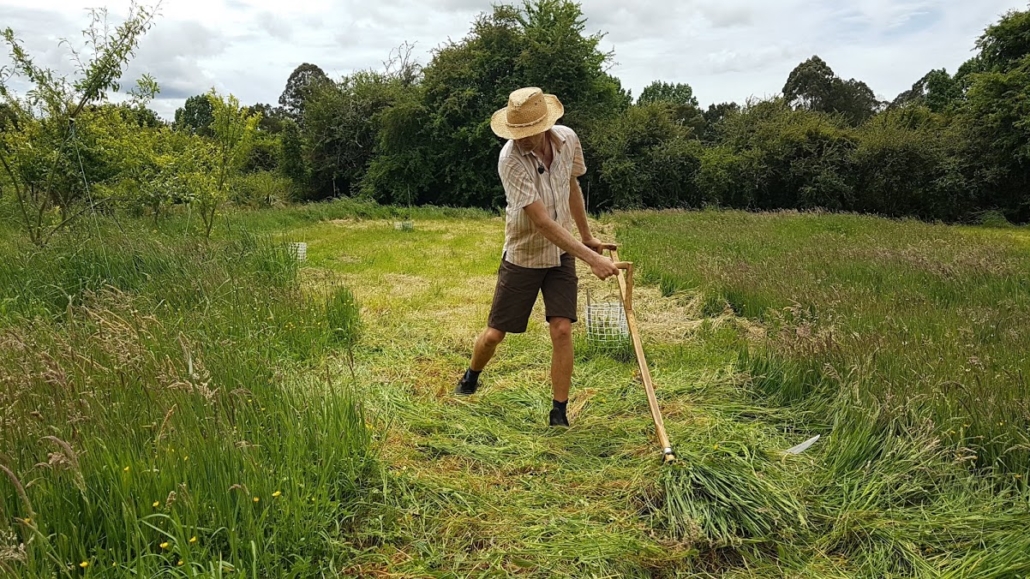
Above: Richard scything grass
Growing vegetables
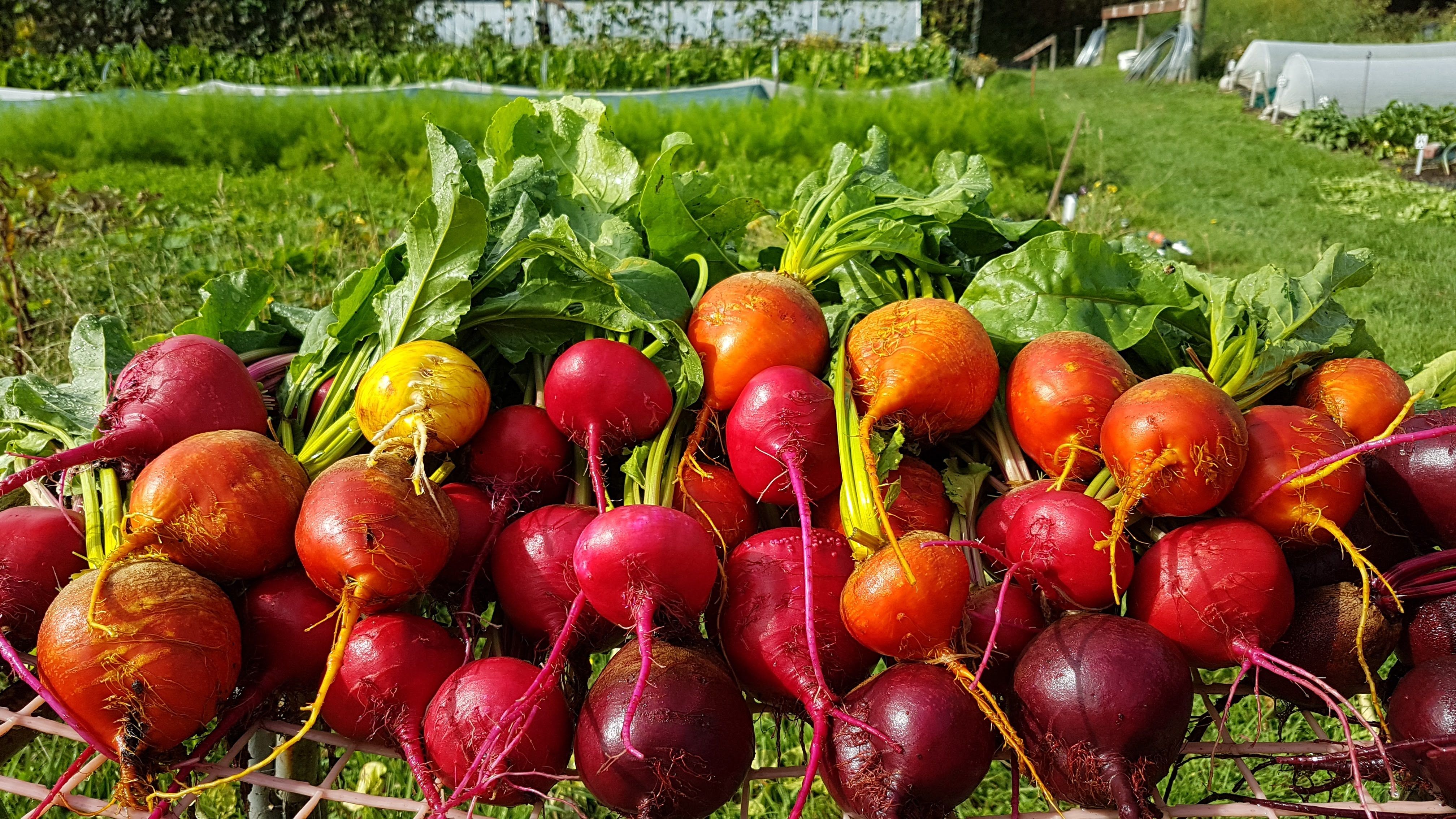
I moved from field-based plant ecology work to growing and selling organic vegetables, as a home-based profession that could keep me close to our kids and our food. Richard helped me establish Lux Organics, a small-scale organic market garden on the outskirts of Rotorua. He initially kept his day job as an ecologist, but then joined me full-time in the business for three years. My parents got involved, providing a generational backbone to the business.
We grew beautiful vegetables for our community, and by the time the Covid crisis and lockdowns occurred, we were able to pivot to vege boxes, bringing them to peoples’ doors with our electric van. We started hiring seasonal staff in 2020, which meant a succession of people learning the organic growing methods with us. By 2023 we had added solar panels to our shed, powering our household, vegetable chiller and van with the sun.
This has been a journey of creating a business that minimises carbon emissions while growing food. Hand tools, electric tools and hands in the soil have been our main inputs. The productivity of our soil has been the foundation of our business (as it is for all farming) and we have strived to care for it, taking soil tests each year, and learning about every aspect of soil health along the way.
When you grow a crop for market, and especially when you grow over 40 of them (!), there are a lot of questions and uncertainties about how to manage the soil, what might be affecting the outcomes you’re seeing, how to solve problems, and how to keep producing all through the seasons.
These veins of query are what led me to the five-day Earthworkers Regenerative Horticulture 101 course in the winter of 2021. I attended with two of my staff and I encountered a whole group of amazing people involved in different sorts of projects who were on my wavelength.
I discovered new terms which opened up my mind to the soil ecosystem in a new way. Quorum sensing, cation exchange, paramagnetism, root exudates, polycropping. I have kept in touch with the group ever since (online and in person), and this has led to multiple fertile exchanges and more farm visits, opportunities to learn and even to help others. It’s a magic human interaction!
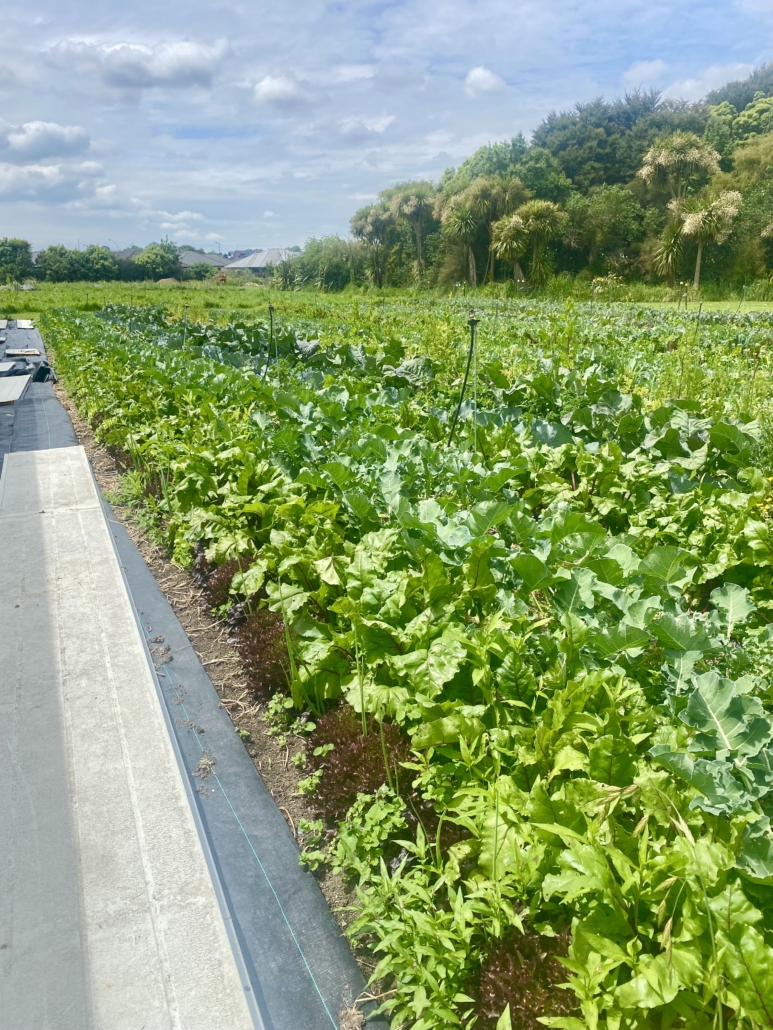
ABOVE: Lux Organics market garden, February 2025
In recent years, with the domestic recession, business has been tough, as local people cut their organic vegetable spending. Looking at in a big picture way, it’s a manifestation of how people cannot/do not make longer-term environmental and health choices when they are poor and worried about their daily survival. Our business relies only on its connection with the local food system, rather than export.
While we experienced a huge high after the Covid crisis, when people suddenly became concerned about the sustainability of their local food supply, we are now in a phase of relentless cost-cutting. Our customer base has concentrated to only those who value food produced in a way that is free from contamination, and which looks after land.
Now that I have been working in practical agroecology on my own land for over nine years, I am curious about taking my soil knowledge deeper and broader, to have a wider impact. It’s one of those cliches… the more you learn, the more you realise you don’t know, and it becomes impossible to give simple explanations any more.
I would now never say, “ah, just use compost and everything will be fine”. There’s a lot more to growing, and to soil, than most of us really, truly understand. Related Research News: why compost alone isn’t enough for juicy lettuce (worm juice + mycorrhizae). My curiosity burns and I want to know which levers to pull to achieve the healthiest crops and soil. Looking again to the bigger picture, how we manage soil on our productive land is the probably the most important aspect of New Zealand’s climate emissions profile.
This is why I’ve dedicated pretty much all of my market garden earnings in 2025 so far to further study and investing in my own knowledge growth.
I have taken papers at the University of Waikato in soil science and hydrological management, and I have attended specialist courses by regenerative educators (Graeme Sait from Nutri-tech Solutions, and Nicole Masters from Integrity Soils).
I am building up a research library and reaching out to soil mentors for the next step in my career. I even bought a microscope from a fellow Earthworker (thank you Coral).
All of this new learning is feeding directly into the next stage of my journey — growing my skills, confidence, and contribution through the Earthworkers community.
Over the next few months, I’ll be deepening my learning through the new Regenerative Horticulture 201 and Future Agronomists courses, working directly with Daniel Schuurman as we develop and pilot both programmes. My goal is to grow my capacity as a biology-first regenerative agronomist — someone who can read the soil, guide other growers, and support the shift toward biology-led farming across Aotearoa.
In 2024 I mentored for For the Love of Bees on their year-long Communities of Regenerative Learning programme, which opened a new path for me as a mentor within the sector. That experience, and my continued involvement supporting new growers through the post course Earthworkers WhatsApp network, has shown me how powerful it is when we stay connected — helping one another, sharing knowledge, and learning together every day out in the field.
I look forward to doing Regenerative Horticulture 201 in 2026 and keeping up my active learning and practice. Growing in soil is a bit like general life… you can’t follow one set recipe. Things keep moving and changing, and you have to be observant, responsive and kind.
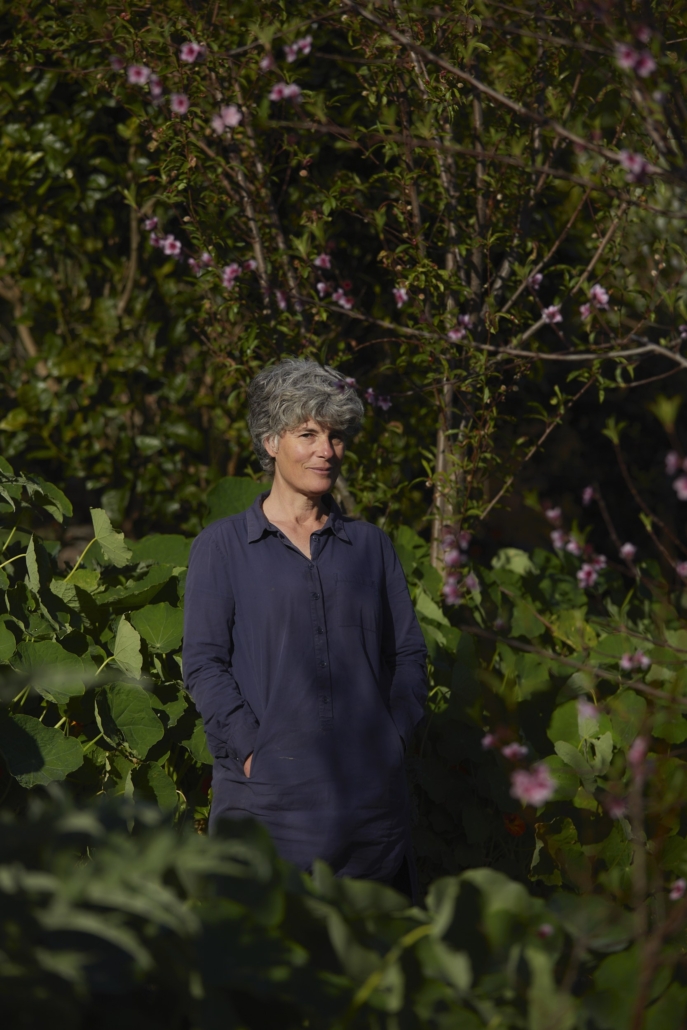
Jenny Lux is a former chair of the Soil & Health Association. Find Lux Organics online here.
Earthworkers has launched
The natural evolution of For the Love of Bees, Earthworkers has a new hub to support biology-first regenerative horticulture in Aotearoa.
After a year of development they have launched a brand new website, and a full learning pathway.
Enrolments are now open for 2026:
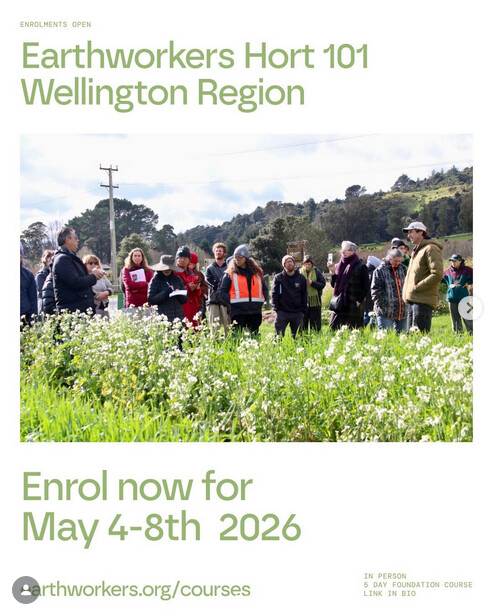
The foundation course Hort 101 (4–8 May, Mangaroa Te Awa Kairangi – Wellington region)
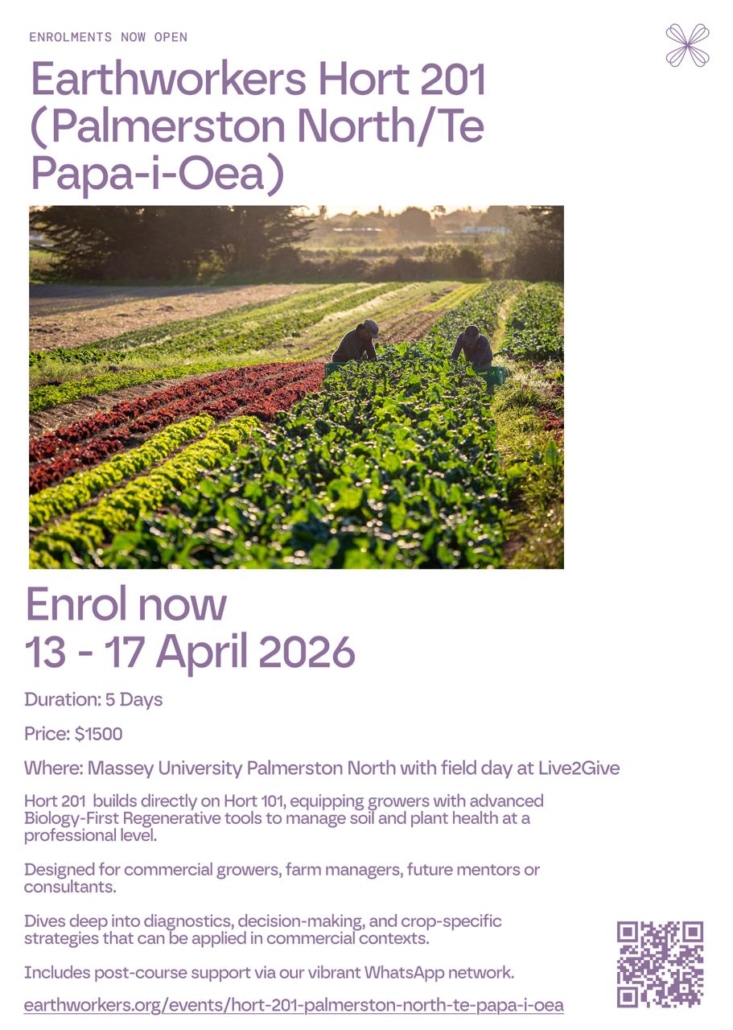
The advanced course Hort 201 (13–17 April, Palmerston North, in partnership with Live2Give)
Both courses come with post-course support via a WhatsApp chat network to help growers transition to resilient, profitable, biology-first regenerative systems.
Earthworkers’ first alumni blog, Cultivating Knowledge Together, features Jenny Lux— an experienced grower and organic advocate who will be one of the first participants in our new Hort 201 and Future Agronomists programmes, designed to grow New Zealand’s next generation of biology-first agronomists.
https://organicnz.org.nz/wp-content/uploads/sites/2/2025/12/Jenny-Lux-2025-low-res-scaled.jpg25602560membershiphttps://organicnz.org.nz/wp-content/uploads/sites/2/2024/09/OrganicNZ-2024-Masthead.pngmembership2025-12-19 07:41:332026-09-14 09:06:00Loving soil, but also learning soil
We hope you enjoy this free article from OrganicNZ. Joinus to access more, exclusive member-only content
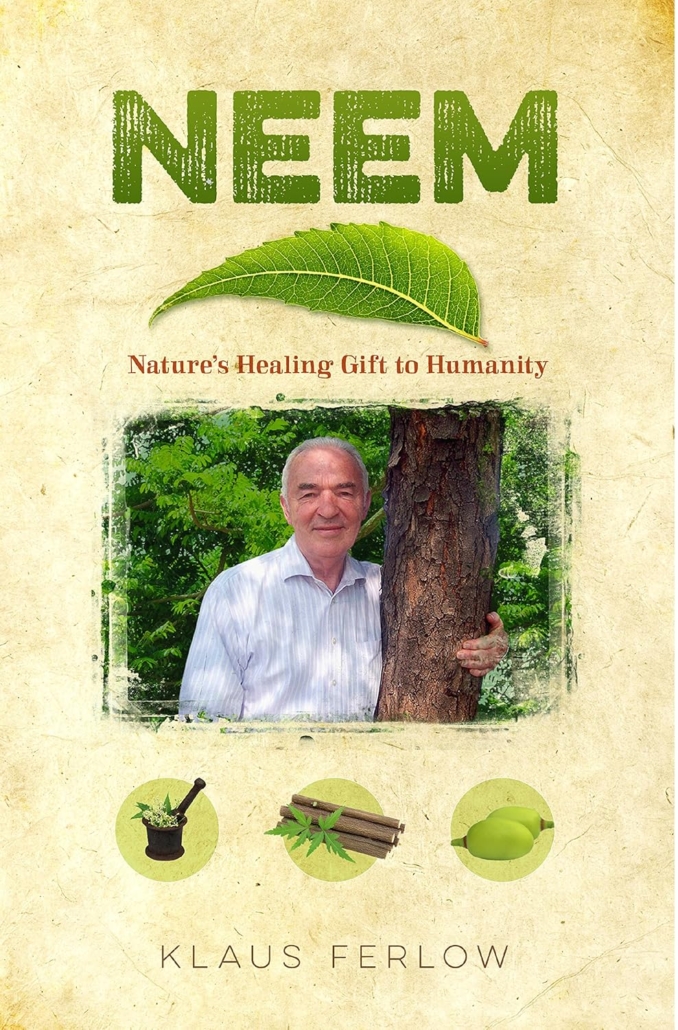
It’s appropriate that the cover of this book features its author, Klaus Ferlow, standing beside a neem tree, his left arm reaching around to embrace its trunk in a fraternal greeting. That’s because Ferlow (originally from Germany) helped to introduce people in North America to the healing properties of the neem tree, after emigrating to Canada in 1975 and founding Ferlow Botanicals approximately 20 years later.
Klaus Ferlow credits his (now late) wife Rose with introducing him to neem by urging him to watch a TV programme called ‘What’s in a Neem’, narrated by David Suzuki. Inspired by the documentary, Ferlow obtained some neem extract and applied a neem cream to the psoriasis on his scalp and elbow and got relief from this condition in just three weeks. Having previously trained as a herbalist, he decided to set up a business to bring the benefits of neem to the North American market. Ferlow Botanicals is now rum by the Ferlows’ sons, Peter and Harald, and Ruth (Peter’s wife).
Klaus Ferlow has maintained his interest in neem and founded the organisation Neem Research “to promote neem for human, animal and environmental health”. His new book, Neem: Nature’s healing gift to humanity, includes profiles of neem researchers and entrepreneurs. He gives special credit to the late Professor Dr. Heinrich Schmutterer as ‘the father of modern neem’. It was his observation that neem trees had survived a plague of locusts that swept through Sudan when he was on a field trip there in 1959 that caused him to wonder if a natural insect repellent could be present that led to his work researching neem and writing the definitive textbook on neem, The Neem Tree (1995, 893 pages).
From the home of the neem tree in India, knowledge about the tree has spread to North and South America, the Caribbean, Africa and Australia.
Among the examples described in the book is Abaco Neem, a farm in the Bahamas that includes neem trees intercropped with fruit trees. (In all, 120 varieties of fruiting and flowering trees are grown on the farm.) Spiders and beneficial insects like butterflies and bees have thrived in this environment and hives on the farm allow neem honey to be produced as well as other neem-based health and personal care products. Some of these products incorporate beeswax from the hives. Among the products produced by Abaco Neem is a neem-based insect repellent.
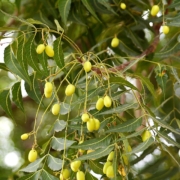
ABOVE: Collection of neem seeds for the preparation of seed balls. Photo: Paryavarana Margadarsi Vaisakhi via Wikimedia Commons
The farm has organic certification and the fruit from the neem trees also has the benefit of providing food for birds; a visiting intern from France identified almost 40 different bird species on a single day.
In addition to being used to promote human health when used as a supplement or medicine, neem has the potential to boost food production. Neem extracts can be used as insecticides and ‘neem cake’ made from defatted neem seeds can be used as a fertiliser that also helps to protect plants from nematodes. The book also reports that a constituent of neem (azadirachtin) is being developed as a food additive for farmed salmon in Scotland to treat sea lice infestation of the fish.
In India, a company called Nisarga Biotech has been producing supercritical extracts of neem (using CO2 to extract constituents from the plant) which may be used as botanical pesticides, or in cosmetics or personal or medicinal products. Their product line includes a neem toothpaste and mouthwash – a modern iteration of the tradition in Indian villages of using neem twigs as a toothbrush. The company has also ‘secured a patent for the manufacture of neem leaf CO2 extract for use in treating oral and colon cancer’.
Neem: Nature’s Healing Gift to Humanity is a testament to the hard work and vision of its author and all the individuals whose businesses feature in its pages.
• Published by Neem Research, 2016, 258 pages, ISBN 9780993727504
• Available via local booksellers or from Neem Research.
About the reviewer: Katherine Smith is the co-editor of The NZ Journal of Natural Medicine, which first published this review in issue 54 (February 2025).
https://organicnz.org.nz/wp-content/uploads/sites/2/2025/04/Azadirachta_indica-Neem_tree.jpg640960membershiphttps://organicnz.org.nz/wp-content/uploads/sites/2/2024/09/OrganicNZ-2024-Masthead.pngmembership2025-04-15 14:14:582025-04-15 15:24:52Neem: Nature’s healing gift to humanity
In an increasingly disconnected world, many people are seeking ways to live more closely with both the environment and one another. For Simone Woodland, a dream to create a different way of life led to the Tākaka Cohousing project in Golden Bay.
Hannah Schenker tells the story.
We hope you enjoy this free article from OrganicNZ. Joinus to access more, exclusive member-only content
ABOVE: Simone Woodland and her daughter Frida
The birth of a dream
Simone Woodland’s dream began to take shape in 2017 when she applied to become an Edmund Hillary Fellow, and travelled to New Zealand. Driven to live more harmoniously with herself, others, and the land, she discovered cohousing. Her vision became clear: she could create a supportive community for her family to live in, while regenerating the land. From this seed, Tākaka Cohousing was born.
Originally from the UK, Simone trained in architecture and urban design before becoming disheartened by the industry and shifting to social entrepreneurship. In Aotearoa, she began exploring alternative, minimalist living through her early business Tiny Lifestyle.
Her passion for community building and sustainability deepened as she transformed this into another business, Elemental Design and Build, further honing her knowledge and interest in eco-conscious, natural construction. To bring her cohousing vision to life, she drew on these experiences and co-founded Mōhua Ventures, a housing development company owned by a charity, Te Hapori Hauora Community Land Trust.
But her love of community started much earlier. “When I was a kid, my dad hosted annual street parties in our little cul-de-sac,” says Simone. “It brought all of our neighbours together around a bonfire, sharing kai and doing silly things like three-legged races. It broke down barriers and we became friendly with our neighbours. He showed me that you can create community wherever you are.”
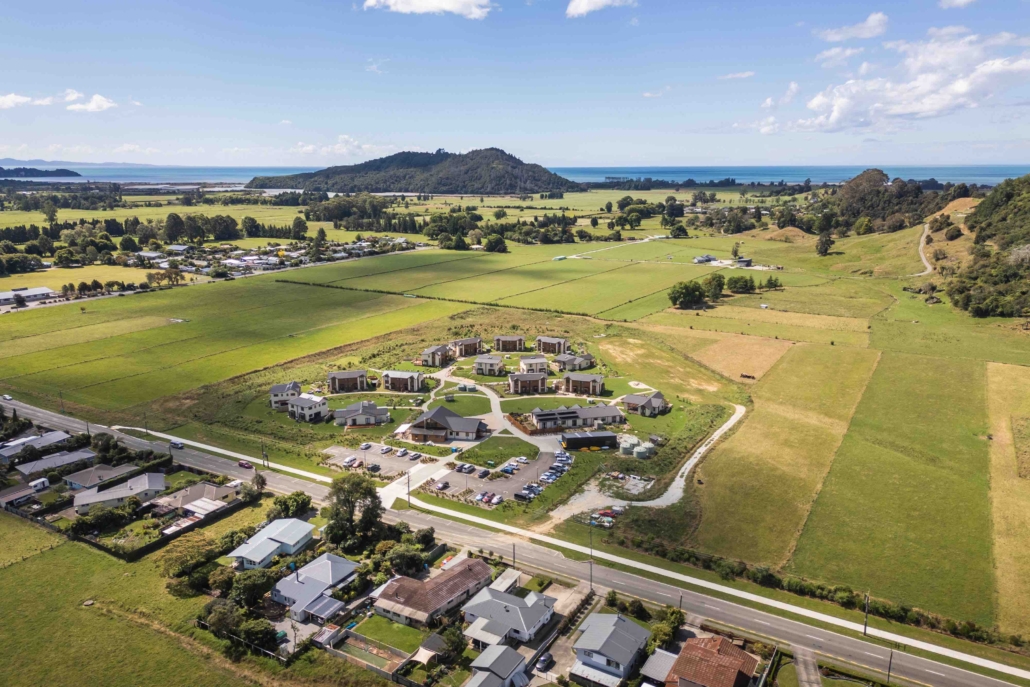
ABOVE: Tākaka Cohousing from the air
The benefits of cohousing
Cohousing offers a refreshing alternative to traditional suburban living. The concept originated in Denmark in the early 1970s and has since spread globally. It is a community-based housing model where individuals own private homes but share common spaces and facilities. It blends personal privacy with social connection, fostering collaboration, sustainability, and a supportive environment. Residents actively contribute to decision-making and community life, creating a stronger, more connected neighbourhood.
Loneliness is a growing issue in New Zealand, exacerbated by our individualistic society. A 2018 Stats NZ survey found over 650,000 New Zealanders experienced loneliness at least some of the time in the past four weeks. (https://loneliness.org.nz/nz/facts/many-kiwis-feel-lonely/).
Cohousing can help counteract that. Living in a close-knit neighbourhood opens up possibilities for interactions that foster personal growth, increasing the health and wellbeing of residents, promoting intergenerational connection.
Cohousing also offers environmental, social, and economic benefits. Sharing facilities reduces individual costs and space needs, while sharing green spaces means you don’t have to grow and tend everything on your own.
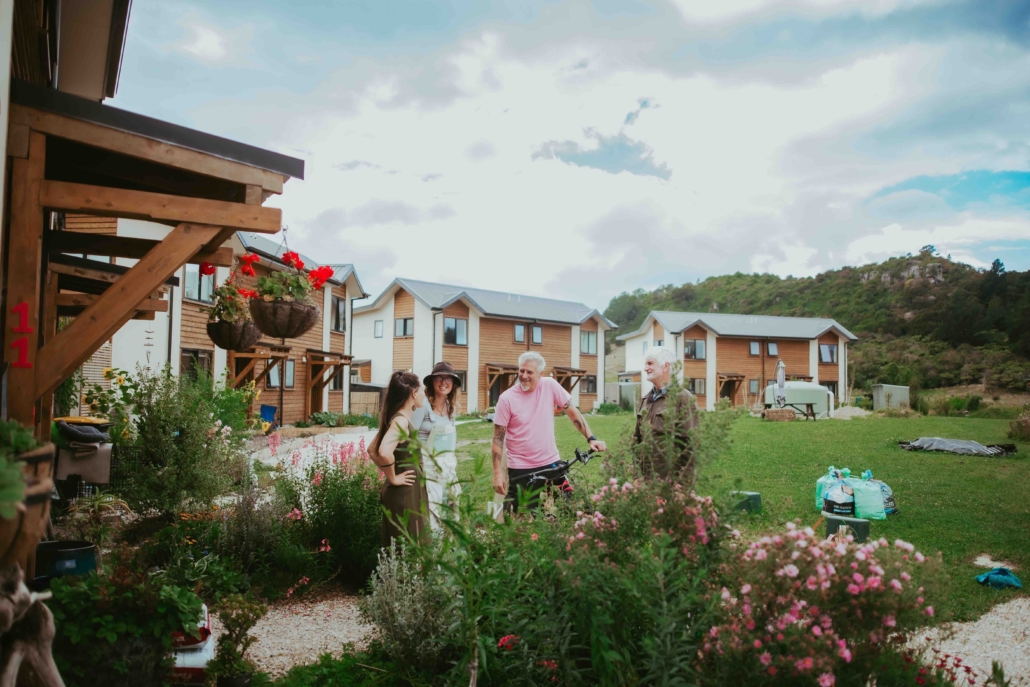
ABOVE: Residents meeting outside the three-bedroom duplex homesABOVE: Sharing a meal in the Common House
How Tākaka Cohousing works
Homes are sold at cost with individual unit titles, which banks recognise for mortgage approvals. Residents own their own home and the land directly beneath it, and a share of the common land and facilities, managed by a body corporate.
Architecture and urban planning principles are used to create a pedestrian-friendly layout, with car parking kept to the outside of the neighbourhood. The physical design promotes social interaction in “bump spaces”, allowing spontaneous interactions to occur in daily life. This means you don’t always have to pre-arrange catch-ups and cuppas and diarise everything – it happens quite naturally.
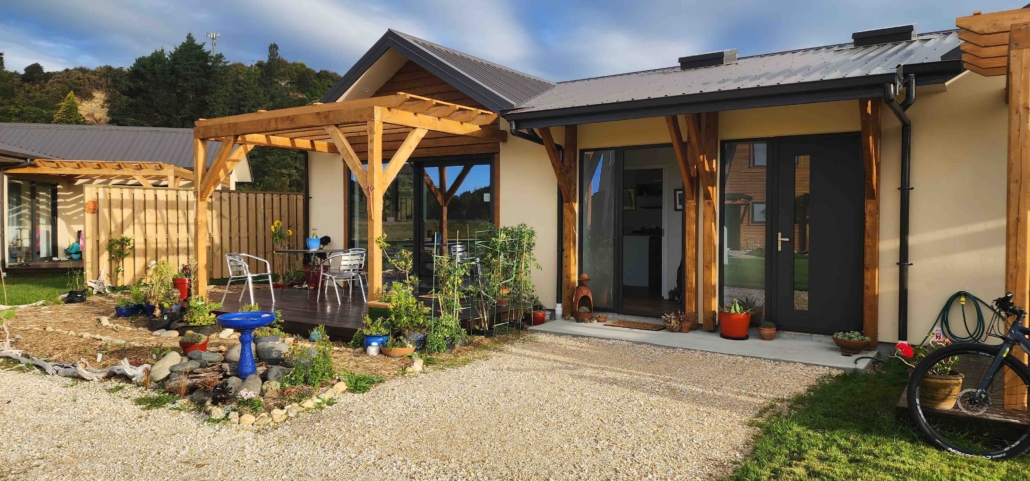
The first neighbourhood has 34 fully occupied duplex homes, with a mix of single and double-storey two- and three-bedroom layouts. Two more neighbourhoods are planned for construction in 2026 and 2027, with a similar mix of options now open for expressions of interest.
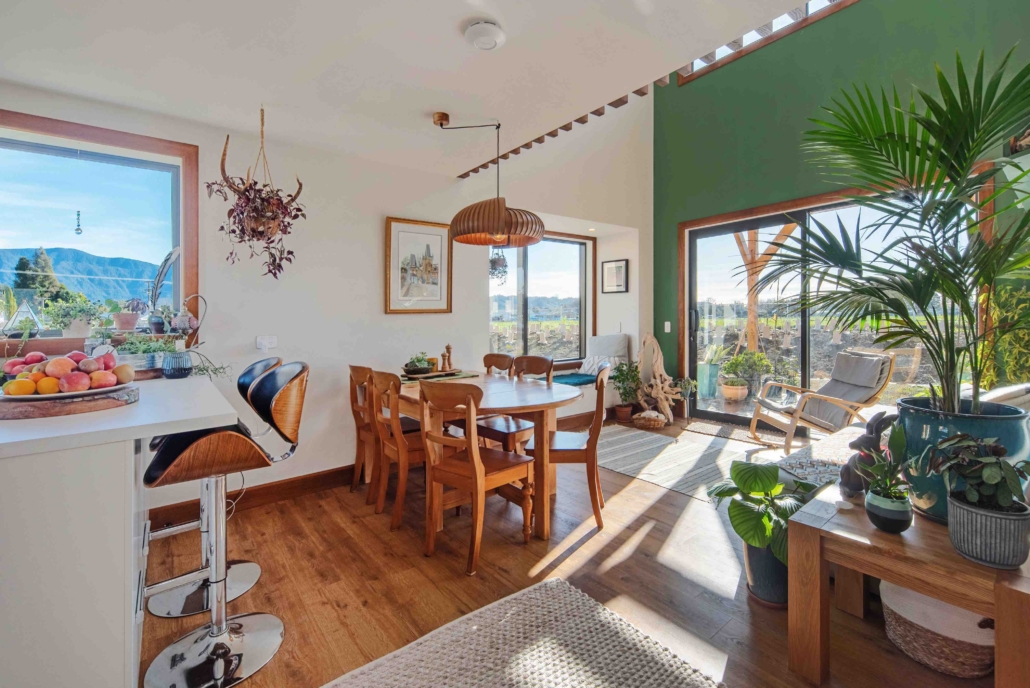
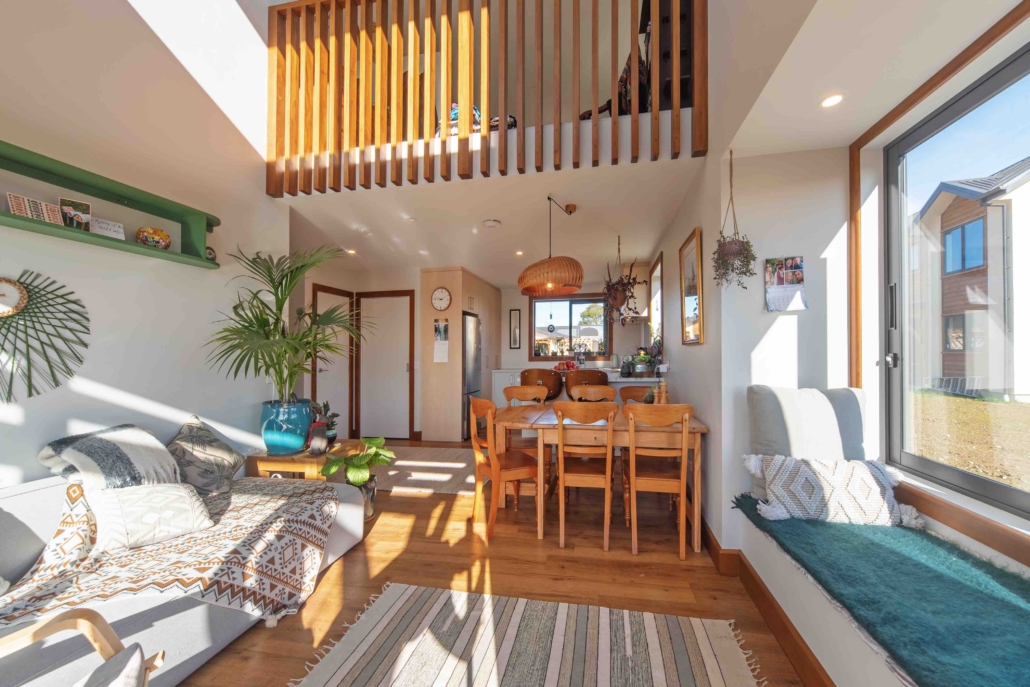
ABOVE: Left – Exterior of the two-bedroom, single-level duplex. Right – Interior showing dining and living areaABOVE: Left – Interior from living area showing mezzanine above Right – Kitchen
Recipe for success
A big part of why Tākaka Cohousing has succeeded is Simone’s approach of creating a dedicated company to drive the project forward. Rather than relying on a group of peers to navigate the complexities of development – something that often leads to slow progress or burnout – she founded Mōhua Ventures, a company with the experience and knowledge needed to deliver the vision.
Through the company, she is able to maintain the momentum of the project, while being a resident herself gives her firsthand experience of what works and what can be improved as the development grows.
The project is currently entering its second phase, with two further 18-home cohousing neighbourhoods to be built on the remaining land along Meihana Street, near Tākaka township. Seven hectares of land surrounding the neighbourhoods will be regenerated into publicly accessible parkland through a community land trust.
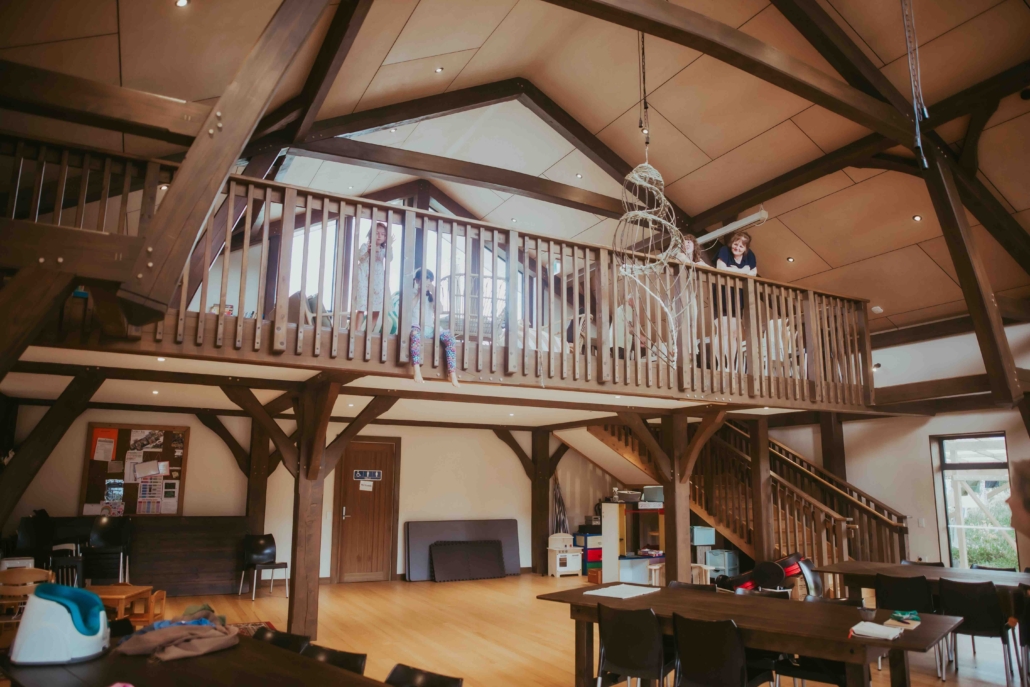
ABOVE: A carpeted mezzanine in the Common House offers comfy lounge space for board games and movie nights.
Spotlight on sustainability
The duplexes at Tākaka Cohousing feature Terra Lana insulation made from recycled sheep’s wool, thicker walls to increase insulation, concrete floors for added thermal mass, and non-toxic paint from The Natural Paint Co. “The health of the whānau living in our homes is our top priority,” says Simone. “It’s about creating spaces that are not just energy-efficient but truly healthy to live in—warm, dry, and well-insulated.”
The Common House was built by Elemental Design and Build, guided by Graeme Scott’s passion for traditional timber framing. This off-grid natural build was crafted using untreated, non-toxic and sustainably sourced heartwood lusitanica (Cupressus lustitanica – related to macrocarpa) for the framing, staircase, railings and balustrade, and a couple of extra-long pieces of macrocarpa heartwood for framing, all stained with Osmo natural wood stain.
All of the wood was milled on site, keeping transport and carbon footprint to a minimum, and its natural non-toxic qualities preserve the health and wellbeing of the builders and contractors during construction, and the residents who use the space. Eucalyptus was sourced from Riwaka for flooring, skirting and architraves. Inside the walls is regular H1.2 boron-treated timber. The external weatherboards are macrocarpa (not milled on site, sourced from Totally Timber, and stained with a natural oil stain).
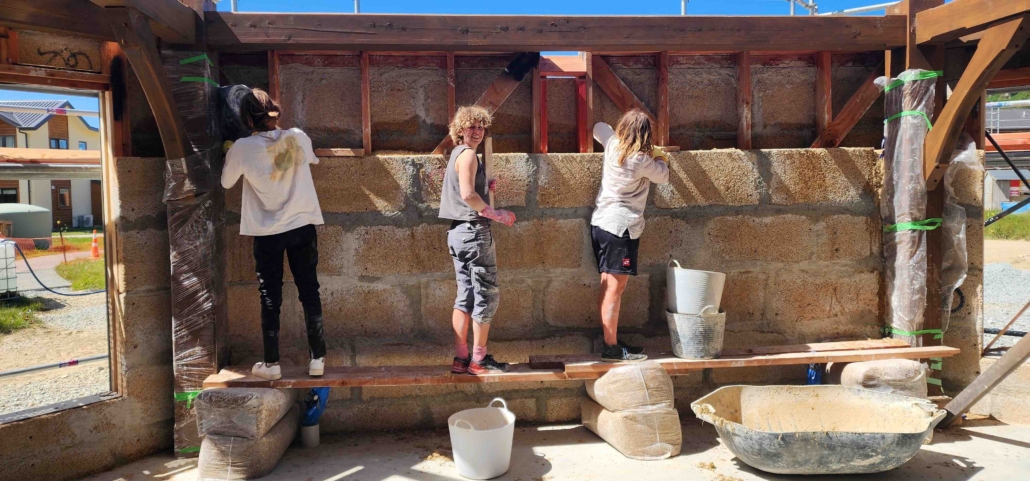
The walls are made using hempcrete panels, manufactured by Kohu Hemp using their own formula of hemp hurd and hydrated lime, and coated in lime plaster by Solid Earth. Hemp is a crop that enhances soil health, and grows in just three months. It creates a breathable, natural product with high insulation values. Hempcrete sequesters carbon dioxide for 50 years.
Additionally, the project acknowledges the importance of mana whenua (local iwi) as kaitiaki (guardians), integrating cultural connections into its development. Mōhua Ventures is owned by Te Hapori Hauora, Mōhua Community Land Trust – a registered charity.
Te Hapori Hauora governs the land surrounding the cohousing neighbourhoods and has a tripartite structure, with representatives from mana whenua, the cohousing neighbourhood, and the wider Mōhua (Golden Bay) community. The Trust is planning to create a publicly accessible parkland and community facilities on the land surrounding the cohousing neighbourhood, regenerating the whenua for generations to come.
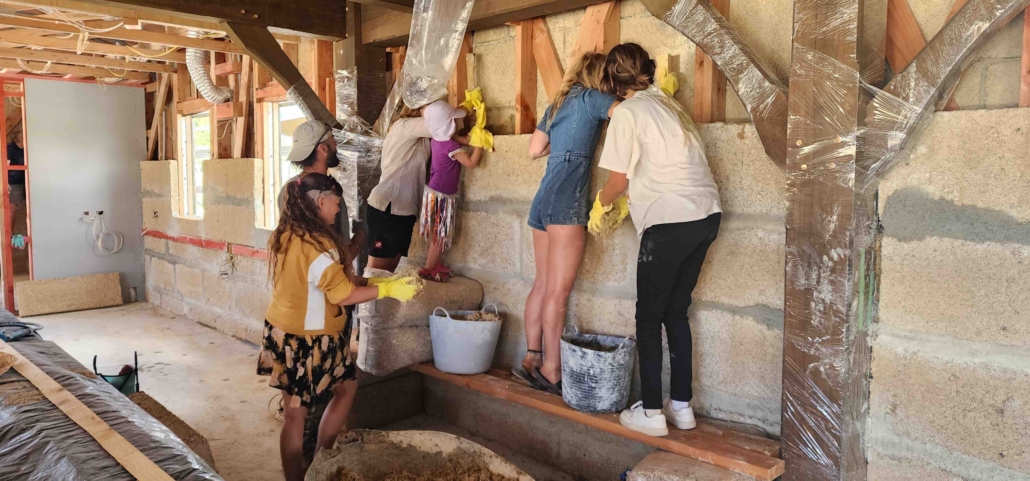
ABOVE: Willing workers installing hempcrete panelsABOVE: Getting the whole family involved – hempcreting the Common House
Cohousing in Aotearoa NZ
Cohousing in Aotearoa is still finding its feet, but the momentum is growing as more people realise the benefits of living in community. Pioneering projects like Earthsong (32 terrace homes and apartments in Auckland) and Toiora (21 passive homes in Dunedin) have shown what’s possible, but many other initiatives still struggle with the usual roadblocks – funding, land access, and red tape. Despite these challenges, the desire for a more connected, sustainable way of living is stronger than ever.
“We are now expanding our horizons to support other communities with their plans to create sustainable, alternative housing solutions,” Simone says. Mōhua Ventures has an experienced, professional team that can help with understanding project feasibility, project management, and community building. “We would love to hear from other communities we can support.”
Who lives here?
Residents come from diverse backgrounds and life stages. For Kirsty and Duane, the desire to explore alternative education for their two children led them to cohousing. Recognising the need for community support in their unschooling and life learning approach, they found Tākaka Cohousing to be the perfect fit. “We all live such a rich life,” says Kirsty, highlighting the benefits of a safe, supportive environment where children thrive and connect with people of all ages.
“The kids are constantly playing with their friends, are safe to walk, bike ride, and run around the neighbourhood without any worries about cars,” she says. “They’re learning and connecting with everyone all the time and have developed some amazing friendships, not just with the other children, but also other adults, while gardening or attending working bees. Their contribution is valued, and their opinion is considered.”
For some, the location is the biggest drawcard. Golden Bay is known for its beautiful landscapes bordered by two National Parks, for the sacred waters of Waikoropupū Springs, and its friendly and creative community.
“It’s the ease of access,” says resident Mazarine Fitzgerald, “to be able to connect with yourself, and nature, and the land.” For her, what makes Tākaka so special is also the “sense of community, real friendship and belonging, and all the wholesome events that happen here.”
ABOVE: Residents Mazarine Fitzgerald (left) and Kate Burness (right)
Shared facilities and gardens
The Common House is central to community life, hosting everything from social gatherings to morning dance sessions. It offers shared laundry facilities, a meeting space, kitchen, extra storage, a bedroom for guests, and hosts monthly meetings and potluck dinners.
Gardens are another shared resource, allowing residents to grow and share produce, and reduce their reliance on external sources. “We get together for working bees, we plant, weed, and harvest food,” says Simone. “I love it because I’m learning so much about gardening. Doing it together lightens the load and benefits more than just yourselves, and the kids are growing up knowing where yummy fresh food comes from.”
Tākaka Cohousing is more than just a housing development – it’s a community that embodies the values of connection, collaboration, and environmental stewardship. For Simone and many others, it represents a new way of living that aligns with their principles and their vision for a better future. With its blend of shared resources, healthy homes, and a supportive social dynamic, Tākaka Cohousing is proving that the future doesn’t have to be a solo journey – it can be a shared experience.
ABOVE: Sharing gardens reduces the load for all, while increasing the amount of produce to share. Residents, left to right: Phoebe Fulton, Mazarine Fitzgerald and Deb Rolston
Hannah Schenker is a freelance writer, proofreader, and team assistant at Mōhua Ventures. She’s also mama to a beautiful five-year-old, living a life rich in family and creativity.
https://organicnz.org.nz/wp-content/uploads/sites/2/2025/03/DJI_0169-scaled.jpg16002560membershiphttps://organicnz.org.nz/wp-content/uploads/sites/2/2024/09/OrganicNZ-2024-Masthead.pngmembership2025-03-27 14:34:272025-03-28 12:23:38Living Better, Together
Sarah Smuts-Kennedy has dedicated her life to cultivating change – not just in the soil, but in the way we grow, learn, and connect to the land. From her early days as an artist to becoming an advocate for biology-first regenerative horticulture practices, she has helped reshape how we view the potential of food production in our cities and its capacity to heal the soils we grow in.
Sarah shares her transformational journey, the challenges and triumphs of founding For the Love of Bees (FTLOB), their model farm OMG and the Earthworkers Hort 101 educational pathway.
We hope you enjoy this free article from OrganicNZ. Joinus to access more, exclusive member-only content
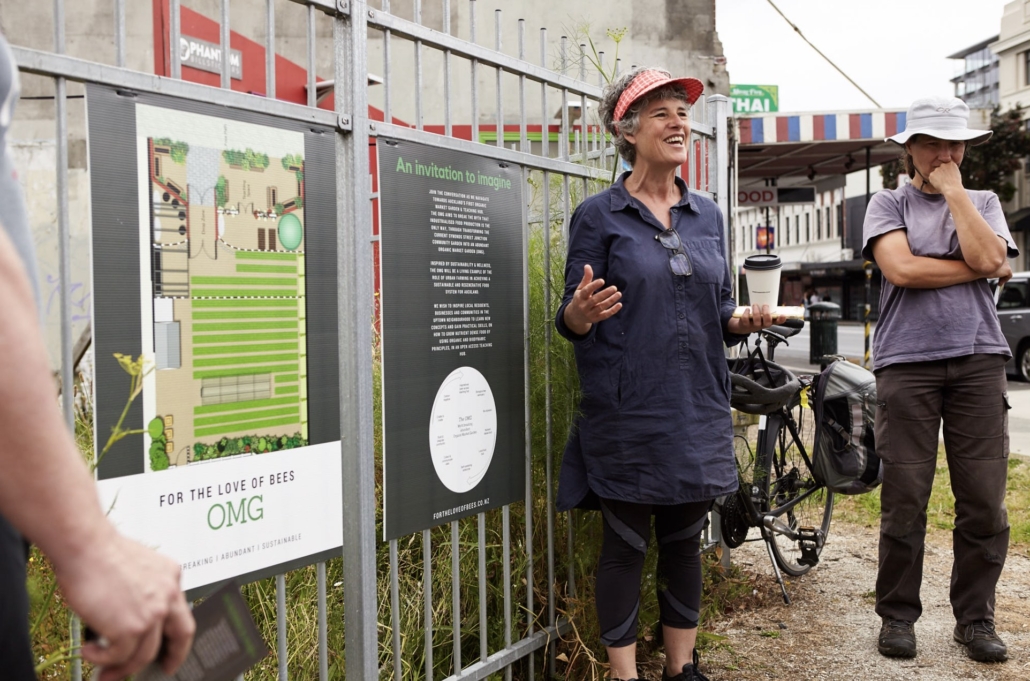
ABOVE: Sarah Smuts-Kennedy, establishing interest in the OMG farm in central Auckland, 2017
Tell us a bit about your background, Sarah. You’ve had quite a diverse career journey.
I’ve had an unconventional path, to say the least. I was an actor for over 20 years, from the ’80s through to the early 2000s. In the early 2000s I moved to Australia and became an artist and in 2005 I got to travel to India and exhibit my art in New Delhi. That experience really changed my perspective on the world. I began to use my art practice to explore the environmental issues we were facing, like deforestation and coal mining in Australia.
By 2010, I realised that my art wasn’t having the kind of impact I wanted. I was highlighting problems but not providing solutions. So, I decided to make a shift. I enrolled in a Permaculture Design Course at the same time I began an Master of Fine Arts and started working with biodynamic practices, committing myself to learning how to regenerate land I had just moved to which we named Maunga Kereru. I wanted to focus on solutions and find ways to share these practices with others.
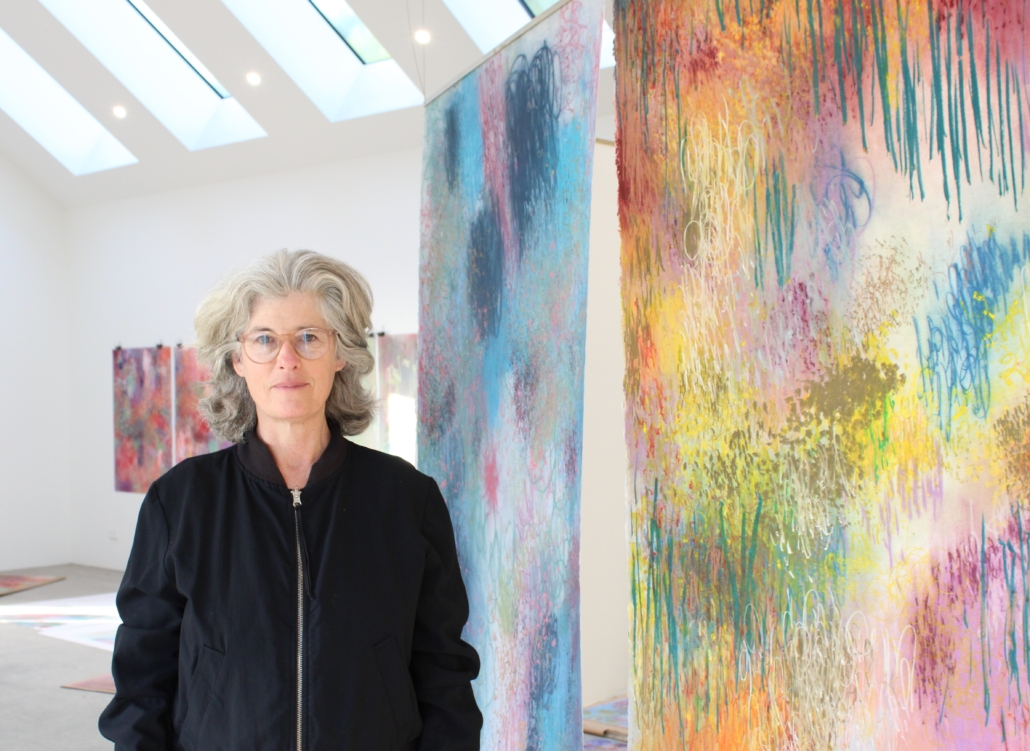
ABOVE: Sarah in her studio at Maunga Kereru, 2023
You’ve had quite an impact in the regenerative urban farming community. How did For the Love of Bees and Earthworkers come to be?
In 2014, I worked on a collaborative artwork called ‘The Park’, which aimed to bring bees into the city and encourage people to engage with their local food sources. Through this project, I connected with Daniel Schuurman, who introduced me to the idea of using fungi to improve plant health.
I realised that while art could bring attention to environmental issues, it was through practical action that real change could be made. This led to the creation of For the Love of Bees, a project focused on reimagining urban environments as safe spaces for bees. We wanted to build a community that would prioritise biology-first regeneration horticulture. Over the years, that vision grew into Earthworkers, an educational platform designed to equip people with the skills they need to regenerate the land and grow food sustainably.
To date, over 200 people have graduated from Earthworkers, many of whom are now working professionally in the sector, spreading the knowledge they’ve gained through workshops and projects of their own.
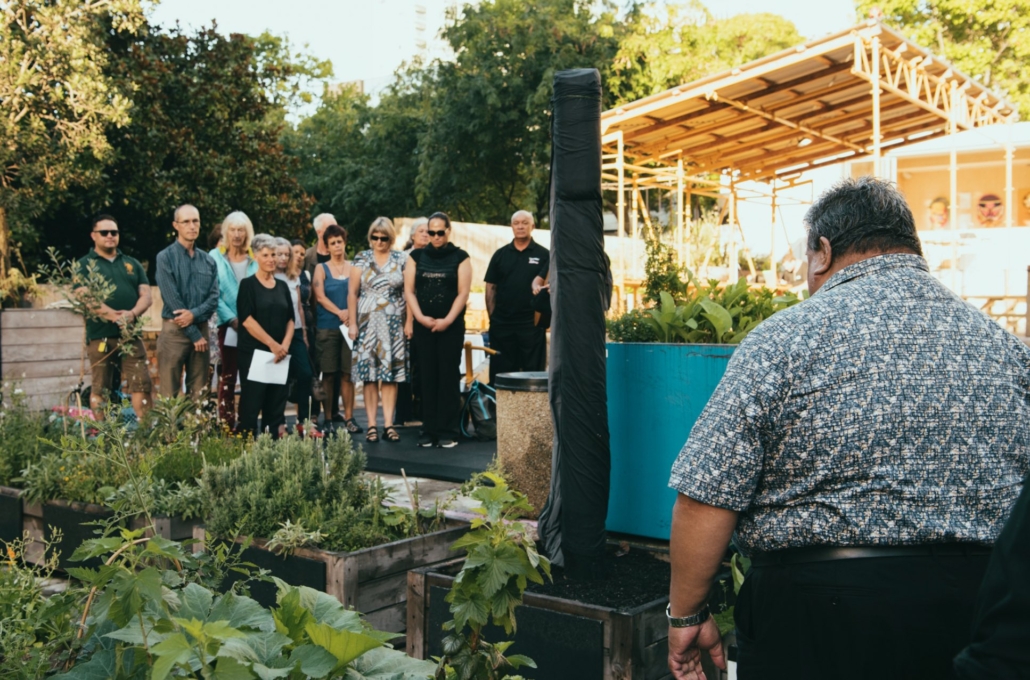
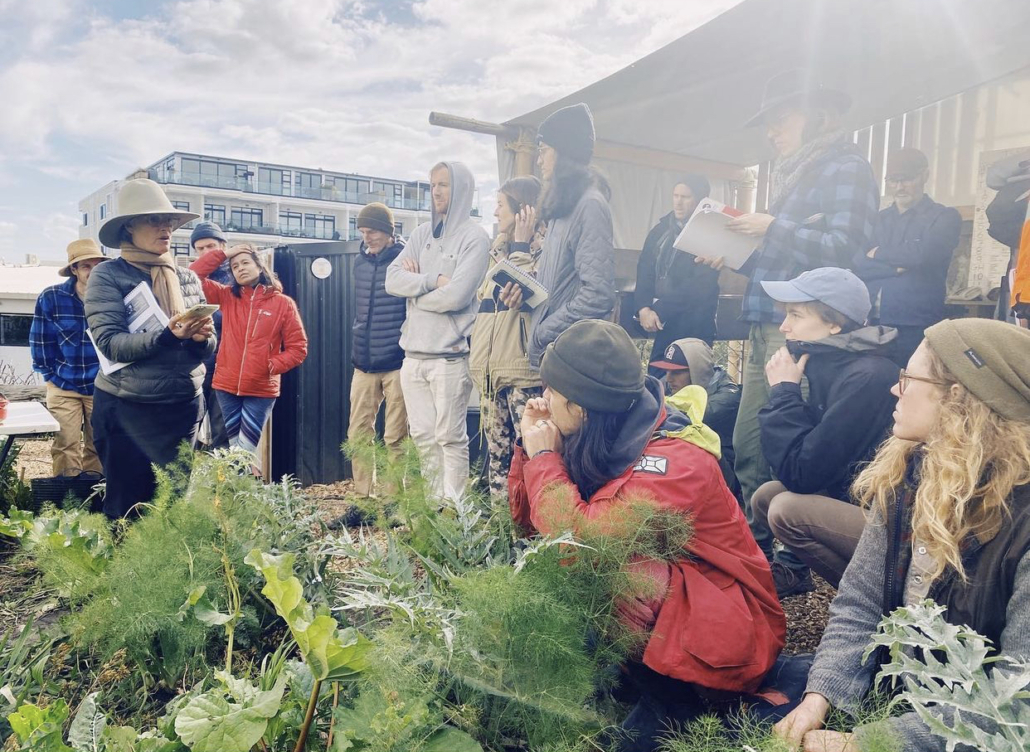
ABOVE: Pōwhiri for the Rongoā gardens at Wellesley St, central Auckland, pre OMG (2017)ABOVE: Sarah (at left, wearing a hat) with Earthworkers participants at OMG (Organic Market Garden) in 2021
What led you to focus on education and mentorship in the agricultural sector?
I’ve always believed in learning from those who are actually doing the work. There’s so much theory out there, but hands-on experience makes the difference. After taking various courses and learning from experts like Graham Sait and Jodi Roebuck, I realised that no one was offering an educational pathway that combined learning with ongoing mentorship.
When you’re starting out in regenerative farming, so many questions arise in the field. Without proper support, it’s easy to fall back on old habits or resort to quick fixes – like pesticides or even organic fertilisers that may not always benefit the ecosystem as a whole. That’s why we integrated post-course mentoring into Earthworkers Hort 101.
The idea is that students don’t just leave with knowledge; they have a community to lean on as they continue to learn and grow. The mentorship component ensures that they implement the practices and make decisions that prioritise soil health—the foundation of any regenerative system.
ABOVE: Left – Sarah Smuts-Kennedy at Maunga Kereru, which she describes as a syntropic research gardening project. Right – Sarah teaching at an event at Solstice Organics, Whenuapai, organised by OrganicFarmNZ in February 2025
What makes Earthworkers Hort 101 different from other agricultural courses?
Our course is built around a biology-first approach to regenerative farming. We focus on soil remediation and fostering healthy ecosystems as the foundation for sustainable food production. Biology-first means prioritising the health of the biological engine of the soil, which leads to healthier plants and greater economic resilience for growers.
But it’s not just about theory – it’s about learning through doing. Our five-day intensive course is split between a deep dive into soil science in the classroom, and hands-on fieldwork. We teach everything from the microbial world and mineral cycles to soil testing and plant health monitoring. In the afternoons, we take these concepts into real-world settings – farms, community gardens, or home gardens – where students see regenerative systems in action. We teach on model farms that actively use the principles we promote, because seeing is believing. We teach people to investigate their own site’s condition and only make the amendments it needs, with a less-is-more approach.
Most importantly, after the course ends, we don’t just send students on their way – we provide ongoing mentorship. Our alumni network has become an incredible resource, with experienced graduates mentoring new students and sharing their knowledge. This sense of community is one of the most valuable aspects of the programme.
ABOVE: Sarah (centre in pale grey) and participants in Earthworkers 101 at Kaicycle, Pōneke Wellington, 2021
“True learning happens in the field, side by side, hands in the soil.” – Sarah Smuts-Kennedy
Why do you believe that food biology-first regenerative production is key to addressing environmental challenges?
Biology-first regenerative agriculture is one of the most powerful tools we have to combat biodiversity loss and heal farm ecosystems. It restores soil health, which leads to better food production and resilience against climate extremes.
We see the results firsthand – year after year, crops thrive, yields improve, and produce lasts longer due to higher nutrient density. This means healthier food for consumers and fewer pesticide residues, which is a growing concern for many. Farmers want to grow better, but they face barriers: time, money, and the risk of change. That’s why education and support are critical. We’re now seeing larger-scale growers becoming interested in regenerative techniques, and we believe it’s important to offer a locally supported pathway that harnesses the knowledge of their own communities.
ABOVE: Sarah teaching her neighbour from Kauri Ora, February 2025
What’s next for you and For the Love of Bees?
Separating the farm (OMG) from the Earthworkers educational pathway was a tough decision, but it’s allowed us to focus fully on expanding Earthworkers. We want to develop resources to help people learn how to regenerate their land, no matter where they are, and support our alumni who are expressing a desire to train to be regenerative agronomists like Daniel.
I get excited seeing how our alumni continue to innovate and inspire others. We’ve built a strong community, and by supporting each other, we can keep growing this movement. Ultimately, my goal is to keep learning, keep teaching, and keep building a world where people are more connected to their land and food. If we can do that, we’ll be well on our way to healing both our landscapes and our communities.
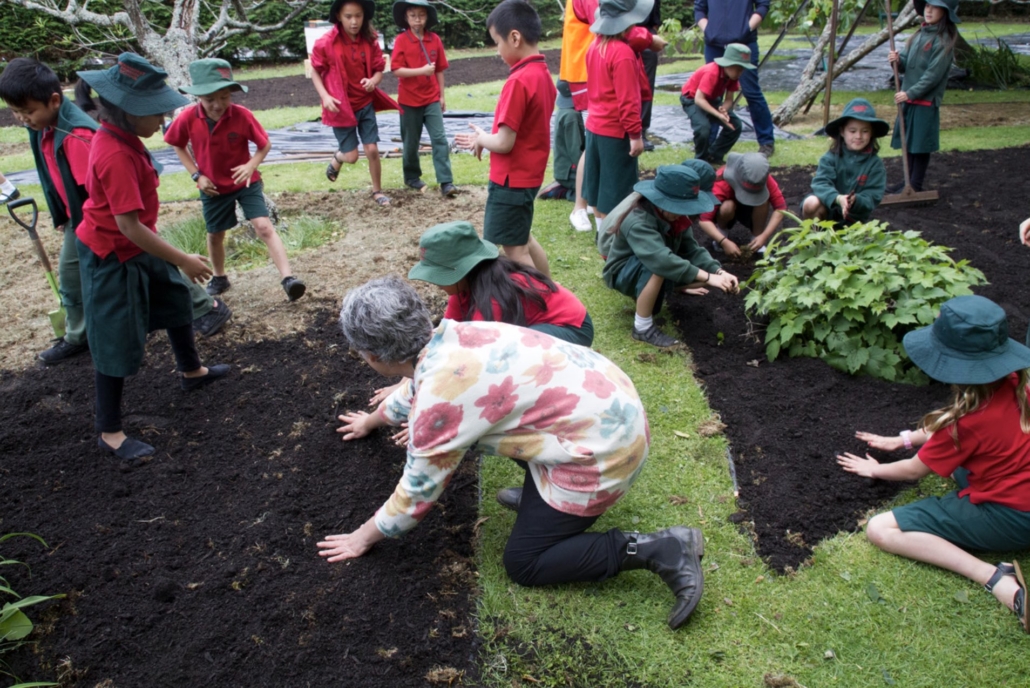
ABOVE: Sarah with school children in Auckland at Highwic Historical House. This was a pasture painting project, in collaboration with Auckland Council, Enviroschools, Parnell Rotary, and Newmarket and Parnell primary schools.
Any final thoughts on teaching and learning?
It has always been important to me that teachers practice what they teach. While I am not a commercial grower, I have spent the last 15 years deeply immersed in regenerative growing. Maunga Kereru, my 10-acre property just 45 minutes north of Auckland, has served as both sanctuary and laboratory—a place where mistakes have become lessons, and experiments have shaped my evolving understanding of ecosystems.
One of my greatest teachers has been the land itself—specifically, a 400-square-metre food forest that I regenerated from an engineered, compacted clay driveway. Over 15 years, this hard clay has transformed into the heart of food production at Maunga Kereru, providing evidence that even the most degraded soils can be revived through thoughtful interventions and design.
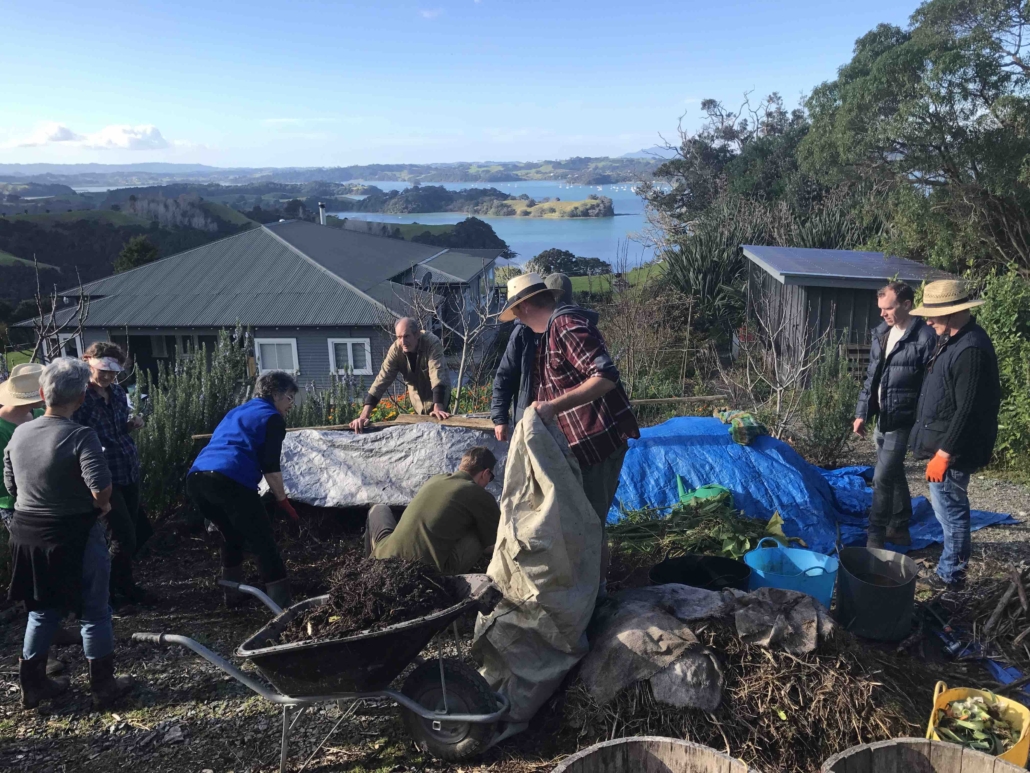
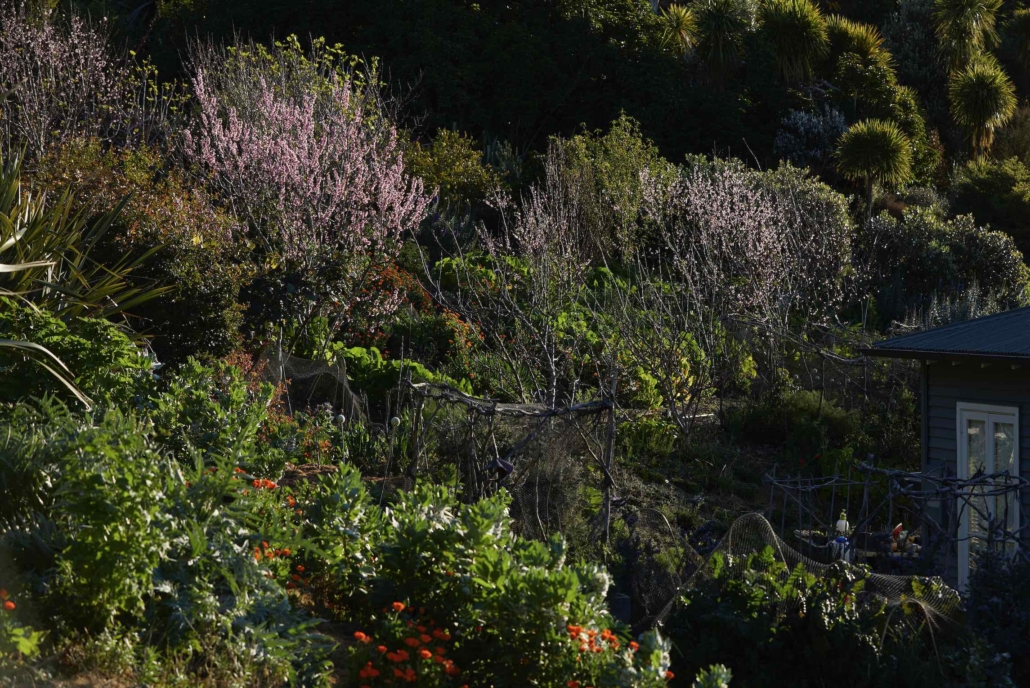
ABOVE: Photos from Sarah’s land, Maunga Kereru, Mahurangi West. Left to right: establishing compost, working bee, spring blossom amidst lush growth
I began learning how to teach here—first with my WWOOFers, then through workshops with the biodynamic community, and later with the FTLOB and OMG communities. For the past eight years, I concentrated my teaching at the FTLOB OMG farm, but my systems were always tested and refined here at home. More recently, I’ve returned to teaching at Maunga Kereru, where students can see permaculture, biodynamic, syntropic, raised beds, and traditional horticulture integrated side by side.
My knowledge is valuable, but I wouldn’t feel confident teaching Earthworkers Hort 101 without Daniel’s 40-plus years of experience as a grower and agronomist leading us. I am still a student, and each time I participate in an Earthworkers course, I integrate more complex ideas into my knowledge base. As Daniel always says, we are all learning together.
We invite the growers who host Earthworkers Hort 101 on their farms to run modules, and we encourage students to bring their own experiences into the conversation.
After all, true learning happens in the field, side by side, hands in the soil.
ABOVE: Levi Brinsdon-Hall, Sarah Smuts-Kennedy and friend at the first working bee at OMG, 2018. Photo: Aaron McLean
Earthworkers Hort 101
In 2025 we at the FTLOB organisation are dedicating our focus on creating an educational pathway that will allow growers to journey with us from beginners to agronomists.
The Earthworkers Hort 101 March course in Kirikiriroa/Hamilton was a huge success.
With two more courses this year, growers will be able to advance their training and benefit from the ongoing post-course mentoring programme.
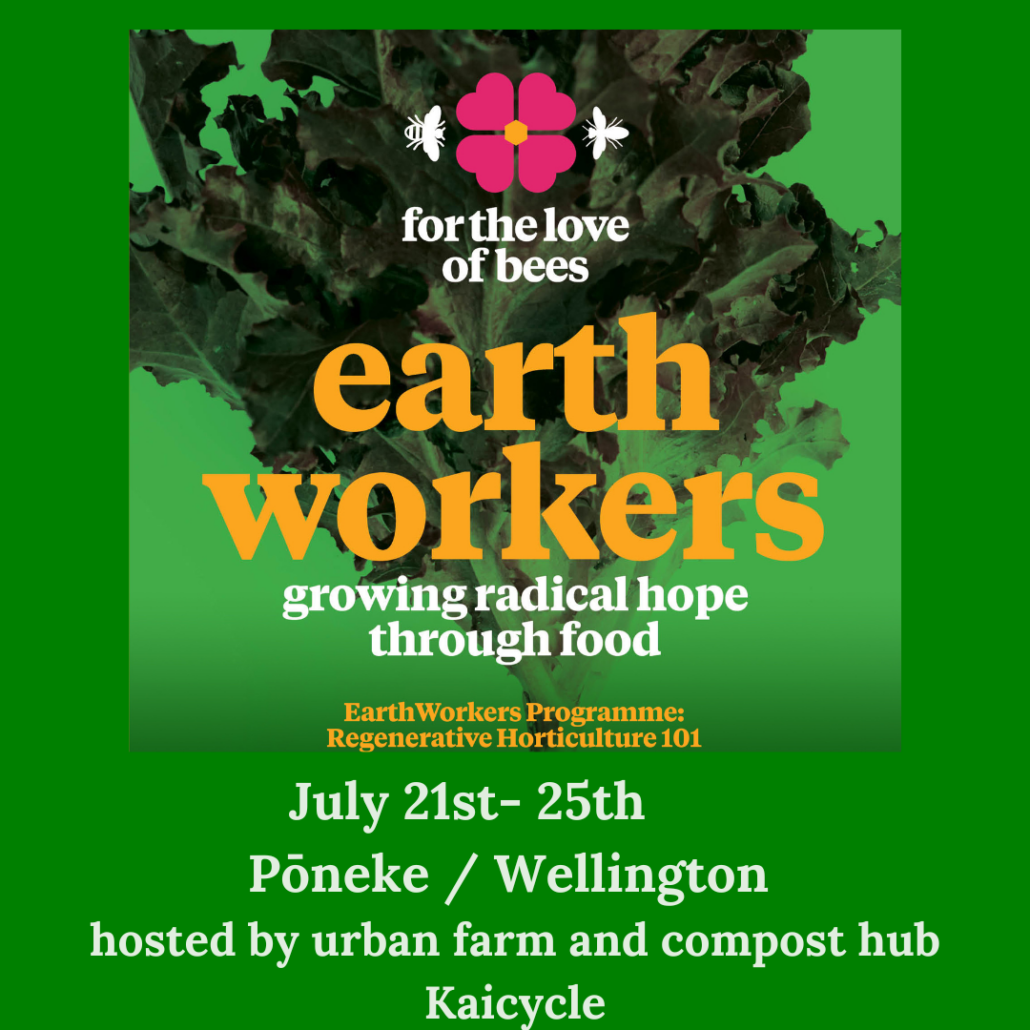
COMING UP: Earthworkers Hort 101, 21–25 July 2025, Pōneke/Wellington
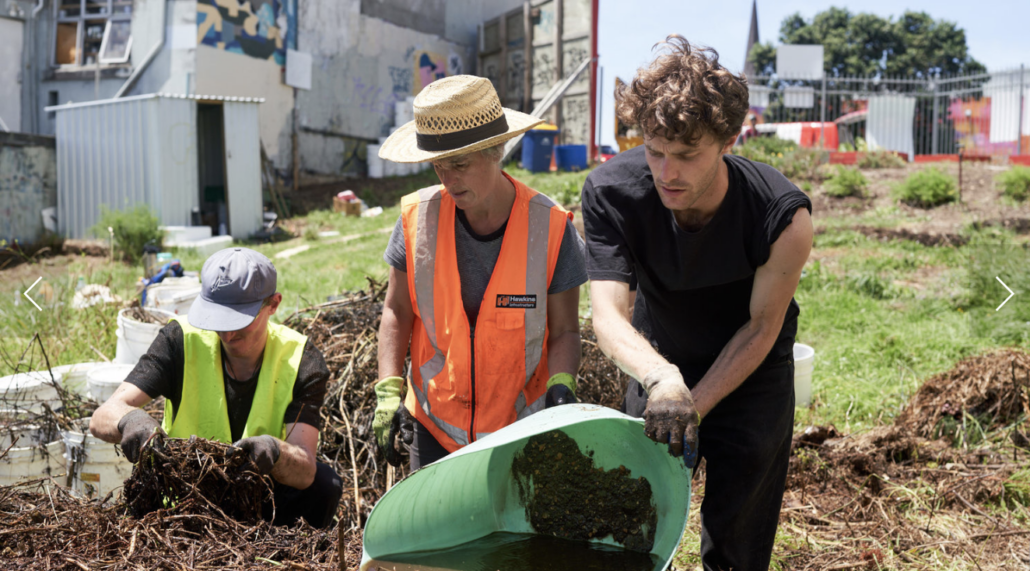
We are thrilled to be returning to this urban farm and community compost hub that hosted us four years ago, and being able to contribute to the region’s growers biology-first regenerative methods.
As he deepens his knowledge of organic and regenerative horticulture and the links with soil, food and health, Chris McIntosh has found his life journey coming full circle.
We hope you enjoy this free article from OrganicNZ. Joinus to access more, exclusive member-only content
Seeds planted in childhood
Raised on his grandparents’ farm, Chris McIntosh had a childhood steeped in traditional practices. “They cooked everything from scratch, preserved food, and had animals,” he recalls. His grandfather, a market gardener from Holland, unknowingly planted the seeds of horticulture in him. These experiences became his happiest childhood memories and set the foundation for his later passion for growing food.
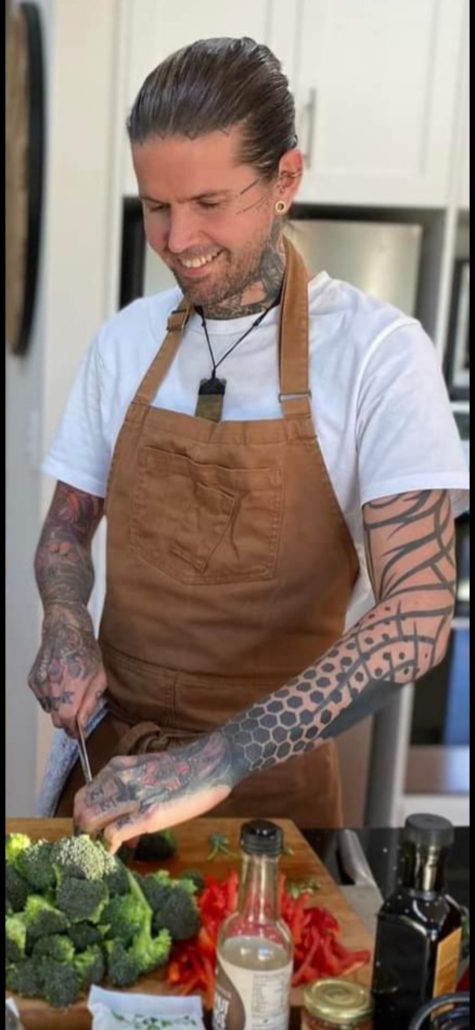
As a chef, Chris’s approach to food was always health-driven. “Most chefs focus on flavor. My first question is, ‘Is this healthy?’”
Health challenges forced him to scrutinise ingredients and their sources. “When you start asking where food comes from, it becomes pretty scary.” This curiosity and necessity drove his journey into horticulture.
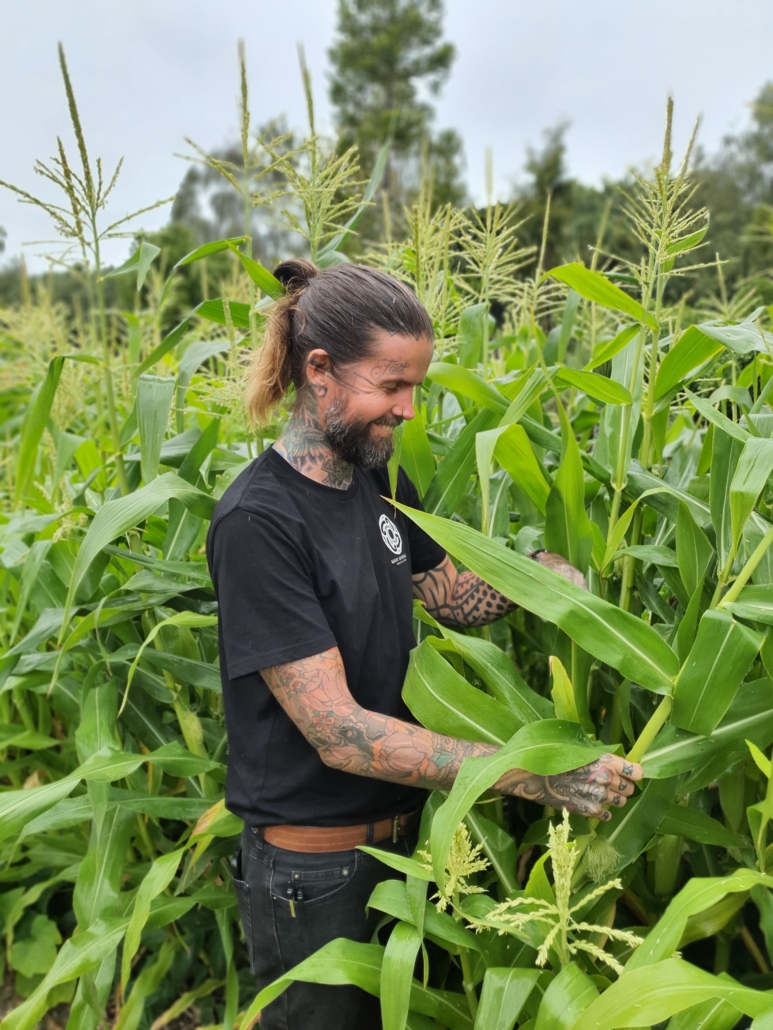
ABOVE: Left – Chris is well pleased with the corn crop at Ethos in January 2025. Photo: Wade Aukett, Anglican Action Right – Chris in the Ethos kitchen
Starting with Earth Stewards
Chris found the culinary industry to be a toxic environment, so he left, and took a leap of faith. He had no job but had always dreamed of starting a farm. A friend introduced him to Warwick Hutchinson, who offered him land to begin Earth Stewards, a certified organic urban farm project in Hamilton inspired by North American regenerative farming pioneers like Curtis Stone and Jean-Martin Fortier.
“I approached the farm with methods I learned online,” Chris explains. But the labour-intensive practices of broadforking and double digging weren’t sustainable. He pivoted to no-till horticulture, laying heavy compost directly on the soil, which worked well initially. Over the years of growing Chris has realised that one size does not fit all in horticultural practices.
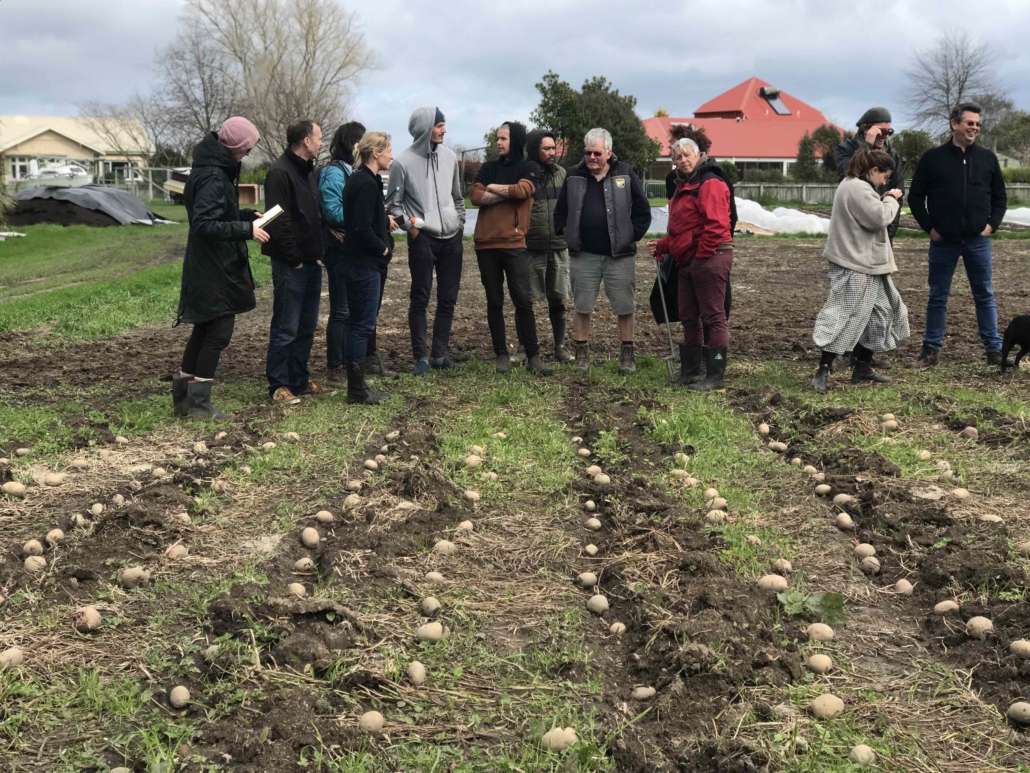
ABOVE: Chris (centre, arms folded) with a group visiting Earth Stewards in 2019. Photo: Sarah Smuts-Kennedy
Ethos: A new chapter
Chris’s second urban farm project reflects his deeper understanding of horticulture. It’s a café called Ethos, located within the social enterprise of Mahi Mihinare – Anglican Action farm, also in Hamilton.
“Starting another growing project gives me a chance to apply everything I’ve already learned. But it also makes me realise there is so much more I want to know about regenerative horticulture.”
From creating his own potting mix to understanding soil chemistry, he emphasises the importance of getting it right from day one. “If you don’t get a good start, you don’t get a good outcome.”
Soil testing has become really essential, something he has learnt from the mistakes he has made which have taught him valuable lessons. “This season for example, one bad input material has affected all our growing beds, and I’ve had to spend months trying to recover from it.” This was bought-in compost that turned out to be very poor quality.
The Ethos project also gives Chris the freedom to explore the connection between food culture and horticulture. “Food culture is born around what we can grow in season locally, not what we can import. I’m trying to find my identity within the food industry and our culture.”
The integration of this new urban farm with the Ethos café means he is focused on using surplus produce to create preserves adding value to their produce. “This way, we make the most of what we grow, while educating customers on seasonal, local food.”
Lessons learned
Key takeaways from Chris’s journey include:
Observation is a horticulturist’s greatest tool: “Nature is always speaking to us. Everything in nature is perfect. Why am I so arrogant to think I know better?”
Holistic thinking: Health, soil, and community are interconnected. “You can’t just focus on one aspect and hope the rest falls into place.”
Importance of systems: “As a chef, I’ve learned the value of good systems. Without them, nothing flows, whether in the kitchen or in the garden.”
Hosting the Earthworker Course
Chris is extending his learning, connection and growth not only by participating in the Earthworker Course, but at the same time by offering to host the course coming up in late March at the Mahi Mihinare conference facilities where Ethos is located.
“I want to be part of the biology-first regenerative horticulture movement and learn from others on this path. I already have a few years of urban farming under my belt, and I recently completed the Nutri Tech Solutions course in Australia with Graeme Sait, but I know Daniel [Schuurman] has more to teach me here on my own site, and I also sense being part of the Earthworker network will be invaluable for growing my confidence and ability as a horticulturist.”
He sees this as an opportunity to refine his skills and contribute to a broader community of regenerative growers. “I hope to support other projects and participate in further education opportunities to become an agronomist like Graeme Sait and Daniel.”
“I’ve spent years practicing, but now I want to understand how the system works beneath the soil. To become a good steward of it.” – Chris McIntosh
ABOVE: Spring garden at Ethos Cafe gardens. Photo: Wade Aukett, Anglican Action
Mentorship: Daniel Schuurman’s support
A key figure in Chris’s journey has been Daniel Schuurman, the lead teacher and mentor for Earthworkers. Daniel has over 45 years of lived experience as a grower, giving him a long-range perspective as an agronomist and consultant. He began supporting Chris during his time at Earth Stewards and has continued to guide him through the challenges of his new project at Ethos.
“Daniel’s depth of knowledge and ability to connect science with lived experience have been invaluable,” Chris says. “His mentorship has helped me navigate complex challenges and saved my arse a few times. Slowly his support is helping me build necessary foundational knowledge. ”
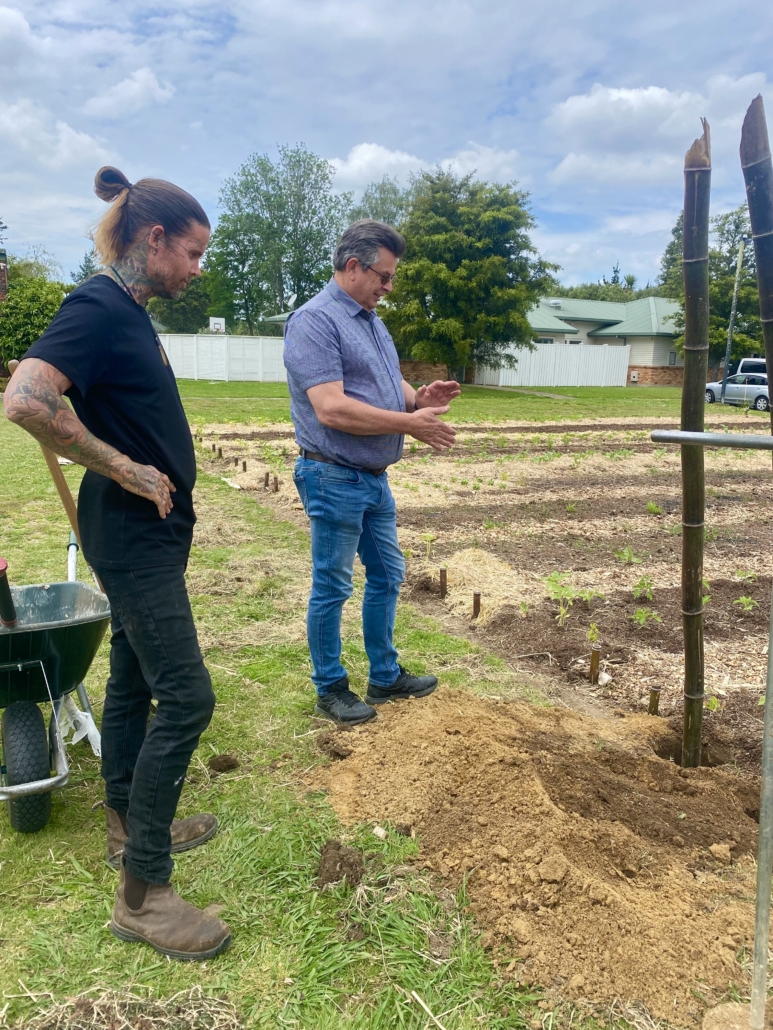
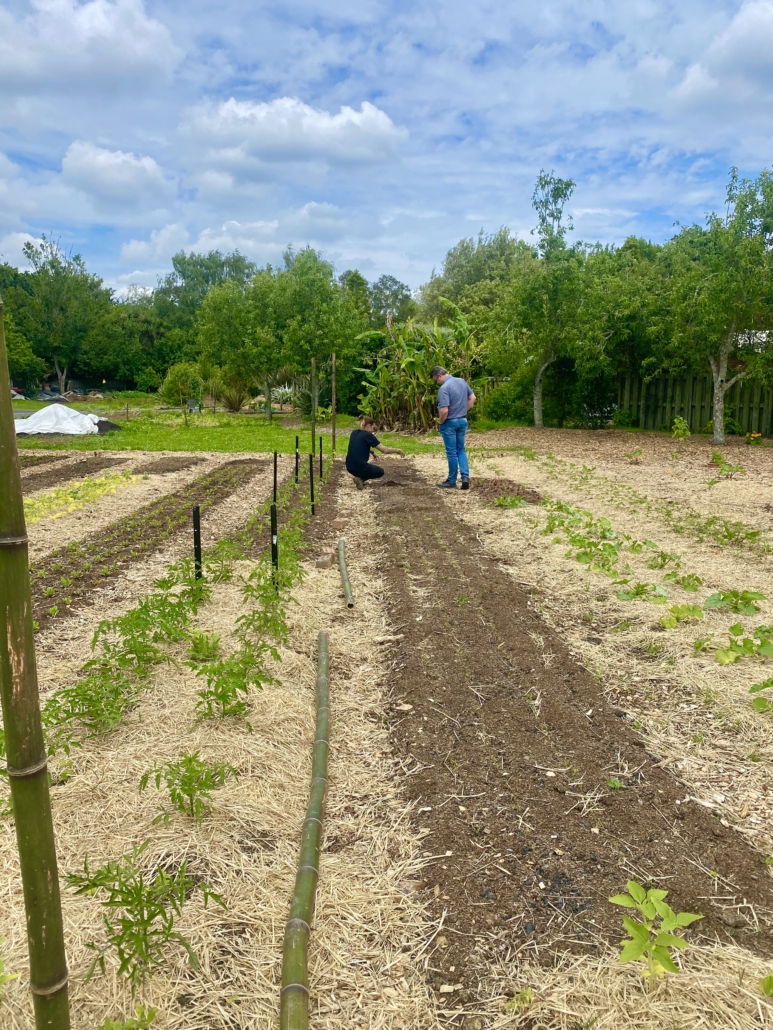
ABOVE: Chris and Daniel at the vege gardens at Ethos discussing how to remedy the impact of the poor quality bought-in compost. Photos: Sarah Smuts-Kennedy
A transformative opportunity
The Earthworker course will be a transformative opportunity to deepen his understanding and connect him with like-minded growers. “I have a million questions a week, and being part of the Earthworker Alumni network will allow me to tap into a growing community of regenerative practitioners who prioritise ecosystem and community restoration.” For more information about the Earthworker Alumni network, see the first article in this series here.
Chris is excited to learn specific practical skills, including:
Making his own biological inoculations for seeds and brewing applications for soil and foliar use.
Understanding the nitrogen cycle and how minerals like phosphorus interact with fungi.
Improving his composting techniques to prepare for creating his own seed-raising mix, inspired by Earth Stewards manager Coral Ramiro.
Developing effective mulching strategies to improve soil health and water retention.
How nutrition affects plant health, impacts on a plant’s ability to photosynthesise, be pollinated effectively, and encourage its relationship with soil microbes.
The five-day immersion into the chemistry and biology of thriving horticultural systems is particularly exciting for Chris. “I’ve spent years practicing, but now I want to understand how the system works beneath the soil. To become a good steward of it.”
Chris feels passionate about making biology-first regenerative horticulture his life’s work. He’s especially eager about the prospect of joining a small cohort of Earthworker Alumni in 2025, participating in a research group that will receive expert coaching to achieve a higher level of mastery. “This is an incredible opportunity to deepen my expertise and contribute to the future of regenerative horticulture.”
The bigger picture
Chris’s vision extends beyond his garden. He dreams of a world where people reconnect with the land and embrace community living. “Everyone has moved away from horticulture because of the materialistic dream of city life. We’ve lost our connection to the very thing that sustains us.”
By hosting the Earthworker course and sharing his journey, Chris hopes to inspire others to return to the land and take responsibility for their food and health. “If we work with nature instead of against it, we can create a sustainable future for ourselves and our communities.”
Sarah Smuts-Kennedy is the founder of For the Love of Bees and OMG (Organic Market Garden in central Auckland), and co-founder of the Earthworkers programme.
Earthworkers Hort 101
24–28 March 2025, Hamilton
Hosted by:
Coral Ramiro and team at Earth Stewards
Brit and James Stembridge of Tomtit Farm
Chris McIntosh at Ethos Café’s new start-up farm
These three farms will showcase regenerative farming practices in action. Participants in the course will learn from these growers who have experience of managing farms and offer models of what’s possible using biology-first regenerative methods.
https://organicnz.org.nz/wp-content/uploads/sites/2/2025/01/20250121_142918-cropped-med-res-scaled.jpg11632560membershiphttps://organicnz.org.nz/wp-content/uploads/sites/2/2024/09/OrganicNZ-2024-Masthead.pngmembership2025-01-23 11:41:062025-01-23 11:41:07From paddock to plate and back again
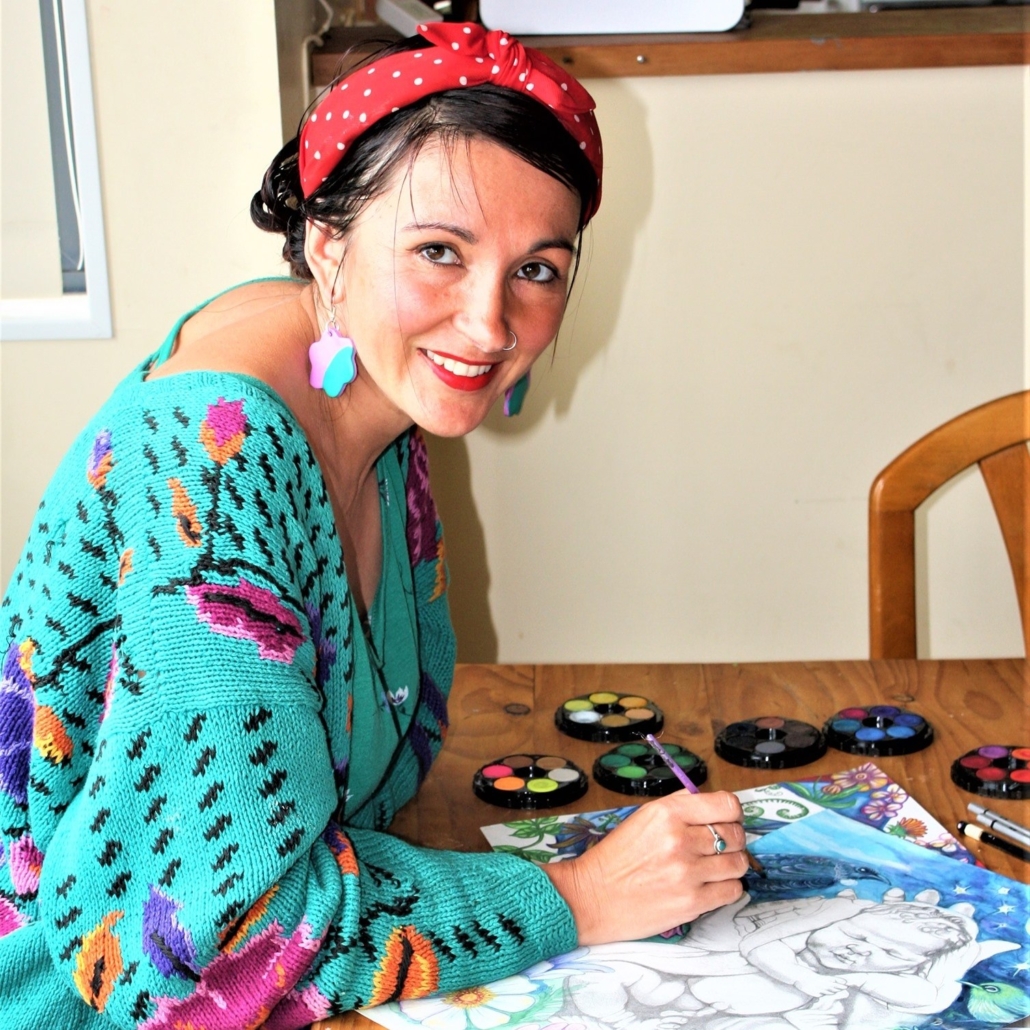
Lenny Prinz and Jodi Collins are next generation homesteaders living in Ōpōtiki, Eastern Bay of Plenty. In 2009, Lenny started as a fungiculturalist: growing mushrooms and cultivating their spawn. Jodi is a potter and artist, committed to growing the couple’s children with the principles of sustainability and child-led learning.
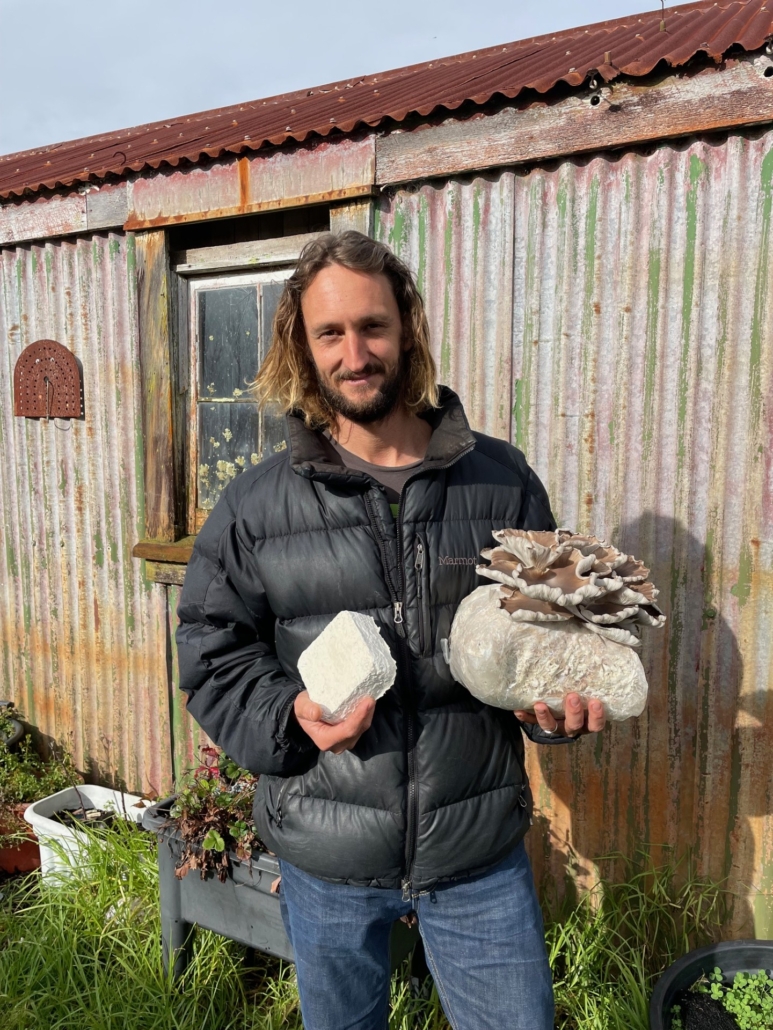
Lenny has expanded the utility of farmed mushrooms by developing compostable packaging using mycelium, as an alternative to polystyrene. Jodi also works using zero-waste principles. In her creative work she upcycles and recycles to produce art with humour and meaning, and more formal pieces.
Nutritional therapist Paula Sharp met Lenny and Jodi at an oyster mushroom workshop, and tells their story here.
We hope you enjoy this free article from OrganicNZ. Joinus to access more, exclusive member-only content
Organic lifestyle
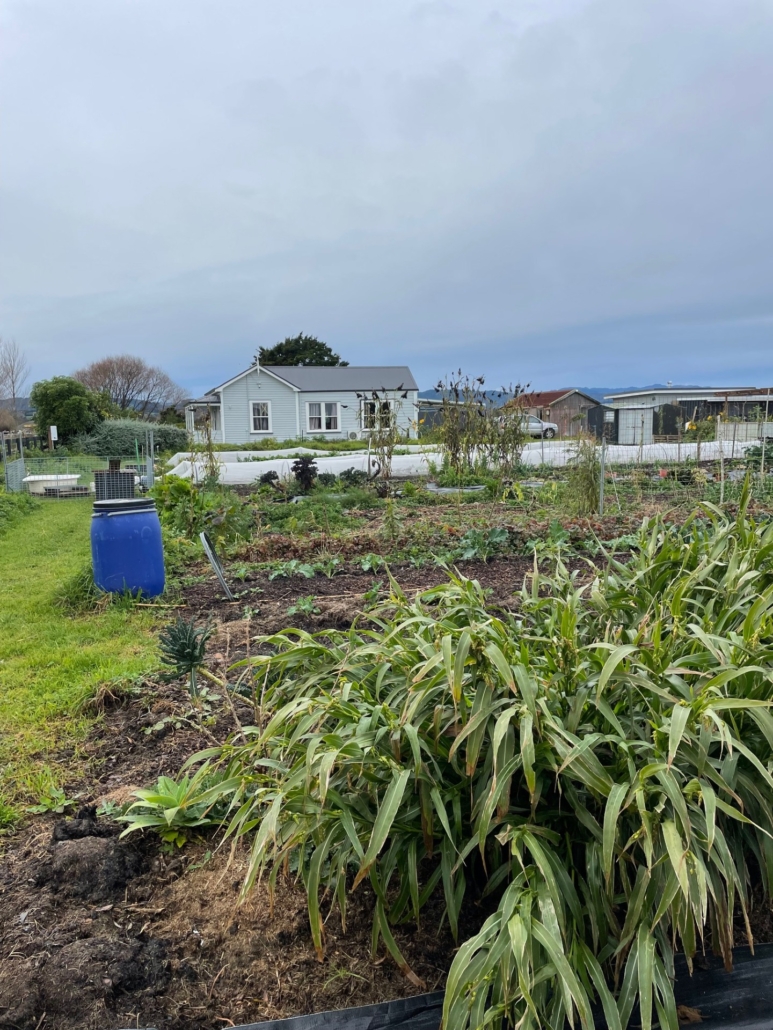
Ōpōtiki, gateway to the East Cape, has become home for Lenny and Jodi’s family. Their homestead was built in 1907 and now boasts a huge spray-free vegetable garden using agroforestry methods. There are ducks, young chickens turning over the compost heap, while mature hens roam and lay their eggs (unpredictably at times) near their mobile coop.
Three generations live here: Lenny’s father, Lenny and Jodi, and their three children, Juliana (10), Albaer (7) and Iver (2). Life is hectic as they balance planting, growing and harvesting with hunting, home schooling, creativity, mushroom cultivation, the science of mycelium, and agroforestry education.
Lenny’s parents emigrated from Germany in 1990 in the wake of Chernobyl’s creeping contamination concerns. They chose to settle in Whakatāne and later Pikowai, near Matatā, in order to provide an organic lifestyle for their family. Lenny, now is his 30s, is doing the same thing for his family. Lenny and Jodi’s ethos is multi-layered: to connect people with the land and growing, to invest in the future of their family and community, and to live a sustainable and honest life.
Jodi is an advocate for homeschooling, and can offer advice for parents and carers in the homeschooling network, or considering being part it.
ABOVE: Left – Jodi at work on her art Right – Some of Jodi’s playful creations
Spawning and supporting
In his small sterile (and mobile) laboratory, Lenny grows mushroom spawn. Fourteen years of experience, previously in Raglan, mean that Lenny is an expert in his field. Pink and grey oyster and native tawaka (poplar) mushrooms are currently his most popular.
It takes approximately 14 days to grow Petri dish spawn to colonised substrate ready to fruit. The substrate is a carrier product (for example straw or sawdust), and it’s colonised when the spider web strands of mycelium grow through it. One of Lenny’s business activities is to send spawn and colonised substrate around New Zealand to different growers. They fruit the mushrooms and sell them or use them within their own businesses.
Lenny is driven to support regional growers, particularly now as many small entities have suffered in the post-covid period. Many business costs are increasing, but Lenny is reviewing how to make his products cheaper and more affordable so they can reach more people and help the survival of small businesses. He also coaches and mentors start-up growers to be fully functioning businesses, teaching people how to grow from spawn to then market mushrooms and/or grow their own spawn for marketing purposes.
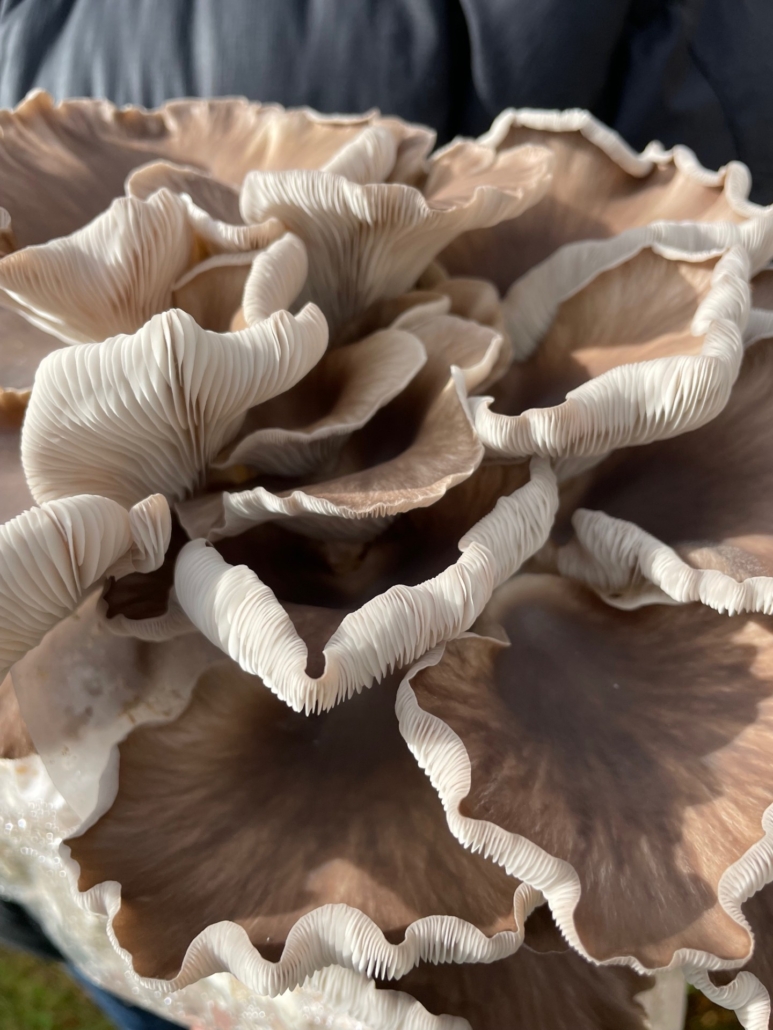
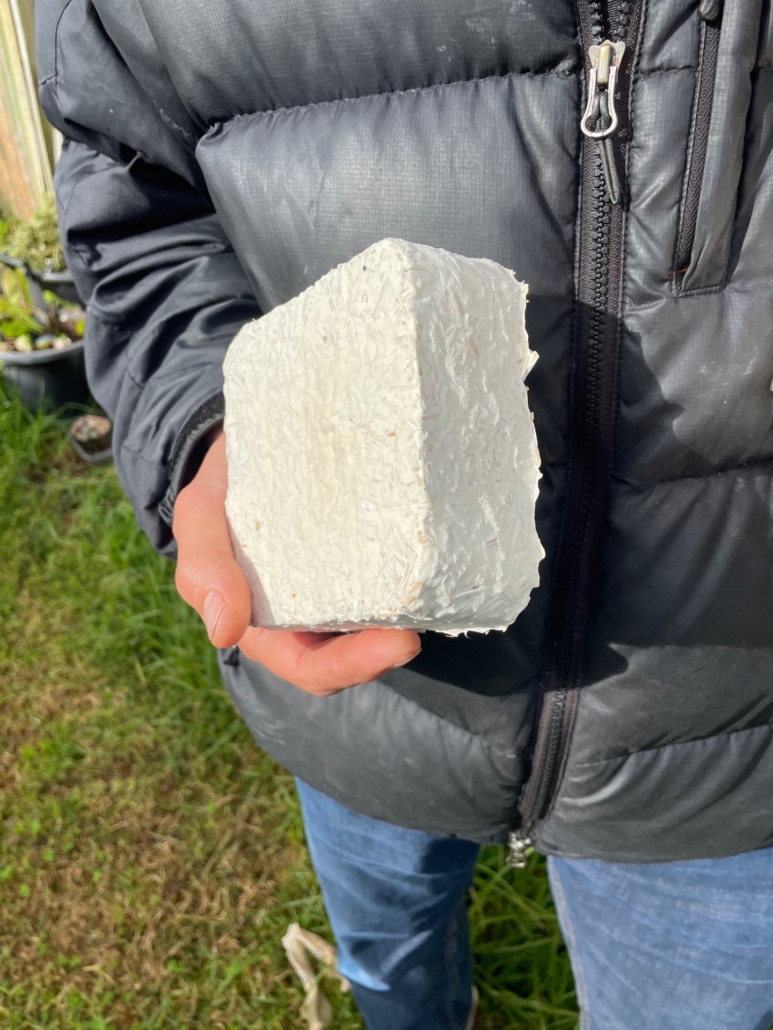
ABOVE: Left – Lenny Prinz with his compostable packaging made of mushrooms, and oyster mushrooms. Right – Close-up of oyster mushrooms.
Native mushrooms
Lenny is successfully experimenting with native edible mushrooms in order to supply spawn or mushroom fruit to the New Zealand culinary market. He spends time foraging, on the hunt for endemic species that he can replicate as spawn, picked from local surroundings. New Zealand’s strict biosecurity laws mean there’s no opportunity to import different mushroom varieties, but this doesn’t faze him in the least. “We just need to eat closer to home. I want to make our native mushrooms available to Kiwis.”
Native edibles that Lenny cultivates besides the tawaka and oyster varieties are the New Zealand native shiitake, pekepeke-kiore (New Zealand lion’s mane), enoki, hakeke (wood ear), garden giants (or wine caps because of their colour), turkey tail and the New Zealand reishi (of the Ganoderma family).
Lenny is interested in the nutritional and medicinal value of mushrooms. His most popular medicinal varieties are turkey tail, reishi and hakeke. Turkey tail is a tough, leathery mushroom that is best brewed as a tea or tincture and supports immunity. New Zealand reishi is renowned for its immune-boosting qualities too and supports sleep. Wood ear or hakeke is used to treat colds, reduce fevers, and to strengthen the cardiovascular system. (If you’re new to medicinal mushrooms, always consult a professional before use).
Soil health, mycorrhiza and carbon sinks
The link between mushrooms and other produce is very clear to Lenny; it’s soil health. Good quality soil produces nutrient-dense vegetables, fruit and animals. Mushrooms, specifically mycorrhiza fungi, have a big part to play in soil quality.
Most mushrooms (button, oyster, reishi etc) live and feed on dead matter, whereas mycorrhizal mushrooms grow in close, symbiotic relationships with the living roots of plants or trees. Mycelium strands of the fungi attach themselves to the root of the host, expanding the reach of the root to absorb and transport nutrients and water to the tree. In return, the tree provides the mycorrhiza with sugars and starches produced through photosynthesis.
We would recognise mycorrhizal fungi as the edible fruiting bodies of mushrooms such as truffles, chanterelles and porcini. There are many more which are not edible. Edible mycorrhiza are notoriously difficult to cultivate, but all grow well in the wild. There is even more magic to this relationship: these fungi act as natural carbon sinks. They can hold carbon produced by the host in their tissues and the surrounding soil. Like biochar, mycorrhizal fungi have a part to play in our carbon solution.
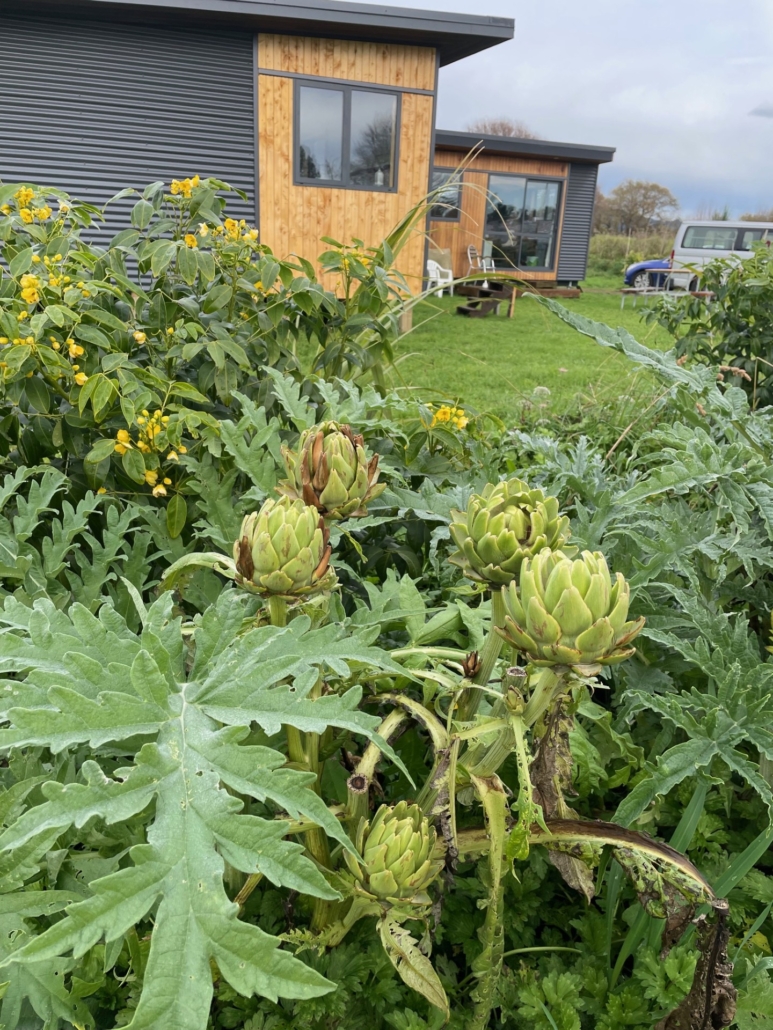
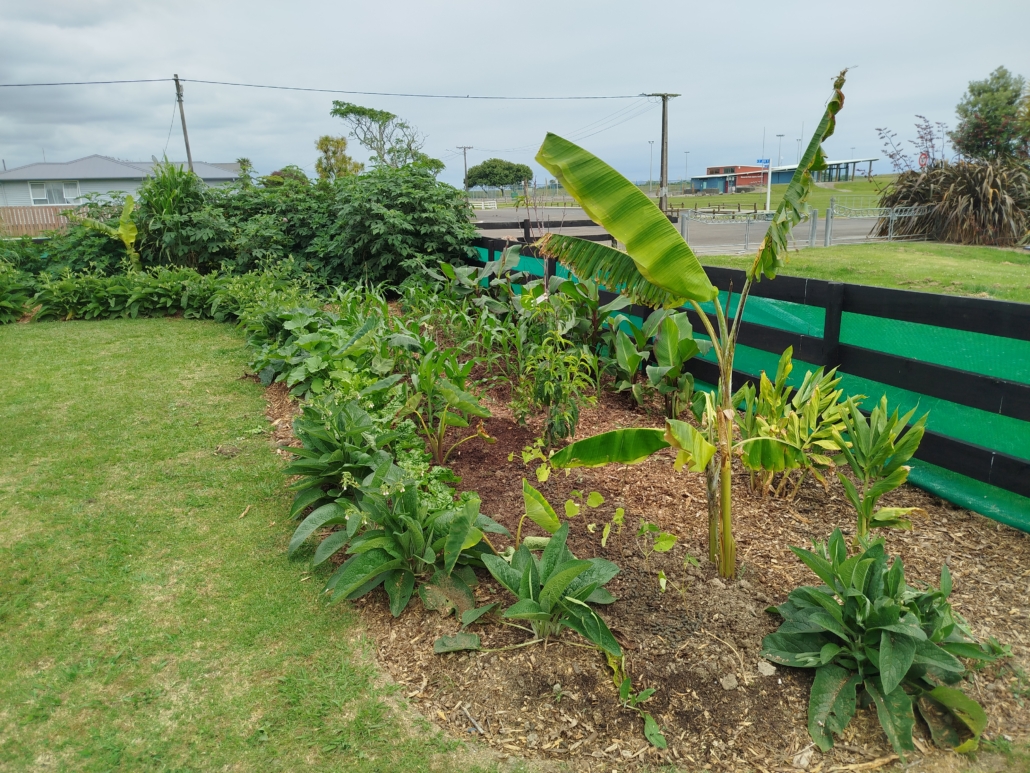
ABOVE: Left – Lenny was involved in the installation of this no-dig vegetable garden at the McKenzie family’s home as part of Te Pātaka Kai a Toi mentorship project
Right – Globe artichokes at Jodi and Lenny’s family farm
Sharing the knowledge
Lenny shares his knowledge as a sustainable gardener and mushroom educator. He supports regional growers, and coaches start-up enterprises to fully functioning businesses.
On his land he runs mushroom growing workshops and shares sustainable gardening tips with curious people. He doesn’t keep secrets around his growing techniques but shares his knowledge and experience so others can try it out in their own gardens or with their mushroom growing. For example, after years of using different activated straw as his growing compound for the mushroom mycelium, he has found a soya and pine pellet mix which is affordable, less time consuming and more sustainable.
Gardening and community food sovereignty
Similarly, he shares his version of food forestry, using his land as his example; it works for him. Lenny and Jodi use a variety of growing practices. They’ve created a vegetable garden using companion planting, organic matter, no-till farming practices and agroforestry (larger plants sheltering vulnerable leafy greens and providing pollinating insect food). And it’s working to keep the soil healthy and crops abundant – last season the kūmara patch produced some tubers weighing as much as six kilos each!
Lenny and Jodi have planted a fruit orchard and sell spray-free seedlings cheaply. They’re always thinking of how to give back to the land and its people. More recently Lenny has worked with Ihi Kura Gym to create a garden supplying food to its members, and with Te Ao Hou Trust to project manage local growing ventures. Lenny is helping to grow growers, using the foundations of food sovereignty.
ABOVE: Left – the beginnings of a food forest at Ihi Kura Gym, as a border around a children’s play area Right – raised beds at Ihi Kura Gym, Ōpōtiki
Compostable fungi packaging
Over the years, Lenny has immersed himself in the science of mushrooms and the various uses for mycelium and mushroom compounds. Perhaps the cap on the top of his fungi is that he’s part of a team spearheading compostable packaging.
As chief technology officer for the company BioFab, Lenny has been instrumental in developing an alternative packaging material made from agricultural waste and mycelium, aimed at replacing polystyrene. This multi-use product can be domestically or commercially composted within 30 days.
BioFab recently located its operations to Australia in order to broaden its reach in the Australasian packaging market. Its mission is ‘to significantly reduce the harm toxic materials are causing to the planet and encourage a world where waste streams regenerate, rather than destroy our natural environment.’ www.biofab.bio/
ABOVE: An example of the compostable mushroom packaging from BioLab
Growing humanity
Perhaps even more important than growing mushrooms, fruit and vegetables is that Lenny Prinz and Jodi Collins are growing humanity. They’re focused on the health and wellbeing of their family, their community, New Zealanders and making change globally. And there’s no doubt this inspiring couple are making a positive difference.
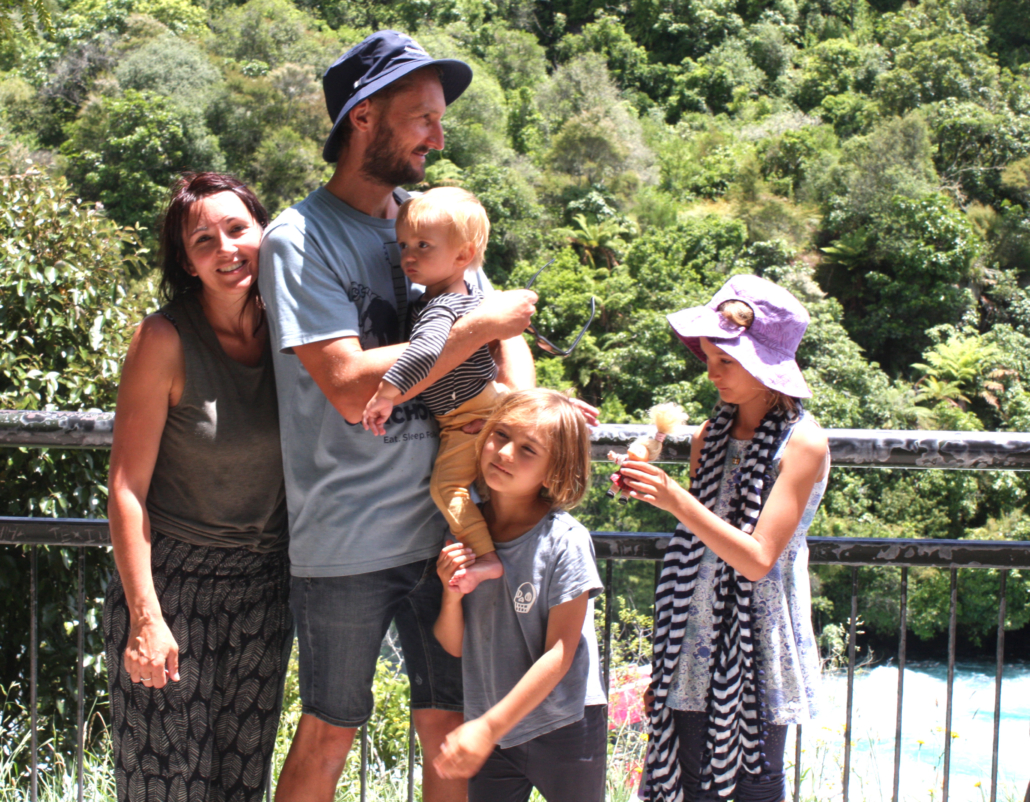
ABOVE: Jodi and Lenny with their children Iver, Albaer and Juliana PHOTO: John Bell
Casing layer: A layer of water-holding material, layered on top of a substrate to promote mushroom growth.
CO2: Carbon dioxide gas is exhaled by mushrooms.
Colonise: Mycelium is grown from one substrate to the next. Once the intended substrate is completely dense with white, it is fully colonised and ready to produce mushrooms or be transferred onto the next substrate.
Culture: A pure mushroom strain.
Flush: When mushroom substrates produce mushrooms.
Fruit-body, fruiting body, mushroom: The edible part of the mushroom
Gills: The underside of the cap, thin lines
Incubation: Period of time between substrate inoculation to mushroom.
Mycelium: This is the bulk of the mushroom; it is a fine root like structure that secretes enzymes digesting material externally.
Mycology: The study of fungi.
Pasteurisation: Process that kills most spores and other non-beneficial organisms in bulk substrate.
Spawn: Sterilised grain or sawdust with a selected mushroom culture grown through it.
Spores: Mushroom ‘seeds’. Tiny microscopic single celled reproductive product that are dropped from the gills of the mushroom.
AUTHOR BIO: Paula Sharp is a nutritional therapist working globally via Zoom to support women’s health, restore gut health and digestion, hormonal balance, skin and hair, sleep, shifting weight and health pre- and post-surgery. www.paulasharpnutrition.com
She is also a guest speaker, giving talks to companies on nutrition and mindset. In London she worked in the organic fruit and vegetable industry, and now she is based in Whakatāne, growing her own extensive spray-free garden.
https://organicnz.org.nz/wp-content/uploads/sites/2/2025/01/IMG_4121cropped-scaled.jpg11862560membershiphttps://organicnz.org.nz/wp-content/uploads/sites/2/2024/09/OrganicNZ-2024-Masthead.pngmembership2025-01-22 11:21:182025-04-03 16:25:43Mushrooming with next-gen homesteaders
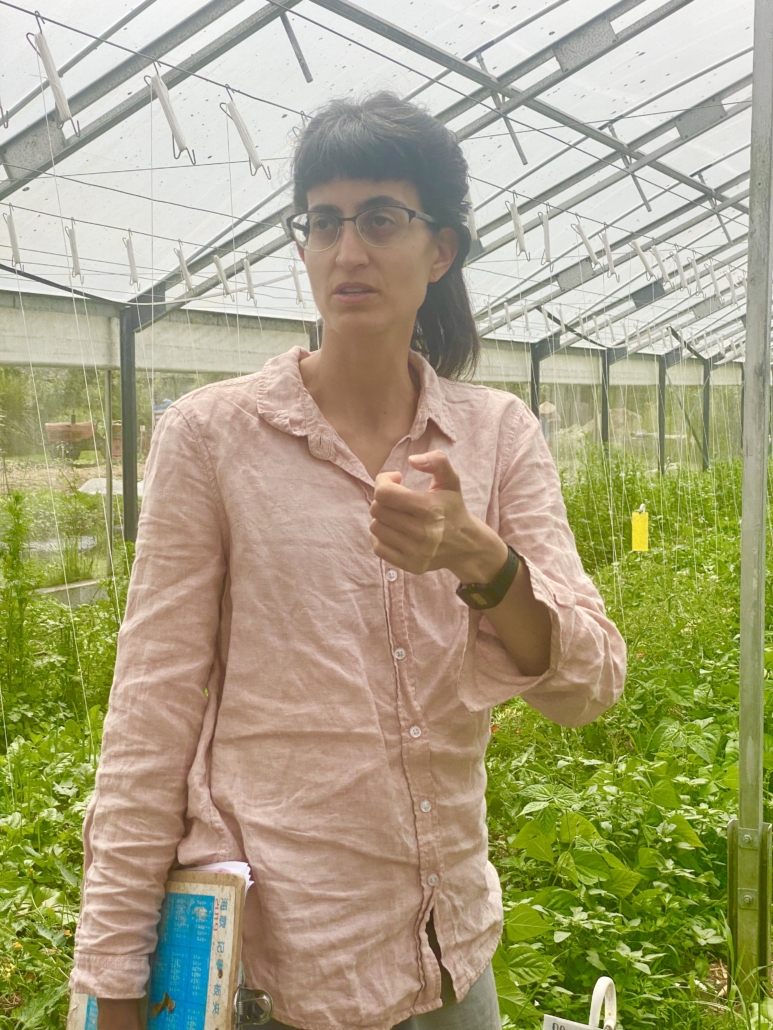
Coral Ramiro is the manager of Earth Stewards certified organic urban farm in Kirikiriroa Hamilton, and an alumna of the Earthworkers Hort 101 programme.
She tells her story to Sarah Smuts-Kennedy.
We hope you enjoy this free article from OrganicNZ. Joinus to access more, exclusive member-only content
Coral’s journey to organic regenerative growing
Sarah began by asking Coral how she became a regenerative grower and how the Earthworkers course helped shape her path.
“My journey into regenerative farming began far from the soil and was an unexpected turn,” says Coral. “I actually trained as an interior designer in Spain, but had to move to London in 2008 after the recession made it impossible to find any work there. It was in London while living in a tiny flat with no access to nature, that I started to notice I was developing a longing for a connection to the outdoors.”
So when the opportunity arose to volunteer at one of London’s educational farms, Coral joined the team.
“I have always been a vegan, passionate about sustainable food systems, so I quickly gravitated towards the growing team, where I discovered a deep sense of belonging with like-minded individuals who shared a desire to create a food system that nourishes both people and the planet.”
ABOVE: Left – polycropping at Earth Stewards; right – Coral Ramiro Photos: Sarah Smuts-Kennedy
Challenges: catalysts for change
But despite her growing passion, she faced challenges breaking into the sector due to a lack of experience. This was a catalyst for Coral and her partner embarking on their big OE (overseas experience), first going to Australia before ultimately landing in New Zealand.
“I completed my Permaculture Design Certificate (PDC) at Whanganui Eco School before I was lucky to secure my first role in the sector at Earth Stewards in 2019, just as the farm was getting off the ground,” says Coral.
During Covid-19 Earth Stewards lost its manager and Coral was encouraged to step up and take the reins. It was a daunting task, but luckily six months later, she was invited to take the Earthworkers Hort 101 course, which proved to be a pivotal moment in her career.
Earthworkers course: valuable learning
“The course really opened doors for me,” says Coral. “It helped me become an informed decision-maker. I need to understand something before I can truly embrace it. The course gave me the base knowledge of why we do what we do, especially when it comes to growing regeneratively and organically. I came away with answers that gave me clarity and confidence in my role as a market garden manager.”
One of the key takeaways for Coral was understanding the science behind regenerative practices, particularly the relationship between soil microbiology, chemistry, minerals, and nutrients.
“It was overwhelming at first. I had a headache for days trying to absorb all the new information, but by the end of the course, I really understood how everything fits together.”
As a creative person, Coral also loved how polycropping allowed her to apply her design skills to farming.
“I get a lot of joy from the colour patterns that appear across the beds over the growing season. We got really excited at Earth Stewards as a team about planning our polycrops, and it gave us a simple way to contribute and learn together.”
“I need to understand the why behind what we do—why we grow in ways to protect the soil and the whole ecosystem” – Coral Ramiro
Supportive network of growers
In addition to the valuable knowledge gained, the Earthworkers course provided her with the opportunity to connect with other like-minded growers.
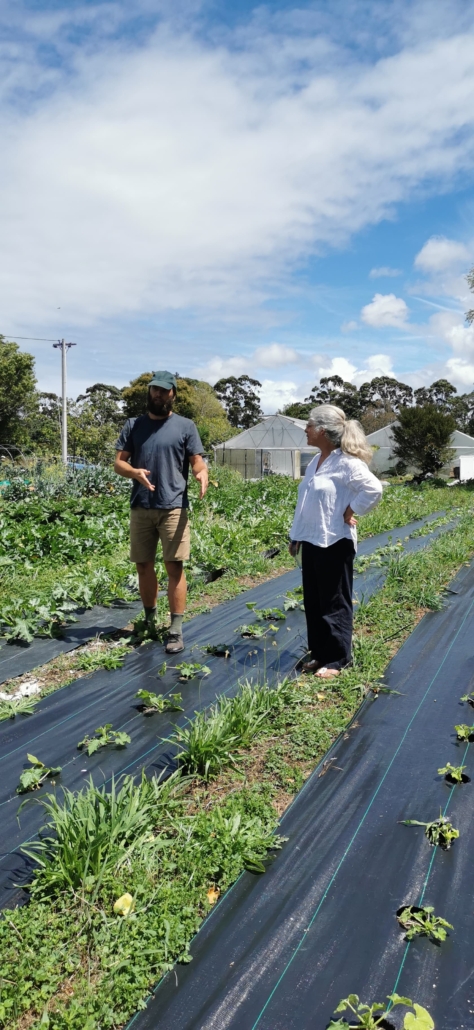
“Through the course, I met Jenny Lux of Lux Organics and Brit from Tomtit Farms, and we’ve formed a lasting, supportive connection. Our farms collaborate by sharing produce, seedlings, and knowledge, and we’ve visited each other’s farms, like Jenny’s in Rotorua. It’s been a reminder that we’re not alone. Being part of a network of like-minded growers makes all the difference, especially in a field where the challenges can feel isolating.”
Coral has found the Earthworkers support network to be crucial for her and the Earth Stewards team, especially when it comes to managing pest and disease pressures.
“Having access to the post-course WhatsApp group has been vital. It’s reassuring to see other growers experiencing the same challenges—it makes you feel better about the difficulties you’re facing.”
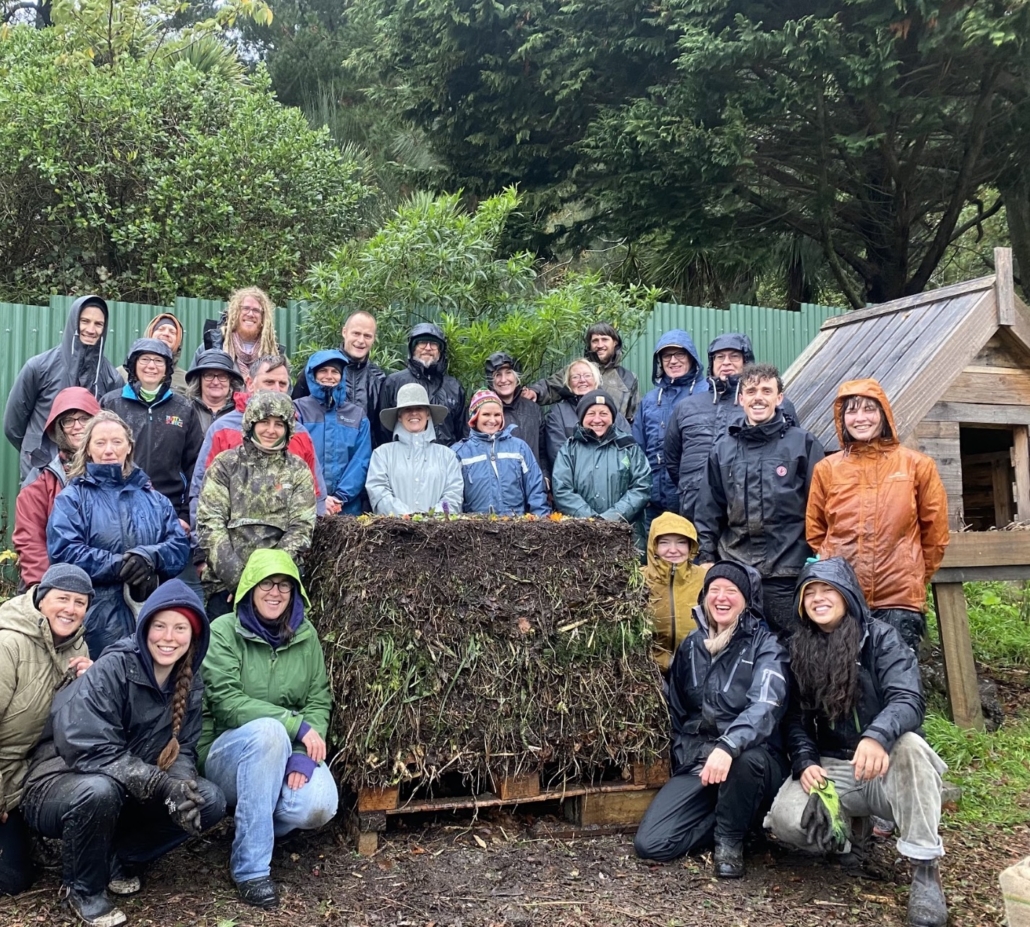
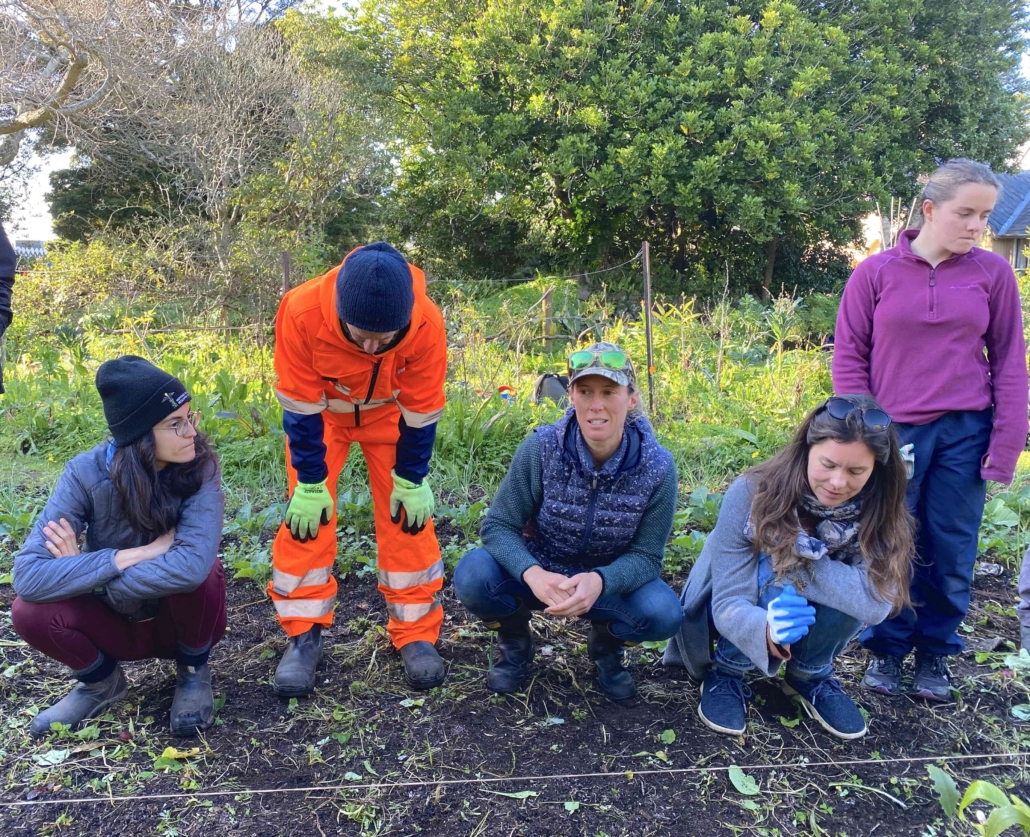
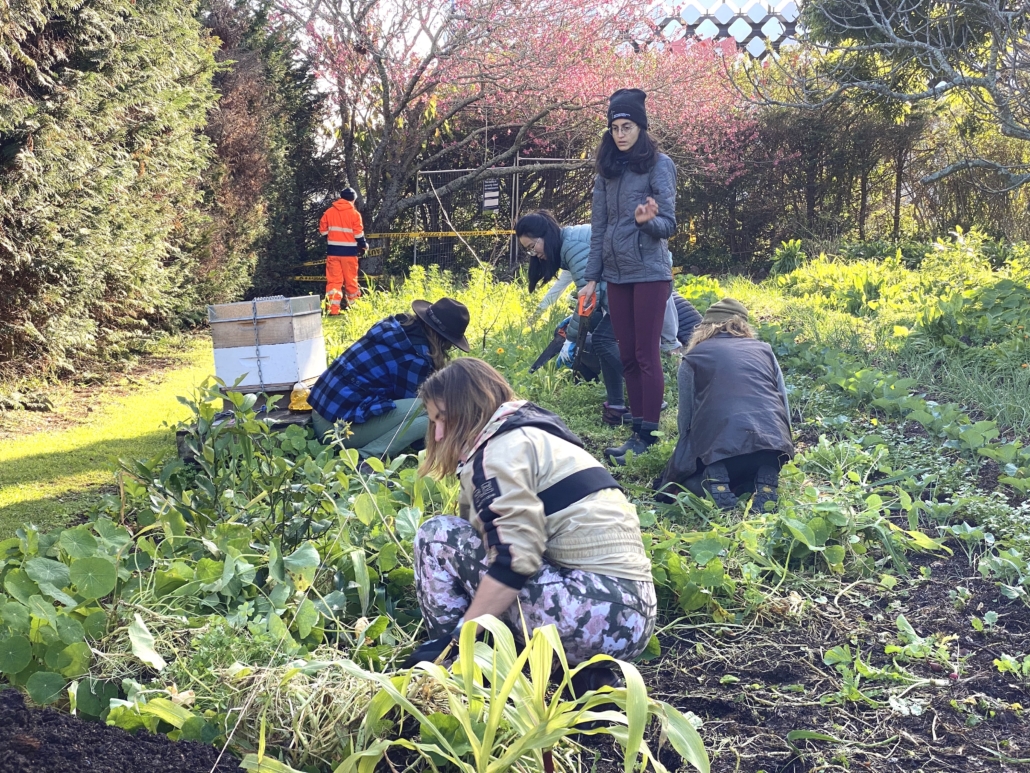
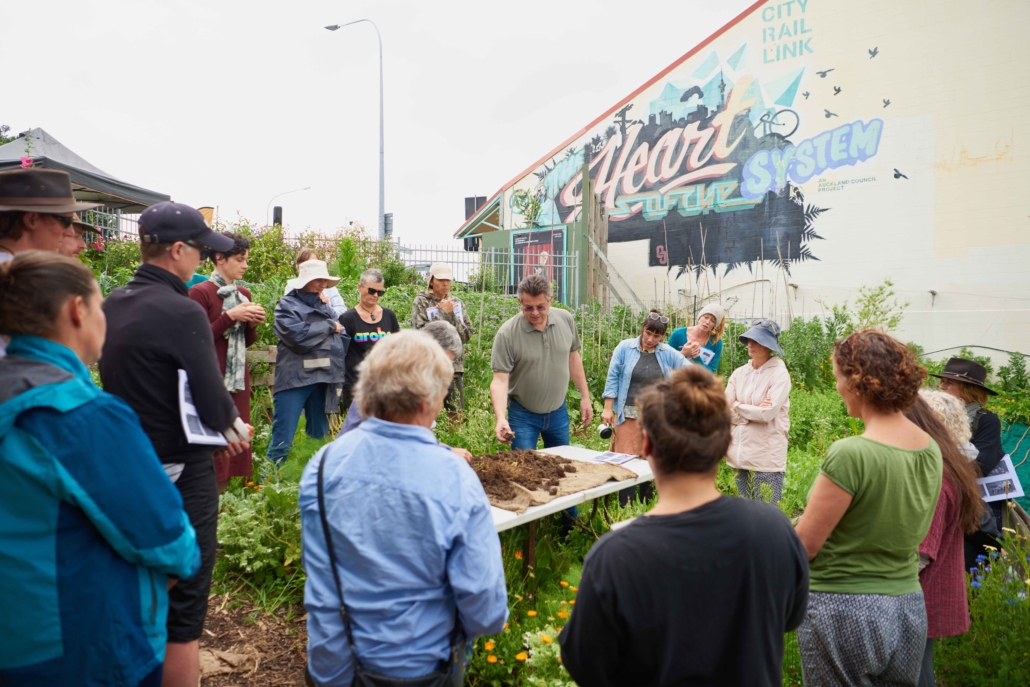
ABOVE LEFT: Earthworkers participants at Highwic House, left to right: Coral Ramiro, Richard Conyngham, Jenny Lux, Pippa Hayes and Kaitlyn Lamb ABOVE RIGHT: Coral, standing in the centre, and Brit Stembridge at the front, with other Earthworker participants at Highwic House, learning ‘flipping beds’ with no-till systems. Photos: Sarah Smuts-Kennedy
Stepping up to share knowledge and innovation
“Brit and I are excited to host the 2025 Earthworkers Hort 101 course at Earth Stewards and Tomtit Farms. The Earthworkers course was a game-changer for us, and being able to see these practices in action at the FTLOB (For the Love of Bees) model farm OMG in Auckland really made it feel real and achievable. Now, as we step into hosting the course on our own farms, we hope to inspire local growers in Waikato to embrace biology-first regenerative growing systems.”
Coral’s enthusiasm for soil science as a result of the Earthworkers course led her to undertake more study with Dr Elaine Ingham via the Soil Food Web. Participants in the next Earthworkers course in March 2025 will be able to see some of the research project she did.
Earth Stewards is certified organic with OrganicFarmNZ. It has come a long way since its early days, and Coral and the team will share some of the farm’s innovations with course participants in March.
Enhancing soils with compost and cover crops
“One of the things we’re really proud of is our ability to grow all the inputs we need to produce high-quality compost. We’re now self-sufficient in compost production, which we use for our seed-raising mix. Knowing that we control the quality of our seedlings has made a huge difference.”
“We’ve also had our first successful season managing our cover crops, allowing us to have in-situ mulch on most of our beds. This has drastically improved our moisture management and weed control, while also providing nutrition to the plants as they grow.” “This season while we were planting out our seedlings we experienced the soil being bouncy underfoot for the first time, and found preparing for planting carrots much easier. Over time we are seeing a change in the physical conditions of the farm as a result of the practices we are using.”
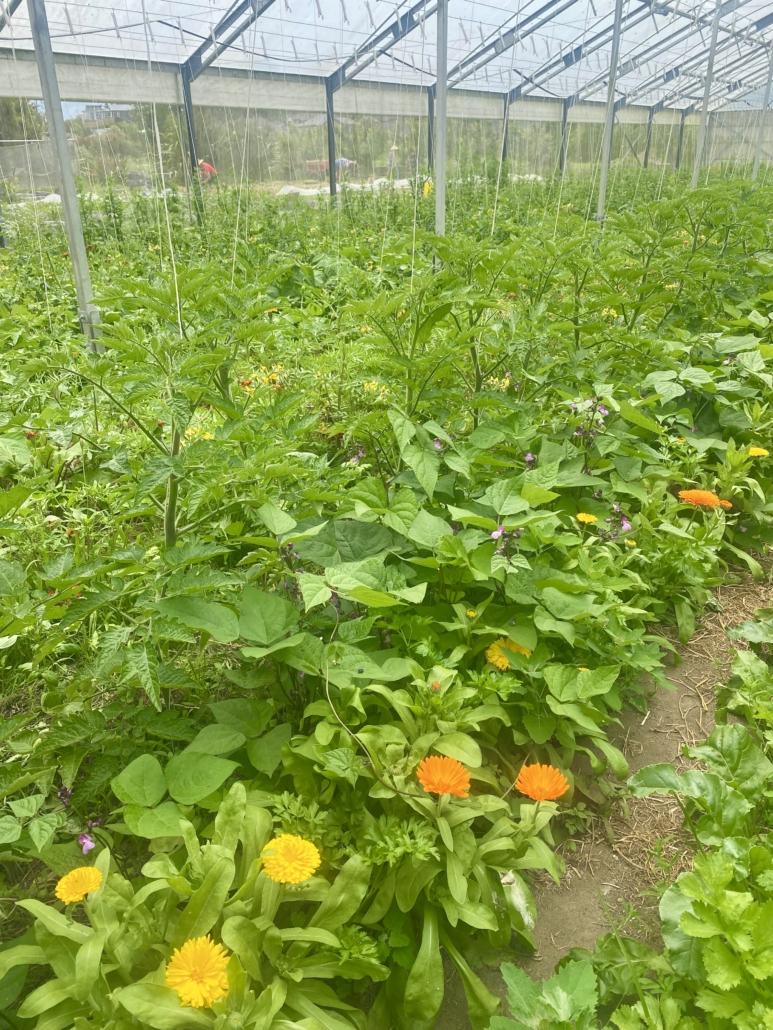
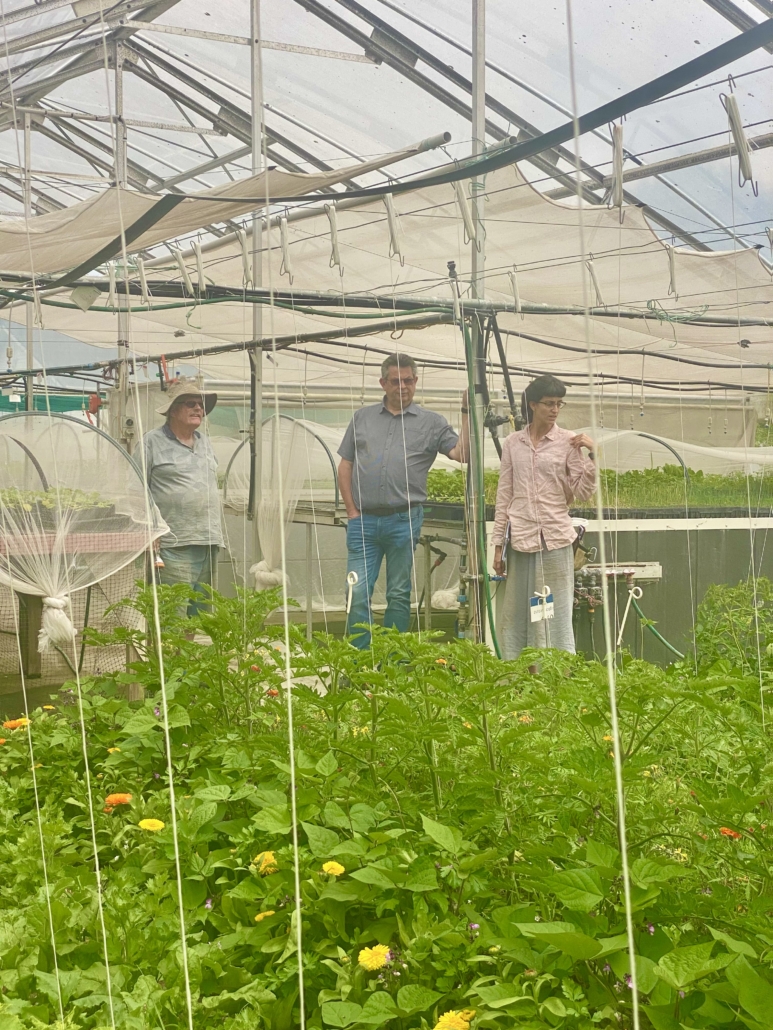
ABOVE: Abundant growth in the Earth Stewards greenhouse. Photos: Sarah Smuts-Kennedy
Finding the best sales model
At Earth Stewards they have also made real progress with their sales system, which they discovered is just as important as the growing.
“We started out doing farmers’ markets and had just started implementing the CSA (community supported agriculture) model as Covid started,” Coral recalls. “In a few weeks we went from doing a few CSA boxes to over 100, which put us under untenable pressure. It took us a while to find the right balance, and model, for selling our produce, but now we have a thriving shop on site which is open one day a week with talk of opening another day.”
“On sunny days there is a queue to buy produce which comes from a few local growers we are collaborating with. This gives us a very practical way to contribute to local growers who are also needing to sell their produce.”
The importance of a sense of community in organic regenerative farming is huge. Farming can be isolating, especially when you’re committed to healing the ecosystem the community gets even smaller. But for Coral and others the Earthworkers network has helped them feel supported and connected to others who are facing similar challenges.
“Together, we’re learning, growing, and turning our farms into models of biology-first regenerative practice.”
Earthworkers Hort 101
24–28 March 2025, Hamilton
Hosted by:
Coral Ramiro and team at Earth Stewards
Brit and James Stembridge of Tomtit Farm
Chris McIntosh at Ethos Café’s new start-up farm
These three farms will showcase regenerative farming practices in action. Participants in the course will learn from these growers who have experience of managing farms and offer models of what’s possible using biology-first regenerative methods.
ABOVE: Earthworkers lead agronomist Daniel Schuurman showing soil samples to Earthworkers participants at OMG in central Auckland. Photo: Kate Micaela
Earthworkers alumni – continuing the journey
Since it was launched in 2020 the five-day Earthworkers Hort 101 course has encouraged nearly 200 alumni to turn food production into an ecosystem restoration tool. Continuing this support via post-course mentoring they have established a network of optimistic like-minded growers who help each other in the day-to-day stresses and joys of learning how to work alongside nature to feed their local communities.
As a result, Earthworkers lead agronomist Daniel Schuurman and Earthworkers co-founder Sarah Smuts-Kennedy are developing the Earthworkers Educational Pathway to include opportunities for those wanting to take their learning to the next stage.
In 2024 For the Love of Bees (FTLOB) ran the Communities of Regenerative Learning (CORL) programme) in Tāmaki Makaurau, supporting six urban growing projects engaging alumni to step into mentoring roles. In 2025 this is being rebranded as the Earthworkers Alumni Research Group and will support a small group of alumni who want to deepen their knowledge using their own projects to do this.
Sarah Smuts-Kennedy is the founder of For the Love of Bees and OMG (Organic Market Garden in central Auckland), and co-founder of the Earthworkers programme.
https://organicnz.org.nz/wp-content/uploads/sites/2/2024/12/Earthstewards-Coral-Ramiro-cropped-scaled.jpg17822560Staff Writerhttps://organicnz.org.nz/wp-content/uploads/sites/2/2024/09/OrganicNZ-2024-Masthead.pngStaff Writer2024-12-18 11:19:302025-04-03 16:33:10Working with the earth