

• Link to Facebook
  • Link to Instagram
  • Link to LinkedIn
Reset member access or visit Soil & Health NZ
Organic NZ
  • Articles
    • Features
    • Gardening
    • Health and Food
    • Farming and Horticulture
    • Building and Technology
    • News
  • Competitions
  • Donate
  • Login
  • Join Us
  • Click to open the search input field Click to open the search input field Search
  • Menu Menu

Tag Archive for: moon calendar

Posts

Kumera slips - moon calendar 2026

Moon Calendar September-October 2026

26 Aug 26/in Gardening

Moon Calendar – Growing kลซmara from tipu

By Monique Macfarlane

One of the most satisfying elements of being with the land is learning new tasks, and folding them in in their entirety over the seasons. We have been growing kลซmara on our block for a number of years now, but last year was the first time I grew our own tipu (slips).

Coming to harvest our kลซmara crop at the end of summer was an absolute joy โ€“ that the whole process was now within the rhythm of our farm. And now, as the seasons change, and we roll through the cycles again, there is a warmth in the activities as we learn and grow with them.

To grow your own tipu, choose good-sized, healthy and well cured kลซmara. I fill a wooden box with a mix of 70% river sand and 30% good compost โ€“ positioning the kลซmara within so they are two thirds from the bottom, and a third from the top. Place the box in a very warm sunny spot, or use a heat pad.

Lightly water every few days to keep the sand moist, but not wet. In time you will see the tipu emerge. I wait till they are about 12โ€“15cm high, then gently tug them while placing a firm hand on the sand (to keep the kลซmara in place underneath, as they will grow more tipu). I then put groups of tipu in glass jars with rainwater and a little seaweed, to ensure the roots are well established.

When planting out in the garden, make a furrow with your hand and place two thirds of the tipu along the soil, and then with a slight bend leave the top few leaves poking out. Cover with soil.

I have found in my years of teaching workshops that a step often is missed in the growing season. When the tipu foliage starts to run across the top of the soil, lift the runners up so they do not root into the ground. We use cardboard to cover between the rows, and then drape the runners back down. This ensures that the kลซmara is formed under the mother tipu. Happy growing!

The following content is only available to logged-in members – log in here. Not a member? Join us to gain access to a wide range of content.


Monique Macfarlane is a holistic food systems facilitator, teaching biodynamics, planting by the moon, no-dig food growing and self-sufficiency. See www.natural-wisdom.net 

Monique co-creates with organic, biodynamic, regenerative, no-till, and natural principles on eight hectares in Waihi that includes a small market garden, orchard, pastoral grazing, chickens and agroforestry.

Images: Arina-Ulyasheva, VeraPetruk
https://organicnz.org.nz/wp-content/uploads/sites/2/2026/08/Monique_Kumara-2026.jpg 800 1500 Claire Flynn https://organicnz.org.nz/wp-content/uploads/sites/2/2024/09/OrganicNZ-2024-Masthead.png Claire Flynn2026-08-26 23:16:412026-08-26 23:16:43Moon Calendar September-October 2026
matariki

Moon Calendar July-August 2026

23 Jun 26/in Gardening

Moon Calendar – Reading the skies

By Monique Macfarlane

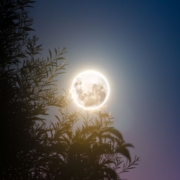
As we pass through the natural โ€˜new yearโ€™ in the southern hemisphere, now is the perfect time to witness the tohu (signs) of the coming seasons. As the stars reappear on the horizon at dawn, take note of how bright they are, where they sit in the sky, the luminosity in reference to each other โ€“ for all of this is vital information. What does it mean? What are they telling us? It depends on your local environment, and the nuances of your ecosystem.

Gathering data, or notes, on reading the skies is part of being in active conversation with everything surrounding you and within you, and fostering the relationship in letting nature lead. Her intelligence, wisdom, and grace is a beautiful thing to witness.

In the coming months, you can gather many more tohu to understand the significance of the stars that rise in the dawn to herald a โ€˜new yearโ€™. It might be that the blossoms come earlier in spring, or later, it might be that a spring or water source dries earlier, or flows with abundance. It might be birds arriving at a certain time, animals you may not have noticed before in your environment, whether the seas are abundant or not in food in the forthcoming months. Winds also are an indication of the unfolding, as with rainfall, clear days and crop abundance.

Witness. Take notes. Catalogue. And over time, an understanding will emerge, deepen, and reconnect you to the wisdom of the world.

Research News companion: Beyond the dates themselves, recent plant science explores how seedlings sense full moonlight โ€” a practical companion to this calendar. Read Your plants can see the moon (Organic NZ Research Desk).

IMAGE above: Te Wฤnanga o Aotearoa

The following content is only available to logged-in members – log in here. Not a member? Join us to gain access to a wide range of content.


Monique Macfarlane is a holistic food systems facilitator, teaching biodynamics, planting by the moon, no-dig food growing and self-sufficiency. See www.natural-wisdom.net 

Monique co-creates with organic, biodynamic, regenerative, no-till, and natural principles on eight hectares in Waihi that includes a small market garden, orchard, pastoral grazing, chickens and agroforestry.

Images: Arina-Ulyasheva, VeraPetruk

https://organicnz.org.nz/wp-content/uploads/sites/2/2026/06/matariki.jpg 562 1030 Claire Flynn https://organicnz.org.nz/wp-content/uploads/sites/2/2024/09/OrganicNZ-2024-Masthead.png Claire Flynn2026-06-23 21:59:442026-08-08 17:50:03Moon Calendar July-August 2026
Seed saving with Monique

Moon Calendar May-June 2026

28 Apr 26/in Gardening

Cosmic Gardening Calendar

By Monique Macfarlane

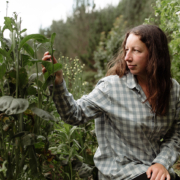
As we descend into the cooler months, the time has come to start to envisage our gardens for the following seasons. Although it can seem obvious โ€“ I remind people when they are starting out growing their own food, or need a way to reconnect to the garden โ€“ to plant what you love to eat.

Although in the suggestions of this calendar I list various plants such as silverbeet, rocket, parsnip, if it’s not something you enjoy, it’s not necessary, use it as a guide to plant similar crops. There is such joy to be found in being able to devour the deliciousness straight from your garden, rather than looking at six unused silverbeet plants!

There is another layer to this, particular when the world feels precarious โ€“ plant what you can trade. Plant what you know your family, friends, or community need or want. There is such an abundance in nature, and the joy of being able to share.

Growing in community can also be a wonderful pathway. Perhaps next summer you plan to grow the potatoes, someone else grows pumpkins, and another member of your village/community/circle grows kลซmara, and then you all trade. This allows you to focus on one crop, and stay connected. Plant in different places, to mitigate weather events, if you have the space available.

Itโ€™s also important to gift back to your garden. We have many helpers in the unseen realms and there are myriad ways to thank them. They love song, poetry, and being acknowledged through the heart space. Offerings of fruit, honey or chocolate are also welcomed. One of my favourite ways is to create a mandala in the garden with flowers, leaves, twigs and fruit on the solstices.

The following content is only available to logged-in members – log in here. Not a member? Join us to gain access to a wide range of content.


Monique Macfarlane is a holistic food systems facilitator, teaching biodynamics, planting by the moon, no-dig food growing and self-sufficiency. See www.natural-wisdom.net 

Monique co-creates with organic, biodynamic, regenerative, no-till, and natural principles on eight hectares in Waihi that includes a small market garden, orchard, pastoral grazing, chickens and agroforestry.

Images: Arina-Ulyasheva, VeraPetruk
https://organicnz.org.nz/wp-content/uploads/sites/2/2025/12/seed-saving-monique-header.jpg 843 1500 Claire Flynn https://organicnz.org.nz/wp-content/uploads/sites/2/2024/09/OrganicNZ-2024-Masthead.png Claire Flynn2026-04-28 23:33:132026-04-28 23:33:14Moon Calendar May-June 2026
Monique Macfarlane - planting by the moon in NZ.

Moon Calendar March-April 2026

25 Feb 26/in Gardening

Enjoy the seasonal bounty and prepare for spring

By Monique Macfarlane

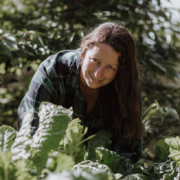
Successful food and flower growing starts well before seedlings or seeds are planted in the ground. Planning, preparation, soil care, and nutrition are all endeavours undertaken in the seasons before.

As we pass through the most abundant time of year, as the fruiting crops hang from their vines and branches, as we preserve the bounty for the cooler times, it can be a time where we have given and taken so much from our gardensโ€ฆ but this is a very important time for preparation too.

The harvested stonefruit trees are setting up now for next year’s fruit; this is a crucial time to feed, replenish and take care. If you are struggling in high humidity, warm areas with fungal dis-eases, try pruning in late summer rather than winter, as often the trees do not go dormant. Spraying equisetum monthly at moon opposition Saturn suppresses the fungal bloom back down into the soil. If you are wanting to support overall tree health and nutrition, for all types of trees, biodynamic tree paste is a fantastic option.

Now is also a great time to get green crops sown to rest parts of your established garden through the autumn and winter months. Try a mix of mustard, lupins, oats, barley, phacelia, buckwheat and marigold. If you want to bring in new areas, or create multiple spaces for resilience, sow green crops ย in these spaces now, to free up later for spring and summer. Itโ€™s also an opportunity for making compost to be ready for the spring, or for setting up a worm farm, but also taking the time to plant beneficial plants for tonics such as comfrey, nettle, dandelion, chickweed.

If you are looking to strengthen the resilience of your garden and nutrient density, autumn is also the perfect time to do a biodynamic preparation 500 stir and spread. This incredible method has a wealth of microbial activity, fungi, bacteria, and starts to bring the cosmos and mineral kingdom into balance, as well as being a foundational building block for a flourishing garden.

The following content is only available to logged-in members – log in here. Not a member? Join us to gain access to a wide range of content.


Monique Macfarlane is a holistic food systems facilitator, teaching biodynamics, planting by the moon, no-dig food growing and self-sufficiency. See www.natural-wisdom.net 

Monique co-creates with organic, biodynamic, regenerative, no-till, and natural principles on eight hectares in Waihi that includes a small market garden, orchard, pastoral grazing, chickens and agroforestry.

Images: Arina-Ulyasheva, VeraPetruk
https://organicnz.org.nz/wp-content/uploads/sites/2/2025/02/Monique-Macfarlane-Mar25-header.jpg 818 1500 Claire Flynn https://organicnz.org.nz/wp-content/uploads/sites/2/2024/09/OrganicNZ-2024-Masthead.png Claire Flynn2026-02-25 23:04:312026-02-25 23:05:46Moon Calendar March-April 2026
Seed saving with Monique

Moon Calendar January-February 2026

17 Dec 25/in Gardening

Enhance nourishment & resilience by saving seeds

By Monique Macfarlane

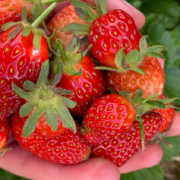
Seed saving is one of the most beautiful acts of resilience and nourishment we can do for ourselves, our communities, our future, and the ecosystems we find ourselves in. Each year on our farm, I save more and more varieties, and it is incredible to witness just how quickly they adapt and strengthen within our farm organism. Everything I grow from the seed we saved ourselves is healthier, abundant, easeful, and has a strength, vitality and density that is unrivalled.

I started with the easy crops โ€“ pumpkins, tomatoes, potatoes. Then added in more flowers like calendula, cornflower, strawflower, sunflowers. Then came brassicas: kale and broccoli. There was the year where I was so proud to do zucchini for the first time โ€“ not realising how itโ€™s best to hand pollinate for seed saving โ€“ the following year I had the most incredible array of fruits and colours, that all came from the same one fruit! Nature is absolutely incredible.

In biodynamics, we save seed at particular times that are favourable for what we are wanting to produce. So for flowers, I typically save seed on ascending flower days. For pumpkins and tomatoes I save seed on ascending fruit and seed days. For potatoes we always harvest on descending root days for better longevity in storing, and this is correct for seed saving too.
This year, I am trying something new, as there is always so much to learn and experiment with. When the moon is opposite Saturn, calcium and silica are in balance, which makes for true-to-form, balanced growth, so I am interested to see what seed saving at this time does for all the crops that might be ready at this very specific time.

Remember, seed should only be taken from well developed plants, not those which run to seed quickly and do not flow through their full expression. And of course โ€“ sharing seed is key!

The following content is only available to logged-in members – log in here. Not a member? Join us to gain access to a wide range of content.


Monique Macfarlane is a holistic food systems facilitator, teaching biodynamics, planting by the moon, no-dig food growing and self-sufficiency. See www.natural-wisdom.net 

Monique co-creates with organic, biodynamic, regenerative, no-till, and natural principles on eight hectares in Waihi that includes a small market garden, orchard, pastoral grazing, chickens and agroforestry.

Images: Arina-Ulyasheva, VeraPetruk
https://organicnz.org.nz/wp-content/uploads/sites/2/2025/12/seed-saving-monique-header.jpg 843 1500 Claire Flynn https://organicnz.org.nz/wp-content/uploads/sites/2/2024/09/OrganicNZ-2024-Masthead.png Claire Flynn2025-12-17 23:27:022025-12-17 23:27:04Moon Calendar January-February 2026
Strawberries - planting by the moon in NZ.

Moon Calendar November-December 2025

29 Oct 25/in Gardening

Cosmic planting calendar: Capture the moments

By Monique Macfarlane

Records are one of the most fundamental parts of being in active conversation with the land. For those who have been following the column for a while, you will know that I encourage you to take photographs on the summer solstice, autumn equinox, winter solstice, and the spring equinox. These are beautiful reminders of the ebb and flow of nature, and of the nature of us.

We can feel that we might remember, but a photographic record, a poem, a letter to your garden, however you see fit to recordโ€ฆ is a beautiful touchstone to return to.

Often our endeavours with the land can be lofty, particularly for those who are custodians of larger land holdings, so our records can also be guides of how far we have come, when the vision still seems so far away. They can be points of celebration.

Daily rainfall is another key record to keep, as are other weather patterns. Perhaps start a journal, a diary of your unique garden or farm organism. The moon can tell us a lot about the weather. Whether the moon is ascending, descending, full, in a root constellation โ€“ the different phases can all have different โ€˜flavoursโ€™. Whether the blossoms are early, late, blooming from the top down or all at onceโ€ฆ information is encoded everywhere.

These are all tohu or signs, ways to strengthen your communication and understanding with it all. I love how these small rituals become part of the flow, part of the rhythm of the garden, and strengthen our practice and communities.

The following content is only available to logged-in members – log in here. Not a member? Join us to gain access to a wide range of content.


Monique Macfarlane is a holistic food systems facilitator, teaching biodynamics, planting by the moon, no-dig food growing and self-sufficiency. See www.natural-wisdom.net 

Monique co-creates with organic, biodynamic, regenerative, no-till, and natural principles on eight hectares in Waihi that includes a small market garden, orchard, pastoral grazing, chickens and agroforestry.

Images: Arina-Ulyasheva, VeraPetruk
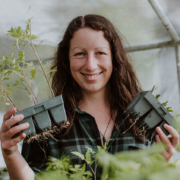
https://organicnz.org.nz/wp-content/uploads/sites/2/2025/10/strawberries-header.jpg 843 1500 Claire Flynn https://organicnz.org.nz/wp-content/uploads/sites/2/2024/09/OrganicNZ-2024-Masthead.png Claire Flynn2025-10-29 22:45:452025-10-29 22:48:47Moon Calendar November-December 2025
Monique Macfarlane with tomato seedlings - planting by the moon in NZ.

Moon Calendar September-October 2025

20 Aug 25/in Gardening

Cosmic planting calendar: Let nature lead

By Monique Macfarlane

All the prep work in the garden now really pays off for feasting on and preserving the abundance in the coming months. At times it can feel overwhelming with everything there is to get done, so as we head towards the traditional summer garden planting dates of late October, I pick particular things to focus on, and let the rest fall behind in the flow.

Some years I prioritise fruiting crops, such as tomatoes, eggplants and chillies, or beans and snowpeas, or pumpkins and melons. It could be prioritising a steady supply of leafy greens for salads through the onslaught of hotter temperatures. It could be saving seed from multiple varieties this season. It could be placing attention on good watering and nutrition.

Having a focus brings the possibility of a sense of accomplishment and learning. Often when we leave nature to her own devices, she flourishes the best, on her own timeline and strength. Knowing this can pave the way to noticing how different plants flourish if we step back from them a little.

It can also give us space to research, discuss and trial new methods and ways of growing if we place a focus on them. Say for tomatoes, do you stake with a central leader? Use an adjustable string-and-frame system to encourage the full potential of height and harvest in the plants? Try a bush variety? Try different colours, varieties, or add in the biodiversity mulches underneath?

By harnessing this approach season after season, year after year, slowly our knowledge, our toolkit and understanding grows with ease. Itโ€™s also not a โ€˜one and doneโ€™ style of learning โ€“ as often I can focus on something, feel like I have understood it, and then we never have a season like it to replicate for 8 or 15 years!

So perhaps really, the best thing to always focus on is the grace of letting nature lead.

The following content is only available to logged-in members – log in here. Not a member? Join us to gain access to a wide range of content.


Monique Macfarlane is a holistic food systems facilitator, teaching biodynamics, planting by the moon, no-dig food growing and self-sufficiency. See www.natural-wisdom.net 

Monique co-creates with organic, biodynamic, regenerative, no-till, and natural principles on eight hectares in Waihi that includes a small market garden, orchard, pastoral grazing, chickens and agroforestry.

Images: Arina-Ulyasheva, VeraPetruk
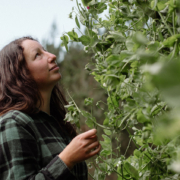
https://organicnz.org.nz/wp-content/uploads/sites/2/2025/08/monique_topper-2025Sep.jpg 843 1500 Claire Flynn https://organicnz.org.nz/wp-content/uploads/sites/2/2024/09/OrganicNZ-2024-Masthead.png Claire Flynn2025-08-20 22:21:592025-08-20 22:22:02Moon Calendar September-October 2025
Monique Macfarlane - planting by the moon in NZ.

Moon Calendar July-August 2025

18 Jun 25/in Gardening

Cosmic planting calendar

By Monique Macfarlane

July and August is a great time in the garden, as we have just passed the new year, the shortest day, and the preparation and groundwork for the summer abundance is underway. Now is the perfect time to change arrangements, be it infrastructure such as trellising, pathways, irrigation, or even move around existing garden beds and create new ones.

Feel into what you would like to eat and grow in the coming months, and make the preparations now for it to flow easefully. If sometimes it all gets too much, or feels unyielding at times, choose a focus or two. It might be leafy greens and herbs, it could be the fruiting crops such as tomatoes, eggplants, chillies. Maybe try your hand at potatoes this year, or growing your own kลซmara tipu. It might be increasing microbial networks, bringing in bees, or encouraging birds.

As areas of the ground are resting, various cover crops are going through their cycles, the brassicas and cold winter crops come into their own. Keep feeding the soil, and nourishing yourselves too. Feel into the flow of the body, and rest when you need it.

Pruning is a priority this time of year for the stone fruit, pip fruit, and roses. Ensure that your tools are sharp, cuts precise, and your joy and thanks is shared with the trees.

Take time to reflect in your garden. Notice how the shorter, cooler days change the world around us and within us, see what is mirrored back to you. Follow your intuition, the little hits of knowing that arrive when you are present and heart-centred, for they are your greatest allies in the natural world.

The following content is only available to logged-in members – log in here. Not a member? Join us to gain access to a wide range of content.

The following content is only available to logged-in members. Enjoy.

Monique Macfarlane is a holistic food systems facilitator, teaching biodynamics, planting by the moon, no-dig food growing and self-sufficiency. See www.natural-wisdom.net 

Monique co-creates with organic, biodynamic, regenerative, no-till, and natural principles on eight hectares in Waihi that includes a small market garden, orchard, pastoral grazing, chickens and agroforestry.

Images: Arina-Ulyasheva, VeraPetruk

https://organicnz.org.nz/wp-content/uploads/sites/2/2025/02/Monique-Macfarlane-Mar25-header.jpg 818 1500 Claire Flynn https://organicnz.org.nz/wp-content/uploads/sites/2/2024/09/OrganicNZ-2024-Masthead.png Claire Flynn2025-06-18 14:02:122025-08-29 12:52:08Moon Calendar July-August 2025

Moon Calendar May-June 2025

16 Apr 25/in Gardening

Cosmic planting calendar

By Monique Macfarlane

It brings me great joy that Matariki is being celebrated in whole new ways in New Zealand โ€“ our natural new year in the southern hemisphere. In the Gregorian calendar, the โ€˜new yearโ€™ ticks over on an arbitrary day between โ€˜Decemberโ€™ and โ€˜Januaryโ€™. This feels incredibly out of place to me, the more I am immersed with the rhythms of the land and the cosmos. The tomatoes are ripening, the zucchini glut is here, beans, snowpeas and chillies are flourishing, all of the fruiting crops are coming to their crescendo. The garden needs my caress almost daily. At that time we are in the midst of the year, and have just surpassed the longest day.

Marking the new year in the depths of winter, timed with the new moon and Tangaroa phases, when the stars disappear and then reappear on the horizon, has an ease to it. A timeliness. An exhale, as we gather the year gone before us, those who have departed from us, and prepare for the year ahead of us. Quite rightly it moves with the land, the skies, and is a period of time, not just a day.

Matariki, or the Pleiades star cluster, isnโ€™t the marker everywhere in New Zealand either, to mark this particular passage of time. In the north, the west, and places in the south, Puanga or Puaka is the star that marks the passage. I love this. The nuance of the environment speaking to us. Showing the way. What does your environment say to you? What do you witness?

Celebrate, reflect, honour. Take the time to be with yourself. Feast, share, come together. Enjoy the prevalence this particular rhythm is having in our lands, and the authenticity of it all.

The following content is only available to logged-in members – log in here. Not a member? Join us to gain access to a wide range of content.


Monique Macfarlane is a holistic food systems facilitator, teaching biodynamics, planting by the moon, no-dig food growing and self-sufficiency. See www.natural-wisdom.net 

Monique co-creates with organic, biodynamic, regenerative, no-till, and natural principles on eight hectares in Waihi that includes a small market garden, orchard, pastoral grazing, chickens and agroforestry.

Images: Arina-Ulyasheva, VeraPetruk

https://organicnz.org.nz/wp-content/uploads/sites/2/2024/09/Monique_topper2.jpg 843 1500 Claire Flynn https://organicnz.org.nz/wp-content/uploads/sites/2/2024/09/OrganicNZ-2024-Masthead.png Claire Flynn2025-04-16 17:04:262025-05-27 00:24:24Moon Calendar May-June 2025
Monique Macfarlane - planting by the moon in NZ.

Moon Calendar Mar-Apr 2025

20 Feb 25/in Gardening

Cosmic planting calendar

By Monique Macfarlane

The more I spend time with the land, the deeper I sink into a form of authenticity with it. For the majority of my life before being introduced to biodynamics, I lived in the cycle of the Gregorian calendar. Itโ€™s fascinating that we use this tool worldwide, yet I find it needs awareness of its disconnect in the southern hemisphere.

The autumn equinox calls for a celebration. We reach equal lengths of day and night, the turning point as we descend down into the winter solstice in June (the longest night). Itโ€™s a cumulative period, where great summer harvests draw to a close, abundance is everywhere, and there starts to be a drawing in for the winter. I love to mark this with time spent in community, and celebrating the fruits of nature with the creation of mandalas.

Samhain, a Celtic tradition involving costumes, masks, bonfires and feasts, marks a point after the autumn equinox when the nights are becoming noticeably longer. While still celebrating the autumn harvest, winter preparations are also underway. The division between this world and the otherworld is at its thinnest, allowing spirits to pass through. In the northern hermisphere, itโ€™s celebrated at the end of October, and in more recent times called Halloween. But in the southern hemisphere it’s important to witness that the end of April is its natural place.

Closer to home, embedded in our landscape, is the kลซmara harvest. In the Maramataka (local environmental calendars) the harvest can be marked by many different tohu (signs) such as the rising of the star Whฤnui (Vega), or when the pฤซpฤซwharauroa (shining cuckoo) and koekoeฤ (long-tailed cuckoo) depart Aotearoa. Typically, these tohu appear in Poutลซterangi (although some draw parallels with the month of March, in the Maramataka each month starts with the new moon).

Through the signals forever present in our environment, I treasure the journey to discover the natural timing of festivals. Contemplating these moments, and witnessing the shifts in the landscape and within me, has breathed into me a deeper connection and reverence for the wisdom of the natural world. Slow down, and see what nature is saying to you.

The following content is only available to logged-in members – log in here. Not a member? Join us to gain access to a wide range of content.


Monique Macfarlane is a holistic food systems facilitator, teaching biodynamics, planting by the moon, no-dig food growing and self-sufficiency. See www.natural-wisdom.net 

Monique co-creates with organic, biodynamic, regenerative, no-till, and natural principles on eight hectares in Waihi that includes a small market garden, orchard, pastoral grazing, chickens and agroforestry.

Images: Arina-Ulyasheva, VeraPetruk

https://organicnz.org.nz/wp-content/uploads/sites/2/2025/02/Monique-Macfarlane-Mar25-header.jpg 818 1500 Claire Flynn https://organicnz.org.nz/wp-content/uploads/sites/2/2024/09/OrganicNZ-2024-Masthead.png Claire Flynn2025-02-20 22:04:492025-03-27 15:06:59Moon Calendar Mar-Apr 2025
Page 1 of 212

Categories

  • All Articles
  • News
  • Features
  • Gardening
  • Health and Food
  • Farming and Horticulture
  • Building and Technology
  • Free Online

Latest Articles

  • Biochar, black gold and bananas
  • Parsley on chopping board with knife
    Parsley: More than just a garnish
  • Hardening off seedlings in mid spring
    Growing Vegetables: Mid spring โ€” hardening off
  • Kumera slips - moon calendar 2026
    Moon Calendar September-October 2026
  • Lettuces and watering can in home garden
    Worm juice and soil fungi: why compost alone isnโ€™t enough for juicy lettuce
  • Mandarins in a bowl
    Mandarins: Winter vitamin boost
  • 2026 Example calendar covers
    2027 Calendars
  • Fantail on tree branch
    Parable of the paddock edge
  • Green kiwifruit
    Kiwifruit: Treasures in red, gold and green
  • matariki
    Moon Calendar July-August 2026
Soil & Health Association of NZ Established 1941

Proudly published by the Soil & Health Association NZ

  • About us
  • Contact us
  • Help us
  • Sign up to the Newsletter
ยฉ Copyright OrganicNZ | Soil and Health Association NZ.
  • Link to Facebook
  • Link to Instagram
  • Link to LinkedIn
  • Privacy Policy
  • Editorial Policy
Scroll to top Scroll to top Scroll to top