
• Link to Facebook
  • Link to Instagram
  • Link to LinkedIn
Reset member access or visit Soil & Health NZ
Organic NZ
  • Articles
    • Features
    • Gardening
    • Health and Food
    • Farming and Horticulture
    • Building and Technology
    • News
  • Competitions
  • Donate
  • Login
  • Join Us
  • Click to open the search input field Click to open the search input field Search
  • Menu Menu

Tag Archive for: worms

Posts

Biochar, black gold and bananas

28 Aug 26/in Farming and Horticulture, Features, Free Online, Gardening, Magazine Articles


What started as a simple experiment to improve soil in the direction of terra preta—a famously fertile, friable soil that seems to sequester carbon permanently—has become a national field trial for the use of biochar in New Zealand.


Betsy Kettle from Hibiscus Coast Zero Waste tells the story.

We hope you enjoy this free article from Organic NZ.  Join us to access more, exclusive member-only content
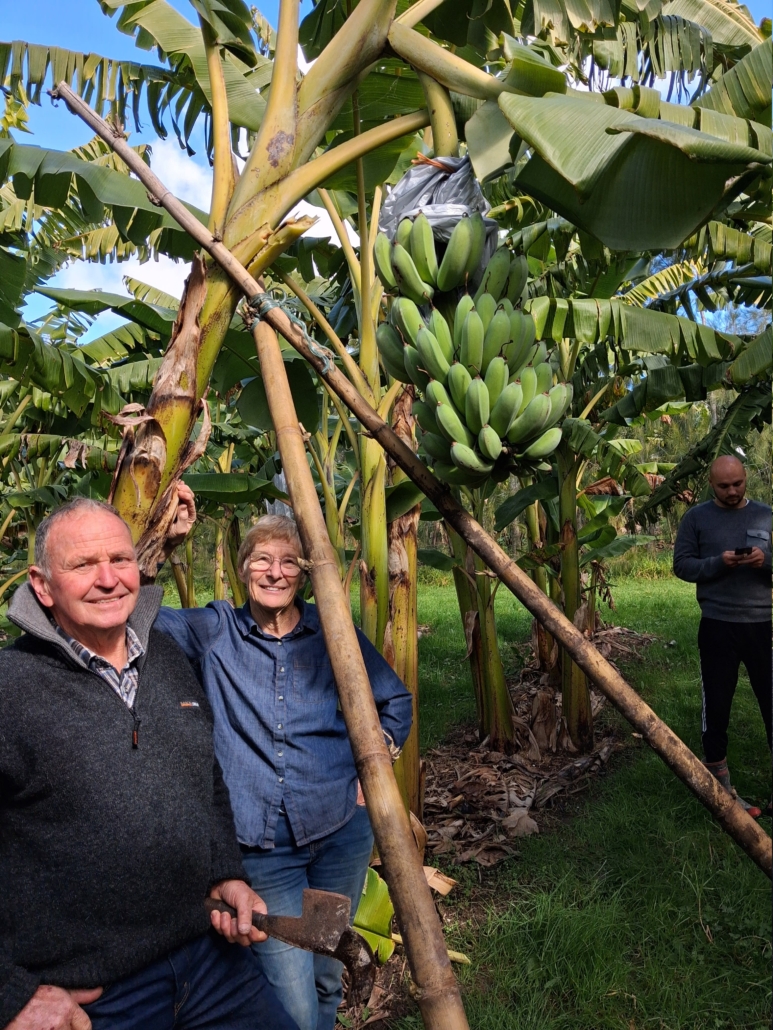
Phil and Jenny Grainger with banana trees grown in compost swales at their Waitoki farm


One of the programmes of our environmental education trust is City to Farm, which involves schools, retirement villages and cafes collecting their food scraps in wheelie bins, along with bokashi to add microorganisms and biochar to control odour and build topsoil.

The bins are transported to a local farm for composting.

Jenny and Phil Grainger have been experimenting at their Waitoki farm, in Rodney district north of Auckland, creating compost swales, enriching the soil and growing bananas.

Seven years later, the results are in. The compost swales created at the Graingers’ farm—layered with mulch, food scraps, and biochar, then planted with bananas—have transformed from hard, lifeless clay into something resembling the black, soft soil of the Amazon. Soil tests from Hill Labs and the Bioeconomy Science Research Lab confirm it.

ABOVE: Phil and Jenny Grainger | Photo: Betsy Kettle

WHAT IS BIOCHAR? Biochar is a form of stabilised carbon that can last for decades, centuries, or even millennia in the soil without decomposing – read more about it on the Biochar Network’s website here.

The black gold of terra preta
Archaeologists who have analysed terra preta tell us that ancient Amazonians placed organic waste of many kinds, along with biochar, into trenches to transform their infamous clay into their famous, long-lasting topsoil.

So we followed their lead. We imitated the process by collecting food scraps from town, using donated biochar from Soil Conditioner Products (SoilPro), and keeping both the composted area and the area around it planted.

The biggest mystery, though, is this: how long does it take to make terra preta? We know there are areas of this ‘black earth’ that are centuries, perhaps even millennia, old. But does it really take that long to create it? Landcare Research told us it would take at least five years before we would notice even the slightest change in soil carbon. We were a little concerned, but we carried on.

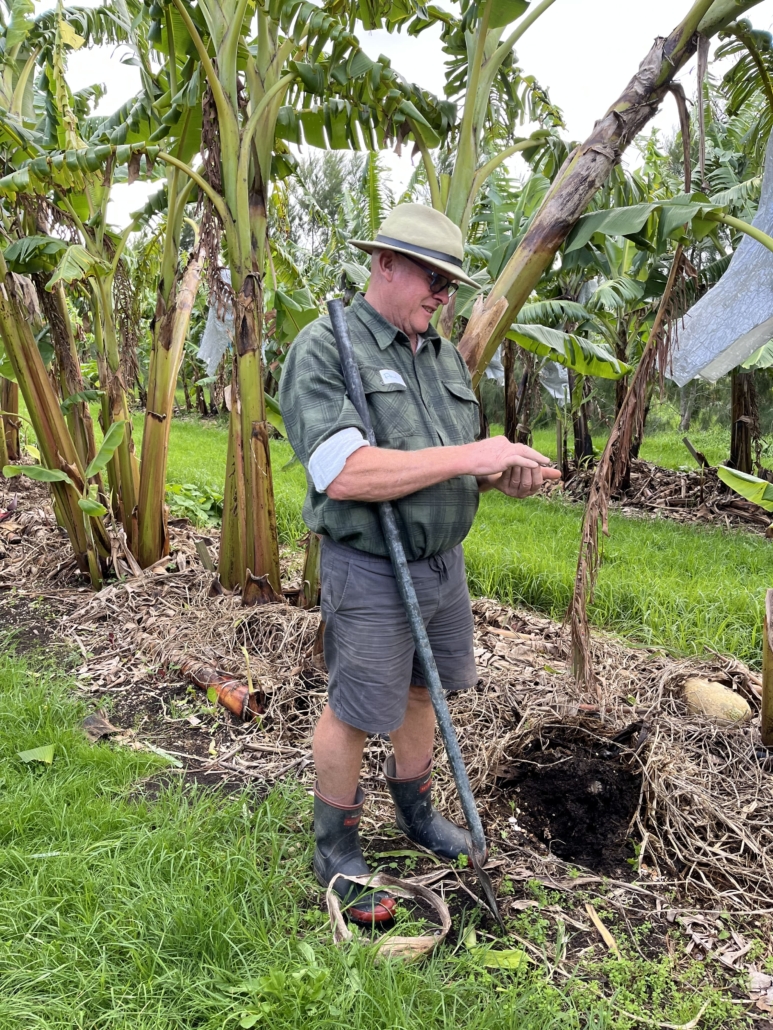
ABOVE: Paul Candy of Future Ready Farms checks out the soil in the compost swales | Photo: Rebecka Keeling

Compost swales

Compost swales are designed especially for clay soils to catch water from above and help it soak into the subsoil. Long, shallow excavations are dug across the contours of a hill, sloping gently downhill. The excavated soil is mounded on the downhill side and planted.

The hollowed area is then layered again and again with woody mulch and food scraps with biochar, or another nitrogen source, until the desired height is reached.

After that, it is simply left to compost. The compost is not turned and not moved. Instead, the combination we used of biochar and bokashi in the food scraps keeps the heap fresh and healthy, if it is not sitting in standing water. The bokashi ‘zing’ (microorganism mix) in the food scraps supports some anaerobic breakdown, and worms move in once the heap has cooled. Fungal hyphae grow undisturbed.

Climate action tool
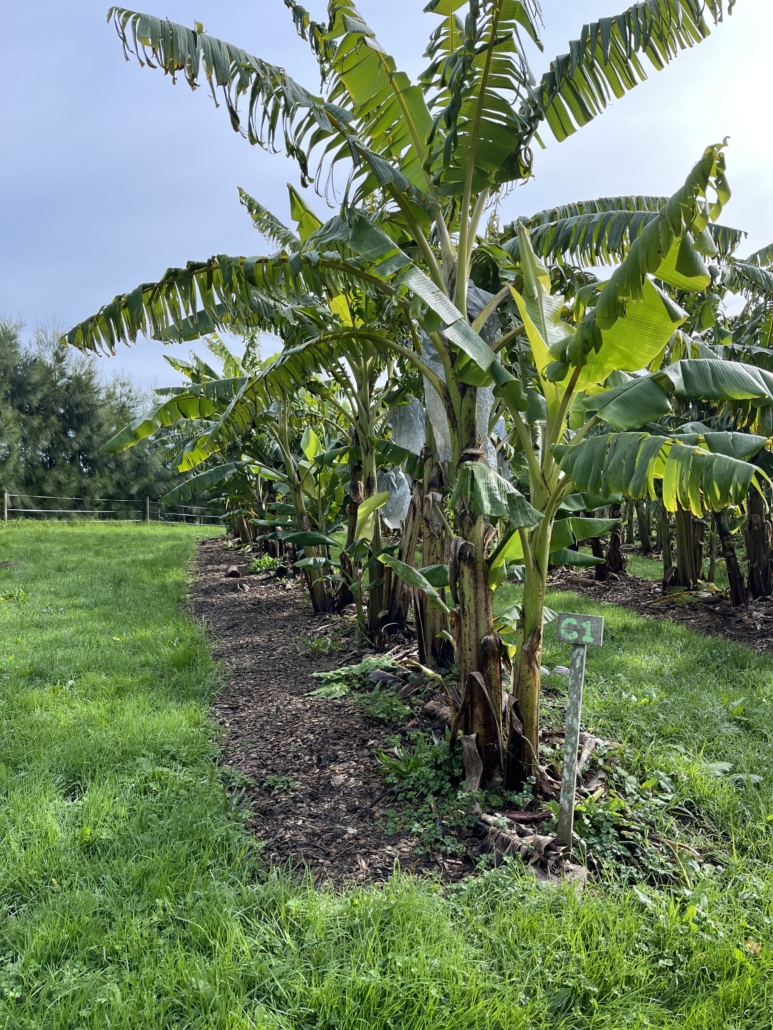
Swales are useful climate action tools because in times of drought the biochar and deepened topsoil act as a reservoir that plants can draw from. They can also help ease flooding by encouraging runoff to soak into the subsoil. And when the swales are saturated, the bunds provide a drier, more aerated area for roots.

Compost swales are also climate action because they use the stabilised carbon that is biochar—making it a carbon sink in its own right. But this is not the biggest carbon sink. The growth of the living soil microbiome may be much larger.

Biochar acts as a long-lasting home for soil microorganisms, giving them more surface area to colonise. Fungal hyphae also seem to be stimulated by biochar and add to the growing carbon mass. But the fungi and bacteria must still rely on a steady source of food from the starches and sugars that plants pump into the soil.

ABOVE: Banana trees growing in compost swales | Photo: Rebecka Keeling

Holistic approach

So, the swale, biochar, compost, plants, and microorganisms all work together symbiotically and synergistically to transform the soil.

Will this work in other parts of New Zealand? We may have been fortunate: we were working with the same ‘dead’ kaolinite clay found in much of Rodney’s soils, that are also found in the Amazon.

We encourage growers throughout the country to experiment—not only with biochar, but with creating diverse living systems that work together to create living carbon sinks that are resilient to an ever-changing climate.


Betsy Kettle has been a zero-waste advocate and composter for at least three decades and is a trustee of the Sustainable North Trust. She thanks Auckland Council for their support for the City to Farm project over the past eight years.
https://organicnz.org.nz/wp-content/uploads/sites/2/2026/08/Phil-and-Jenny-Grainger-with-banana-trees-grown-in-compost-swales-photo-Betsy-KettleCOMPRESSED-scaled.jpg 2560 1920 membership https://organicnz.org.nz/wp-content/uploads/sites/2/2024/09/OrganicNZ-2024-Masthead.png membership2026-08-28 13:50:342026-08-29 08:04:06Biochar, black gold and bananas

Worm Farming Tips

27 Aug 25/in Free Online, Gardening

Home gardener Michelle Coenradi has four worm farms on the go. Here she outlines the benefits, and offers some tips from her experience.

We hope you enjoy this free article from OrganicNZ.  Join us to access more, exclusive member-only content

I am passionate about my worms. There are so many benefits to worm farming, and it’s something you can do almost anywhere, even on a balcony. Worm farms produce two types of fertiliser: a liquid (sometimes called tea or juice) and a more solid one (vermicast). Recent Research News on worm juice plus mycorrhizae for juicier lettuce explores how that liquid pairs with soil fungi and compost. I leave the siphon open and sit a bucket underneath to collect the liquid.

Benefits of worm juice and vermicast

  1. Enhances soil fertility.
  2. Promotes plant growth.
  3. Deters pests and diseases.
  4. Improves soil structure – contains microorganisms and enzymes that improve soil aeration and water retention, leading to better root development.
  5. Rich in readily available nutrients like nitrogen, phosphorus and potassium, as well as trace elements.
  6. Improved aeration and drainage results in reduced soil compaction
  7. Enhances the activity of beneficial microbes which are essential for nutrient cycling and overall soil health.
  8. Cost-effective fertiliser that you can make yourself.
  9. Vermicast is pH neutral.

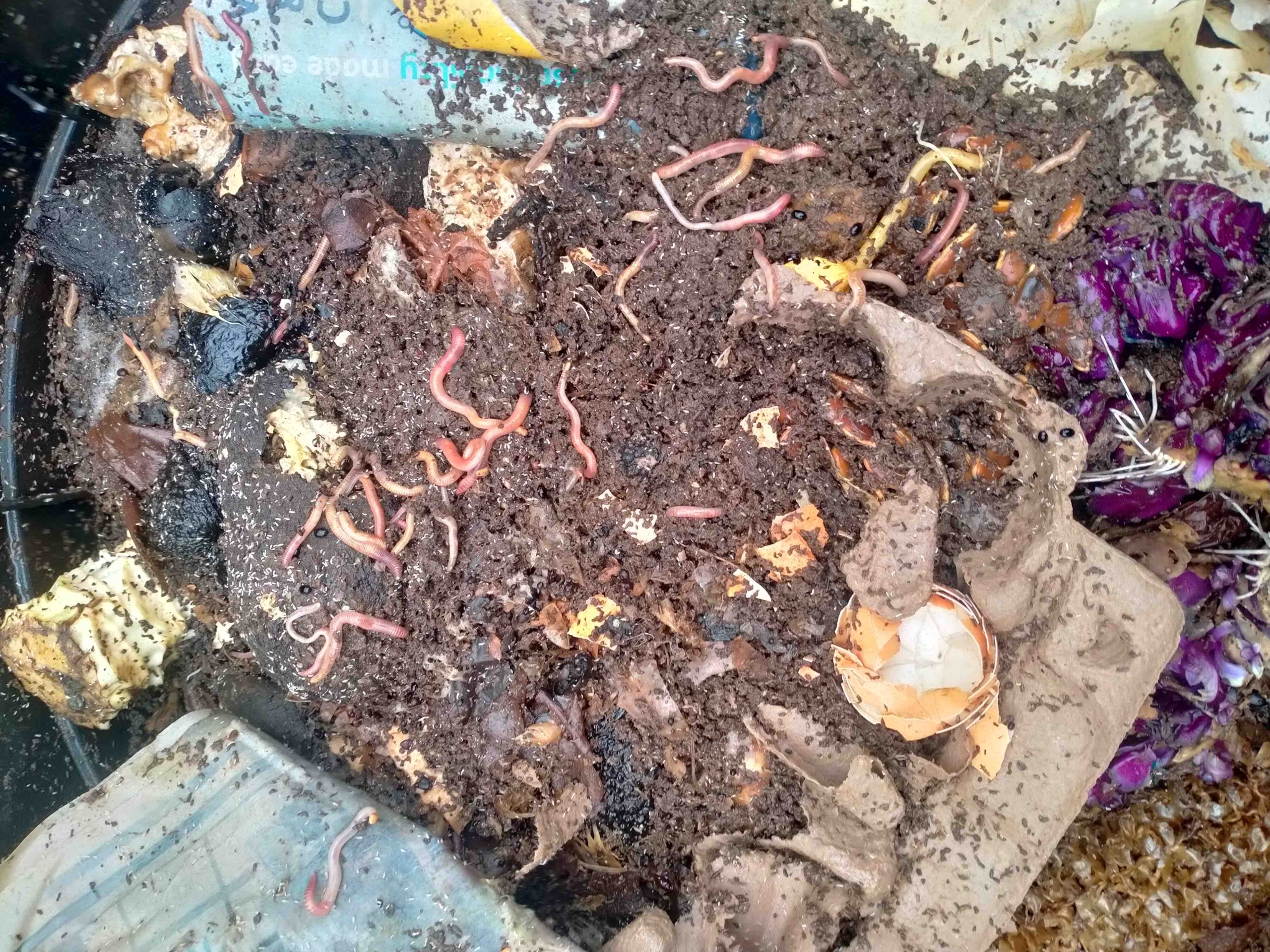
ABOVE: Inside one of Michelle’s worm farms (Photos: Michelle Conraedi)

A healthy home for your worms

Worms need a dark, moist and well aerated environment and a temperature between 15–25ºC. You can put in shredded paper for them to live and breed in, or a worm mat which can be purchased at hardware stores.

Worms love anything curved or round to nest in and keep themselves warm, especially avocado and watermelon skins, and pumpkin is a hit as well.

What do they like to eat?

  • 70% nitrogen-rich ‘green waste’ like fruit and vege scraps, eggshells, coffee grounds and tea bags (make sure they’re compostable ones). Avoid citrus fruit and the onion family.
  • 30% carbon ‘brown waste’, like newspaper and cardboard.

You can feed them daily but I tend to feed weekly.

When I put scraps in I sprinkle Tumbleweed worm compost conditioner over the top. This keeps the pH balanced – you can tell if the worms are struggling with an alkaline imbalance because they lose their colour and start turning white. You can also use garden lime sparingly.

The vermicast is referred to as black gold, indicating its value in the garden. I find worms are hardy and easy care; you really can’t go wrong with a worm farm and they are so rewarding.

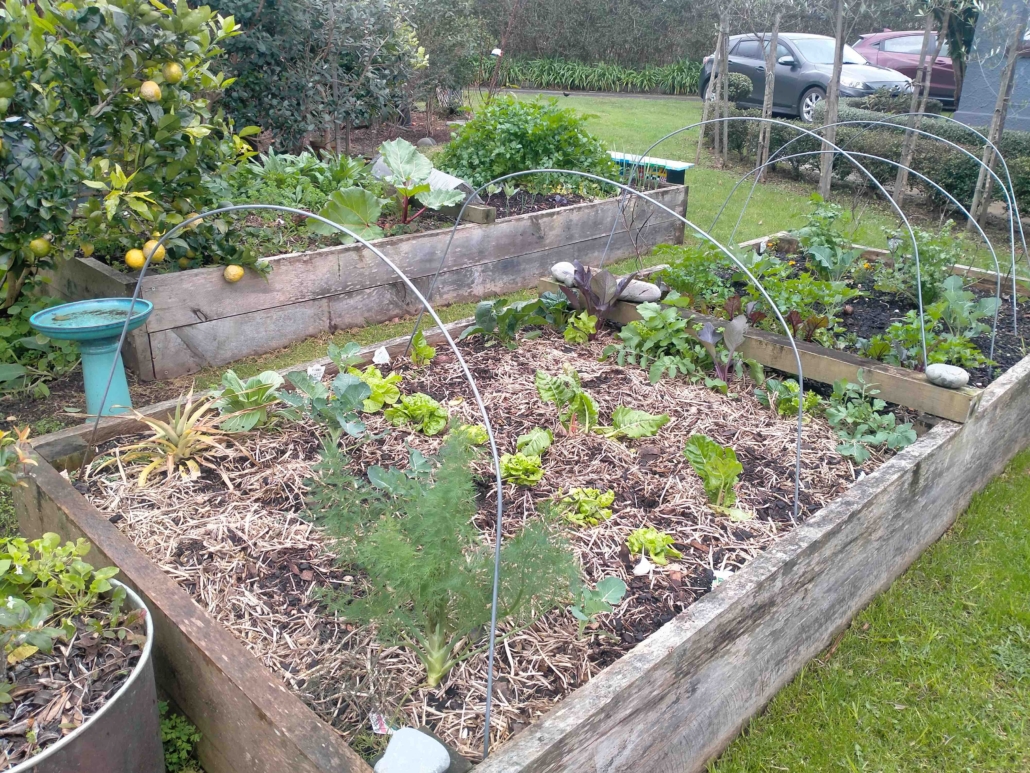
ABOVE: Michelle’s vegetable garden flourishes with the addition of vermicast and liquid from her worm farms.

More information

There is lots more information about worm farming online, such as these tips from the Compost Collective.

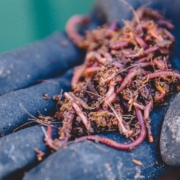
Photo at top: Compost Collective


https://organicnz.org.nz/wp-content/uploads/sites/2/2025/08/Worms-close-up-Compost-Collective.jpg 1128 1692 membership https://organicnz.org.nz/wp-content/uploads/sites/2/2024/09/OrganicNZ-2024-Masthead.png membership2025-08-27 15:33:162026-08-03 15:02:00Worm Farming Tips

Categories

  • All Articles
  • News
  • Features
  • Gardening
  • Health and Food
  • Farming and Horticulture
  • Building and Technology
  • Free Online

Latest Articles

  • Biochar, black gold and bananas
  • Parsley on chopping board with knife
    Parsley: More than just a garnish
  • Hardening off seedlings in mid spring
    Growing Vegetables: Mid spring — hardening off
  • Kumera slips - moon calendar 2026
    Moon Calendar September-October 2026
  • Cabbage and mulch strip-till field trial at IGZ
    Clover under cabbage reduces harvest — rye mulch keeps yields
  • Full moon seen from Amberley, Canterbury, New Zealand
    Your plants can see the moon: Science that deepens the Moon Calendar
  • Lettuces and watering can in home garden
    Worm juice and soil fungi: why compost alone isn’t enough for juicy lettuce
  • Mandarins in a bowl
    Mandarins: Winter vitamin boost
  • 2026 Example calendar covers
    2027 Calendars
  • Fantail on tree branch
    Parable of the paddock edge
Soil & Health Association of NZ Established 1941

Proudly published by the Soil & Health Association NZ

  • About us
  • Contact us
  • Help us
  • Sign up to the Newsletter
© Copyright OrganicNZ | Soil and Health Association NZ.
  • Link to Facebook
  • Link to Instagram
  • Link to LinkedIn
  • Privacy Policy
  • Editorial Policy
Scroll to top Scroll to top Scroll to top