Japanese wineberry: where and how to grow
It thrives in forest margins and produces tasty morsels of delicious flavour. Anna-Marie Barnes introduces a hardy bramble suitable for those who like plants that look after themselves.
Rubus phoenicolasius
We hope you enjoy this free article from OrganicNZ. Join us to access more, exclusive members-only content.
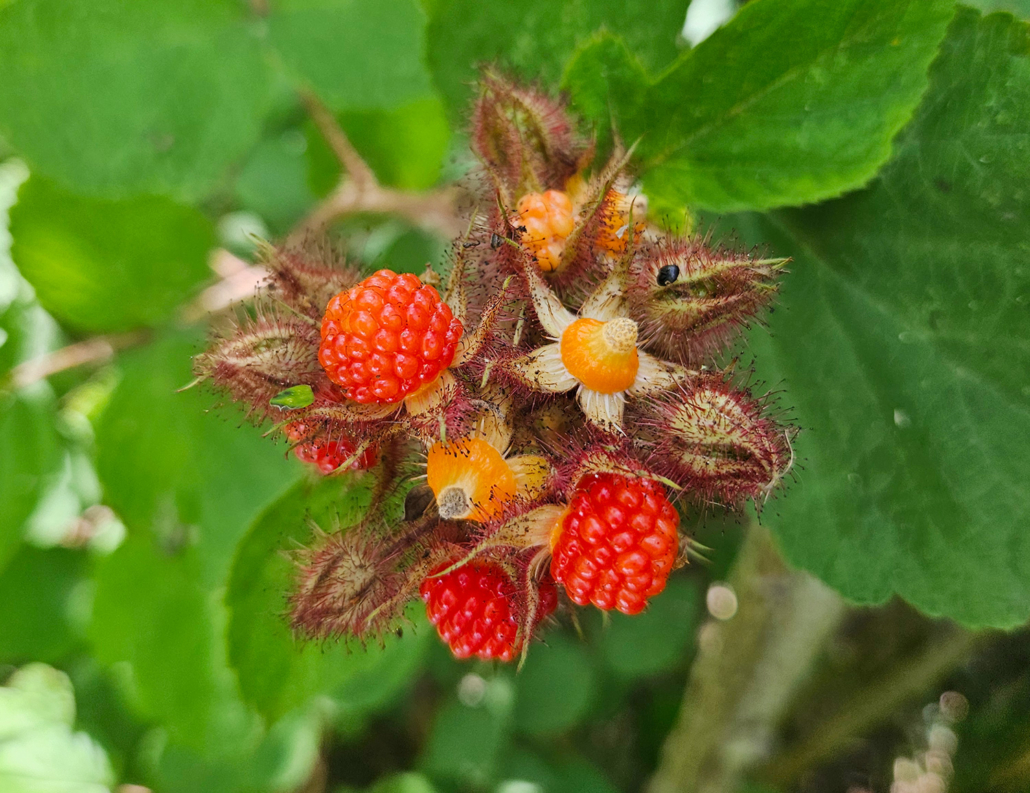
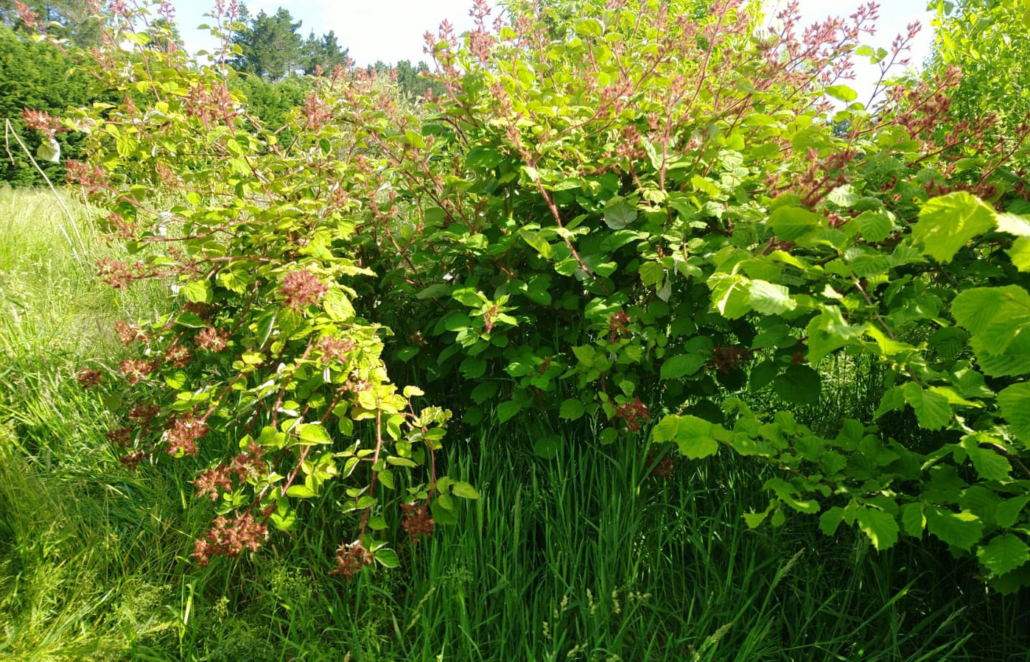
The Japanese wineberry is a strikingly attractive bramble, with a strong upright growth habit and tall canes densely covered in bristly red hairs (phoenicolasius – from the Latin ‘with purple hairs’). The ripe fruit look like small, shiny raspberries but are a bit firmer, juicier, and tangier – not quite as sweet, but with its own unique appeal.
The plants are hardy and ornamental and the fruit, which ripens in mid-late summer, is a refreshing change and usually slightly later than the standard raspberry and, for some reason, not targeted by birds (at least with one grower I know). Flourishing in semi-shade or full sun, the Japanese wineberry thrives in a forest garden or in a berry patch with a bit of space.
There are numerous hybrids in the Rubus family and Japanese wineberries are often used as breeding stock as they carry a recessive gene which produces yellow fruit, and hence are useful for producing yellow-fruiting hybrid berries.
Plant family: Rosaceae
Relatives: Raspberry, blackberry, and other bramble berries
Native to: Japan, Korea, and China
Where to grow
Given the right conditions, Japanese wineberries are potentially invasive as their long canes will droop to the ground and form roots like a blackberry does, so you’ll want to keep rampant growth in check. They prefer a slightly acidic soil pH and a well-drained loam with good water-holding capacity as the plants are thirsty, with surface roots that are not at all drought-tolerant. Mulching in summer helps keep the roots moist while fruiting. In terms of cold-hardiness, established plants will tolerate temperature drops down to about -15°C.
Allow one to two metres between plants if planting several – you may find that given the vigour, length, and height of the canes (up to four metres), one is enough in smaller gardens.
Maintenance
Like many brambles, Japanese wineberry fruits on one-year-old canes (wood in its second year of growth) so don’t expect a crop in the first year of growth – these canes will be vegetative, initiating flower buds in the autumn which will develop and go on to produce fruit the following year.
Because Japanese wineberry canes grow so long, in a smaller patch you might like to cut them back to a more manageable 1.5-2 metre length in year one, and anchor them to a support structure (a wooden trellis or wire framework). This also prevents them from trailing on the ground and self-rooting.
Once canes have fruited, they will look a bit old and tatty and it’s time for them to be removed at ground level. Once you’ve removed the worse-for-wear spent canes, train and tie in some new, flexible shoots ready for cropping the following year. It’s good practice to burn old canes in case pests or pathogens are lurking.
Left to their own devices, they will ramble and produce without any maintenance but choose your site carefully – Japanese wineberries have attained problem weed status in several US states.
An application of compost or sheep pellets at planting, plus a couple more in spring, will go a long way in keeping your Japanese wineberry productive. As with most fruiting plants, too much nitrogen-rich material ends up encouraging the plant to produce foliage over fruit.
Harvest
Japanese wineberry fruit ripens in mid-late summer to autumn (December to April). The flower buds open November to January, revealing snowy white blooms that are enclosed by a bristly red calyx. The calyx splits open at flowering, forming an attractive star-shaped backdrop for the bright red fruit. Unlike blackberries, the fruit picks cleanly from the receptacle. Eat the fruit fresh within a couple of days – like raspberries, they don’t store well. They have a similar nutrient profile to standard raspberries and can be substituted for them in desserts and fruit salads. Enjoy fresh or they make fantastic jam, pie fillings and of course, fruit wine.
Where to source
Specialist nurseries may stock plants but you may have to track down your wineberry from a friend or shout out to NZ Tree Crops members on their Facebook page – anyone with a clump will be able to pass on a rooted shoot tip or two.
(Photo Credits: Claire Flynn and Gianni Prencipe)
Anna-Marie Barnes is the New Zealand Tree Crops Association’s South Island Vice-President. She holds a Bachelor of Science (Primary Production) with a background in agroecology and entomology, and a Graduate Diploma of Teaching and Learning (Secondary). A lifelong gardener, she is a dedicated self-sufficiency enthusiast and endeavours to grow as much of her own produce as possible on a lifestyle block on the West Coast, with three unruly Orpington hens.