
• Link to Facebook
  • Link to Instagram
  • Link to LinkedIn
Reset member access or visit Soil & Health NZ
Organic NZ
  • Articles
    • Features
    • Gardening
    • Health and Food
    • Farming and Horticulture
    • Building and Technology
    • News
  • Competitions
  • Donate
  • Login
  • Join Us
  • Click to open the search input field Click to open the search input field Search
  • Menu Menu

Tag Archive for: fruit

Posts

Biochar, black gold and bananas

28 Aug 26/in Farming and Horticulture, Features, Free Online, Gardening, Magazine Articles


What started as a simple experiment to improve soil in the direction of terra pretaโ€”a famously fertile, friable soil that seems to sequester carbon permanentlyโ€”has become a national field trial for the use of biochar in New Zealand.


Betsy Kettle from Hibiscus Coast Zero Waste tells the story.

We hope you enjoy this free article from Organic NZ.  Join us to access more, exclusive member-only content
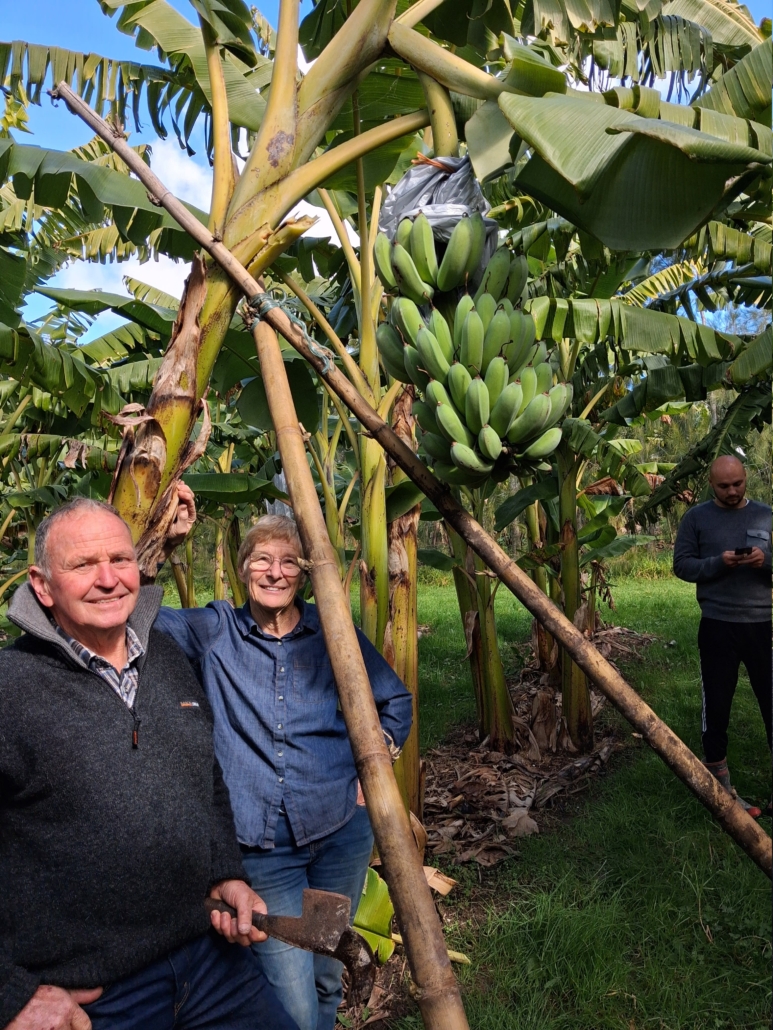
Phil and Jenny Grainger with banana trees grown in compost swales at their Waitoki farm


One of the programmes of our environmental education trust is City to Farm, which involves schools, retirement villages and cafes collecting their food scraps in wheelie bins, along with bokashi to add microorganisms and biochar to control odour and build topsoil.

The bins are transported to a local farm for composting.

Jenny and Phil Grainger have been experimenting at their Waitoki farm, in Rodney district north of Auckland, creating compost swales, enriching the soil and growing bananas.

Seven years later, the results are in. The compost swales created at the Graingersโ€™ farmโ€”layered with mulch, food scraps, and biochar, then planted with bananasโ€”have transformed from hard, lifeless clay into something resembling the black, soft soil of the Amazon. Soil tests from Hill Labs and the Bioeconomy Science Research Lab confirm it.

ABOVE: Phil and Jenny Grainger | Photo: Betsy Kettle

WHAT IS BIOCHAR? Biochar is a form of stabilised carbon that can last for decades, centuries, or even millennia in the soil without decomposing โ€“ read more about it on the Biochar Networkโ€™s website here.

The black gold of terra preta
Archaeologists who have analysed terra preta tell us that ancient Amazonians placed organic waste of many kinds, along with biochar, into trenches to transform their infamous clay into their famous, long-lasting topsoil.

So we followed their lead. We imitated the process by collecting food scraps from town, using donated biochar from Soil Conditioner Products (SoilPro), and keeping both the composted area and the area around it planted.

The biggest mystery, though, is this: how long does it take to make terra preta? We know there are areas of this โ€˜black earthโ€™ that are centuries, perhaps even millennia, old. But does it really take that long to create it? Landcare Research told us it would take at least five years before we would notice even the slightest change in soil carbon. We were a little concerned, but we carried on.

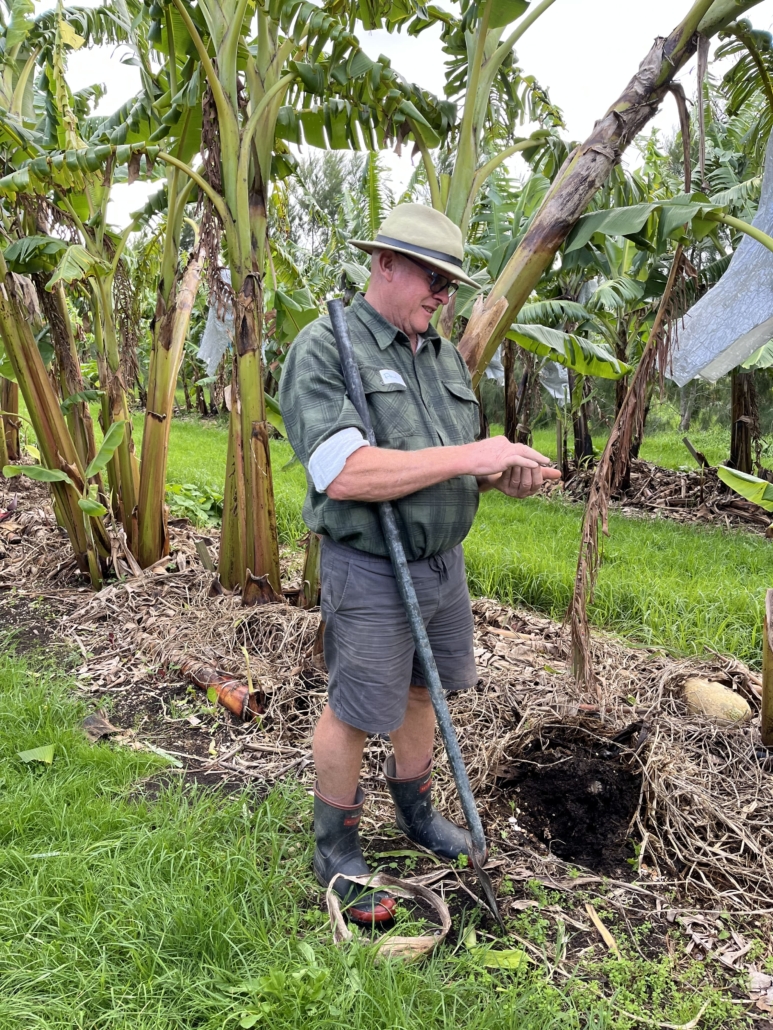
ABOVE: Paul Candy of Future Ready Farms checks out the soil in the compost swales | Photo: Rebecka Keeling

Compost swales

Compost swales are designed especially for clay soils to catch water from above and help it soak into the subsoil. Long, shallow excavations are dug across the contours of a hill, sloping gently downhill. The excavated soil is mounded on the downhill side and planted.

The hollowed area is then layered again and again with woody mulch and food scraps with biochar, or another nitrogen source, until the desired height is reached.

After that, it is simply left to compost. The compost is not turned and not moved. Instead, the combination we used of biochar and bokashi in the food scraps keeps the heap fresh and healthy, if it is not sitting in standing water. The bokashi โ€˜zingโ€™ (microorganism mix) in the food scraps supports some anaerobic breakdown, and worms move in once the heap has cooled. Fungal hyphae grow undisturbed.

Climate action tool
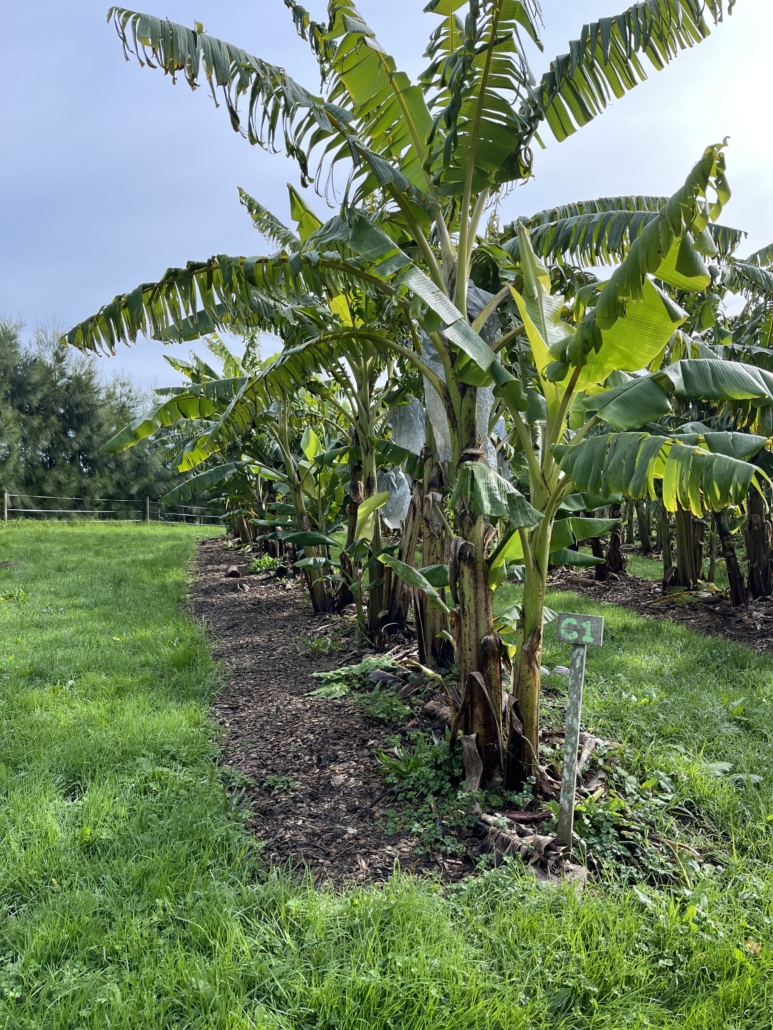
Swales are useful climate action tools because in times of drought the biochar and deepened topsoil act as a reservoir that plants can draw from. They can also help ease flooding by encouraging runoff to soak into the subsoil. And when the swales are saturated, the bunds provide a drier, more aerated area for roots.

Compost swales are also climate action because they use the stabilised carbon that is biocharโ€”making it a carbon sink in its own right. But this is not the biggest carbon sink. The growth of the living soil microbiome may be much larger.

Biochar acts as a long-lasting home for soil microorganisms, giving them more surface area to colonise. Fungal hyphae also seem to be stimulated by biochar and add to the growing carbon mass. But the fungi and bacteria must still rely on a steady source of food from the starches and sugars that plants pump into the soil.

ABOVE: Banana trees growing in compost swales | Photo: Rebecka Keeling

Holistic approach

So, the swale, biochar, compost, plants, and microorganisms all work together symbiotically and synergistically to transform the soil.

Will this work in other parts of New Zealand? We may have been fortunate: we were working with the same โ€˜deadโ€™ kaolinite clay found in much of Rodneyโ€™s soils, that are also found in the Amazon.

We encourage growers throughout the country to experimentโ€”not only with biochar, but with creating diverse living systems that work together to create living carbon sinks that are resilient to an ever-changing climate.


Betsy Kettle has been a zero-waste advocate and composter for at least three decades and is a trustee of the Sustainable North Trust. She thanks Auckland Council for their support for the City to Farm project over the past eight years.
https://organicnz.org.nz/wp-content/uploads/sites/2/2026/08/Phil-and-Jenny-Grainger-with-banana-trees-grown-in-compost-swales-photo-Betsy-KettleCOMPRESSED-scaled.jpg 2560 1920 membership https://organicnz.org.nz/wp-content/uploads/sites/2/2024/09/OrganicNZ-2024-Masthead.png membership2026-08-28 13:50:342026-08-29 08:04:06Biochar, black gold and bananas
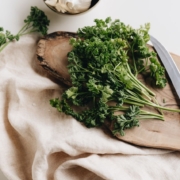
Parsley on chopping board with knife

Parsley: More than just a garnish

28 Aug 26/in Free Online, Health and Food, Magazine Articles

There are some foods that quietly get on with the job without demanding much attention.

Parsley is one of them. Paula Sharp shines a light on this humble herb that also deserves to be considered a vegetable.

We hope you enjoy this free article from Organic NZ.  Join us to access more, exclusive member-only content


Often sprinkled over a meal almost as an afterthought, this hardy little herb can be more than a pretty finishing touch. It brings flavour, colour and a surprising range of nutrients and plant compounds to the plate. It is particularly fabulous during winter to add a little more freshness and variety to our meals.

Growing parsley


Parsley is relatively easy to grow in most parts of New Zealand.

Give it reasonable sunshine, good soil and regular watering and it can keep producing through the cooler months.

It doesnโ€™t need much space, making it ideal for a garden, raised bed or even a pot outside the kitchen door.

Grow it from seed or seedlings โ€“ ask around your neighbourhood if anyone has self-sown seedlings to spare. Once itโ€™s established you can let it go to seed and watch it pop up of its own accord.

It is biennial, meaning it will set seed in its second year, so to ensure continuous supply you may need to sow or plant parsley a couple of years in a row.

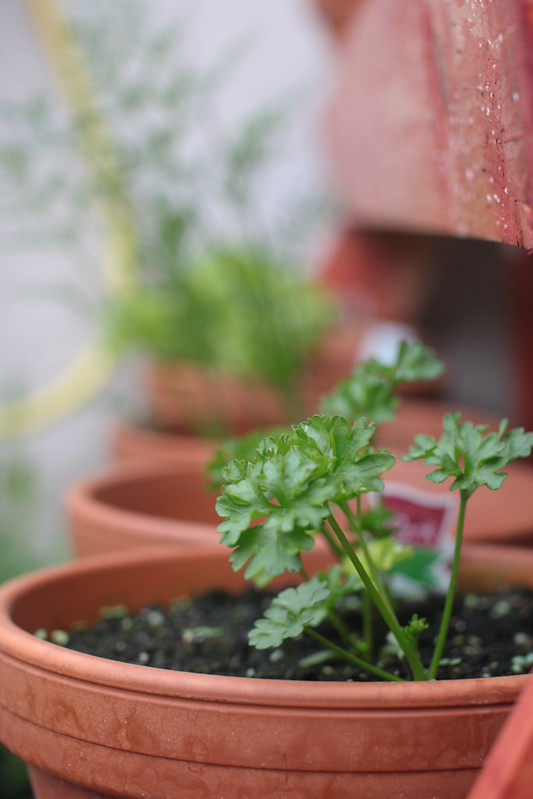
ABOVE: Parsley grows easily in a pot. Photo: Magnus Franklin, Flickr

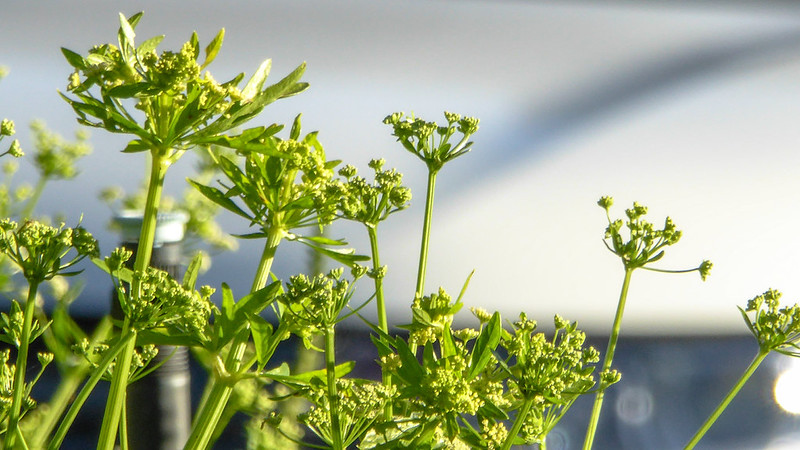
ABOVE: Parsley going to seed, by Theen Moy, Flickr

Packed with nutrients


If you already have parsley growing, here’s your encouragement to stop thinking of it as a garnish and start thinking of it as food.

Parsley may be small, but it is surprisingly nutrient-dense. It provides:

  • Vitamin K โ€“ important for normal blood clotting and maintaining healthy bones.
  • Vitamin C โ€“ contributes to normal immune function and helps the body absorb iron from plant foods.
  • Folate โ€“ needed for normal cell division and the formation of healthy red blood cells.
  • Carotenoids โ€“ Including beta-carotene, lutein and zeaxanthin, naturally occurring plant compounds.
  • A variety of phytochemicals โ€“ the natural compounds found in plants that contribute to their colour, flavour and aroma and help protect plants from environmental stress.

Eat a variety of plants

Of course, weโ€™re not going to meet all our nutritional needs from a handful of parsley. But thatโ€™s not really the point. One of my favourite nutrition messages is simply: eat a variety of plants.

Different plants provide different combinations of vitamins, minerals, fibre and phytochemicals. Rather than eating the same three or four vegetables week after week, look for easy ways to increase the variety on your plate. And this is where herbs are brilliant.

A generous handful of parsley adds another plant to your diet while bringing a completely different flavour and collection of plant compounds to the meal. Think of herbs as small but mighty contributors to dietary diversity.

You donโ€™t need to overhaul your diet. Add a handful of parsley here, some fresh herbs there, try a different vegetable next week and gradually your plant variety starts to grow.


VITAMIN K:
A note about vitamin K โ€“ parsley is particularly high in vitamin K. If you take warfarin or another vitamin-K-sensitive anticoagulant, the important thing isnโ€™t necessarily to avoid parsley altogether, but to keep your intake of vitamin-K-rich foods consistent and follow your healthcare professionalโ€™s advice.

Flavour and savour

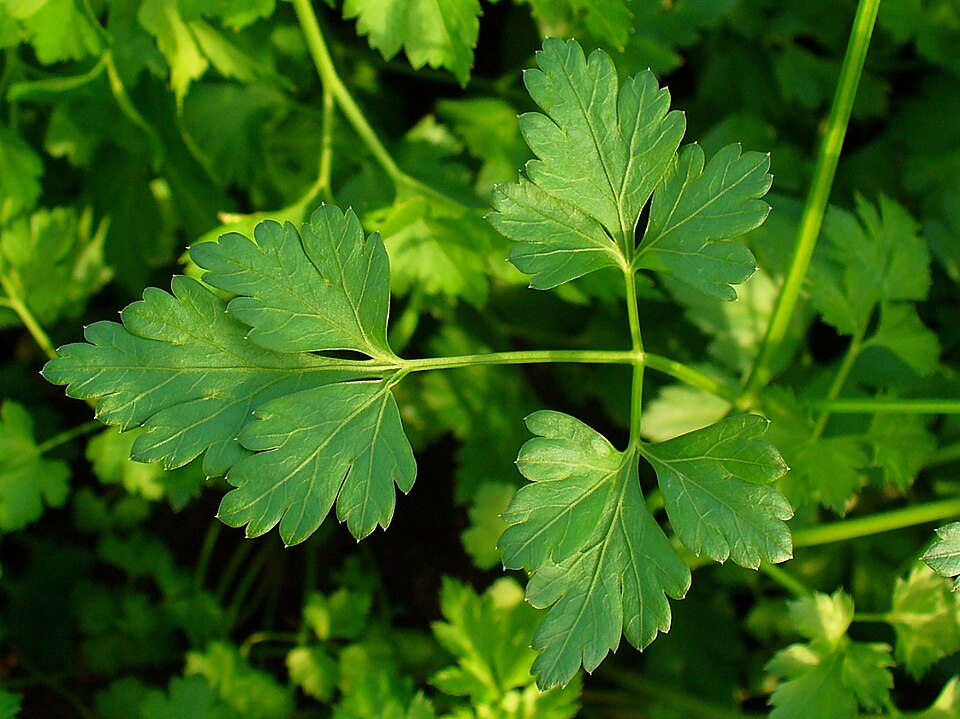
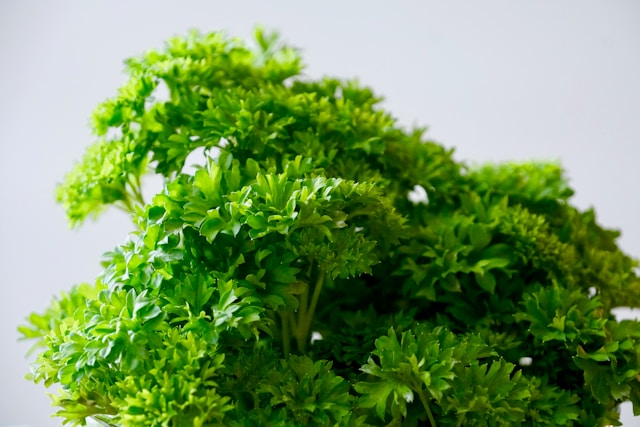
Did you know there are different types of parsley? The two most familiar are curly-leaf parsley, with its frilly leaves and slightly milder flavour, and flat-leaf or Italian parsley, which has broader leaves and a stronger, fresher flavour.

Both have a place in the kitchen, but flat-leaf parsley is particularly lovely when you want the herb itself to be a feature rather than simply a decoration.

ABOVE LEFT: Flat-leaf parsley (photo: H Zell, Wikimedia Commons), and RIGHT: curly-leaf parsley (Hanna Stolt, Unsplash)

Donโ€™t throw away the stalks. The tender stalks are perfectly edible and packed with flavour. Finely chop them into soups, sauces, stocks, casseroles, dressings or salads. Itโ€™s a simple way to reduce food waste while getting more from the bunch. Put parsley to work!

Serving suggestions


Fresh parsley can lift the flavour of winter foods beautifully. Try chopping a generous handful and adding it to:

  • Vegetable, chicken or lentil soup
  • Roasted kลซmara, pumpkin or carrots
  • Mashed potato or cauliflower
  • Scrambled eggs or omelettes
  • Homemade dips
  • Fish cakes or meatballs
  • Brown rice, quinoa or other grain salads
  • A simple lemon and olive oil dressing

It brings freshness, colour and flavour without needing much else. And there is something particularly satisfying about stepping outside just before dinner, snipping a handful of herbs and taking them straight into the kitchen.

Next time you see that little bunch of parsley sitting in the fridge, donโ€™t save it for decoration.

Chop it. Eat it. Enjoy it!

Sometimes the simplest foods are the ones we overlook.


Recipe


Parsley & lemon dressing


This takes just minutes to make and is a delicious way to use a generous amount of parsley rather than just a garnish.

Ingredients

  • 1 large handful fresh parsley, finely chopped
  • Juice and zest of 1 lemon
  • 3 tablespoons extra virgin olive oil
  • 1 small garlic clove, finely grated
  • 1 teaspoon Dijon mustard
  • A pinch of sea salt
  • Freshly ground black pepper

ABOVE: Aaron Blanco Tejedor, Unsplash

Method

  1. Mix everything together and drizzle over roasted vegetables, fish, chicken, potatoes or a warm grain salad.
  2. Store any leftovers in a sealed jar in the refrigerator and use within a few days.

Parsley tabbouleh

Serves 4. This is a show-stopper at a barbecue!

  • 1 cup cooked bulgur wheat, cooled
  • 2 large handfuls fresh flat-leaf parsley, finely chopped
  • ยฝ cup fresh mint leaves, finely chopped
  • 2 large tomatoes, finely diced
  • ยฝ small cucumber, finely diced
  • 2 spring onions, finely sliced
  • Juice of 1 large lemon
  • 3 tbsp extra virgin olive oil
  • ยฝ tsp ground cumin
  • Sea salt and freshly ground black pepper
Someone passing a bowl of tabbouleh

ABOVE: Ali Dashti, Pexels

  1. Place the cooled bulgur in a large bowl and fluff with a fork.
  2. Add the parsley, mint, tomatoes, cucumber and spring onion.
  3. Whisk together the lemon juice, olive oil and cumin, then pour over the salad.
  4. Toss well and season with salt and pepper.
  5. Leave to stand for 15โ€“20 minutes before serving so the flavours can mingle.

Want more seasonal nutrition inspiration?

Iโ€™m Paula Sharp, nutritional therapist and founder of Paula Sharp Nutrition, supporting women to nourish their health with sustainable food and mindset habits.

If youโ€™d like seasonal recipes, practical nutrition tips and evidence-based wellness insights delivered straight to your inbox, Iโ€™d love you to join my newsletter. Sign up at: www.paulasharpnutrition.com

Photo at top of article:


https://organicnz.org.nz/wp-content/uploads/sites/2/2026/08/pexels-alleksana-parsley-board-knife-4113918.jpg 853 1280 membership https://organicnz.org.nz/wp-content/uploads/sites/2/2024/09/OrganicNZ-2024-Masthead.png membership2026-08-28 13:49:122026-08-28 13:49:14Parsley: More than just a garnish
Mandarins in a bowl

Mandarins: Winter vitamin boost

31 Jul 26/in Free Online, Health and Food, Magazine Articles


Easy to peel, naturally sweet and perfectly portable, these vibrant little citrus fruits are often vying for attention alongside oranges.

But mandarins definitely deserve their place as one of winterโ€™s superstars, as Paula Sharp writes.

We hope you enjoy this free article from Organic NZ.  Join us to access more, exclusive member-only content


Originally cultivated over a thousand years ago in China, mandarins were considered a symbol of good fortune and prosperity. Their name comes from the wealthy mandarin officials who prized these fruits.

Today, they are grown throughout many parts of the world, including New Zealand, where our cool winters and warm summers produce beautifully sweet citrus fruits from June to September.

Mandarins come wrapped in their own biodegradable packaging and require no preparation, making them one of the easiest healthy snacks to pop into a lunchbox, handbag or backpack.

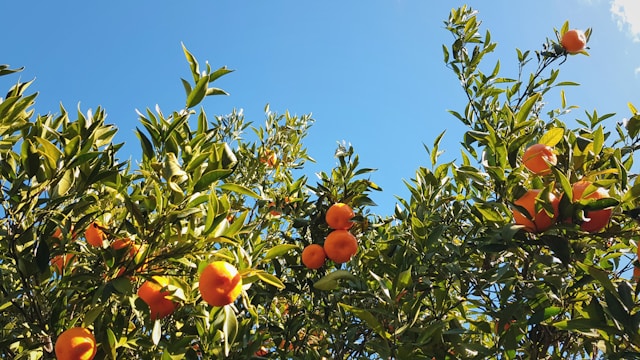
ABOVE: Mandarin tree | Photo by Brittany Lee on Unsplash

Naturally nutritious

One medium mandarin contains around 35โ€“45 calories; itโ€™s a satisfying snack without excessive energy intake. More importantly, it provides an impressive range of nutrients that support overall health.

Mandarins are an excellent source of vitamin C, providing around half of an adultโ€™s daily recommended requirement in just one piece of fruit.

Vitamin C supports immune function, assists collagen production for healthy skin, joints and blood vessels and helps the body absorb iron from plant foods.

Mandarins are also rich in flavonoids, including hesperidin and naringenin: plant compounds that act as antioxidants. These compounds help reduce oxidative stress and support cardiovascular health by helping maintain healthy blood vessels.

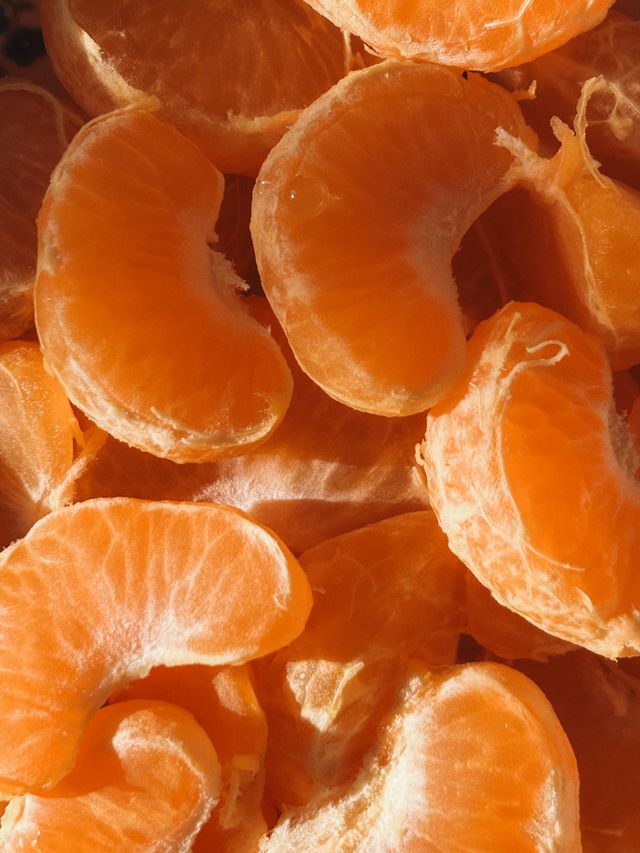
Photo: Anna Danilina, Pexels

Mandarins also contain:

  • Potassium for healthy blood pressure
  • Folate for cell repair and growth
  • Fibre for digestive health
  • Small amounts of calcium and magnesium
  • Beta-cryptoxanthin, a carotenoid that supports eye health and immune function.

Mandarins arrive exactly when we need them most. During winter our immune systems face greater challenges from seasonal viruses and different bacteria. Regular intake of vitamin C-rich foods supports immune cell function and may reduce the duration of common colds.

Their bright colour also reflects their high carotenoid content: nutrients associated with reduced inflammation and healthy ageing. For older adults or small children, mandarins are particularly useful because they are soft, easy to chew and digest, and ideal for people with smaller appetites.

If you enjoy simple, grounded nutrition like this; practical, seasonal, and realistic, you can join Paulaโ€™s Sharp Bite newsletter for weekly insights, recipes, and support HERE.

The perks of pith and peel

Eating the whole mandarin provides more than just natural sweetness. Each segment contains dietary fibre, while the white pith, the fine, stringy layer under the peel, is one of the most nutritious parts of the fruit.

Rich in fibre and antioxidant plant compounds called flavonoids, the pith helps nourish beneficial gut bacteria, supports healthy digestion, promotes steadier blood sugar levels and helps keep you feeling satisfied for longer.

Rather than removing every trace of the pith, leave a little attached and enjoy.

Organic mandarins offer an extra nutritional bonus ยญโ€“ the peel. After washing well, the zest can be grated into baking, porridge, overnight oats or yoghurt for an intense citrus flavour.

Dried peel can also be added to herbal teas or slow-cooked dishes. The aromatic oils found in the peel contain compounds that have traditionally been used to support digestion.

When using zest, always choose organically grown or spray-free fruit.

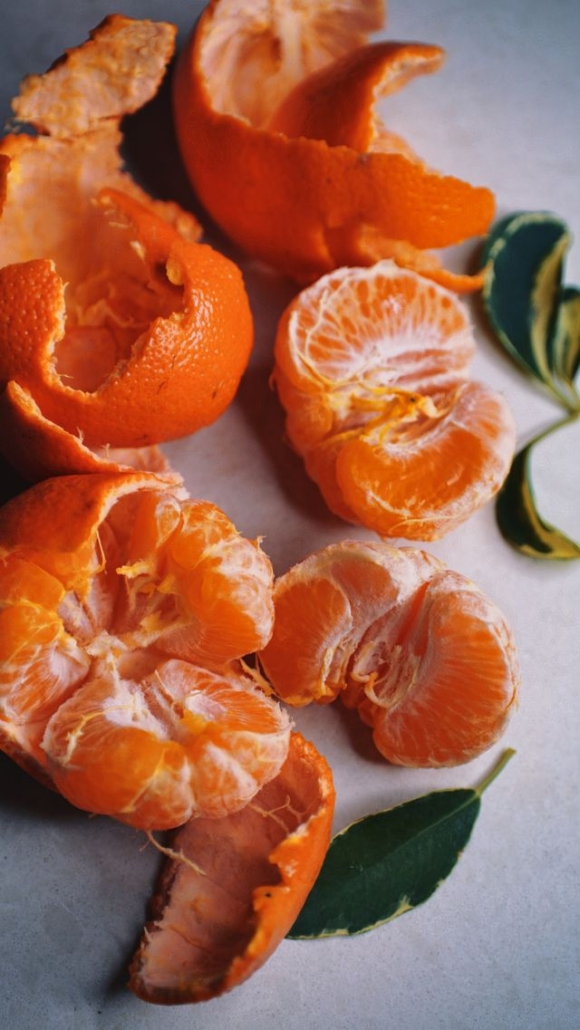
Photo: Aditya Bhatia, Pexels

How to choose, use and store

For the best quality, choose mandarins that feel heavy for their size with smooth, brightly coloured skin. Store them at room temperature if eating within a few days, or refrigerate them to extend their freshness for up to two weeks.

Adding one or two mandarins to your daily routine is one of the easiest nutritional upgrades you can make during winter. Enjoy one with breakfast, slice segments into salads, stir through grain bowls or pair with a handful of nuts for a balanced snack.

Sometimes the smallest changes make the biggest difference to long-term health, and mandarins are a delicious reminder that eating well doesn’t have to be complicated.


Mandarin recipes

Winter mandarin & fennel salad


Beautifully zingy with grilled fish or roast chicken. Serves 4

Ingredients

  • 4 mandarins, peeled and segmented
  • 1 fennel bulb, finely sliced (Florence fennel)
  • 2 handfuls baby spinach
  • ยผ cup toasted walnuts
  • 40g crumbled feta
  • 2 tbsp extra virgin olive oil
  • 1 tbsp apple cider vinegar
  • 1 tsp wholegrain mustard
  • Salt and cracked pepper to taste

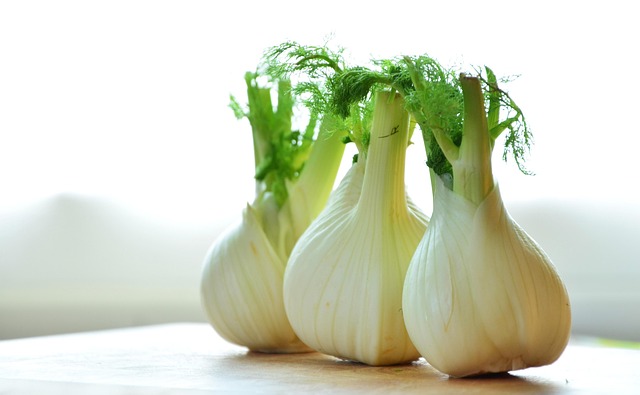
ABOVE: The crunch and mild aniseed flavour of Florence fennel pairs well with the soft sweetness of mandarins. Image by congerdesign from Pixabay

Method

  1. Arrange spinach, fennel and mandarin segments on a serving platter.
  2. Sprinkle over walnuts and feta.
  3. Whisk together olive oil, vinegar, mustard, salt and pepper. Drizzle over salad just before serving.

Mandarin & almond loaf

Delicious served warm with Greek yoghurt. Gluten-free, or you can use wheat flour instead of the almond meal.

Makes 1 loaf (10 slices)

Ingredients

  • 2 whole organic mandarins
  • 3 eggs
  • ยผ cup honey
  • 2 tbsp olive oil
  • 2 cups almond meal
  • 1 tsp baking powder
  • 1 tsp vanilla
  • 1 tsp cinnamon
  • Pinch sea salt
  • Flaked almonds for topping

Method

  1. Simmer whole mandarins for 40 minutes until soft. Cool slightly.
  2. Cut into quarters, remove seeds and blend (skin included) until smooth.
  3. Preheat oven to 180ยฐC.
  4. Mix mandarin puree with eggs, honey, olive oil and vanilla.
  5. Fold in the almond meal, baking powder, cinnamon and salt.
  6. Pour into a lined loaf tin and sprinkle with flaked almonds.
  7. Bake for 35-40 minutes until golden and cooked through. Cool before slicing.

Photo: Magnific


Want more seasonal nutrition inspiration?

Iโ€™m Paula Sharp, nutritional therapist and founder of Paula Sharp Nutrition, supporting women to nourish their health with sustainable food and mindset habits.

If youโ€™d like seasonal recipes, practical nutrition tips and evidence-based wellness insights delivered straight to your inbox, Iโ€™d love you to join my newsletter. Sign up at: www.paulasharpnutrition.com

Photo at top of article: Earl Wilcox on Unsplash


https://organicnz.org.nz/wp-content/uploads/sites/2/2026/07/earl-wilcox-tK54y3XQ2xI-unsplash-mandarins-bowl.jpg 427 640 membership https://organicnz.org.nz/wp-content/uploads/sites/2/2024/09/OrganicNZ-2024-Masthead.png membership2026-07-31 10:24:482026-07-31 10:26:19Mandarins: Winter vitamin boost

Strawberries โ€“ย a self-sufficient crop

26 May 25/in Free Online, Gardening

By Gillian Swinton 

Images and text from The Good Life by Gillian Swinton, photography by Francine Boer Photography and Gillian Swinton. Published by Allen & Unwin NZ, RRP $45.00.

We hope you enjoy this free article from OrganicNZ.  Join us to access more, exclusive member-only content

Planting strawberries in winter might sound ridiculous, but it is a great activity to do while the garden is dormant. When your strawberry plants are in the ground, you should notice runners coming off each mature plant. These runners are future strawberry plants, meaning that if you look after your plants, strawberries can become yet another self-sufficient crop.

Strawberry plants are going to remain in your garden for a few years, so consider where youโ€™re placing them. Wherever you plant them, they will need a bit of love in the beginning to ensure they fruit in summer. Iโ€™ve chosen to plant ours in the paddock next to our garlic crops, as they make great companions. Keep in mind they will need protection from birds, so growing them in a berry house or in an area you can easily cover is key!

Hamish harvests strawberries from under the bird netting

To obtain runners, find a healthy strawberry plant and locate the running stem from the original plant. There may be a few plants on one runner, and you can take them all. Look for little roots and healthy crowns developing at the base. I trim these down and plant them in a seed-raising mix until spring when the soil temperatures rise.

You could do this in autumn or spring, but I find taking the runners in winter, then keeping them in good soil and well fed with seaweed tonic, means I can build healthy roots in time for a head start in spring.

I also build their future garden beds, ready for the runners when it gets warmer. For my strawberry bed, I:

  • fork the ground gently to get some air into the soil.
  • add compost.
  • add chicken poop โ€” itโ€™s acidic, which strawberries love!
  • add leaf mulch and grass clippings โ€” grass clippings in winter are fine to add as there are no seeds. Mixing them with leaves makes a powerhouse combo.
  • add weed matting. This will protect the plant, suppress weeds and stop any fruit in summer from sitting on the ground. Many gardeners dislike using weed matting, but we use it happily for our strawberry beds. You could replace weed matting with wool or a heavy mulch of pea straw. We get some big winds in spring, so pegging down weed matting helps keep our organic materials from being blown away, as well as retaining soil moisture.
  • blow-torch holes into the matting. Melting the matting seals the holes and makes it easier for us to plant the runners.
  • add an irrigation line under the weed matting, to be hooked up in spring when the runners are planted.

When it comes time to plant in spring, get the young plants and plant in the holes in the matting. You may have to dig down through the layers, but make sure not to cover the crown (the stem where the leaves develop from) with soil. Water in with seaweed tonic and keep plants well irrigated through spring and summer.

New plants wonโ€™t yield much fruit in their first year, but they will do better in years two and three. Keep covered with netting to prevent birds (and dogs) from getting in. With some care each year, you shouldnโ€™t have to buy strawberries or strawberry plants again!

Cover of The Good Life by Gillian Swinton


https://organicnz.org.nz/wp-content/uploads/sites/2/2025/05/FrancineBoerPhotography-Lauderburn2.0073.lowres-scaled.jpg 2560 1707 membership https://organicnz.org.nz/wp-content/uploads/sites/2/2024/09/OrganicNZ-2024-Masthead.png membership2025-05-26 12:44:282025-07-04 16:24:29Strawberries โ€“ย a self-sufficient crop

Categories

  • All Articles
  • News
  • Features
  • Gardening
  • Health and Food
  • Farming and Horticulture
  • Building and Technology
  • Free Online

Latest Articles

  • Biochar, black gold and bananas
  • Parsley on chopping board with knife
    Parsley: More than just a garnish
  • Hardening off seedlings in mid spring
    Growing Vegetables: Mid spring โ€” hardening off
  • Kumera slips - moon calendar 2026
    Moon Calendar September-October 2026
  • Lettuces and watering can in home garden
    Worm juice and soil fungi: why compost alone isnโ€™t enough for juicy lettuce
  • Mandarins in a bowl
    Mandarins: Winter vitamin boost
  • 2026 Example calendar covers
    2027 Calendars
  • Fantail on tree branch
    Parable of the paddock edge
  • Green kiwifruit
    Kiwifruit: Treasures in red, gold and green
  • matariki
    Moon Calendar July-August 2026
Soil & Health Association of NZ Established 1941

Proudly published by the Soil & Health Association NZ

  • About us
  • Contact us
  • Help us
  • Sign up to the Newsletter
ยฉ Copyright OrganicNZ | Soil and Health Association NZ.
  • Link to Facebook
  • Link to Instagram
  • Link to LinkedIn
  • Privacy Policy
  • Editorial Policy
Scroll to top Scroll to top Scroll to top