
Parable of the paddock edge
We are the ones who live beside the paddock.
No one asked us whether the new substance belonged here.
A parable for our times by David McNeill
We hope you enjoy this free article from Organic NZ. Join us to access more, exclusive member-only content
We are the ones who live beside the paddock.
We are the children breathing at the fence line, the old woman hanging washing when the wind changes, the dog nosing the ditch, the cat washing its paws after walking through wet grass.
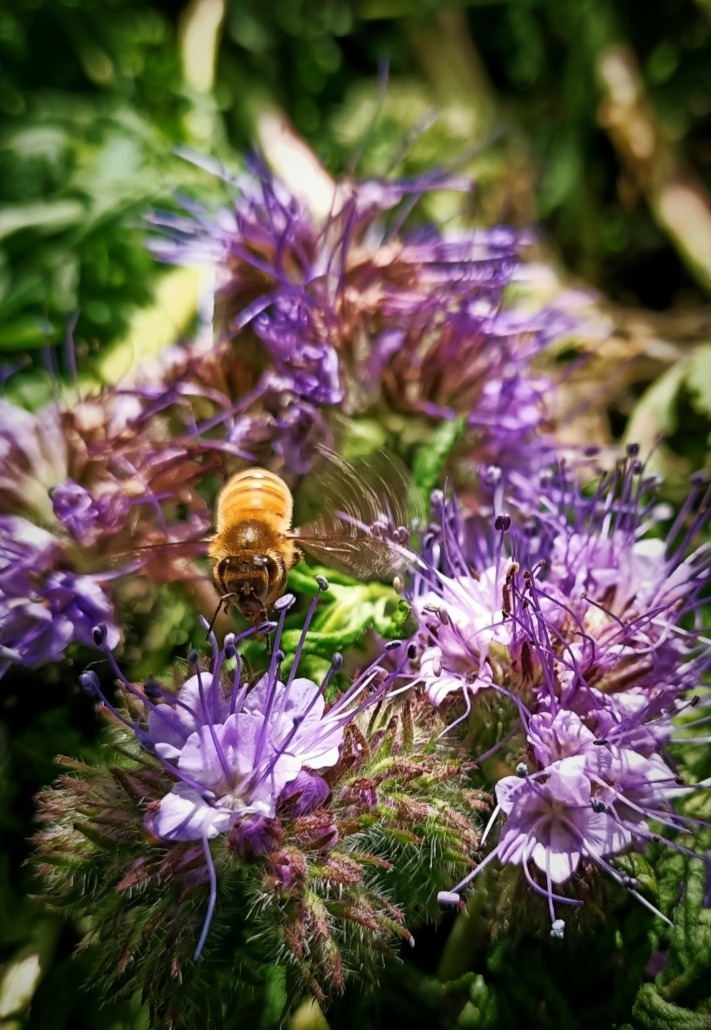
We are the swallows taking insects from the air, the worms folding leaves into the soil, the fungi threading unseen through roots, the bees reading flowers as maps, the fish waiting downstream where every paddock eventually arrives.
No one asked us whether the new substance belonged here.
It came with a label, a number, an approval, a promise. It came as efficiency. It came as yield. It came as a solution to a problem measured in tonnes and dollars.
It came with confidence from elsewhere, from another regulator, another climate, another soil, another river system, another idea of acceptable loss.
The farmer saw a treatment. The supplier saw a market. The regulator saw a pathway. The Minister saw growth. The paddock saw a fog settle on its skin.
We do not speak in quarterly returns.
We speak in hatchings, germinations, moults, root hairs, spawning, coughing, composting, mauri and the slow inheritance of residues.
What is temporary to a permit may be permanent to a stream. What is negligible to a model may be everything to a mayfly. What is ‘acceptable exposure’ to an adult may not be acceptable to a child, an embryo, a wetland, or a handful of living soil.
The farmer may gain this season. The grass may stand thicker. The invoice may be justified. But the paddock is not an isolated factory floor. It is connected: to field drains, lungs, gardens, milk, birds, rain, worms, neighbours, memory, and whakapapa.
- We ask for a law that hears the quiet witnesses before the loudest applicant.
- We ask that novelty not be mistaken for progress.
- We ask that profit not be allowed to outrun proof.
- We ask that soil be treated not as a surface to be managed, but as a living community with its own right to caution, to abundance.
For once a substance has crossed the fence, entered the ditch, touched the root, settled in the silt, or moved through the body of a child, the question is no longer whether approval was efficient. The question is who was made to carry the cost.
This is kaitiakitanga.
The Soil Act — the shortest and most important act for the environment. Clause 1. No person shall do anything to harm the soil. The end.
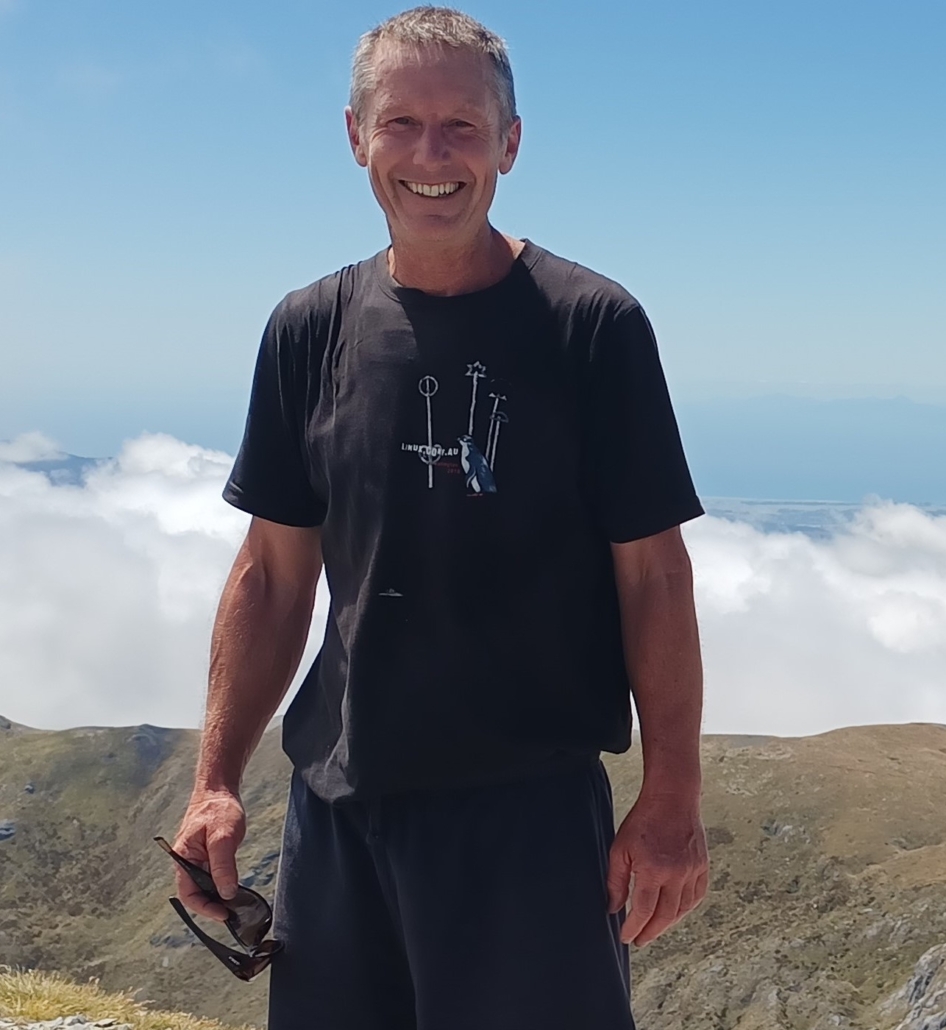
David McNeill is a member of Soil & Health’s National Council, its treasurer, and is a Soil & Health appointee on the board of BioGro NZ.
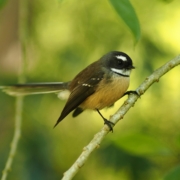
Photo at top: Fantail – piwakawaka on a tree branch, by Lolita Alekseeva, Unsplash