
Tourism doesn’t have to cost the earth
The tourism dollar is coming back, but at what cost?
Claire Brunette investigates how New Zealand can, and does, balance the effect on the environment while still reaping the rewards in our economy.
We hope you enjoy this free article from Organic NZ. Join us for access more exclusive, members-only content.
With vertiginous snowy peaks, pōhutukawa-fringed beaches and geothermal areas it’s not hard to see why Aotearoa New Zealand attracts tourists.
In the year ending March 2020, tourism was our largest export industry, representing $16.4 billion, or 5.5 percent of GDP. Though still only half of pre-pandemic levels, since the border reopened in July 2022, international visitors have been returning in rapid numbers with international arrivals reaching 172,269 in August 2022. With this new bloom of travellers comes a significant environmental impact. A 2018 study estimated that tourism is responsible for around 8% of global greenhouse gas emissions. Construction, energy use, transport, souvenirs, food consumption and waste all impact the local area and global climate.
It’s not all bad news. Done well, tourism can benefit local communities and their economy, raise awareness and funds for wildlife, increase happiness and well-being and create a rich understanding of other cultures.
So how do we find the balance? How can we benefit from the positive aspects of tourism while minimising the detrimental ones?
The answer might lie in ecotourism. Sustainable tourism or ecotourism is defined by the International Ecotourism Society as ‘responsible travel to natural areas that conserves the environment, sustains the well-being of the local people, and involves interpretation and education’. They define ecotourism principles to be followed.
The International Ecotourism Society’s list of ecotourism principles
- Minimise physical, social, behavioural, and psychological impacts.
- Build environmental and cultural awareness and respect.
- Provide positive experiences for both visitors and hosts.
- Provide direct financial benefits for conservation.
- Generate financial benefits for both local people and private industry.
- Deliver memorable interpretative experiences to visitors that help raise sensitivity to host countries’ political, environmental, and social climates.
- Design, construct and operate low-impact facilities.
- Recognise the rights and spiritual beliefs of the indigenous people in your community and work in partnership with them to create empowerment.
Treading lightly
About half of the emissions produced by tourism are from transportation. If you are helicoptering into your eco-lodge, are you really engaging in sustainable tourism?
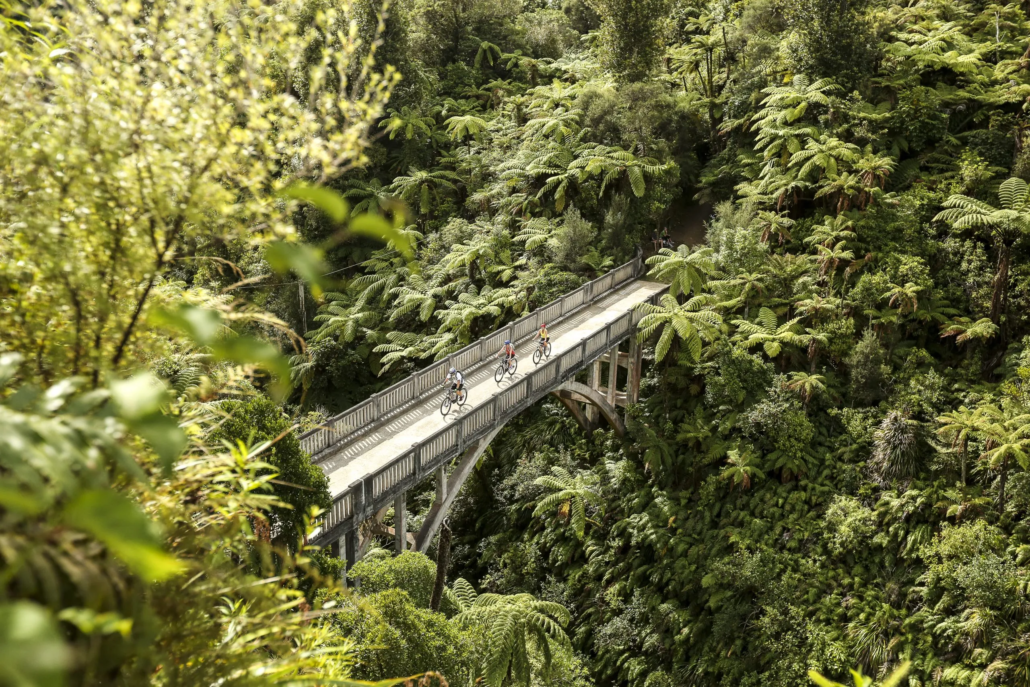
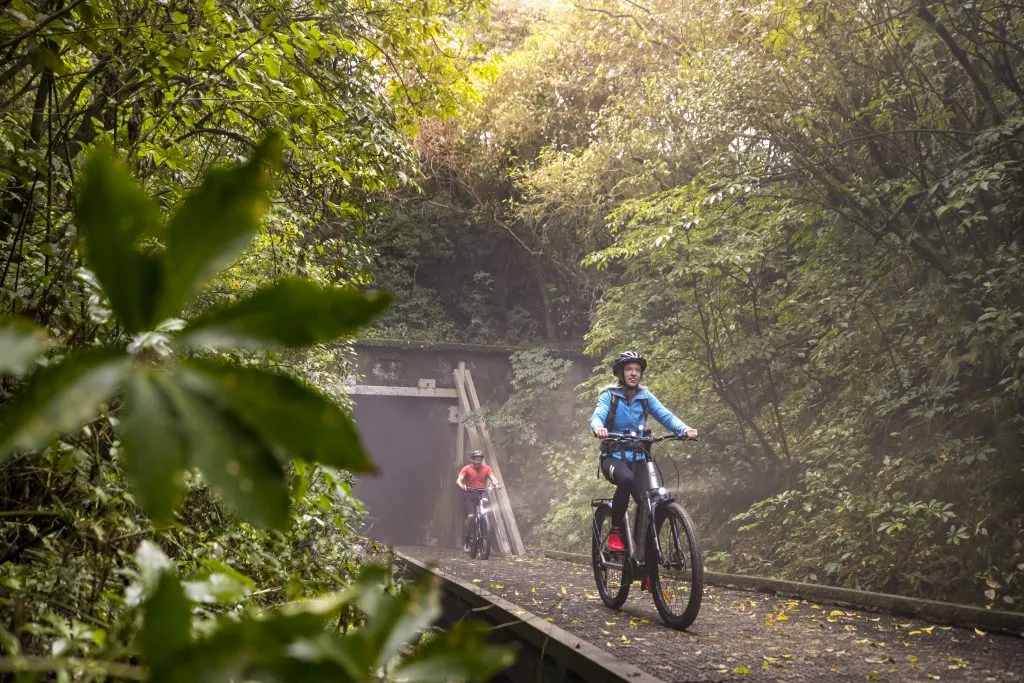
New Zealand’s scale and diversity make it a paradise for getting around using your own, eco-friendly, muscle. Walking, cycling trails and kayaking spots run the whole length of the country and are a great choice for low- emission transport. One such jewel is the Mountain to Sea cycle trail which takes riders from the stark magnificence of Tongariro National Park, along the culturally and historically significant Whanganui River to the wild west coast.
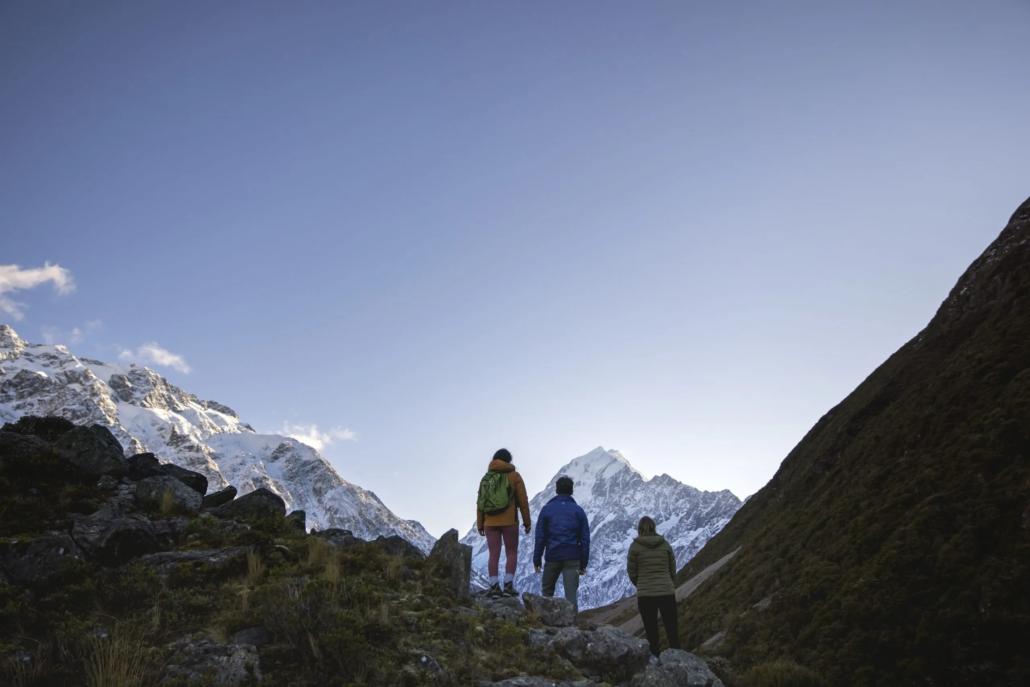
Te Araroa, the walking path that runs from Cape Reinga to Bluff, is growing in popularity. Executive director of the trail, Matt Claridge, anticipates, “over 3000 walkers on Te Araroa this season, nearly double previous numbers”. They’ve seen that the success of the trail is already having an economic impact on small towns along the trail. There’s something very pleasing about being able to walk the length of New Zealand and if you don’t have the time to put aside for the whole thing at once you can complete small sections over time.
Showcasing the sea
Aotearoa is blessed not only with breathtaking scenery, but unique geographic features that enable us to interact with marine wildlife.
The Hikurangi Trench rises to its southern end just off the coast of Kaikoura, creating a feeding ground for the spectacular parāoa sperm whale, amongst others.
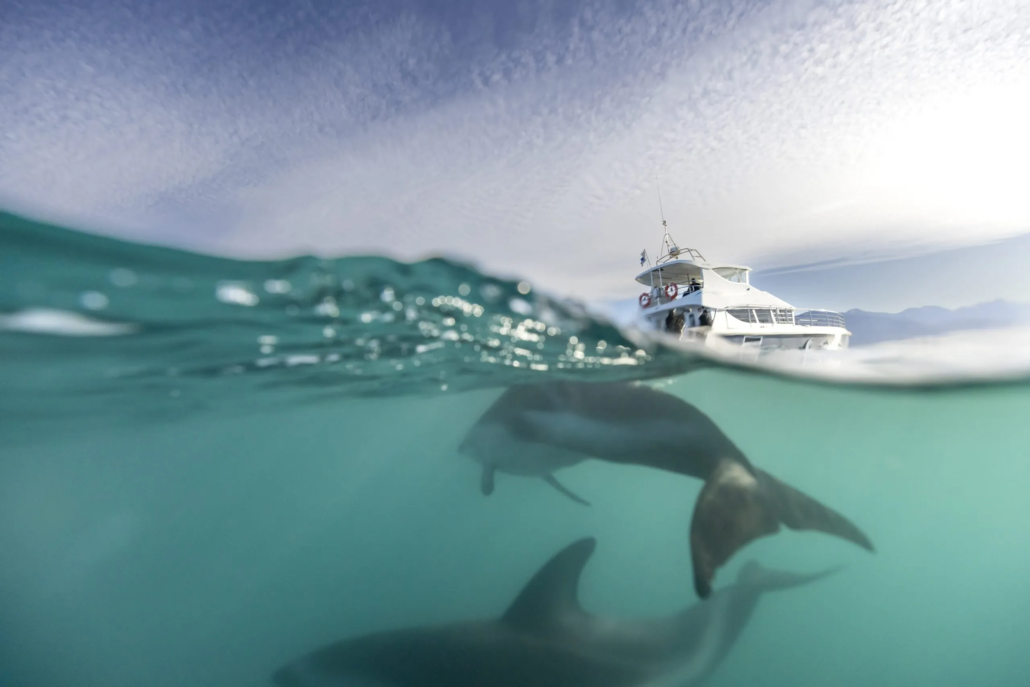
Whale Watch Kaikoura is 100% owned by the local tangata whenua. The business has been a driving force in the local community’s development into an ecotourism destination. Their boats have propulsion systems that reduce the underwater noise level (an important precaution as whales are sensitive to sound). In keeping with ecotourism values, they give back to the local community through sponsorship and contribute data and financial support to scientific research on marine mammals in the local area.

In New Zealand, whale-watching and dolphin-swimming operators must secure a permit from the Department of Conservation (DOC). They must prove that their business is in the interest of ‘conservation, management and the protection of marine mammals’. This limits the number of operators in the area and ensures that the animal’s natural behaviour remains unchanged. And interaction with humans does have an effect on animals. In 2021 DOC implemented extra measures to protect local bottle-nosed dolphins in the Bay of Islands as identifiable dolphins declined from 278 in 1999 to just 26. The dolphins were spending too much time interacting with the boats, leaving them with limited time to eat, rest and care for their babies. When you are selecting a company to observe or interact with our marine mammals, ensure they have certification.
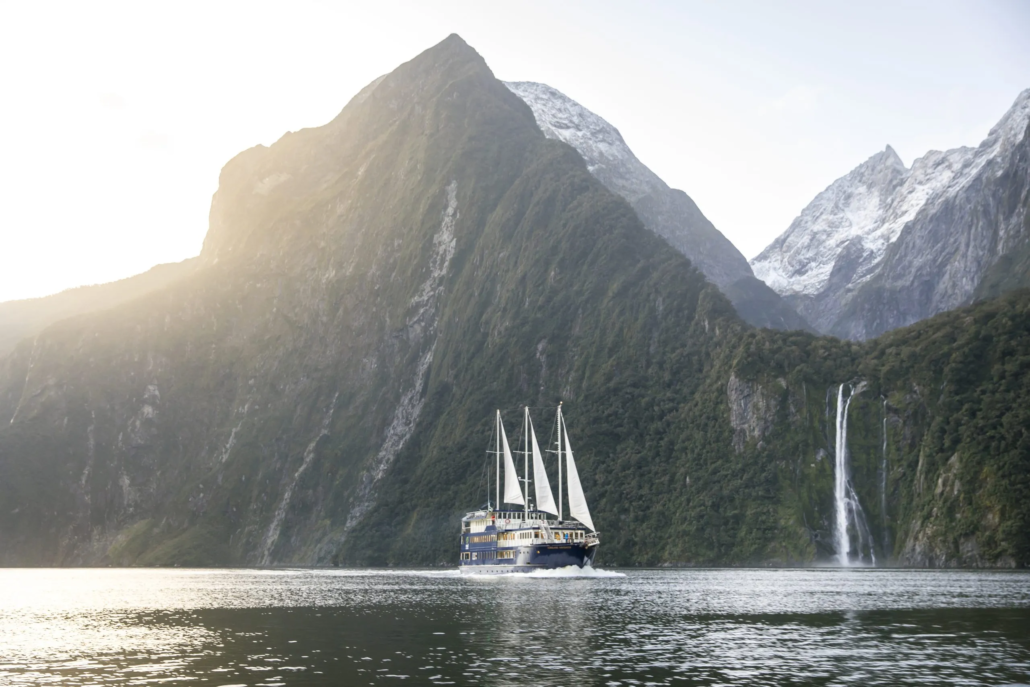
Founded in 1954, family-owned RealNZ employs more than 500 people and opens up the south of the South with a range of cruises, ferries, tours, and ski resorts and include activities such as jet boating, scenic flights and a coal- powered steamship. To reduce their CO2 footprint they are founding members of Hydrogen New Zealand (promoting hydrogen technology), are investigating battery and fuel cell technology for both their road and marine fleet and have already established a number of electric charging stations and renewable energy systems. They say their biggest impediment to reducing their carbon footprint is the historic steamship, TSS Earnshaw, which uses one tonne of coal every hour.
Involved in conservation from the beginning with the Save Manapouri Campaign in the 60s, RealNZ have a dedicated conservation and sustainability team who oversee a number of restoration, pest-eradication, research and education projects throughout Fiordland.
As co-founder Les Hutchins said in 1998, “Tourism and conservation need each other for mutual survival”.
Actively auditing their procurement and waste, RealNZ prioritise buying local, promote product stewardship, and recycle or reuse wherever possible. Amongst many other awards and recognitions, RealNZ holds Qualmark Enviro Gold status.
Sustainability Certifications

Tiaki – Care for New Zealand
A collaborative effort between seven groups, including Tourism New Zealand, Air New Zealand and DOC. Tiaki encourages domestic and international visitors to care for New Zealand while travelling.

Qualmark New Zealand
Qualmark is New Zealand tourism’s official quality assurance organisation. Tourism operators displaying a Qualmark award provides assurance of a sustainable quality experience. An independent evaluation assesses an operator’s commitment to the environment, people and safety.
New Zealand Tourism Sustainability Commitment
Developed by Tourism Industry Aotearoa with the aim to see every New Zealand tourism business committed to sustainability by 2025. They have a Carbon Challenge to track carbon use so businesses can show their progress.
Balancing the budget
Marine social scientist Jessica Giannoumis says on her podcast, Jess explores, that ecotourism is often “painted as a prestigious thing that only people with a lot of money could afford.” Giannoumis thinks this is an odd way of looking at eco-tourism and believes you can have eco-tourism everywhere. She recommends that you “look out for local tourism providers who can show you a different way of experiencing the area you live in.”
Fortunately, there are very affordable options available all over New Zealand.
DOC oversees our thirteen national parks in addition to other conservation areas and many reserves. They run a number of huts and campsites that offer accommodation with very low climate impact (composting toilets!) and are located in both accessible and isolated spots throughout the country.
Set in Northland, the privately run, family-friendly Russel-Orongo Bay Holiday Park is one place to consider if you have young children as it offers classic holiday park fun while offering the chance to get up close to weka, pāteke and the brown kiwi. They have long been dedicated to conservation and sustainability practices, and as part of their eco-statement, they say that “We also want to provide our guests with the mātauranga (knowledge) they need to continue their own journey in kaitiakitanga and conservation”.
In 1975, Fred Dagg famously sang ‘We Don’t Know How Lucky We Are’. Hopefully, we are starting to understand. Making choices that protect what we have and repair what we’ve lost might be the best way to give back to the land we live in.
Claire Brunette is a writer, keen camper, owner of a potted organic garden and increasingly desperate advocate for sustainability living in Tāmaki Makaurau.